Economic Pulse Net | Sources: World Bank World Development Indicators, Government Sources | 2026
Key Takeaways
* The Netherlands demonstrates remarkable resilience with a GDP growth of 1.78% and low unemployment at 3.87%, defying broader regional stagnation trends.
With a GDP per capita (PPP) exceeding $87,000, the nation remains one of the wealthiest economies globally, though inflation pressures persist at 3.2%.
Political stability is anchored in a unique consociational democracy that prioritizes broad consensus, providing a predictable environment for long-term investment.
Despite high living costs and a small population of just over 18 million, the country leverages its strategic position to maintain robust economic output.
Economic Resilience Amidst Global Headwinds
The Dutch economy is currently navigating a period of steady, albeit modest, expansion. According to World Bank data, the country’s GDP growth stands at 1.78463214703797% for 2025, a figure that signals stability rather than explosive boom or bust cycles. This moderate growth is underpinned by a labor market that remains exceptionally tight; the unemployment rate is recorded at a low 3.874%, indicating that nearly the entire workforce is engaged in productive activity.
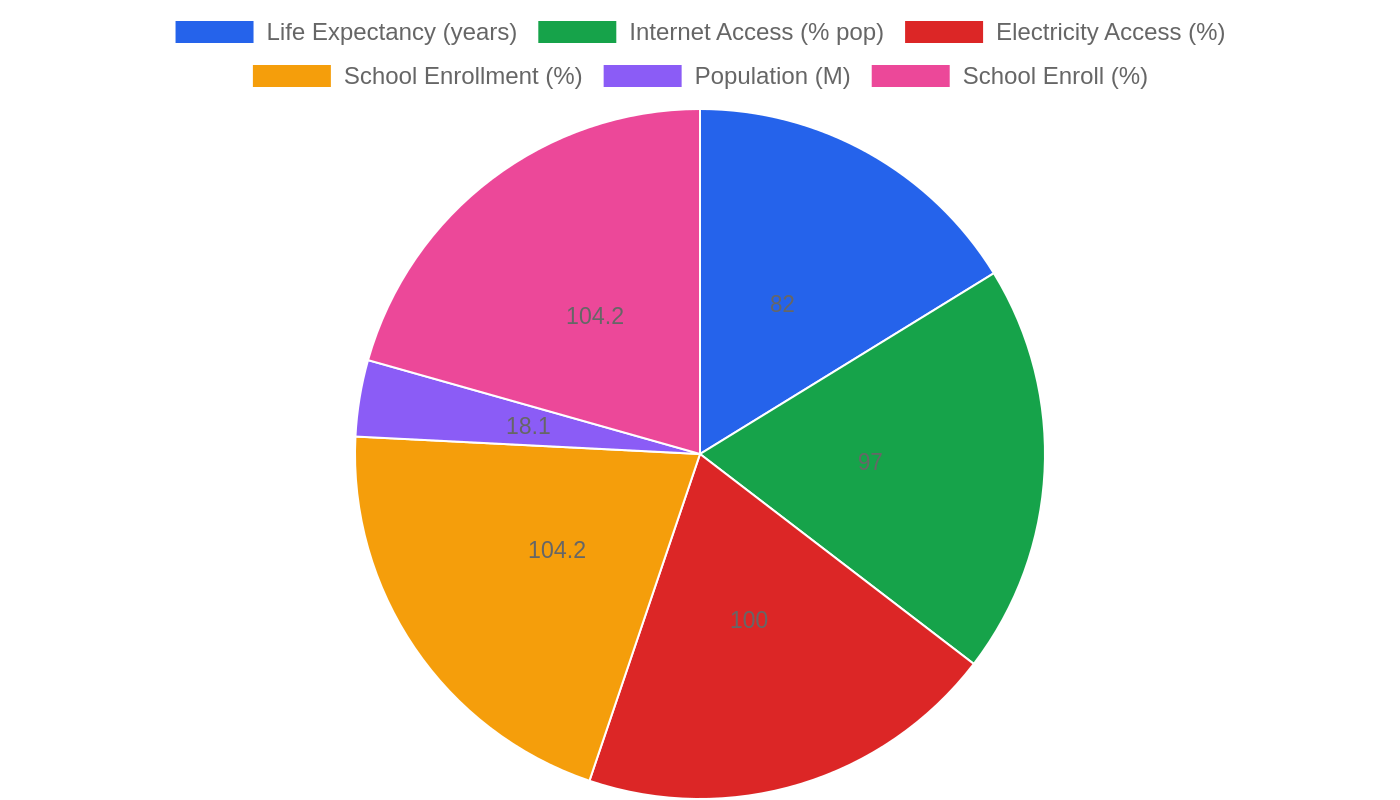
When viewed against the backdrop of a total GDP of $1,332,767,651,100.39, these numbers reveal an economy that punches well above its weight relative to its population size of 18,087,633. The high GDP per capita (PPP) of $87,320.1477254029 underscores the high value generated per worker, driven by advanced services, logistics, and technology sectors.
However, this prosperity comes with price pressures; the Consumer Price Index (CPI) inflation sits at 3.20363967869003%, suggesting that while purchasing power remains strong, the cost of maintaining that standard is rising. For international observers, these figures matter because they illustrate a mature economy that is not reliant on raw commodity exports but on high-efficiency human capital and infrastructure.
The GNI per capita of $68,530 further confirms that income distribution and national wealth retention are healthy, supporting domestic consumption even as global demand fluctuates.
The Premium of Prosperity: Cost of Living and Housing Dynamics
Living in the Netherlands is synonymous with high quality but also high expense. While specific housing metrics are not detailed in the current dataset, the macroeconomic indicators suggest a premium environment. With a GNI per capita of $68,530, residents have significant disposable income, yet the inflation rate of 3.2% indicates that daily expenses are climbing.
In such high-income economies, housing costs typically constitute a major portion of household budgets, often outpacing general inflation due to supply constraints in urban centers like Amsterdam and Rotterdam. The high GDP per capita implies that wages are adjusted to match these elevated living standards, preventing a collapse in real wages despite the price increases.
Compared to other European nations, the Netherlands offers a balanced but costly lifestyle where public services are well-funded but taxed accordingly. The interplay between the 1.78% economic growth and 3.2% inflation suggests that while the economy is expanding, the net benefit to individual households may be slightly eroded by the rising cost of essentials.
Investors and expatriates must account for these high baseline costs when modeling return on investment or salary negotiations, as the “Dutch premium” applies to everything from rent to retail goods.
Investment Climate: Stability Through Consensus
The business environment in the Netherlands is defined less by deregulation and more by structural reliability. The political landscape, described as a consociational state since 1848, ensures that major economic policies are built on broad consensus among diverse societal groups. This governance model minimizes the risk of sudden, disruptive policy shifts, making the country an attractive haven for long-term capital allocation.
While specific top companies are not listed in the provided data, the high GDP figures suggest a dominance of multinational corporations, particularly in logistics, agriculture, and financial services. The low unemployment rate of 3.874% indicates a competitive labor market, meaning businesses must offer compelling compensation packages to attract talent. Furthermore, the country’s status as a constitutional monarchy adds a layer of institutional continuity that appeals to conservative investors seeking safety.
The combination of a highly educated workforce and a stable political framework creates a fertile ground for innovation, particularly in sectors requiring long-term infrastructure development. Companies operating here benefit from a predictable regulatory environment, even if it means navigating complex stakeholder negotiations.
Safety, Politics, and Quality of Life
Safety and political stability are pillars of the Dutch appeal. Although crime and safety indices are marked as N/A in the current dataset, the broader democratic metrics tell a clear story of security. According to International IDEA’s Global State of Democracy Indices, the Netherlands performs in the high range on overall democratic measures, with particular strengths in political representation.
This high level of democratic health correlates strongly with social cohesion and low levels of civil unrest, which indirectly supports public safety. The country’s long-standing tradition as a parliamentary democracy since 1848 has ingrained a culture of dialogue and compromise, reducing the likelihood of violent political outcomes. For citizens and residents alike, this political maturity translates into a high quality of life, supported by robust social services and infrastructure.
The absence of extreme political polarization allows for consistent implementation of public safety initiatives and community welfare programs. Consequently, the Netherlands remains a top-tier destination for those prioritizing personal security and civic engagement alongside economic opportunity.
Current Affairs: Navigating the Post-Growth Era
Right now, the focus in the Netherlands is on managing the delicate balance between growth and inflation. With CPI hovering around 3.2%, policymakers are likely scrutinizing monetary and fiscal tools to ensure that price stability does not stifle the 1.78% GDP expansion. The recent emphasis on achieving broad consensus in governance suggests that any new reforms will be gradual and inclusive, avoiding shock therapy approaches.
Businesses are adapting to the tight labor market, evidenced by the 3.874% unemployment rate, by investing in automation and efficiency rather than relying on cheap labor expansion. There is also a growing attention on sustainable practices, driven by both EU regulations and domestic political pressure, which is reshaping industries from agriculture to energy. As the world moves through 2026, the Netherlands is positioning itself as a model of efficient, high-value economic management.
Stakeholders are watching closely to see how the government handles the tension between maintaining high living standards and keeping inflation in check. The upcoming budgetary decisions will likely reflect a careful calibration of spending to support the wealthy middle class while protecting vulnerable populations.
The Bottom Line
The Netherlands is a critical watchlist for investors seeking stability in a volatile global market. Its combination of high per-capita wealth, low unemployment, and deep-rooted democratic consensus offers a rare safe harbor for capital. While the high cost of living and moderate growth rates require careful navigation, the underlying fundamentals remain incredibly strong. For businesses and individuals alike, the Netherlands represents a mature, reliable, and prosperous ecosystem worth engaging with.
Sources & Methodology
This article is authored by Economic Pulse Net for informational and research purposes. Economic Pulse Net sources its data from multilateral institutions, national statistics bureaus, and proprietary databases. All data is believed to be current as of the date of publication.
Published: October 18, 2026 | Category: Research — Netherlands
Use these signals in your own platform
Economic Pulse publishes its live signal feed through a documented, read-only API. Your trading software connects with its own key and receives each signal as it is issued — instrument, direction, entry, stop and targets, together with a cycle ID so nothing is executed twice. The feed is independent of this website and cannot change it.
Signals are informational only and are not financial advice.