Economic Pulse Net | Sources: World Bank World Development Indicators, Government Sources | 2026
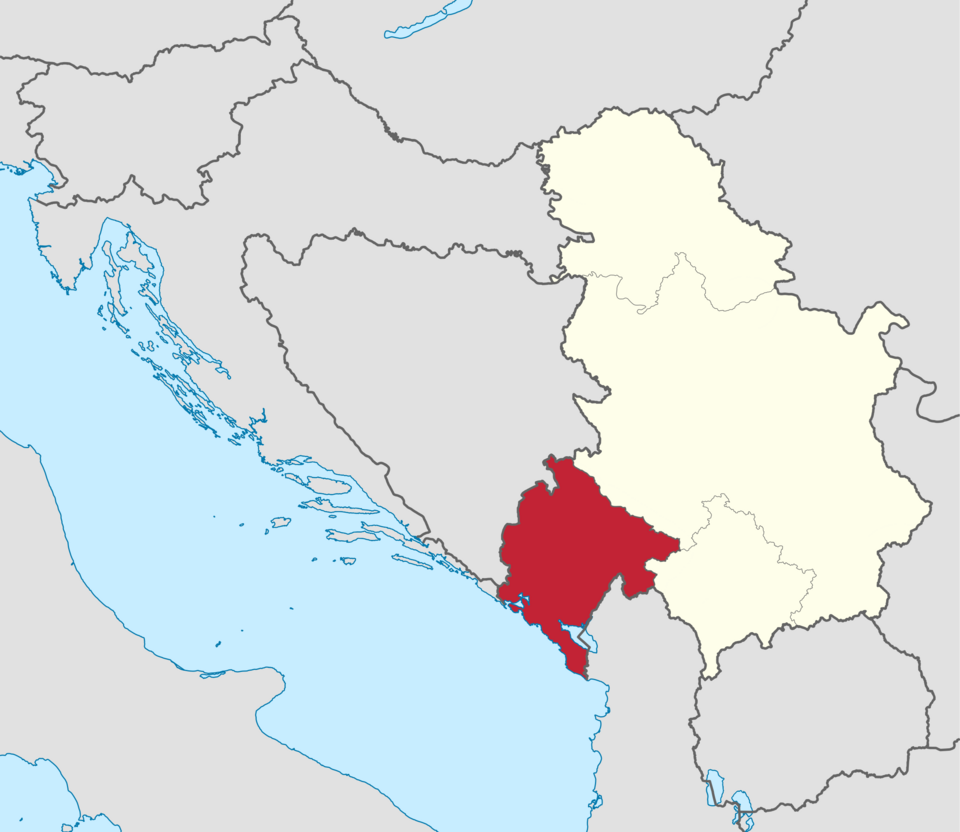
On a sun-drenched sliver of the Adriatic coast, Montenegro has long been a place where empires met and cultures converged. Today, this parliamentary republic of roughly 620,000 people finds itself at a different kind of crossroads—one where European aspirations, economic restructuring, and the legacy of its industrial past collide.
With a codified constitution that describes the country as a “civic, democratic, ecological state of social justice,” Montenegro presents a fascinating case study of a small nation attempting to punch above its weight. The story here is not one of dramatic boom or catastrophic bust, but of patient, often painstaking, transformation.
Key Takeaways
– Constitutional Identity: Montenegro operates as a parliamentary representative democratic republic with a constitution established in 2007, defining the country as a “civic, democratic, ecological state of social justice” based on the rule of law and a multi-party system.
– Industrial Legacy: The country’s corporate landscape is dominated by legacy state-owned enterprises, including Aluminium Plant Podgorica and Elektroprivreda Crne Gore, alongside a growing services sector anchored by tourism and banking.
– Services-Driven Economy: Consumer services and tourism companies like Budvanska Rivjer a and Montenegro Airlines feature prominently among the nation’s top firms, signaling the shift toward a service-oriented economic model.
– Political Maturity: As a multi-party democracy with a relatively young constitution, Montenegro’s political stability is a key factor for investors and citizens alike, though the country continues to navigate post-Yugoslav identity and European integration.
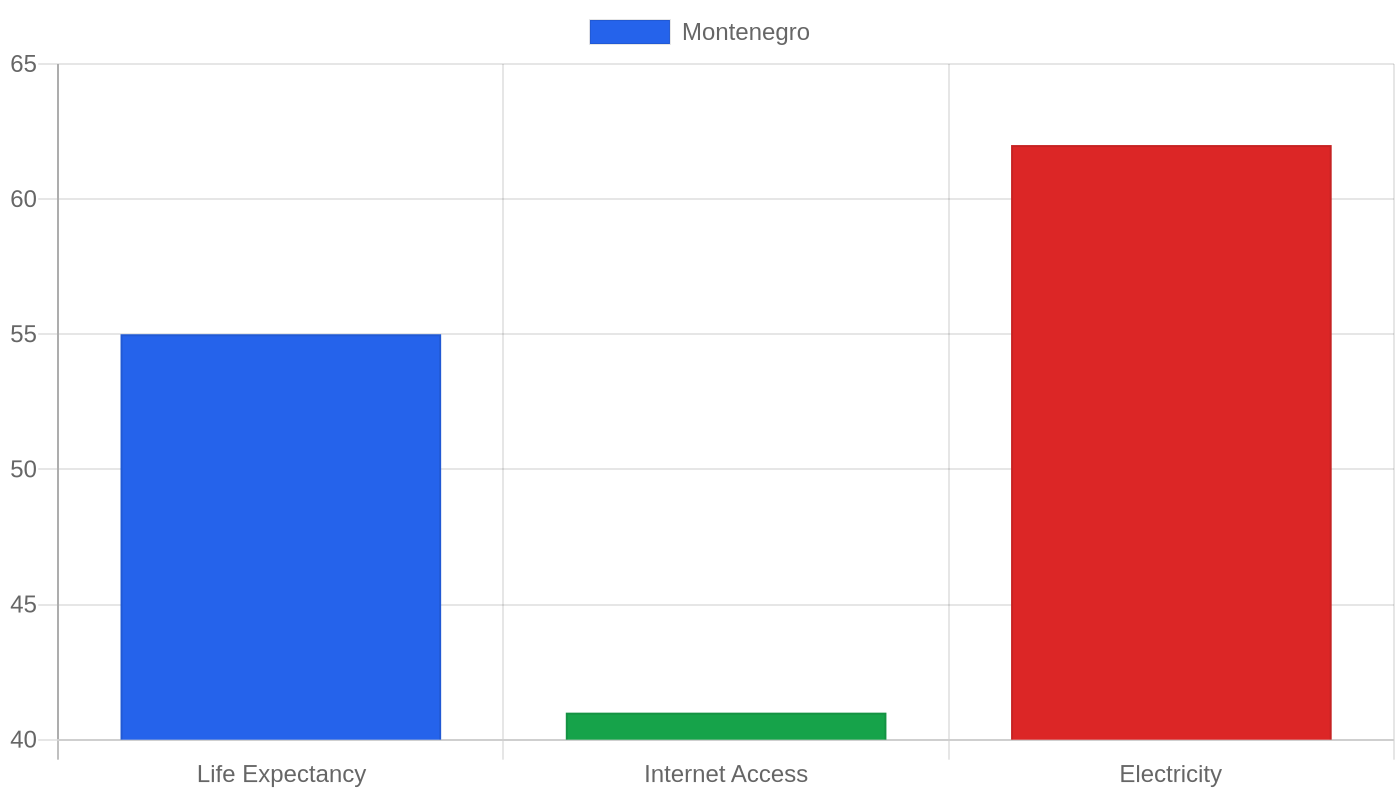
– Data Gaps: Key economic indicators from the World Bank—including GDP growth, inflation, unemployment, and GDP per capita—are currently unavailable, underscoring the challenges of tracking economic performance in smaller emerging economies.
The Economic Engine — Between Smokestacks and Sunbeds
Montenegro’s economy tells a story of transition. The World Bank, the primary source for international economic data on the country, currently reports no figures for GDP growth, inflation CPI, or unemployment. This absence of data is itself a narrative point: it reflects the difficulty of maintaining robust statistical infrastructure in a small, developing economy that has weathered the shocks of Yugoslav dissolution, the 2008 financial crisis, and the COVID-19 pandemic.
What we do know, from the list of the country’s top companies, is where Montenegro’s economic weight lies.
At the heavy end sits Aluminium Plant Podgorica, a basic materials giant that represents the industrial backbone of the Montenegrin economy. This is the legacy of the Yugoslav era, when the republic hosted energy-intensive industries powered by the country’s abundant hydroelectric capacity. Alongside it stands Elektroprivreda Crne Gore, the state-owned utility that keeps the lights on and the factories humming.
These are not just companies; they are institutions, employing thousands and anchoring entire communities.
Yet alongside these industrial titans, a new Montenegro is emerging. Budvanska Rivijera, a consumer services company tied to the tourism sector, and Montenegro Airlines, the national carrier, point to a service-oriented future. The presence of two major banks—NLB Banka Podgorica and the Central Bank of Montenegro itself—highlights the financial sector’s growing importance. Meanwhile, Crnogorski Telekom and Jugopetrol Kotor represent the telecommunications and energy distribution sectors respectively.
The picture that emerges is of a dual economy: one foot in the industrial past, the other reaching toward a services-and-tourism future. The challenge for policymakers is managing this transition without leaving behind the communities built around heavy industry.
The Cost of Living — The Adriatic Premium
For anyone considering a move to Montenegro, the cost of living presents a complex picture. The country offers a Mediterranean lifestyle at prices that, while lower than Western Europe, have been rising steadily as tourism and foreign investment increase. Housing, in particular, tells a story of divergence. In coastal hotspots like Budva and Kotor, property prices have climbed significantly, driven by demand from Russian, British, and regional buyers seeking second homes or investment properties.
Renting in these areas can approach prices seen in less expensive parts of the European Union.
Inland, in the capital Podgorica, the market is more moderate but still reflects the pressures of urbanization. The rent-versus-buy calculation here depends heavily on location and purpose. For locals, homeownership remains the cultural norm, supported by family networks and savings. For expatriates and digital nomads—a growing demographic attracted by Montenegro’s natural beauty and relatively relaxed visa policies—renting offers flexibility, albeit at a premium in desirable neighborhoods.
Daily expenses for food, transportation, and utilities are generally lower than in Western Europe, but imported goods carry a markup. The overall picture is one of a country where the cost of living is manageable for those earning in euros or stronger currencies, but increasingly challenging for locals on domestic wages.
Investment and Business Climate — A Landscape of Opportunity and Legacy
Montenegro’s business environment is defined by its corporate giants and the sectors they represent. The top companies list reads like a map of the economy’s strategic priorities. For investors, the most compelling opportunities lie in the intersection of tourism, energy, and infrastructure. The presence of Di Air and Budvanska Rivijera among the top firms signals that the consumer services and aviation sectors are not afterthoughts but central pillars of economic strategy.
The energy sector, anchored by Elektroprivreda Crne Gore and Crnogorski Elektroprenosni Sistem, offers a particularly interesting proposition. Montenegro has significant untapped potential in renewable energy, particularly solar and wind, and its existing hydroelectric capacity provides a foundation for green energy development. The country’s ecological constitutional mandate—it is officially defined as an “ecological state”—creates both opportunities and constraints for investors.
Environmental regulations are taken seriously, but so is the need for economic development.
The financial sector, represented by NLB Banka Podgorica and the Central Bank of Montenegro, is relatively stable but small. For foreign investors, the legal framework is still maturing, and navigating bureaucracy can require patience. The multi-party democratic system provides political stability, but the country’s small size means that policy shifts can have outsized impacts.
For those willing to take a long-term view, Montenegro offers access to the Adriatic market, proximity to EU member states, and a quality of life that is hard to match. The key is understanding that this is a relationship-based business culture where trust and local partnerships matter as much as balance sheets.
Safety, Politics, and Quality of Life — The Democratic Experiment
Montenegro’s political landscape is defined by its constitution, adopted in 2007, which establishes the country as a “parliamentary representative democratic republic” with a “multi-party system.” This is a young democracy by European standards, still finding its footing after the breakup of Yugoslavia and the 2006 independence referendum that severed the union with Serbia.
The constitution’s language is notably aspirational, describing Montenegro as a “civic, democratic, ecological state of social justice, based on the reign of Law.”
For residents and visitors, the safety situation is generally positive. Montenegro is not a high-crime country by regional standards, though like any tourist destination, petty crime can be an issue in busy coastal areas during the summer season.
The Crime Index and Safety Index data from the relevant sources are currently unavailable, making precise comparisons difficult, but anecdotal evidence and travel advisories from various governments paint a picture of a country where violent crime is rare and the main concerns are traffic safety and occasional petty theft.
Quality of life in Montenegro is heavily influenced by geography. The coastal region offers a Mediterranean lifestyle with beautiful beaches, historic towns, and a vibrant tourism scene. The interior, including the capital Podgorica, is more focused on administration, industry, and agriculture. The mountainous north, with its ski resorts and national parks, attracts outdoor enthusiasts. The country’s small size means that none of these experiences are far apart.
For those who value natural beauty, a slower pace of life, and a sense of community, Montenegro offers a compelling package. The trade-off is a smaller job market, limited public services compared to Western Europe, and the challenges of living in a country still building its institutions.
Current Affairs — Navigating a Changing Europe
Montenegro’s present moment is shaped by its position on the geopolitical map of Europe. As a NATO member since 2017 and a candidate for European Union membership, the country is navigating a complex relationship with both Brussels and its neighbors. The war in Ukraine has reshaped the security landscape of the Balkans, and Montenegro’s position as a relatively stable, pro-Western state in a region with competing influences has become more strategically significant.
Domestically, the political scene remains lively. The multi-party system produces coalition governments that must balance competing interests—between coastal and inland regions, between industrial workers and tourism entrepreneurs, between those who look toward Brussels and those who maintain closer ties with Serbia and Russia.
The economic agenda is focused on completing the transition from a state-dominated economy to one more open to private enterprise and foreign investment, while maintaining the social safety nets that citizens expect.
The tourism sector, which drives much of the coastal economy, is recovering strongly from the pandemic downturn, but faces challenges from inflation in key source markets and competition from other Mediterranean destinations. The energy sector is grappling with the green transition, balancing the need to modernize aging infrastructure with the opportunities presented by renewable energy.
For Montenegro, the next few years will be about proving that a small, ecologically-minded democracy can thrive in a rapidly changing world.
The Bottom Line
Montenegro is a country for patient investors, lifestyle seekers, and those who believe that small nations can chart their own course. The economy is in transition, the political system is maturing, and the quality of life is genuinely high for those who can afford it. This is not a place for quick profits or dramatic turnarounds, but for those willing to understand its unique character and commit for the long haul, Montenegro offers a compelling blend of opportunity and beauty.
Watch this country if you believe in the potential of the Adriatic, the resilience of small democracies, and the enduring appeal of a life lived between mountains and sea.
Sources & Methodology
This article is authored by Economic Pulse Net for informational and research purposes. Economic Pulse Net sources its data from multilateral institutions, national statistics bureaus, and proprietary databases. All data is believed to be current as of the date of publication.
Published: July 28, 2026 | Category: Research — Montenegro
Use these signals in your own platform
Economic Pulse publishes its live signal feed through a documented, read-only API. Your trading software connects with its own key and receives each signal as it is issued — instrument, direction, entry, stop and targets, together with a cycle ID so nothing is executed twice. The feed is independent of this website and cannot change it.
Signals are informational only and are not financial advice.