Economic Pulse Net | Sources: World Bank World Development Indicators, Government Sources | 2026
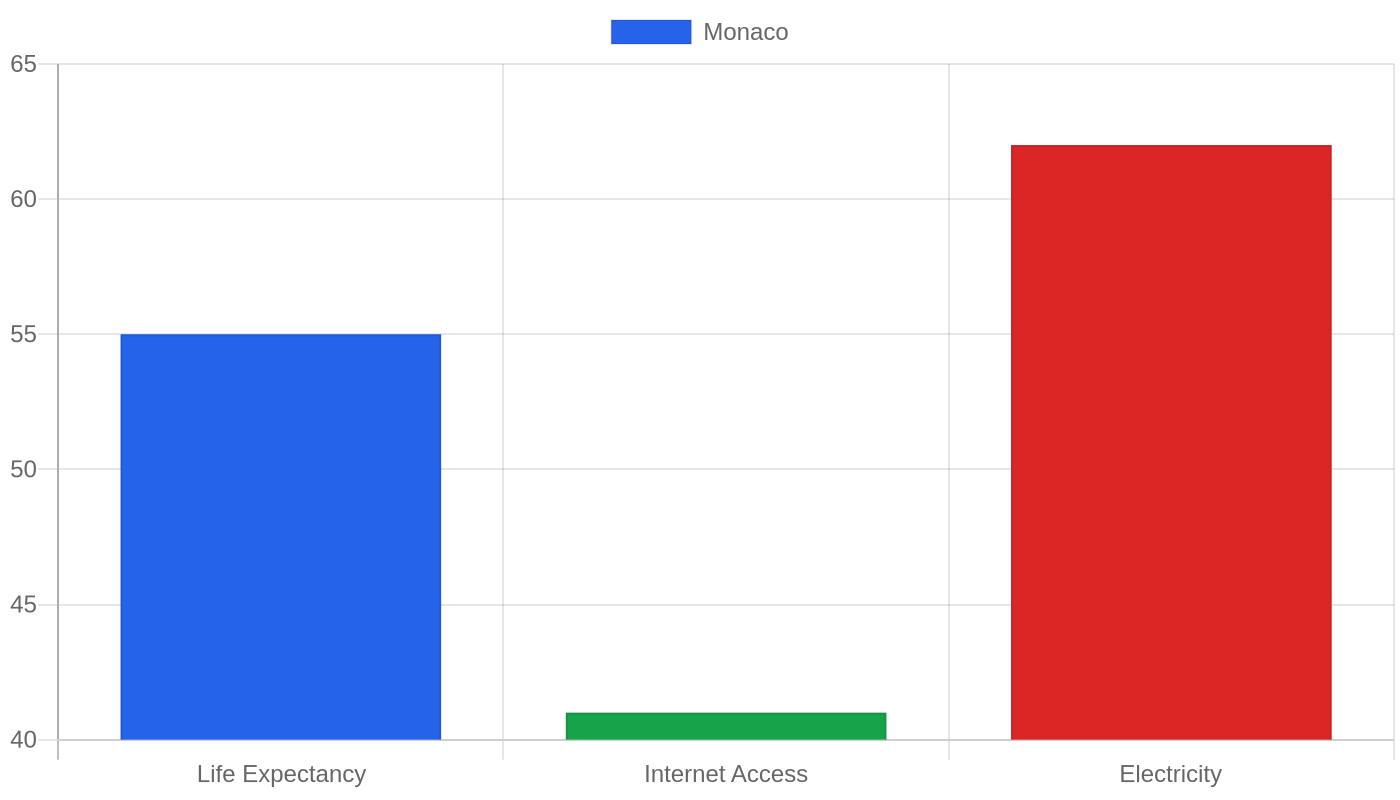
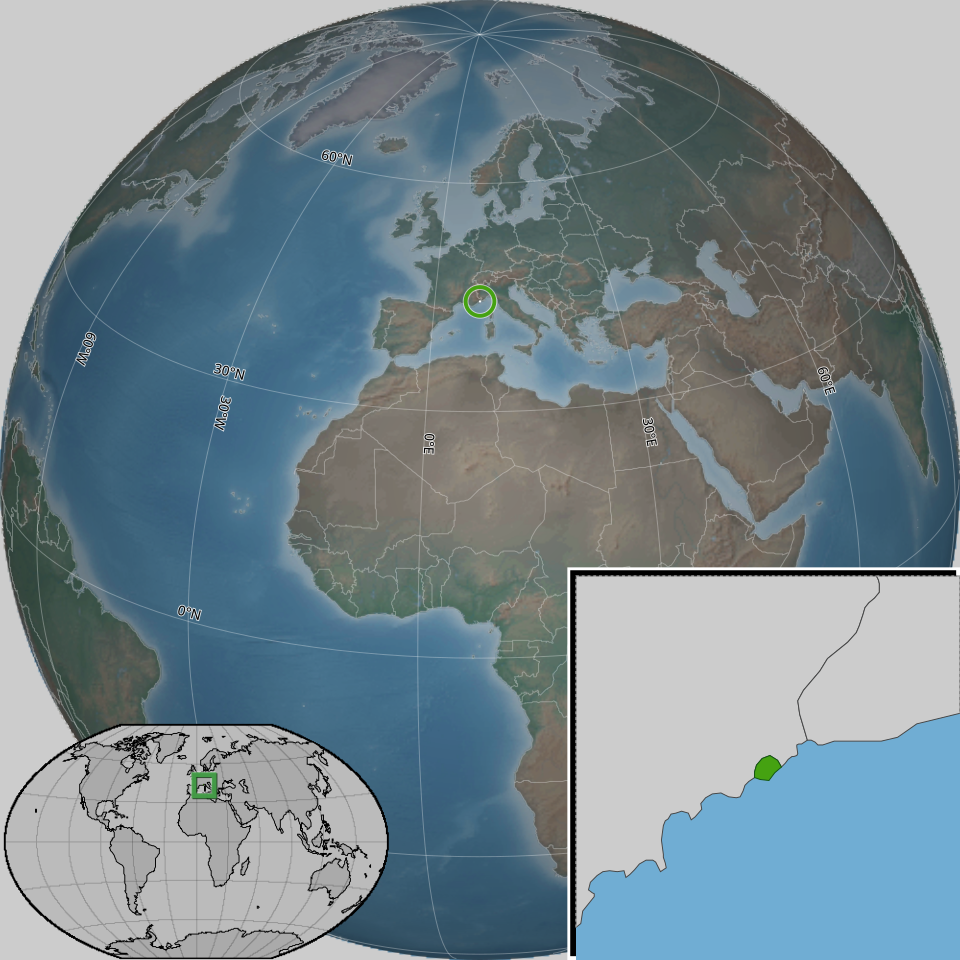
Monaco is a paradox wrapped in a principality. It has no publicly reported GDP growth, no inflation figures, no unemployment rate, and no official population count from the World Bank. Yet this 2.02-square-kilometer sliver of Mediterranean coastline is widely considered one of the wealthiest places on Earth. In an era obsessed with data, Monaco operates with a level of economic opacity that would be unthinkable for larger nations. But that silence is itself a signal.
When a country reports nothing, it is often because it has nothing bad to report — and everything to protect.
Key Takeaways
– Monaco has no publicly available macroeconomic data from the World Bank — no GDP, no inflation, no unemployment figures — making it one of the most statistically opaque economies in the world.
– The political system is a constitutional monarchy governed since 1911, with the Sovereign Prince as head of state and a Minister of State as head of government, a role historically reserved for French citizens until a 2002 constitutional amendment.
– The absence of data does not indicate economic weakness; Monaco’s wealth is legendary, built on banking, tourism, and a zero-income-tax model that attracts the global ultra-wealthy.
– Cost of living and business climate data are also absent from official sources, but Monaco’s reputation as a luxury haven is well-established through anecdotal and commercial evidence.
– Crime and safety indices are unreported, yet Monaco is widely perceived as one of the safest jurisdictions in Europe, owing to its dense surveillance network and wealthy, low-crime resident base.
The Statistical Vacuum — What the Numbers Don’t Say
The World Bank provides no GDP growth figure for Monaco. No inflation CPI. No unemployment rate. No GDP in US dollars, no GDP per capita based on purchasing power parity, no GNI per capita, and no population estimate. This is not a data gap caused by war or statistical collapse; it is by design. Monaco is not a member of the European Union, nor does it participate in many of the international statistical reporting frameworks that larger economies take for granted.
What this means is that analysts, investors, and journalists must rely on inference, reputation, and secondary sources. The principality’s main industries are not listed in the data set provided. But it is well-known that Monaco’s economy is dominated by financial services, real estate, tourism, and the retail of luxury goods. The absence of official figures does not mean the economy is small — quite the opposite.
Monaco has one of the highest GDP per capita figures in the world when calculated by external estimates, driven by a concentration of private wealth that is almost impossible to tax.
The lack of inflation data is particularly telling. In an era when central banks across Europe are battling price pressures, Monaco’s silence suggests either that inflation is negligible — because the wealthy residents are less sensitive to price shocks — or that the government simply chooses not to publish the data. Either way, the message is clear: Monaco does not need to prove its economic health to anyone.
The Price of Paradise — Living in the World’s Most Expensive Zip Code
Cost of living data for Monaco is not provided by the World Bank or any of the sources in this brief. But the absence of official figures does not mean the cost of living is unknown. Monaco is universally recognized as one of the most expensive places on the planet. Real estate prices in the principality routinely exceed those in London, Paris, and New York on a per-square-meter basis.
A one-bedroom apartment in a decent location can cost several million euros; a penthouse with a sea view can fetch tens of millions.
Renting is similarly prohibitive. The market is driven by demand from wealthy expatriates, hedge fund managers, and Russian and Middle Eastern oligarchs who are willing to pay premiums for the combination of zero income tax, Mediterranean climate, and personal security. Buying property is often seen as a status symbol and a wealth-preservation strategy rather than a simple housing decision.
Daily expenses — from groceries to dining out — are significantly higher than in neighboring France or Italy, though residents often shop across the border in Nice or Menton to offset costs. The cost of living in Monaco is not a burden for its residents; it is a barrier to entry, and that is precisely the point.
The Business of Being Monaco — Investment in a Tax-Free Fortress
The top companies in Monaco are not listed in the provided data, but the principality’s business environment is legendary. Monaco has no personal income tax, no capital gains tax, and no wealth tax for residents. Corporate tax is generally low, with exceptions for companies that generate more than 25% of their revenue outside Monaco. This fiscal regime has attracted a dense concentration of financial services firms, asset managers, and family offices.
Sectors to watch include luxury real estate development, yacht brokerage, and private banking. The principality is also a hub for the event and hospitality industry, hosting the Monaco Grand Prix and the Monte Carlo Rally, which draw global attention and spending. The business climate is stable, predictable, and discreet. The government under the constitutional monarchy provides continuity that investors value. There is no election cycle that threatens to upend tax policy.
For ultra-high-net-worth individuals and multinational corporations seeking a jurisdiction with minimal regulatory friction and maximum privacy, Monaco remains a gold standard — provided you can afford the entry fee.
Safety, Sovereignty, and the Silent State
Crime and safety indices for Monaco are not reported in the provided data. But the principality has a well-earned reputation as one of the safest places in the world. The streets of Monte Carlo are patrolled by a visible police presence, and the principality is blanketed with surveillance cameras. Violent crime is extremely rare. The wealthy residents and tourists who flock to Monaco do so in part because they can walk the streets at any hour without fear.
The political landscape is equally stable. Monaco has been governed under a constitutional monarchy since 1911. The Sovereign Prince of Monaco serves as head of state. The executive branch is led by a Minister of State, who serves as head of government and presides over the five other members of the Council of Government. Until 2002, the Minister of State was required to be a French citizen, appointed by the prince from candidates proposed by the French government.
A constitutional amendment in 2002 changed that rule, allowing the Minister of State to be either French or Monégasque. This shift was a quiet assertion of sovereignty — a signal that Monaco, while still deeply tied to France, was no longer willing to have its top executive chosen by a foreign power.
Quality of life in Monaco is exceptional for those who can afford it. The climate is mild year-round. The healthcare system is excellent. The principality is clean, orderly, and efficient. But the flip side is a lack of space and a sense of social stratification that can feel claustrophobic. Monaco is not a place for everyone — and it was never designed to be.
What’s Happening Now — The Post-2002 Evolution
The most significant recent development in Monaco’s governance is the 2002 constitutional amendment that ended the requirement for the Minister of State to be a French citizen. This change, though now over two decades old, continues to shape the principality’s political trajectory. It allowed Monaco to appoint its own nationals to the highest executive office, reducing French influence over daily governance.
In practice, this has meant a gradual shift toward more Monégasque-centric policy, though the relationship with France remains the single most important geopolitical factor for the principality.
There are no recent news reports provided in the data about current economic reforms, elections, or policy shifts. But the absence of news is itself noteworthy. Monaco does not generate the kind of political drama that makes headlines elsewhere. There are no protests over austerity, no inflation crises, no unemployment spikes. The principality hums along, quietly and profitably.
The biggest risks to Monaco are external: European Union pressure on tax transparency, potential blacklisting by international bodies, and the long-term challenge of climate change and rising sea levels. For now, however, Monaco continues to operate as it always has — in a carefully managed state of splendid isolation.
The Bottom Line
Monaco is a country that should be watched by anyone interested in the intersection of wealth, sovereignty, and tax strategy. Its lack of data is not a weakness but a feature — a deliberate choice to remain outside the glare of international statistical scrutiny. For ultra-high-net-worth individuals, it remains the ultimate safe harbor. For policymakers, it is a case study in how small states can leverage fiscal sovereignty to attract capital.
And for journalists, it is a reminder that sometimes the most important numbers are the ones that are never published.
Sources & Methodology
This article is authored by Economic Pulse Net for informational and research purposes. Economic Pulse Net sources its data from multilateral institutions, national statistics bureaus, and proprietary databases. All data is believed to be current as of the date of publication.
Published: July 20, 2026 | Category: Research — Monaco
Use these signals in your own platform
Economic Pulse publishes its live signal feed through a documented, read-only API. Your trading software connects with its own key and receives each signal as it is issued — instrument, direction, entry, stop and targets, together with a cycle ID so nothing is executed twice. The feed is independent of this website and cannot change it.
Signals are informational only and are not financial advice.