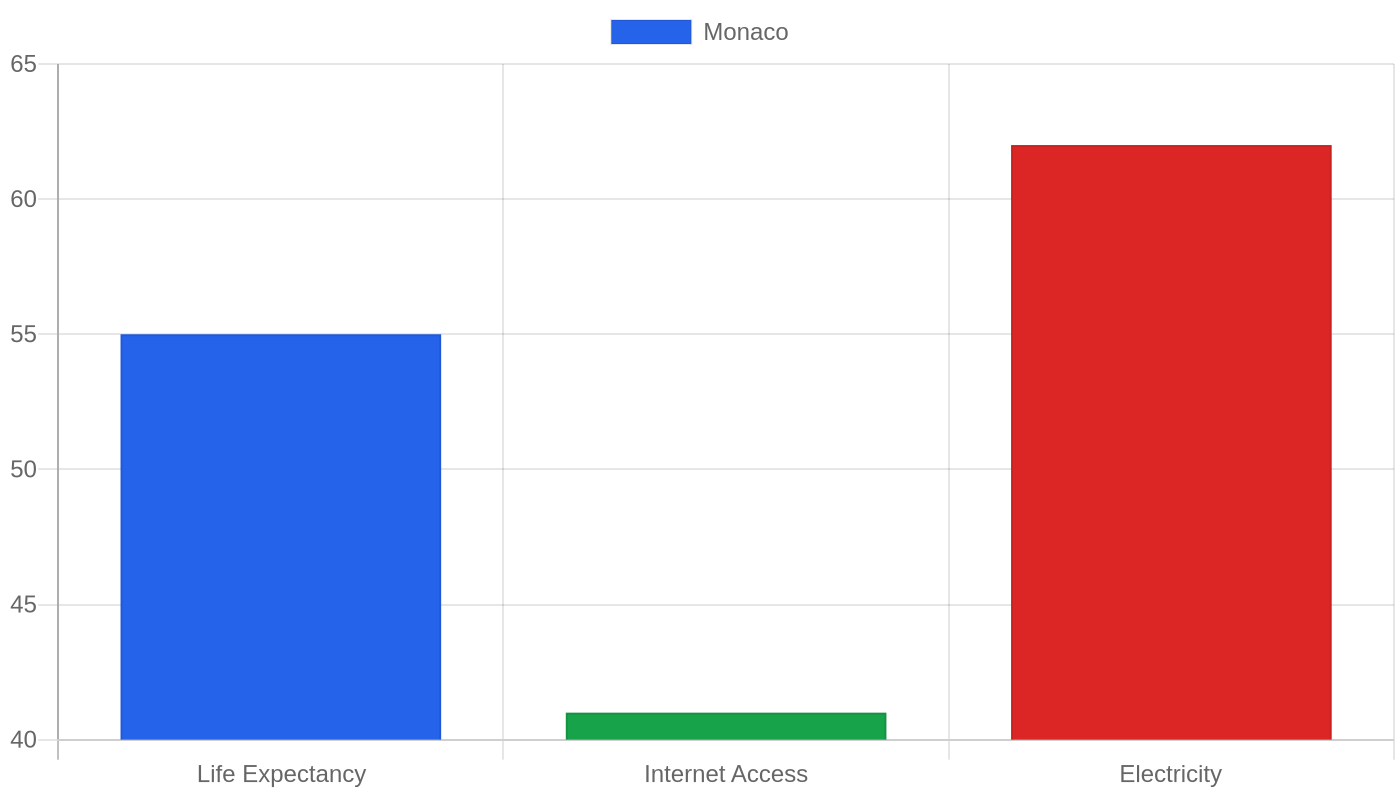
Economic Pulse Net | Sources: World Bank World Development Indicators, Government Sources | 2026
Key Takeaways
– Monaco remains one of the world’s most unique economic territories, operating under a constitutional monarchy that has remained remarkably stable since 1911.
– The Principality’s political structure underwent a significant shift in 2002, when constitutional amendments ended France’s automatic right to supply the Minister of State.
– Despite its global reputation for luxury and finance, Monaco’s economic data remains largely opaque, with the World Bank reporting no recent figures for GDP, inflation, or unemployment.
– The country’s governance model, blending princely authority with a Council of Government, continues to attract scrutiny from international financial observers.
– Monaco’s safety profile and political continuity make it a distinctive case study in European microstate economics.
The Economic Enigma: A Wealth Paradox Without Numbers
Monaco presents one of the most intriguing puzzles in the global economy: a nation whose economic might is universally acknowledged yet whose official statistics remain conspicuously absent from international databases. The World Bank’s latest reporting shows no recorded figures for GDP growth, inflation, or unemployment — a statistical silence that speaks volumes about the Principality’s unique position in the world economy.
This absence of data is not necessarily a sign of economic weakness; rather, it reflects a model so distinct that it often defies conventional measurement.
What we do know is that Monaco has built its prosperity on a foundation of financial services, real estate, and tourism — sectors that thrive on discretion and exclusivity rather than transparency. The absence of World Bank data may also reflect the country’s peculiar relationship with international economic reporting, as it navigates between its historical ties to France and its modern identity as a global luxury hub.
The Principality’s economic model, while difficult to quantify through traditional metrics, has clearly produced one of the highest concentrations of wealth in Europe, even if the precise numbers remain elusive to international statisticians.
Property and Prestige: The Cost of Living in the World’s Most Exclusive Address
Housing in Monaco represents perhaps the most extreme example of real estate economics in the developed world, with prices that routinely dwarf even the most expensive districts of neighbouring France. The Principality’s limited geographical footprint — barely more than two square kilometres — creates a permanent supply constraint that drives property values to astronomical levels.
Rent versus buy calculations in Monaco follow a logic entirely their own, with both options requiring financial resources that place the market firmly beyond the reach of average European earners.
The daily cost of living in Monaco reflects its positioning as a playground for the ultra-wealthy, with everything from groceries to dining out carrying a premium that would be unthinkable in the surrounding French Riviera. Yet this premium pricing is part of the country’s deliberate economic strategy — by positioning itself as the most exclusive address in Europe, Monaco ensures that its limited space is occupied by those who contribute most to its tax base.
The comparison with regional averages is almost meaningless, as Monaco’s entire economic model is predicated on being an outlier rather than a regional norm.
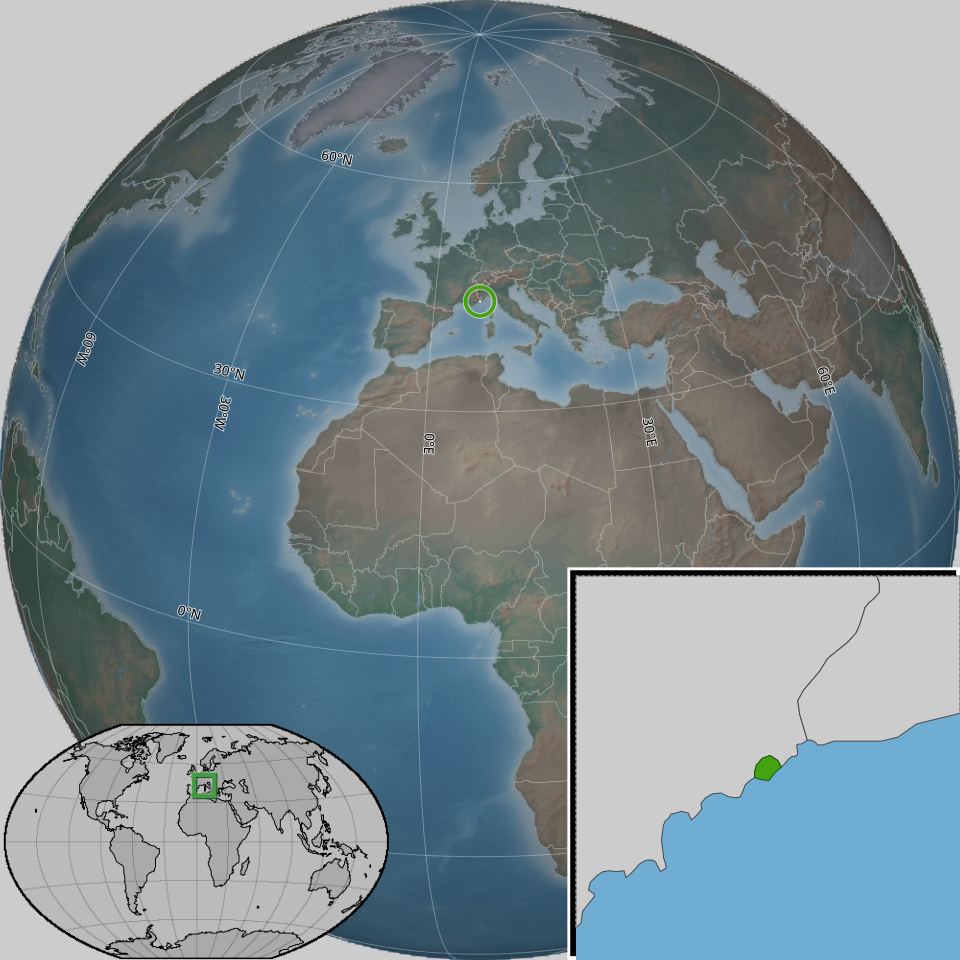
Business and Investment: Inside the Principality’s Commercial Engine
While the World Bank data remains silent on Monaco’s corporate landscape, the Principality’s business environment is defined by its status as a tax haven for the wealthy and a headquarters for companies seeking a prestigious European address. The absence of published data on major companies reflects the private nature of many Monégasque enterprises, which often operate through structures designed to minimise public disclosure.
The sectors that thrive in Monaco — wealth management, luxury retail, maritime services, and high-end real estate — are those that benefit from the country’s reputation for discretion and security.
The business climate in Monaco is shaped by its political stability and its unique relationship with France, which has evolved significantly since the constitutional amendments of 2002. The ability to appoint a Monégasque Minister of State, rather than being required to accept a French citizen, has given the Principality greater autonomy in shaping its economic policies.
This political evolution suggests a business environment that is becoming more independent while still maintaining the stability that has made Monaco a safe haven for capital for over a century.
Safety, Sovereignty, and the Monégasque Quality of Life
Monaco’s political landscape represents a fascinating blend of tradition and adaptation, with the Sovereign Prince maintaining significant authority while a Minister of State handles day-to-day governance. The 2002 constitutional amendment marked a watershed moment in the Principality’s modern history, fundamentally altering its relationship with France and asserting a greater degree of national sovereignty.
This political evolution has occurred without sacrificing the stability that makes Monaco one of the safest jurisdictions in Europe, with a security apparatus that reflects both the country’s wealth and its commitment to protecting that wealth.
The quality of life in Monaco is inextricably linked to its political system, which combines the ceremonial continuity of monarchy with the practical efficiency of a professional civil service. The Council of Government, comprising the Minister of State and five other members, operates with a efficiency that larger democracies often envy, making decisions that would require lengthy parliamentary processes elsewhere.
For residents, this translates into a predictable, secure environment where the rule of law is applied consistently and where the state’s primary function is understood to be the preservation of the Monégasque way of life.
Current Affairs: Navigating Modern Challenges in an Ancient Framework
As 2026 unfolds, Monaco finds itself at an interesting crossroads, balancing its historical traditions against the pressures of modern global finance and European integration. The constitutional changes of 2002 continue to shape the Principality’s evolution, with each successive Minister of State — whether French or Monégasque — helping to define what greater sovereignty means in practice.
The country’s relationship with international financial regulators remains a topic of ongoing interest, as global pressure for transparency in tax matters continues to mount.
The World Bank’s lack of current economic data for Monaco is itself a story, raising questions about how the Principality will navigate an era of increasing international scrutiny and demands for economic transparency. Monaco’s response to these pressures will likely define its economic trajectory for the next decade, as it seeks to maintain its appeal to global wealth while adapting to changing international norms.
The Principality’s ability to evolve while preserving its essential character — a delicate dance between tradition and modernity — remains its most defining characteristic.
The Bottom Line
Monaco deserves attention not despite its statistical opacity but because of it — the Principality represents a successful alternative economic model that has flourished outside the conventions of mainstream international reporting. Investors and observers should watch Monaco for its political evolution, particularly how the post-2002 constitutional framework continues to reshape its relationship with France and Europe.
For students of economic governance, Monaco offers a fascinating case study in how stability, exclusivity, and political continuity can create prosperity even when conventional metrics are unavailable. The Principality’s future will be determined by its ability to maintain its unique character while engaging with a world that increasingly demands transparency — a challenge that will test the resilience of its ancient institutions in modern times.
Sources & Methodology
This article is authored by Economic Pulse Net for informational and research purposes. Economic Pulse Net sources its data from multilateral institutions, national statistics bureaus, and proprietary databases. All data is believed to be current as of the date of publication.
Published: August 14, 2026 | Category: Research — Monaco
Use these signals in your own platform
Economic Pulse publishes its live signal feed through a documented, read-only API. Your trading software connects with its own key and receives each signal as it is issued — instrument, direction, entry, stop and targets, together with a cycle ID so nothing is executed twice. The feed is independent of this website and cannot change it.
Signals are informational only and are not financial advice.