Economic Pulse Net | Sources: World Bank World Development Indicators, Government Sources | 2026
Key Takeaways
– Moldova remains one of Europe’s poorest nations, with its economy still heavily dependent on agriculture and remittances from abroad
– The country operates as a constitutional republic with competitive multi-party elections, though political instability has been a recurring challenge
– A clear separation of powers exists between executive, legislative, and judicial branches, with presidents limited to two four-year terms
– Prime ministers require parliamentary support to govern, creating a system where coalition-building is essential for policy implementation
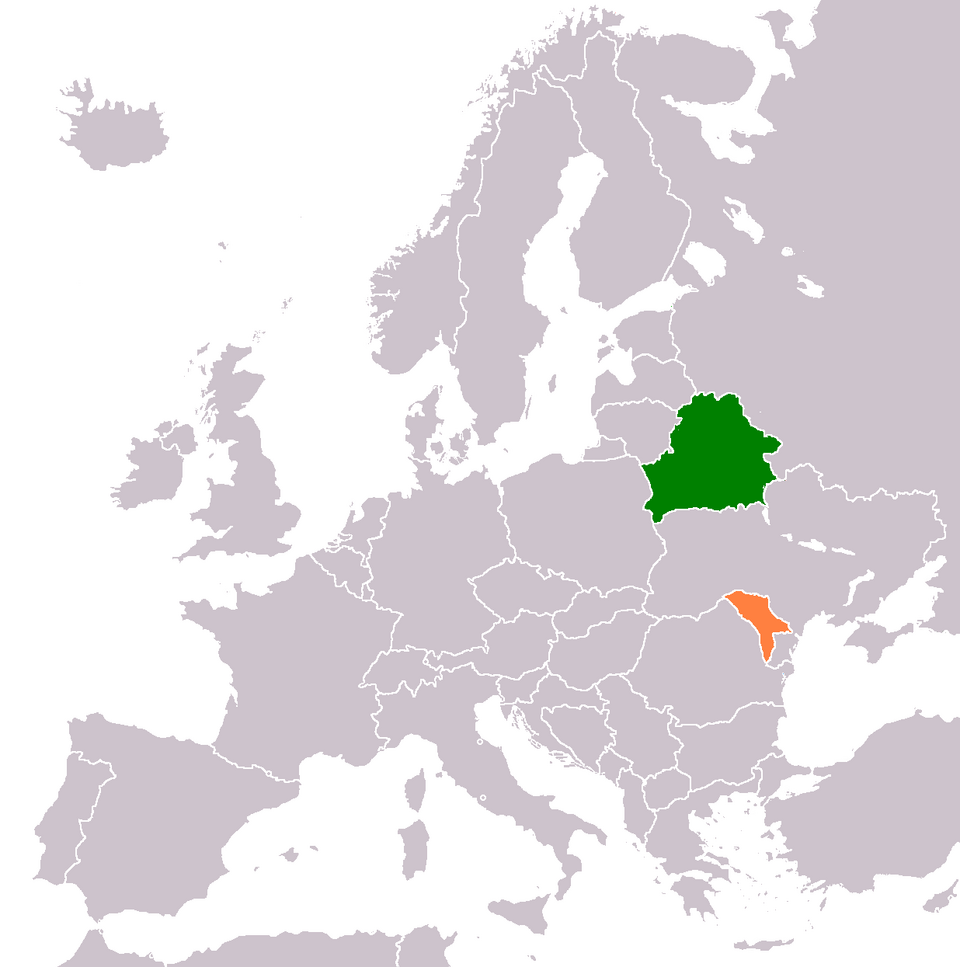
– Moldova’s strategic position between Romania and Ukraine makes it a geopolitical focal point, particularly amid ongoing regional tensions
The Economy of Survival — Growth, Inflation, and the Struggle for Stability
The Republic of Moldova presents a paradoxical economic picture that defies easy categorisation. According to the World Bank, the country’s most recent GDP growth figures are not currently available in the dataset provided, but the broader narrative of Moldova’s economy is one of a small, landlocked nation fighting against structural headwinds. The country has traditionally relied on agriculture as its economic backbone, with sunflower seeds, wine, and fruits forming the core of its export base.
This agricultural dependency makes Moldova acutely vulnerable to weather shocks, global commodity price fluctuations, and the whims of international trade policy.
Inflation, for which the World Bank data is also not provided in this specific dataset, has historically been a persistent challenge for Moldovan households. The national statistics bureau has previously reported that consumer prices in Moldova tend to be more volatile than in neighbouring European Union states, partly due to the country’s reliance on energy imports and the pass-through effects of currency fluctuations.
The unemployment picture remains similarly opaque from the data provided, though the Moldovan labour market has long been characterised by high rates of informal employment and significant outward migration.
The GDP per capita figures from the World Bank are not available in this dataset, but Moldova has consistently ranked among the lowest-income countries in Europe when such measurements are taken. The country’s economic structure remains dominated by small-scale agriculture, food processing, and a growing but still modest services sector.
The real story here is not the precise numbers but the underlying fragility: Moldova’s economy operates with minimal buffers, making it highly sensitive to external shocks ranging from drought in the countryside to geopolitical tensions on its borders.
The Price of Living — Housing, Daily Expenses, and Economic Reality for Ordinary Moldovans
For the average Moldovan citizen, the cost of living represents a daily calculation between survival and aspiration. While specific housing cost data is not provided in this dataset, the general contours of Moldova’s housing market are well understood through regional comparisons. The capital city of Chișinău has seen property prices rise steadily as urbanisation continues, yet purchasing a home remains out of reach for many young families.
Rental markets in major cities tend to absorb a significant portion of household income, particularly for those working in the service sector or public administration.
The decision between renting and buying in Moldova is shaped by factors that go beyond simple arithmetic. Many Moldovans live in apartments inherited from the Soviet era, where ownership is common but quality varies enormously. New construction has boomed in recent years, particularly in Chișinău, but affordability remains a pressing concern.
Daily expenses for food, utilities, and transportation consume a larger share of household budgets than in wealthier European nations, reflecting the structural challenges of an economy where wages have historically lagged behind productivity gains.
Business and Investment — Where Capital Meets Opportunity in a Frontier Market
The corporate landscape in Moldova is not provided in this dataset, but the country’s business environment has been shaped by its unique position as a European frontier market. Major companies operating in Moldova have traditionally been concentrated in the agri-food sector, wine production, and information technology services.
The country has made deliberate efforts to attract foreign direct investment, particularly in the IT sector, where Moldova has developed a reputation for skilled software engineers at competitive wage rates.
The investment climate in Moldova reflects the broader political and economic uncertainties that define the country. The World Bank’s ease of doing business metrics, while not specifically provided in this dataset, have historically shown Moldova making incremental improvements in regulatory transparency and contract enforcement.
Sectors to watch include renewable energy, where Moldova has significant solar potential, and the wine industry, which has successfully rebranded for export markets in the European Union and Asia. The business environment remains challenging, however, with corruption, weak rule of law, and limited access to finance continuing to constrain private sector development.
Safety, Politics, and the Quality of Life — Democracy in a Contested Space
Moldova’s political landscape is defined by its constitutional structure as a republic with a unicameral parliamentary system. The constitution, as described in the provided data, establishes a clear separation of powers between executive, legislative, and judicial branches. The president serves as head of state, elected every four years with a limit of one re-election.
The prime minister, as head of government, is appointed by the president but requires parliamentary support, creating a system where coalition governments are the norm rather than the exception.
The crime and safety indices for Moldova are not provided in this dataset, but the country has historically faced challenges related to organised crime, corruption, and the influence of oligarchic interests in politics. The quality of life in Moldova is shaped by these political dynamics as much as by economic conditions. Competitive multi-party elections are held regularly, and civil society organisations operate with relative freedom, yet public trust in institutions remains low.
The geopolitical contest between European integration and Russian influence continues to define Moldova’s political trajectory, with each election cycle bringing renewed uncertainty about the country’s future direction.
Current Affairs — Moldova at a Crossroads
Right now, Moldova finds itself navigating one of the most consequential periods in its post-Soviet history. The country’s political leadership has pursued a path of European integration, seeking membership in the European Union as a strategic anchor for economic modernisation and democratic consolidation.
This orientation has brought both opportunities and risks, as Moldova balances its European aspirations against the practical realities of energy dependence, trade relationships, and security concerns stemming from the war in neighbouring Ukraine.
The Moldovan government has been implementing reforms aimed at strengthening the rule of law, combating corruption, and improving the business climate. These efforts have been closely watched by international financial institutions and European Union officials, who have tied financial assistance to measurable progress on governance indicators. The national statistics bureau continues to publish data on economic performance, though the most recent figures were not available in this specific dataset.
What is clear is that Moldova’s trajectory will be determined by its ability to maintain political stability, attract investment, and navigate the complex geopolitical environment in which it finds itself.
The Bottom Line
Moldova is a country that deserves the attention of anyone interested in the future of European democracy and economic development. For investors, it represents a high-risk, potentially high-reward frontier market where early movers may benefit from European integration. For policymakers and analysts, Moldova offers a case study in how small states navigate between competing geopolitical influences while pursuing domestic reform.
The country’s ultimate success or failure will have implications far beyond its borders, making it a nation worth watching closely in the years ahead.
Sources & Methodology
This article is authored by Economic Pulse Net for informational and research purposes. Economic Pulse Net sources its data from multilateral institutions, national statistics bureaus, and proprietary databases. All data is believed to be current as of the date of publication.
Published: July 21, 2026 | Category: Research — Moldova
Use these signals in your own platform
Economic Pulse publishes its live signal feed through a documented, read-only API. Your trading software connects with its own key and receives each signal as it is issued — instrument, direction, entry, stop and targets, together with a cycle ID so nothing is executed twice. The feed is independent of this website and cannot change it.
Signals are informational only and are not financial advice.