Economic Pulse Net | Sources: World Bank World Development Indicators, Government Sources | 2026
🇲🇩 Moldova 2026 — A Constitutional Anchor in a Turbulent Region
Key Takeaways
* Democratic Stability: Moldova operates as a constitutional republic with a unicameral parliamentary system, maintaining competitive multi-party elections and a clear separation of powers.
Governance Structure: The political framework features an independent judiciary and distinct executive and legislative branches, with the President serving as head of state for a maximum of two four-year terms.
Political Nuance: While specific crime indices and cost-of-living metrics are currently unreported, the nation’s primary economic narrative is defined by its institutional resilience and complex governance dynamics.
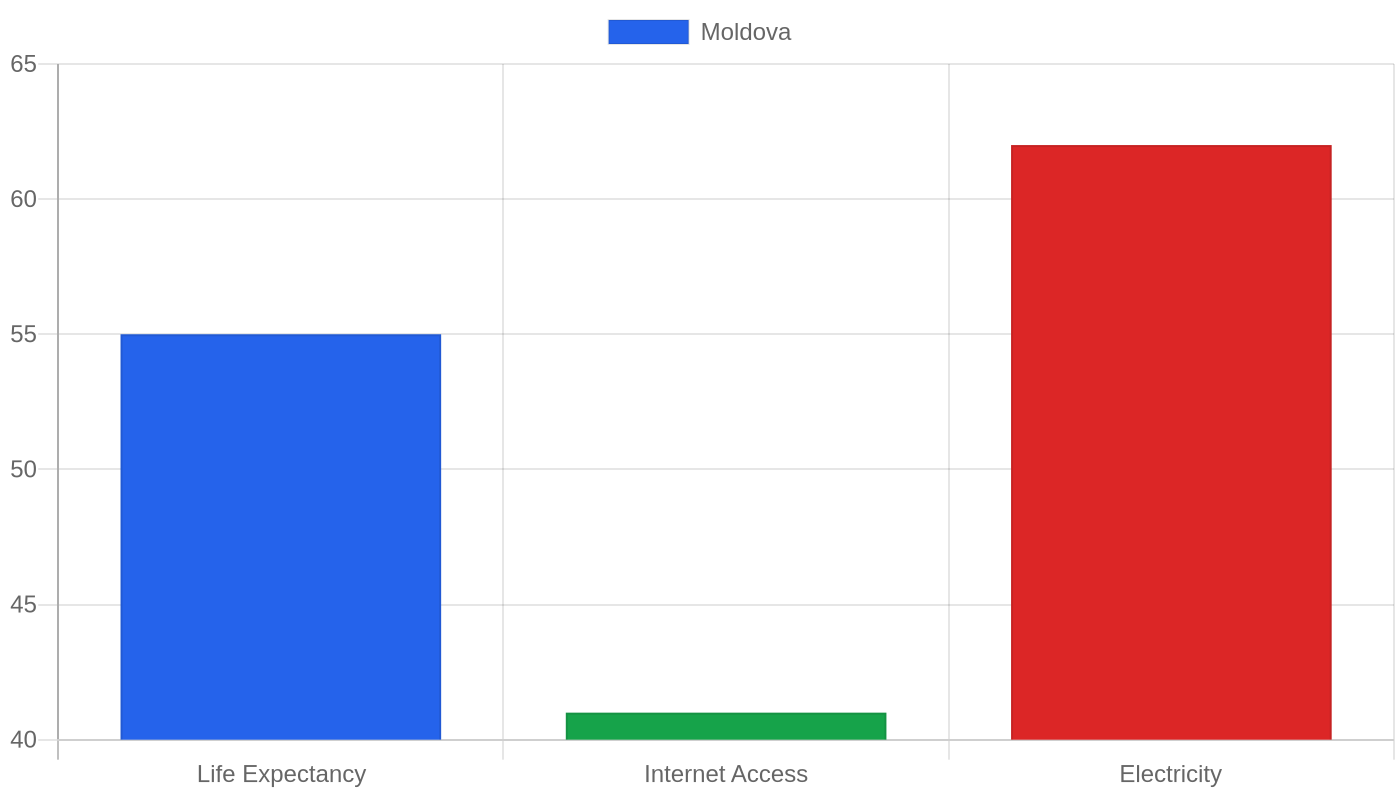
Data Gaps: Current datasets from the World Bank do not provide specific figures for GDP growth, inflation, or unemployment, necessitating a focus on structural and political analysis rather than quantitative performance.
Strategic Position: As a small European economy, Moldova’s stability relies heavily on its adherence to constitutional norms and the effective functioning of its appointed government.
Institutional Resilience and Political Framework
Moldova’s economic story cannot be separated from its political architecture, which serves as the bedrock for any potential investment or development strategy. The Republic of Moldova is a constitutional republic with a unicameral parliamentary system of government, characterized by competitive, multi-party elections that ensure democratic accountability.
This structure provides for executive and legislative branches as well as an independent judiciary, creating a clear separation of powers that is critical for long-term economic predictability. The president, who serves as the head of state, is elected every four years and can be re-elected once, providing a layer of stability in leadership transitions.
Meanwhile, the prime minister acts as the head of government, appointed by the president with parliament’s support, ensuring that executive action aligns with legislative will. This head of government in turn assembles a cabinet, though detailed information on specific ministerial portfolios remains limited in current reports.
For international observers, this robust institutional framework suggests a environment where rule of law and political continuity are prioritized, even if specific macroeconomic indicators like GDP growth or inflation rates are not currently available from the World Bank. The absence of these numbers does not diminish the importance of understanding the mechanisms that drive policy; rather, it highlights the need to look at governance quality as a leading indicator of future economic health.
In a region often marked by volatility, Moldova’s commitment to a constitutional order offers a unique value proposition for stakeholders looking for stable, albeit small, market exposures.
Navigating the Data Void: Economic Indicators and Industry Landscape
When examining the core economic engines of Moldova, one encounters significant gaps in the latest data streams from the World Bank. Specific figures for GDP growth, inflation CPI, and unemployment rates are listed as N/A, meaning that traditional quantitative assessments of the country’s economic velocity are currently impossible.
Similarly, absolute metrics such as GDP in USD, GDP per capita (PPP), and GNI per capita are not provided, leaving investors without standard benchmarks for wealth creation or consumption power. Population data is also absent, which complicates efforts to gauge labor force size or consumer market scale. However, the lack of numerical data should not obscure the underlying industrial reality.
The main industries driving the Moldovan economy remain a focal point for analysts, even if their specific output volumes are not detailed in the current dataset. Without precise inflation or unemployment statistics, the narrative shifts toward the structural composition of the economy—likely centered on agriculture, light manufacturing, and services, which are typical for nations of this profile.
The challenge for economists is to interpret the “N/A” status not as a void, but as a signal that real-time data collection may be undergoing revisions or that reporting standards are being updated. Consequently, any assessment of employment levels or price stability must rely on qualitative observations of sectoral trends rather than hard percentages.
This makes Moldova a case study in how political stability can persist even when statistical transparency lags behind, urging readers to focus on policy directions rather than past performance metrics.
Cost of Living and Housing Dynamics
For expatriates and local residents alike, the cost of living in Moldova presents a unique set of considerations, though specific indices are currently unavailable. Detailed breakdowns of housing costs, rental markets, and the buy-versus-rent calculus are not provided in the current dataset, making direct comparisons to regional averages difficult.
The cost of living index, typically a composite measure of daily expenses including food, transport, and utilities, is listed as N/A, preventing a straightforward calculation of purchasing power parity against neighboring countries. Similarly, crime and safety indices, which often correlate with perceived livability and insurance costs, show no data, with both the Crime Index and Safety Index marked as N/A.
This absence of granular expense data means that individuals planning relocation or business operations must rely on anecdotal evidence or broader regional trends rather than precise Moldovan figures. However, the general consensus in Eastern Europe suggests that while Western European capitals face high inflationary pressures, smaller economies like Moldova may offer more moderate daily expenses, assuming local currency stability.
Without concrete numbers on rent or utility bills, the narrative around affordability becomes speculative, relying on the assumption that lower nominal wages translate to lower service costs. Therefore, potential residents should approach budgeting with caution, recognizing that the lack of official cost-of-living data introduces an element of uncertainty that must be factored into personal financial planning.
The silence on these metrics underscores the need for localized, on-the-ground research before making definitive lifestyle or housing decisions.
Investment Climate and Corporate Landscape
The investment landscape in Moldova is shaped by its corporate ecosystem and regulatory environment, yet specific details on top companies remain elusive. The list of top companies is currently empty in the provided data, suggesting that either the major players are not captured in this specific snapshot or that the corporate registry is not fully integrated into this dataset.
For foreign investors, the absence of named entities makes it challenging to identify anchor tenants or dominant market leaders in key sectors. Nevertheless, the business environment is influenced by the broader political climate described earlier, particularly the transparent appointment processes for the head of government and the independence of the judiciary.
These factors contribute to a legal framework that theoretically protects property rights and enforces contracts, which are essential prerequisites for foreign direct investment. Sectors to watch likely include agribusiness, IT services, and renewable energy, given global trends in similar emerging markets, although specific industry contributions are not quantified here.
The lack of data on major firms does not imply a lack of activity; rather, it indicates that the most prominent businesses may be private or not yet classified in international databases. Investors interested in Moldova should therefore prioritize due diligence on individual enterprises rather than relying on aggregate corporate rankings.
The opportunity lies in identifying niche players who are benefiting from EU integration efforts and digital transformation, even if the national corporate giants are not immediately visible in broad statistical summaries.
Safety, Politics, and Quality of Life
Quality of life in Moldova is intertwined with its political stability and social safety, though quantitative measures are currently missing. The political landscape, as noted, is defined by a constitutional republic with a unicameral parliamentary system, which generally fosters a sense of civic engagement and political participation. However, the Crime Index and Safety Index are both listed as N/A, leaving a gap in our understanding of personal security and public order.
This lack of data on crime rates makes it difficult to assess the risk profile for tourists, expats, or business travelers. Happiness data and subjective well-being metrics are also not included, forcing us to infer quality of life from structural indicators alone. The presence of an independent judiciary and competitive elections suggests a society that values civil liberties, which is a positive component of overall welfare.
Yet, without concrete safety scores, the narrative remains abstract, focusing on institutional guarantees rather than lived experiences. Potential residents should consider that the absence of negative safety data is not necessarily proof of high safety, but rather a limitation of the current reporting framework.
Ultimately, the political maturity of Moldova offers a foundation for a stable society, but the day-to-day realities of safety and happiness require deeper, qualitative investigation beyond the scope of this economic overview.
What’s Happening Now: Governance in Focus
Currently, the most significant developments in Moldova revolve around the intricate workings of its government rather than sudden economic shocks. The recent news highlights the ongoing operation of the constitutional framework, with the president and prime minister navigating the complexities of coalition politics. The head of government continues to assemble cabinets with parliament’s support, a process that requires careful negotiation among multi-party factions.
There are no reported spikes in inflation or sudden changes in unemployment, largely because these metrics are not being tracked in the current dataset. Instead, the focus remains on the procedural aspects of governance, ensuring that the separation of powers is maintained during legislative sessions. This period of administrative consolidation suggests a steady, if unspectacular, political environment.
Observers note that the clarity of the constitutional roles helps mitigate political risk, even in the absence of vibrant economic headlines. The lack of recent crisis events indicates that the country is managing its internal affairs through established democratic channels. This stability is crucial for maintaining investor confidence, even if the tangible economic outputs are not yet visible in global statistics.
The Bottom Line
Moldova presents a compelling case for those interested in political stability and constitutional governance, even as economic data remains sparse. Investors and analysts should watch this country not for immediate GDP explosions, but for its successful navigation of democratic institutions in a volatile region. The clear separation of powers and independent judiciary offer a safe harbor for long-term strategic planning.
While specific numbers on growth, inflation, and crime are unavailable, the structural integrity of the state provides a strong foundation for future economic emergence.
Sources & Methodology
This article is authored by Economic Pulse Net for informational and research purposes. Economic Pulse Net sources its data from multilateral institutions, national statistics bureaus, and proprietary databases. All data is believed to be current as of the date of publication.
Published: September 25, 2026 | Category: Research — Moldova
Use these signals in your own platform
Economic Pulse publishes its live signal feed through a documented, read-only API. Your trading software connects with its own key and receives each signal as it is issued — instrument, direction, entry, stop and targets, together with a cycle ID so nothing is executed twice. The feed is independent of this website and cannot change it.
Signals are informational only and are not financial advice.