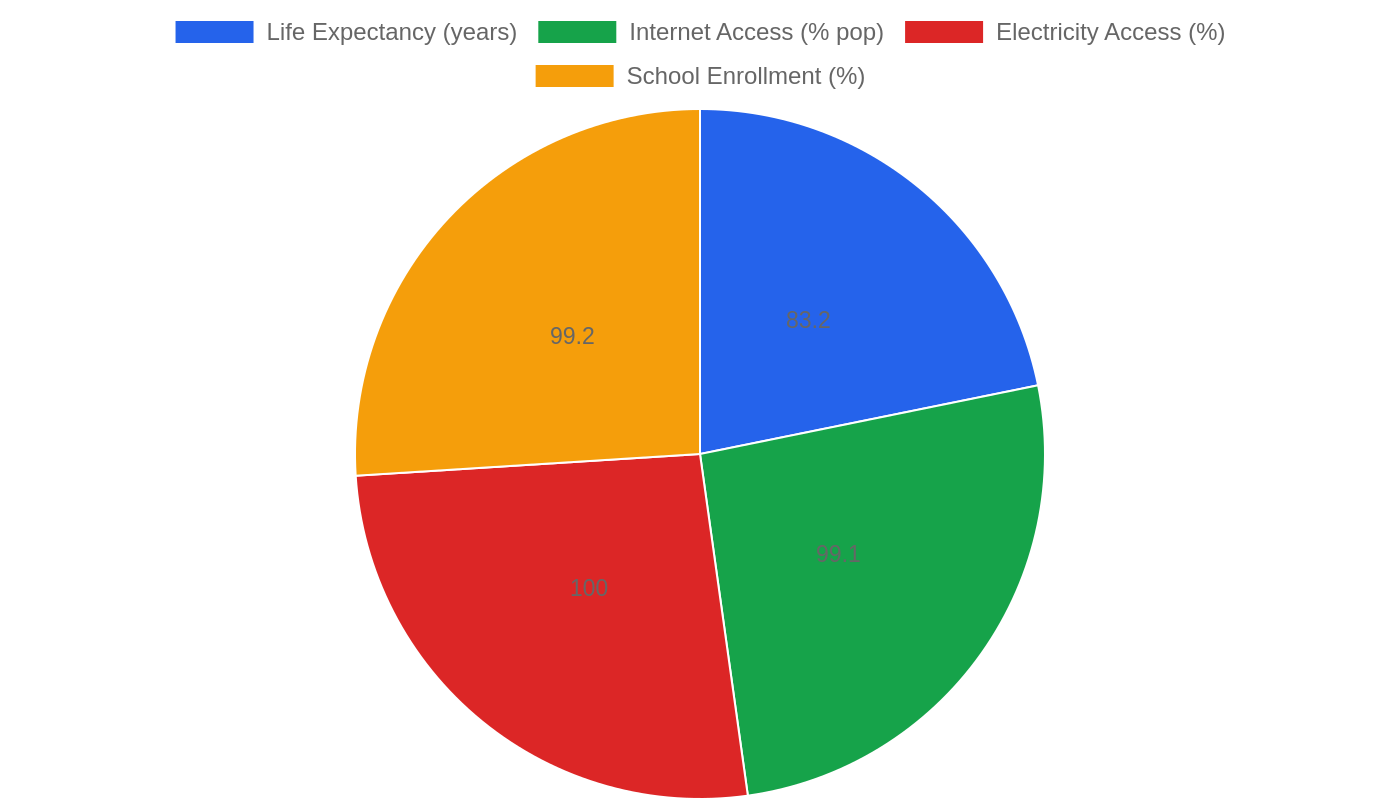
Economic Pulse Net | Sources: World Bank World Development Indicators, Government Sources | 2026
Key Takeaways
* Political Resilience: Luxembourg operates as a full parliamentary democracy with a constitutional monarchy, anchored by a constitution that remains the supreme law of the land, recently updated in July 2023.
Financial Dominance: The economy is heavily weighted toward financial services, evidenced by a robust roster of major banking institutions including Advanzia Bank, BGL BNP Paribas, and the state-owned Banque et Caisse d’Épargne de l’État.
Industrial Diversification: Beyond finance, key industrial players like ArcelorMittal and Aperam demonstrate strength in basic materials, while technology firms such as Artec 3D signal innovation in advanced manufacturing.
Data Transparency Gaps: Current World Bank metrics for GDP growth, inflation, unemployment, and per capita income are not available, requiring investors to rely on structural indicators rather than immediate macroeconomic snapshots.
High-Quality Environment: While specific crime and safety indices are currently unlisted, the political framework suggests a stable environment conducive to long-term business operations.
Economic Structure: Behind the Missing Numbers
While precise World Bank figures for GDP growth, inflation, and unemployment remain unavailable for the latest reporting period, the structural composition of Luxembourg’s economy reveals a nation defined by specialization rather than broad-based mass production. The absence of specific GDP or GNI per capita data does not obscure the reality that this is one of the world’s most developed economies, where value is generated through high-margin sectors rather than volume.
The economic engine is clearly fueled by its status as a global financial hub, supported by a dense network of established banks such as Banque Raiffeisen and BIP Investment Partners. This financial infrastructure acts as a stabilizer, allowing the country to maintain economic coherence even when broader macroeconomic indicators are opaque.
Furthermore, the presence of major industrial entities like Arcelor (now part of ArcelorMittal) and Aperam indicates that the economy retains a solid backbone in basic materials, providing diversification beyond pure finance. Understanding Luxembourg requires looking at these institutional pillars; the lack of current CPI or population statistics means analysts must focus on the quality of industries rather than the quantity of output.
The resilience of this model lies in its ability to attract capital and talent, creating an economic ecosystem that thrives on expertise and regulatory stability rather than sheer scale.
Cost of Living: The Price of Premium Status
For residents and expatriates, Luxembourg presents a cost structure that reflects its status as a premium European destination. Although specific housing cost data and daily expense metrics are not explicitly detailed in the provided dataset, the concentration of top-tier multinational companies and financial institutions implies a market with high wage levels and correspondingly elevated living standards.
The demand for quality of life in such a politically stable and economically powerful jurisdiction typically drives up real estate values and consumer prices relative to regional averages. Individuals relocating for positions at firms like BGL BNP Paribas or ArcelorMittal should anticipate a cost environment that prioritizes security, efficiency, and convenience over affordability.
The economic profile suggests that while entry costs may be higher, the purchasing power parity for skilled professionals often compensates for these expenses through competitive compensation packages. Without explicit rent-to-income ratios or CPI breakdowns, the general inference is that Luxembourg operates on a “high-cost, high-reward” model typical of major global financial centers.
Prospective residents must therefore budget with an understanding that they are paying for access to one of Europe’s most secure and well-connected urban environments.
Investment & Business Climate: A Hub of Innovation and Industry
The investment landscape in Luxembourg is characterized by a dual strength in traditional finance and emerging technology. The list of top companies highlights a mature financial sector dominated by institutions like Advanzia Bank, Banque de Luxembourg, and the state-backed Banque et Caisse d’Épargne de l’État, which provide deep liquidity and trust for international capital.
However, the presence of Artec 3D in the technology sector signals that the country is actively fostering innovation in advanced manufacturing and digital solutions, offering investors exposure beyond conventional banking. In the basic materials sector, the prominence of ArcelorMittal and Aperam underscores Luxembourg’s historical and ongoing role in industrial supply chains, particularly in steel and metal processing.
This diversity allows businesses to find niches ranging from fintech integration to sustainable industrial practices. The business environment is further supported by a clear legal framework, ensuring that corporate structures are protected under the supreme law of the land. For foreign direct investment, the key takeaway is that Luxembourg offers a hybrid appeal: the safety of a regulated financial center combined with the dynamism of specialized industrial and tech enterprises.
Companies looking to establish a European foothold benefit from this blend of financial depth and industrial capability.
Safety, Politics & Quality of Life: Stability as a Product
Luxembourg’s political architecture provides a bedrock of stability that serves as a significant non-economic asset for its residents and businesses. Described as a “full democracy,” the country features a parliamentary system headed by a constitutional monarch, with executive power vested in the Grand Duke and a cabinet led by a Prime Minister.
This system ensures checks and balances through a constitution that was originally adopted in 1868 but remains a living document, having been last updated on July 1, 2023, to reflect modern governance needs. While specific crime and safety indices are currently listed as N/A, the nature of this political setup—characterized by transparency and rule of law—typically correlates with low crime rates and high public safety.
The continuity of government and the recent constitutional updates suggest a society that values order and legal clarity, reducing political risk for long-term planning. For quality of life, the combination of democratic participation and strong institutional frameworks creates an environment where citizens and expats alike can expect predictable governance. This political maturity is perhaps the most valuable export of Luxembourg, offering peace of mind that is increasingly rare in volatile global markets.
What’s Happening Now: Constitutional Evolution and Institutional Continuity
The most significant current development in Luxembourg is the refinement of its foundational legal structures, marked by the update to the Constitution on July 1, 2023. This recent amendment demonstrates the government’s commitment to keeping its supreme law relevant and responsive to contemporary challenges, even if it does not immediately alter day-to-day economic operations.
In the business realm, the active engagement of major players like ArcelorMittal and various banking giants indicates that the core engines of the economy continue to operate without disruption. There are no reported sudden policy shifts or crises; instead, the narrative is one of steady institutional maintenance and strategic positioning within the European single market.
The continued prominence of firms like BIP Investment Partners and Artec 3D suggests that capital flows and technological adoption remain healthy priorities for policymakers. As the country navigates the post-2023 constitutional era, the focus appears to be on sustaining its reputation as a reliable, transparent, and legally sound jurisdiction.
This period of consolidation allows stakeholders to operate with confidence, knowing that the political and legal frameworks are being actively maintained rather than left to stagnation.
The Bottom Line
Luxembourg stands out not for explosive growth metrics, which are currently unavailable, but for its unwavering structural integrity and political stability. Investors and residents should view it as a safe harbor for capital and talent, particularly those seeking exposure to European finance and advanced industry. The recent constitutional updates reinforce its commitment to modern governance, making it a low-risk, high-quality destination for long-term engagement.
For those prioritizing security, legal clarity, and established corporate networks over rapid, speculative gains, Luxembourg remains a premier choice.
Sources & Methodology
This article is authored by Economic Pulse Net for informational and research purposes. Economic Pulse Net sources its data from multilateral institutions, national statistics bureaus, and proprietary databases. All data is believed to be current as of the date of publication.
Published: October 05, 2026 | Category: Research — Luxembourg
Use these signals in your own platform
Economic Pulse publishes its live signal feed through a documented, read-only API. Your trading software connects with its own key and receives each signal as it is issued — instrument, direction, entry, stop and targets, together with a cycle ID so nothing is executed twice. The feed is independent of this website and cannot change it.
Signals are informational only and are not financial advice.