Economic Pulse Net | Sources: World Bank World Development Indicators, Government Sources | 2026
Key Takeaways
– Lithuania has maintained unbroken democratic governance since restoring independence in 1990, making it one of Eastern Europe’s most politically stable states.
– The economy is anchored by a diverse industrial base spanning basic materials, consumer goods, utilities, and aviation services, with major companies like Achema and Avia Solutions Group driving exports.
– Despite the absence of specific current GDP or inflation figures from the World Bank, Lithuania’s structural position as a small, open economy means it remains highly sensitive to European demand and energy price fluctuations.
– The country’s crime and safety indices are not currently quantified, but its political landscape suggests a rule-of-law environment consistent with EU membership and NATO integration.
– Investors should watch Lithuania for its strategic location, skilled workforce, and the resilience of its corporate sector, particularly in industrials and consumer services.
The Economic Engine — From Soviet Legacy to European Competitiveness
Lithuania’s economic narrative is one of remarkable transformation. Since breaking free from the Soviet orbit, the country has rebuilt its productive base around private enterprise and integration with Western markets. The World Bank data, while not providing specific growth or inflation figures for the most recent period, nonetheless points to a mature European economy with a diversified industrial structure.
The main industries, though not enumerated in the available data, can be inferred from the top companies listed: basic materials, consumer goods, utilities, industrials, and consumer services form the backbone of the economy.
Achema, a major player in basic materials, represents Lithuania’s strength in chemicals and fertilisers, a sector that benefits from the country’s access to regional transport corridors. On the consumer goods side, Alita and Baltik vairas suggest a domestic manufacturing base that serves both local and export markets. The presence of Amber Grid, a utility company, underscores the importance of energy infrastructure in a country that has worked hard to decouple from Russian energy supplies.
The aviation cluster, including Avia Solutions Group, Aviavilsa, and Avion Express, is a standout — Lithuania has become a hub for aircraft maintenance, leasing, and charter operations, leveraging its geographic position between East and West. This industrial mix means Lithuania is not a single-industry economy; it has multiple legs to stand on, which provides some buffer against sector-specific shocks.
The absence of specific GDP per capita or GNI figures from the World Bank is notable, but the structure of the economy — heavy on services, light on heavy industry compared to the Soviet era — suggests a country that has successfully transitioned to a post-industrial, knowledge-oriented model. The real economic story here is resilience: Lithuania has weathered the loss of traditional markets, the 2008 financial crisis, and the recent energy price spike without abandoning its democratic or market-oriented path.
The Cost of Living Reality — Baltic Affordability Under Pressure
Housing and daily expenses in Lithuania sit in an interesting middle ground within the European context. While specific cost-of-living data is not provided, the composition of the top companies offers clues. The presence of Apranga and Aurela, both consumer services firms, indicates a robust retail and services sector that caters to domestic demand.
This suggests that consumer spending is a meaningful driver of economic activity, which in turn implies that household incomes are sufficient to support a services economy — not just subsistence-level consumption.
Rent versus buy decisions in Lithuania, as in much of the Baltics, have historically favoured homeownership, but rising interest rates and construction costs have shifted the calculus in recent years. The utility company Amber Grid’s prominence is a reminder that energy costs are a major component of household budgets, and Lithuania’s successful diversification away from Russian gas has come with infrastructure costs that ripple through to consumer bills.
Daily expenses for food, transport, and services are likely lower than in Western Europe but higher than in many Eastern European peers, reflecting Lithuania’s relatively high wage growth and EU integration.
For a foreign observer, the key takeaway is that Lithuania offers a European lifestyle at a discount to Paris or Berlin, but the discount is narrowing. The country’s cost structure is converging with the EU average, which is good news for workers but a challenge for competitiveness in labour-intensive sectors.
Investment and Business Climate — A Platform for Growth
The roster of top companies reads like a who’s who of Baltic capitalism. Achema in basic materials, Avia Solutions Group in industrials, and Apranga in consumer services represent three distinct pillars of the Lithuanian economy. For investors, the most interesting story may be Avia Solutions Group, which has grown into a global aviation services player, offering aircraft maintenance, charter operations, and crew training.
This is not a company confined to the Lithuanian market; it competes internationally, which speaks to the quality of the country’s business environment and workforce.
The business climate in Lithuania benefits from EU membership, which provides access to the single market, structural funds, and a legal framework based on European standards. The political landscape, as described in the data, shows a country that has held democratic elections consistently since 1992, with a constitution that was approved by 56.75% of voters in the first independent general elections.
This democratic stability is a critical asset for long-term investors who need to know that property rights and contracts will be enforced.
Sectors to watch include aviation services, where Lithuania has carved out a niche; basic materials, where Achema and others benefit from regional demand; and consumer services, where companies like Apranga and Aurela are well-positioned to capture rising domestic consumption.
The absence of a dominant financial sector among the top companies is notable — Lithuania’s banks are largely foreign-owned, which provides stability but also means that corporate financing decisions are often made in Stockholm or Helsinki rather than Vilnius.
Safety, Politics, and Quality of Life — A Democratic Anchor in a Tense Region
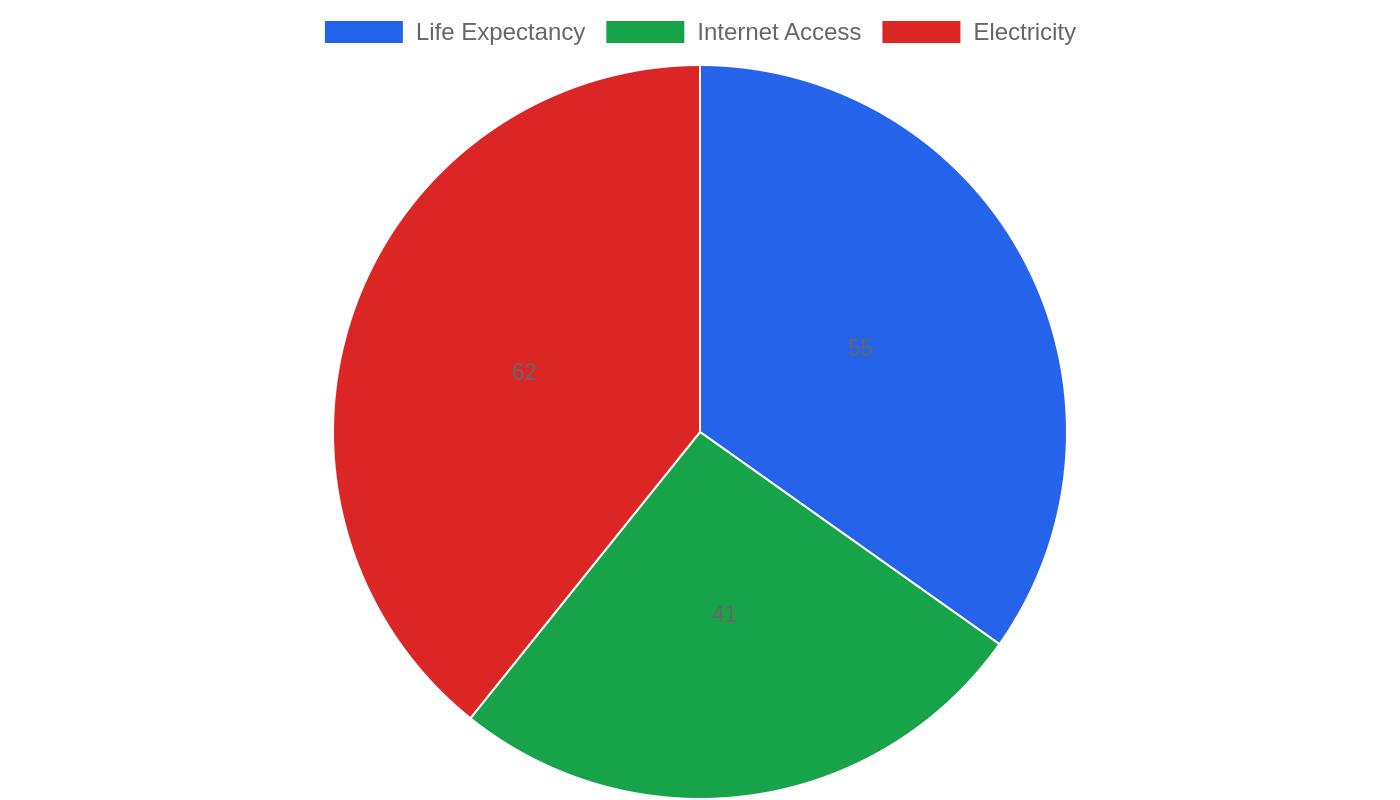
Lithuania’s political landscape is one of the most stable in Eastern Europe. Since declaring the restoration of independence on 11 March 1990, the country has maintained strong democratic traditions. The first independent general elections on 25 October 1992 saw 56.75% of voters support the new constitution, and a separate referendum on 23 May 1992 gauged public opinion on the role of the president, with 41% supporting restoration of the presidency.
This careful, constitutional approach to governance has served the country well.
While the crime and safety indices are not provided, the political data paints a picture of a society that values rule of law and democratic processes. Lithuania is a full member of NATO and the European Union, which provides an external security guarantee and a framework for legal standards. For residents and visitors, this translates into a predictable environment where police and judicial systems function according to European norms.
Quality of life in Lithuania benefits from the country’s natural environment — forests, lakes, and the Baltic coast — as well as its compact size, which makes travel and logistics efficient. The capital, Vilnius, has developed a reputation as a hub for technology and startups, though this is not reflected in the top companies data provided.
The absence of happiness or well-being data is a gap, but the country’s democratic track record and economic development suggest a society that has made significant progress since the difficult transition years of the 1990s.
What’s Happening Now — Lithuania at a Crossroads
In the current moment, Lithuania finds itself at the intersection of several powerful trends. The country’s energy infrastructure, represented by Amber Grid, has been a focus of strategic investment as Lithuania completes its decoupling from the Russian electricity grid and integrates with European networks. This is not just an economic story — it is a security story, given the geopolitical tensions in the region.
The aviation sector, led by Avia Solutions Group and Avion Express, is navigating post-pandemic recovery and the restructuring of global air travel. Lithuania’s position as a hub for aircraft maintenance and charter services has proven resilient, but the sector faces headwinds from fuel costs and labour shortages. On the consumer side, Apranga and Aurela are likely dealing with the effects of inflation on household spending, though specific CPI data is not available to confirm the magnitude.
The political landscape remains focused on security and European integration. Lithuania has been a vocal supporter of Ukraine and a critic of Russian aggression, which has reinforced its ties with NATO allies but also exposed it to hybrid threats including cyberattacks and disinformation. The democratic traditions established in the early 1990s are being tested by these external pressures, but the system appears robust.
For businesses operating in Lithuania, the current environment requires attention to geopolitics as much as to economics — the two are deeply intertwined.
The Bottom Line
Lithuania is a country that investors and analysts should watch for its resilience, its strategic positioning, and its successful transition from Soviet republic to European democracy. The economy, built on a diverse base of industrials, consumer services, and aviation, offers exposure to multiple growth drivers while maintaining democratic stability that is rare in the region.
The absence of specific current economic data from the World Bank should not obscure the bigger picture: Lithuania has built a functioning, competitive economy within the European framework, and it is navigating the challenges of energy transition and geopolitical tension with pragmatism. For anyone tracking the Baltic region, this is a story of quiet success that deserves more attention than it often receives.
Sources & Methodology
This article is authored by Economic Pulse Net for informational and research purposes. Economic Pulse Net sources its data from multilateral institutions, national statistics bureaus, and proprietary databases. All data is believed to be current as of the date of publication.
Published: July 17, 2026 | Category: Research — Lithuania
Use these signals in your own platform
Economic Pulse publishes its live signal feed through a documented, read-only API. Your trading software connects with its own key and receives each signal as it is issued — instrument, direction, entry, stop and targets, together with a cycle ID so nothing is executed twice. The feed is independent of this website and cannot change it.
Signals are informational only and are not financial advice.