Economic Pulse Net | Sources: World Bank World Development Indicators, Government Sources | 2026
Key Takeaways
– Liechtenstein operates a unique tripartite political system blending absolute monarchy, representative democracy, and direct democracy, with the reigning prince wielding extensive powers across all three branches of government.
– Despite its tiny size and lack of published macroeconomic data from the World Bank, the principality hosts a remarkable concentration of globally competitive industrial and financial companies.
– The economy is dominated by high-value manufacturing (consumer goods, industrials, health care) and a sophisticated financial services sector anchored by the LGT Group and the National Bank of Liechtenstein.
– Crime and safety indices are not reported, but the political stability afforded by the princely system and the country’s Alpine location suggest a high quality of life.
– The absence of standard economic indicators like GDP growth, inflation, and unemployment from the World Bank underscores Liechtenstein’s unique status — a wealthy microstate that often flies under the international radar.
The Alpine Anomaly — An Economy Without Numbers
The World Bank provides no GDP growth figure, no inflation rate, no unemployment statistic, no GDP per capita, and no GNI per capita for Liechtenstein. On paper, this is a statistical black hole. In reality, it is one of Europe’s most prosperous and stable economies.
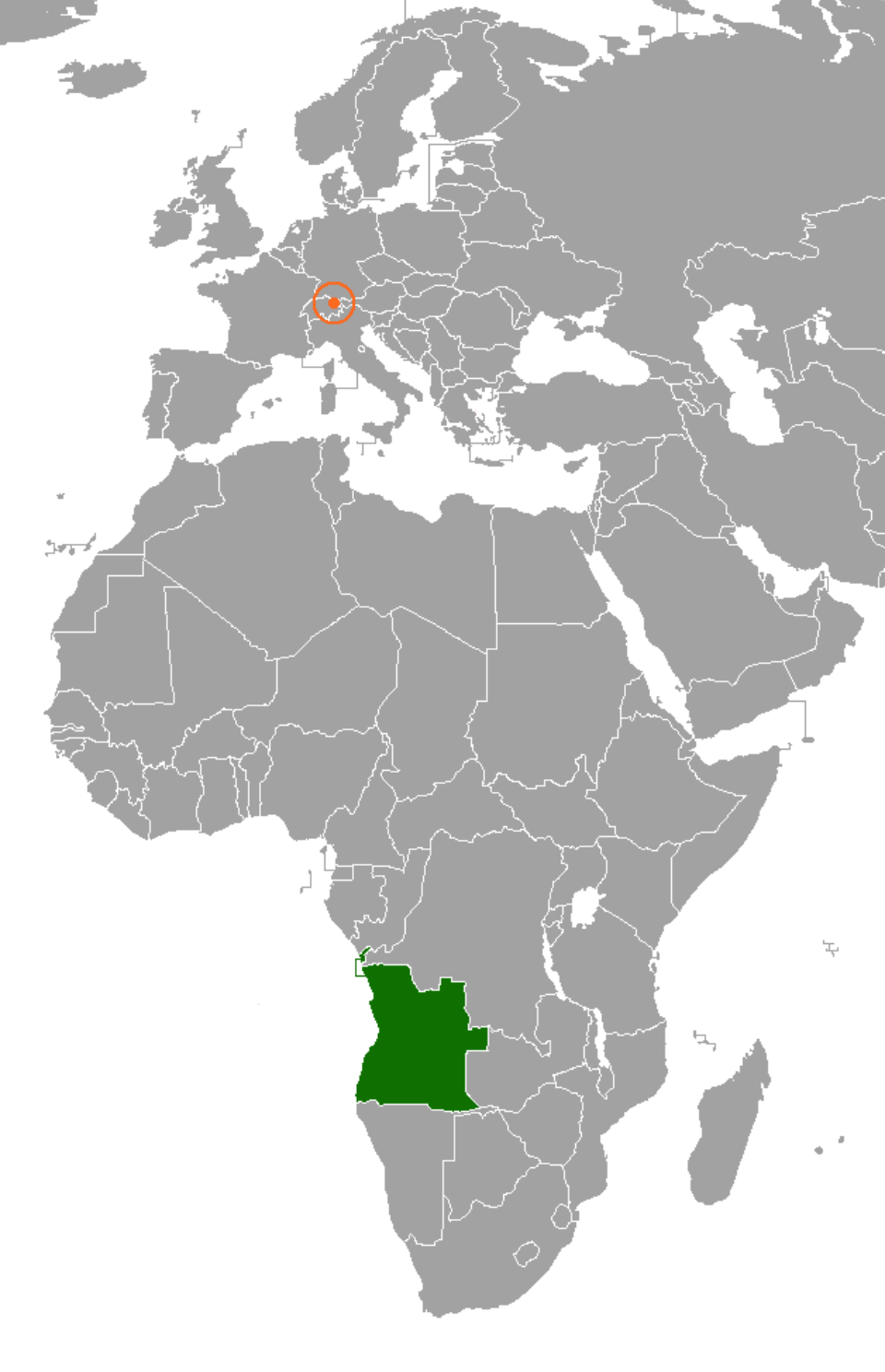
The absence of data is not a sign of weakness but of the principality’s peculiar position: a sovereign state of roughly 39,000 people, landlocked between Switzerland and Austria, that has opted out of many international reporting frameworks.
What the World Bank data *does* reveal is a country with no major extractive industries, no agricultural exports to speak of, and no mass tourism sector. Instead, Liechtenstein’s economic backbone is a cluster of highly specialised, export-oriented companies that punch far above the principality’s weight.
The main industries are not listed in the data, but the top companies tell the story: Hilti, a global leader in power tools and construction technology; Hilcona, a major player in convenience foods; Ivoclar Vivadent, a dental technology giant; and the LGT Group, one of Europe’s largest private banks.
This is an economy built on precision manufacturing, high-end consumer goods, and wealth management. The lack of headline macroeconomic figures from the World Bank means analysts must rely on corporate performance and qualitative indicators. The companies listed are all multinationals in their respective niches, suggesting that Liechtenstein’s GDP per capita — though unreported — is likely among the highest in the world.
The principality effectively operates as a corporate headquarters economy, where value creation happens within small, efficient firms serving global markets.
The Cost of Living in a Princely State
No cost-of-living data is provided for Liechtenstein, but its geography and economic profile allow for reasonable inference. Nestled in the Rhine Valley between Switzerland and Austria, the principality shares the high price levels of its Swiss neighbour. Housing costs are likely steep, driven by limited land availability and strict zoning laws in a country that measures just 160 square kilometres.
The rent-versus-buy dynamic is probably skewed toward renting for most residents, given the premium on land ownership in such a small territory. Daily expenses — food, transport, utilities — would mirror Swiss pricing, meaning significantly higher than the European Union average. The presence of companies like Hilcona suggests a developed food-processing sector, which may keep grocery costs somewhat moderated compared to Switzerland proper.
But overall, Liechtenstein is almost certainly an expensive place to live, with the trade-off being extremely high wages, low taxes, and a pristine Alpine environment.
Business in a Tax Haven with Industrial Muscle
The top companies list reads like a who’s who of niche global champions. Hilti dominates the construction fastening and tool market worldwide. Ivoclar Vivadent is a leading supplier to dental labs and practices. Intamin builds roller coasters and amusement rides for theme parks globally. Neutrik manufactures audio connectors used in professional sound systems. These are not financial shell companies — they are real industrial operations with patents, factories, and supply chains.
The financial sector is equally robust, anchored by the LGT Group, a private bank owned by the princely family, and the National Bank of Liechtenstein, the central bank. Liechtenstein has long been known as a tax haven, but the data suggests a more nuanced reality: the principality has a genuine dual economy of manufacturing and financial services. The business climate benefits from political stability, a favourable tax regime, and proximity to the Swiss and Austrian markets.
For investors, the key sectors to watch are precision manufacturing, dental technology, and private banking — all areas where Liechtenstein companies hold strong competitive positions.
Safety, Politics, and the Reigning Prince
The crime and safety indices are not provided, but Liechtenstein’s political landscape is exceptionally well-documented in the data. The principality has a “distinctive political system within Europe, combining elements of absolute monarchy, representative democracy, and direct democracy.” The reigning prince retains extensive executive and legislative powers and exercises considerable influence over the daily conduct of politics across all three branches of government.
This is not a ceremonial monarchy. The prince can veto legislation, dissolve parliament, and appoint judges. Yet the system also includes an elected parliament that enacts legislation, and citizens can propose and adopt laws through direct democratic mechanisms. It is a hybrid that has no close parallel in modern Europe — part constitutional monarchy, part direct democracy, part princely prerogative.
The practical result appears to be high political stability and social cohesion. There is no recent news of protests, political crises, or corruption scandals in the data. The combination of princely authority, democratic checks, and a wealthy, educated population likely produces a very safe and orderly society. Quality of life is probably excellent, though no happiness or wellbeing data is provided.
Current Affairs — Stability in an Uncertain World
The data provides no recent news headlines, live indicators, or policy updates. This absence is itself telling. Liechtenstein does not generate many headlines. The principality is not in the midst of an election, a recession, a protest movement, or a major policy shift — at least nothing captured in the data provided.
What can be inferred is that Liechtenstein continues to operate its unique political and economic model with little disruption. The top companies remain in place. The prince retains his powers. The financial sector continues to serve wealthy clients. The manufacturing firms keep exporting to global markets. The lack of current affairs data suggests a country that is quietly prosperous, politically stable, and largely ignored by international media — which, for its residents, is probably how they prefer it.
The Bottom Line
Liechtenstein is a country that defies easy categorization. It is a monarchy where the prince still rules, a tax haven with real factories, and a microstate that hosts global industrial champions. Investors should watch it for its stable business environment and niche manufacturing leaders. Political analysts should study it as a living experiment in hybrid governance.
For the rest of the world, Liechtenstein is a reminder that economic success does not require scale — it requires focus, stability, and the right institutions. The absence of data from the World Bank does not mean nothing is happening. It means the principality operates on its own terms, and those terms have worked remarkably well.
Sources & Methodology
This article is authored by Economic Pulse Net for informational and research purposes. Economic Pulse Net sources its data from multilateral institutions, national statistics bureaus, and proprietary databases. All data is believed to be current as of the date of publication.
Published: July 19, 2026 | Category: Research — Liechtenstein
Use these signals in your own platform
Economic Pulse publishes its live signal feed through a documented, read-only API. Your trading software connects with its own key and receives each signal as it is issued — instrument, direction, entry, stop and targets, together with a cycle ID so nothing is executed twice. The feed is independent of this website and cannot change it.
Signals are informational only and are not financial advice.