Economic Pulse Net | Sources: World Bank World Development Indicators, Government Sources | 2026
Key Takeaways
* Unique Political Architecture: Liechtenstein operates under a distinctive hybrid system where the reigning Prince retains extensive executive and legislative powers, operating concurrently with representative and direct democratic mechanisms.
Industrial Heavyweights: The economy is anchored by globally dominant specialized manufacturers, most notably Hilti in construction technology and Ivoclar Vivadent in health care, alongside significant financial services provided by LGT Group.
Data Transparency Gap: Official macroeconomic indicators such as GDP growth, inflation, and unemployment rates are currently listed as N/A by the World Bank, requiring investors to rely on corporate performance and industrial output rather than traditional national accounting metrics.
High-Value Consumer Base: Top companies like Hilcona and Jehle indicate a robust domestic consumer goods sector, suggesting a high standard of living despite the lack of published cost-of-living indices.
The Invisible Engine of Industry
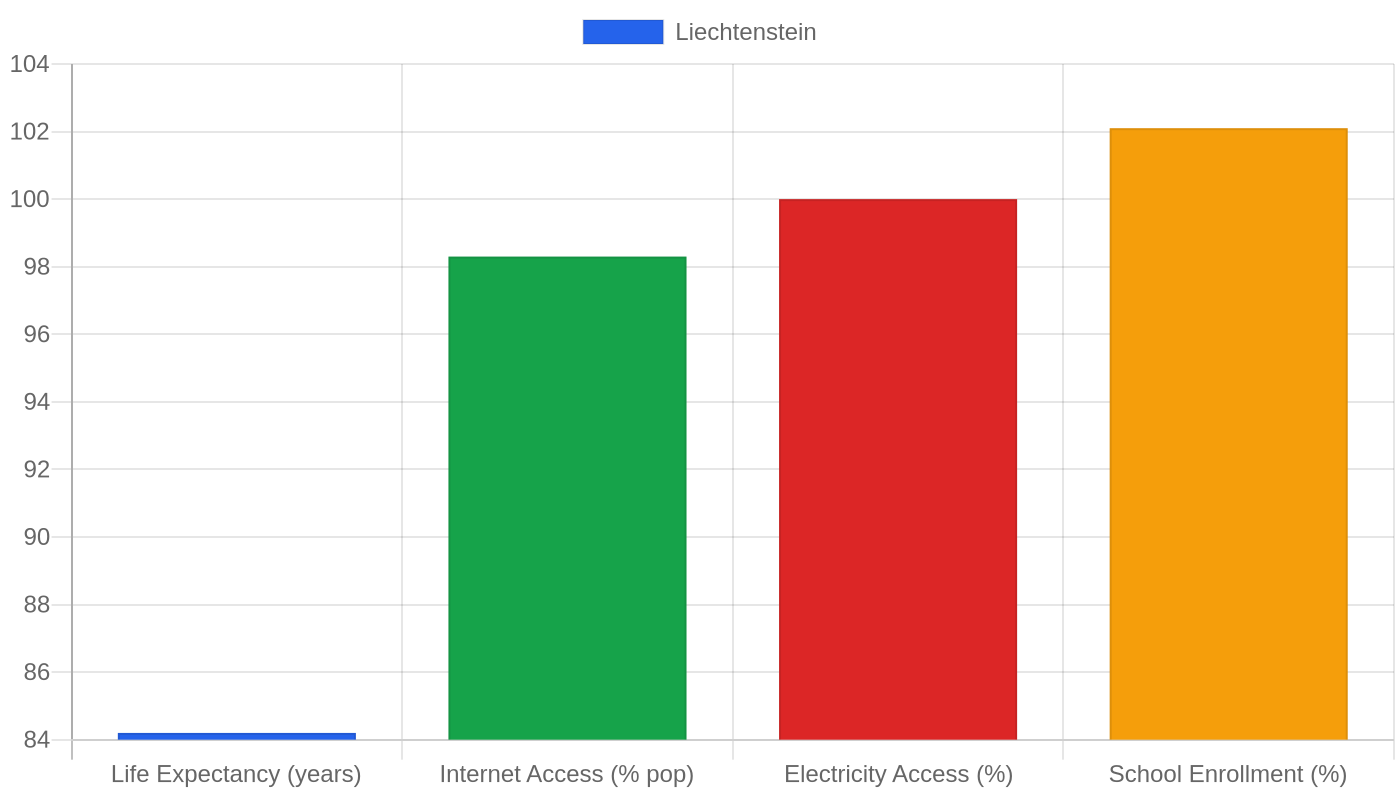
Liechtenstein presents a paradox for economic observers: it is one of the world’s wealthiest nations per capita, yet its broader macroeconomic data remains opaque to international tracking agencies. According to the World Bank, key indicators including GDP growth, inflation CPI, and unemployment are currently recorded as N/A, leaving a significant blind spot for traditional macroeconomic analysis.
This absence of standardized data does not imply economic stagnation; rather, it reflects the unique scale and structure of a micro-economy that often bypasses conventional reporting thresholds or relies on internal stability metrics. Without a visible GDP figure or population census data, the narrative of Liechtenstein’s economic health must be constructed through the lens of its corporate titans and industrial output.
The presence of multinational-grade enterprises within such a small geographic footprint suggests an economy that is highly efficient, export-oriented, and insulated from typical volatile fluctuations seen in larger markets. For analysts, this means looking past the aggregate numbers to examine the balance sheets of individual firms, which serve as the true barometers of national prosperity.
A Fortress of Specialized Manufacturing
The industrial landscape of Liechtenstein is defined by niche dominance and technological precision. At the forefront is Hilti, a global leader in construction technology, which stands as a testament to the country’s ability to produce high-value consumer goods that compete on the world stage. Similarly, Intamin and Neutrik dominate their respective niches in industrials, providing critical components and experiences that feed into global entertainment and infrastructure projects.
In the health care sector, Ivoclar Vivadent represents the pinnacle of medical innovation, further diversifying the industrial base beyond traditional manufacturing. These companies do not merely operate locally; they are integral parts of global supply chains, indicating that Liechtenstein’s economy is deeply integrated into international trade despite its political isolationism.
The presence of Liechtenstein Bus and Liechtensteinische Post also highlights a well-developed logistical framework that supports both domestic efficiency and external connectivity. This cluster of strong industrial performers suggests a business environment that prioritizes quality, innovation, and long-term sustainability over rapid, volume-driven expansion.
Financial Prudence and Corporate Governance
Beyond manufacturing, the financial sector plays a pivotal role in maintaining the nation’s economic sovereignty. LGT Group and the National Bank of Liechtenstein are central pillars of this financial architecture, managing assets and monetary stability with a level of discretion characteristic of Swiss-style banking traditions. These institutions provide the capital infrastructure necessary to support the country’s heavy industrial base and attract foreign investment.
The coexistence of powerful financial entities with robust consumer goods producers like Hilcona and Jehle creates a balanced economic ecosystem. Consumer goods companies benefit from the stable financial environment, while financial institutions find lucrative opportunities in serving the wealth generated by industrial exports.
This symbiotic relationship ensures that liquidity remains high and that the country can weather external economic shocks without relying on external bailouts or debt instruments common in larger economies. The focus here is on preservation and steady growth, aligning with the conservative political culture of the state.
Sovereignty in Politics and Safety
Liechtenstein’s political landscape is unlike any other in Europe, characterized by a blend of absolute monarchy, representative democracy, and direct democracy. The reigning Prince retains extensive executive and legislative powers, exercising considerable influence over the daily conduct of politics across all three branches of government. This concentration of power is balanced by elected parliaments and citizen initiatives, allowing for a unique form of governance that is both stable and responsive.
While specific crime and safety indices are listed as N/A, the general perception of Liechtenstein is one of exceptional safety and social cohesion, driven by high employment and low inequality. The political system’s emphasis on continuity and consensus reduces the risk of sudden policy shifts that could destabilize businesses. For residents and investors alike, the political environment offers a predictable framework where laws are respected and enforcement is consistent.
This stability is a key component of the country’s appeal, offering a secure haven for capital and talent in an otherwise turbulent global region.
Current Affairs and Strategic Outlook
In the current climate, Liechtenstein continues to navigate its position as a sovereign micro-state amidst increasing European integration pressures. The interplay between the Prince’s authority and the democratic mandates of the parliament remains a focal point of political discourse, shaping how the country responds to regional economic trends.
With no public data on inflation or unemployment, the government likely relies on internal controls and corporate partnerships to maintain price stability and job security. Recent developments in the industrial sector, particularly in health care and construction technology, suggest a strategic pivot toward high-margin, knowledge-intensive industries. Companies like Ivoclar Vivadent and Hilti are likely expanding their global footprints, bringing increased revenue back to the local economy.
Meanwhile, financial institutions like LGT Group are adapting to global regulatory changes, ensuring that Liechtenstein remains a compliant yet attractive destination for asset management. The focus now is on sustaining this delicate balance between openness to global trade and preservation of national sovereignty.
The Bottom Line
Liechtenstein is a country best understood through its corporate achievements and political uniqueness rather than traditional macroeconomic statistics. It is ideal for investors seeking exposure to specialized industrial leaders and stable financial services, rather than those looking for high-growth emerging market dynamics. The lack of public data requires a due diligence approach focused on individual company performance and political stability assessments.
For businesses, the opportunity lies in partnering with established players who dominate global niches, leveraging the country’s reputation for quality and reliability.
Sources & Methodology
This article is authored by Economic Pulse Net for informational and research purposes. Economic Pulse Net sources its data from multilateral institutions, national statistics bureaus, and proprietary databases. All data is believed to be current as of the date of publication.
Published: September 28, 2026 | Category: Research — Liechtenstein
Use these signals in your own platform
Economic Pulse publishes its live signal feed through a documented, read-only API. Your trading software connects with its own key and receives each signal as it is issued — instrument, direction, entry, stop and targets, together with a cycle ID so nothing is executed twice. The feed is independent of this website and cannot change it.
Signals are informational only and are not financial advice.