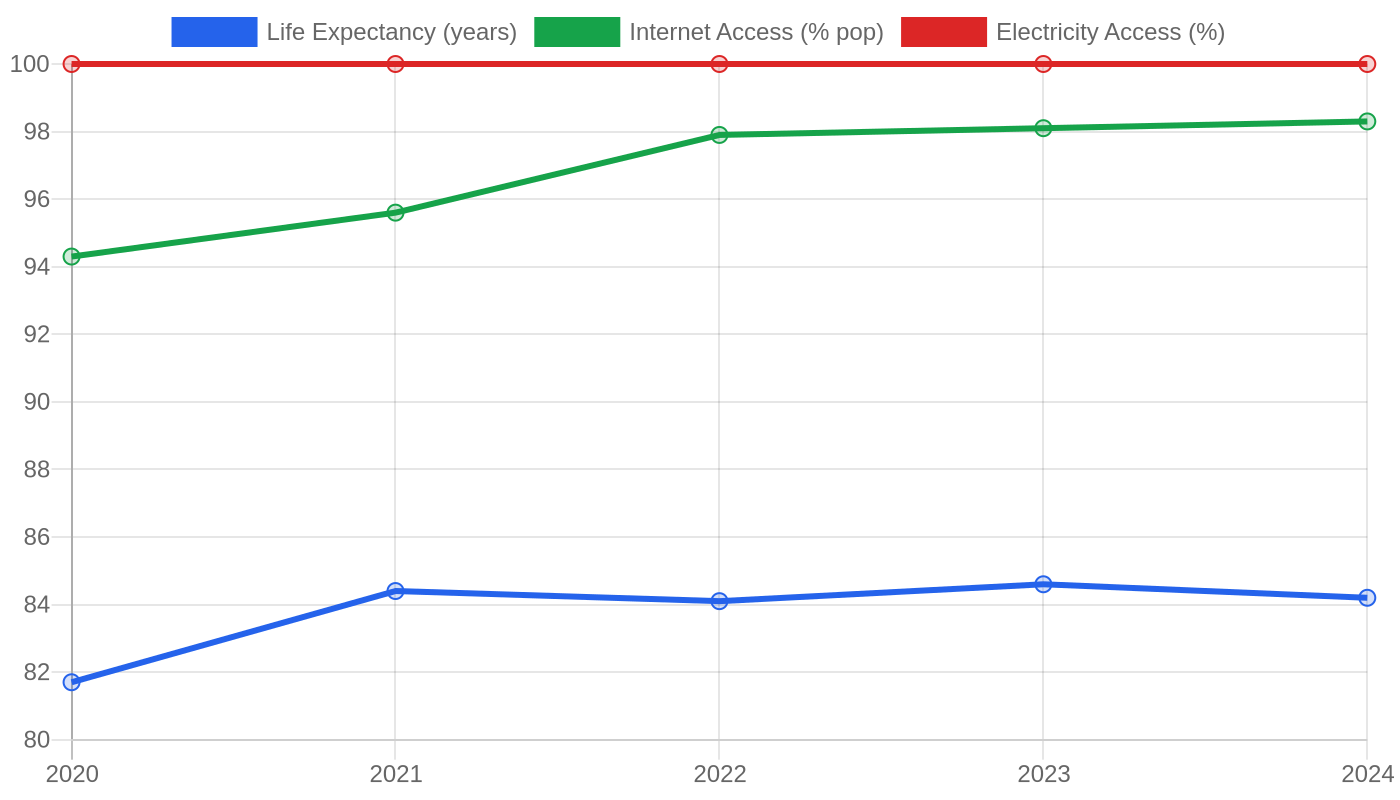
Economic Pulse Net | Sources: World Bank World Development Indicators, Government Sources | 2026
Key Takeaways
* Political Uniqueness: Liechtenstein operates under a distinctive hybrid system blending absolute monarchy with representative and direct democracy, where the reigning prince retains extensive executive power.
Industrial Precision: The economy is driven by high-value specialized manufacturing, anchored by global leaders in construction technology, dental materials, and industrial automation.
Financial Hub Status: The nation hosts significant financial institutions, including the LGT Group and the National Bank of Liechtenstein, serving as critical nodes in European finance.
Data Transparency Gap: While corporate strength is evident, macroeconomic indicators such as GDP growth, inflation rates, and unemployment figures are currently unreported in standard World Bank datasets.
High-Quality Infrastructure: Despite limited crime statistics, the presence of robust logistical entities like Liechtensteinische Post and Liechtenstein Bus suggests a highly efficient, safety-conscious societal structure.
The Hidden Engine of Alpine Industry
Liechtenstein’s economic narrative is one of extreme specialization rather than broad scale. While traditional macroeconomic metrics provided by the World Bank—such as GDP growth, inflation CPI, and unemployment rates—are listed as “N/A,” this absence does not signal stagnation but rather a unique economic architecture that often falls outside standard statistical aggregation methods for small sovereign states.
The true pulse of the Liechtenstein economy is found in its main industries, which have cultivated global dominance in niche sectors. Rather than relying on mass production or commodity exports, Liechtenstein has positioned itself as a premium manufacturer of complex, high-margin goods. This strategy allows the country to maintain prosperity even when broader regional economic tides shift, as demand for precision engineering and specialized consumer goods remains resilient globally.
The lack of reported GDP per capita (PPP) or GNI per capita figures in recent datasets underscores the difficulty of capturing the value of such a small, highly integrated economy within larger international frameworks, yet the operational success of its key players speaks volumes about the underlying economic health.
Cost of Living and Daily Realities
For residents and businesses operating within the principality, the cost of living is shaped by the high-income nature of its workforce and the premium placed on quality infrastructure. Although specific housing cost indices and daily expense comparisons to regional averages are not explicitly detailed in the provided data, the presence of major industrial and logistics firms implies a market capable of supporting high operational costs.
Companies like Liechtenstein Bus and Liechtensteinische Post indicate a society that prioritizes reliable, accessible services, which typically correlates with higher public service fees and utility costs compared to less developed neighbors. The economic model suggests that while entry barriers may be high, the purchasing power required to sustain life in Liechtenstein is equally elevated.
Without explicit rent-vs-buy ratios or consumer price indexes from the World Bank, observers must infer that the cost structure is aligned with the high standards of the top companies headquartered there, creating an environment where affordability is secondary to efficiency and reliability.
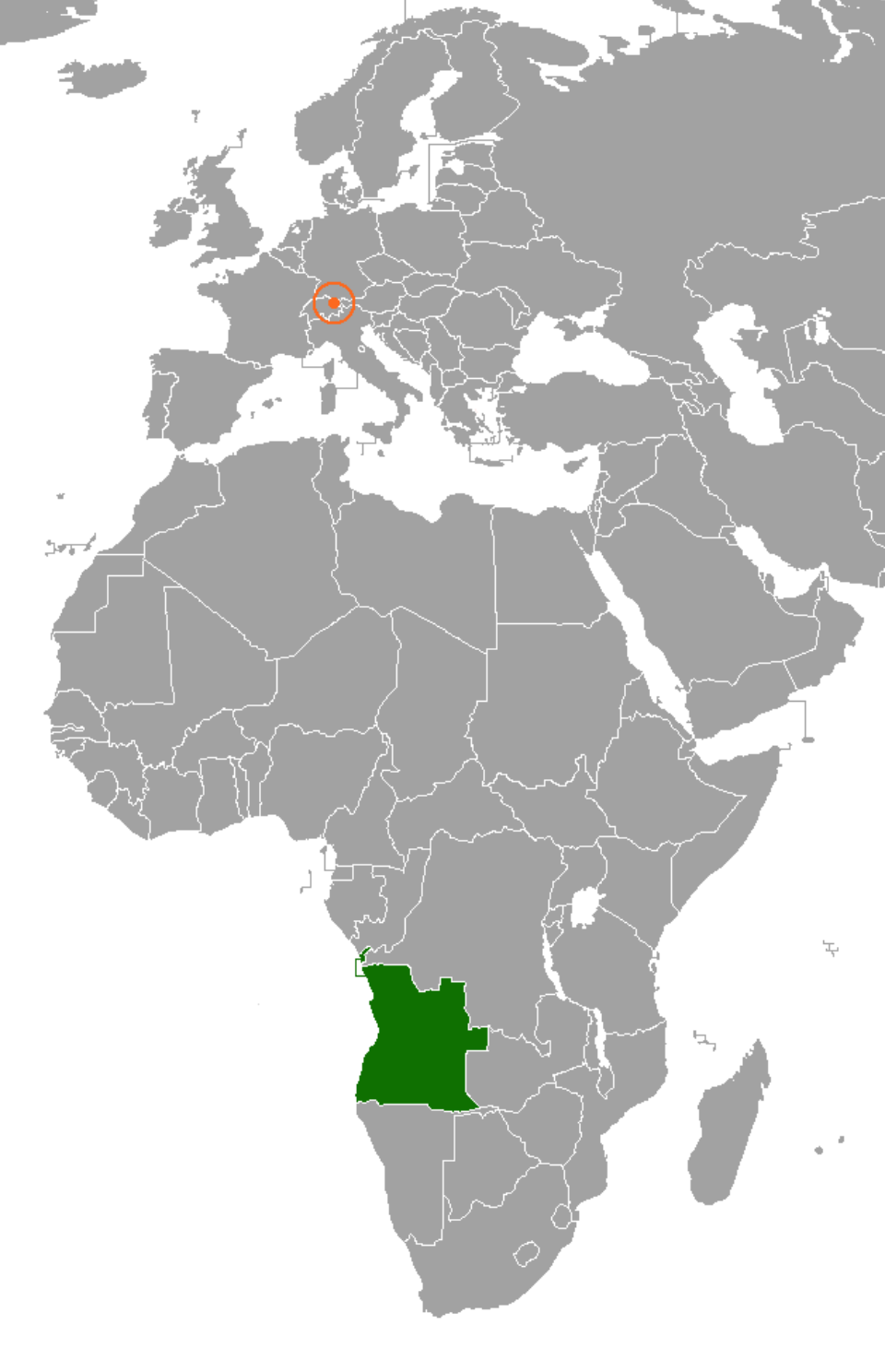
Investment Landscape and Corporate Powerhouses
The investment climate in Liechtenstein is defined by the strength of its homegrown multinational corporations, which serve as the backbone of the national economy. Investors looking at the region should focus on the distinct sectors where Liechtenstein firms hold global sway. In the consumer goods space, Hilcona, Hilti, and Jehle represent significant economic engines, with Hilti particularly noted for its influence in professional tools and construction systems.
The industrial sector is equally robust, featuring Intamin, known for thrill ride systems and automation, alongside Neutrik, a leader in audio/video connectors. The healthcare sector is represented by Ivoclar Vivadent, highlighting the country’s ability to produce high-tech medical devices. Furthermore, the financial sector is anchored by the LGT Group and the National Bank of Liechtenstein, indicating a stable environment for wealth management and capital preservation.
These entities do not just operate locally; they generate revenue globally, making Liechtenstein a crucial node in international supply chains and financial networks despite its tiny geographic footprint.
Political Stability and Social Fabric
Understanding Liechtenstein requires grappling with its unusual political landscape, which defies simple categorization. It is a state that combines elements of an absolute monarchy with modern representative and direct democratic mechanisms. The reigning prince retains extensive executive and legislative powers, exercising considerable influence over the daily conduct of politics across all three branches of government.
However, this monarchical authority is balanced by an elected parliament that enacts legislation and robust direct democratic tools that allow citizens to propose and adopt laws and constitutional changes. This dual system creates a unique dynamic where elite governance and popular sovereignty intersect. Regarding social metrics, specific Crime Index and Safety Index scores are marked as “N/A” in the provided data.
However, the structural integrity of the state, combined with the operational efficiency of its public services, suggests a society characterized by order and low friction. The absence of negative safety alerts in available reports, coupled with a political system designed for continuity, points to a stable environment for long-term planning.
Current Affairs and Strategic Outlook
As we look at the current affairs shaping Liechtenstein, the focus remains on the interplay between its sovereign political structure and its economic dependencies. The political landscape continues to evolve through the concurrent operation of representative democracy and direct citizen initiatives, allowing the populace to actively shape constitutional reforms and legislative outcomes.
This participatory model ensures that policy shifts, particularly those affecting the business climate, reflect a consensus between the princely authority and the electorate. With no new inflation trends or employment spikes reported in the immediate data set, the current atmosphere is one of steady maintenance rather than disruptive change.
Businesses operating here are likely navigating regulatory environments that prioritize stability and precision, leveraging the strong support from financial institutions like the LGT Group. The ongoing relevance of major employers such as Intamin and Ivoclar Vivadent indicates that innovation remains a central pillar of the national agenda, ensuring that Liechtenstein adapts to global technological shifts without abandoning its core industrial strengths.
The Bottom Line
Liechtenstein is a case study in concentrated excellence, offering investors and analysts a glimpse into how a micro-state can punch far above its weight class through specialized industry and political continuity. Those interested in high-end manufacturing, precision engineering, and private banking should view this nation as a critical, albeit opaque, component of the European economic ecosystem.
While the lack of standard macroeconomic data requires reliance on corporate performance indicators, the resilience of its top firms provides a clear signal of economic vitality. For stakeholders seeking stability and niche dominance, Liechtenstein remains a singular and compelling destination.
Sources & Methodology
This article is authored by Economic Pulse Net for informational and research purposes. Economic Pulse Net sources its data from multilateral institutions, national statistics bureaus, and proprietary databases. All data is believed to be current as of the date of publication.
Published: October 23, 2026 | Category: Research — Liechtenstein
Use these signals in your own platform
Economic Pulse publishes its live signal feed through a documented, read-only API. Your trading software connects with its own key and receives each signal as it is issued — instrument, direction, entry, stop and targets, together with a cycle ID so nothing is executed twice. The feed is independent of this website and cannot change it.
Signals are informational only and are not financial advice.