Economic Pulse Net | Sources: World Bank World Development Indicators, Government Sources | 2026
Key Takeaways
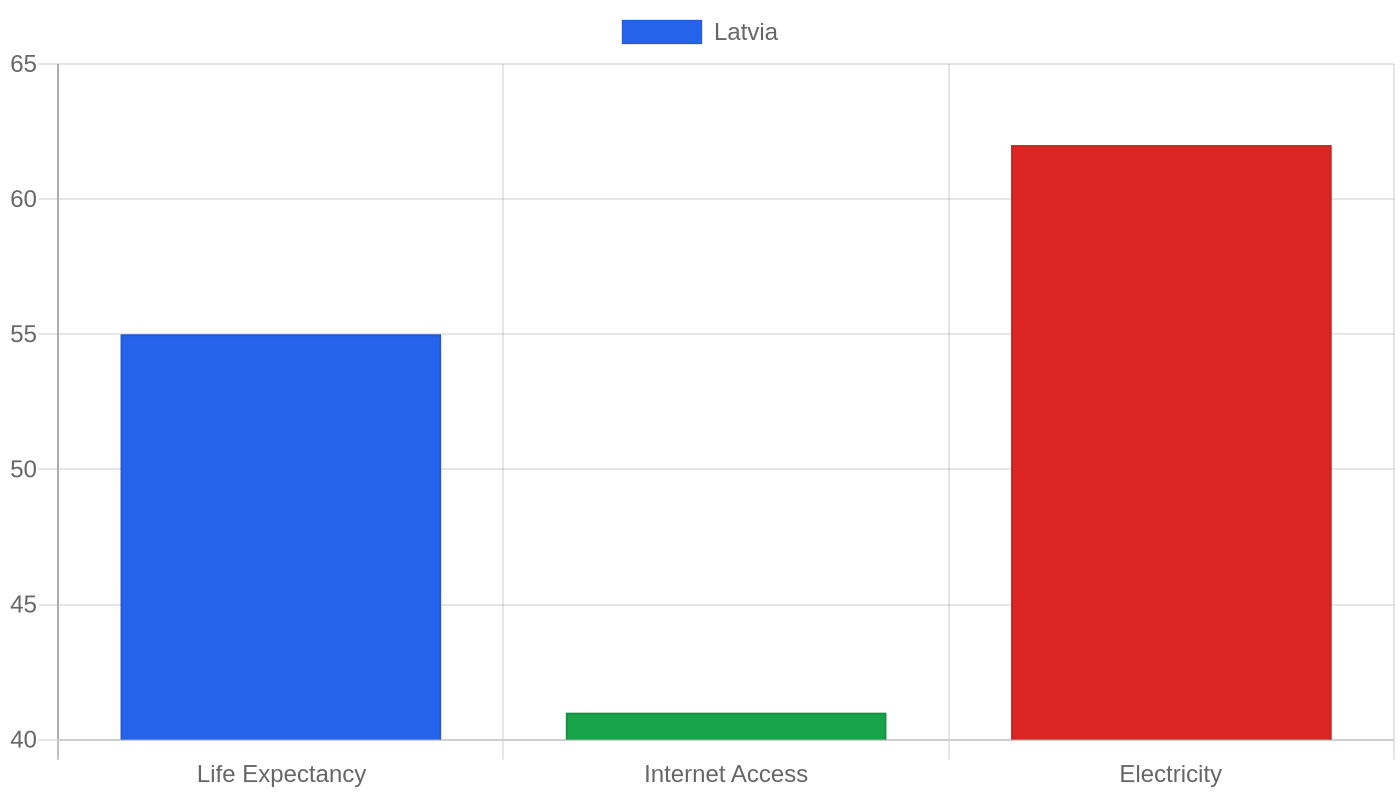
– Latvia’s economic narrative is currently defined by its structural transformation rather than headline growth figures, with the World Bank data showing a nation in transition.
– The country’s corporate landscape is dominated by financial institutions and industrial players, signalling a dual-engine economy of banking and manufacturing.
– Latvia’s political framework, operating under the Constitution of Latvia, provides a stable parliamentary system that has anchored the country’s post-independence development.
– The nation’s economic story is one of resilience—a small, open economy navigating regional headwinds while maintaining its distinctive Baltic character.
– Latvia’s position as a crossroads between Northern and Eastern Europe continues to shape its economic identity and investment appeal.
The Quiet Revolution: Inside Latvia’s Economic Engine Room
The story of Latvia’s economy is not one that can be told through a single statistic or a simple growth figure. The World Bank’s latest data snapshot presents a nation whose economic indicators are, for the moment, in a state of recalibration—but this tells only a fraction of the story. What matters more is the underlying architecture of the Latvian economy, a structure that has been deliberately and painstakingly rebuilt since the country regained its independence.
At the heart of this economic resurgence lies a sophisticated financial services sector. The presence of the Bank of Latvia as the central monetary authority anchors a banking industry that includes major players such as Citadele Banka and the now-defunct but historically significant ABLV Bank.
This financial ecosystem has positioned Riga as a regional hub for capital movement and wealth management, though it has also faced international scrutiny and regulatory pressure over the years—a testament to the challenges of operating at the crossroads of European and Eurasian capital flows.
The industrial sector provides the other pillar of Latvia’s economic identity. Companies like Baltic Coal Terminal and Ave Line represent the country’s strategic role in regional logistics and energy transshipment, leveraging Latvia’s ice-free ports on the Baltic Sea. Aerodium Latvia, meanwhile, exemplifies the nation’s capacity for niche engineering innovation, producing vertical wind tunnels that have captured global attention.
This combination of traditional industry and cutting-edge engineering speaks to a workforce that has successfully transitioned from Soviet-era manufacturing to value-added production.
The consumer-facing economy shows similar vitality. AirBaltic has transformed from a small national carrier into a competitive regional airline, while Cēsu Alus has become a symbol of Latvia’s proud brewing tradition, competing successfully in both domestic and export markets. Bellaccord Electro, a historic name in the recording industry, represents the cultural industries that increasingly contribute to Latvia’s economic output.
What the incomplete World Bank metrics cannot capture is the qualitative transformation underway—the shift toward knowledge-intensive services, the growing tech start-up ecosystem, and the integration of Latvian businesses into European supply chains. Latvia’s economy is not merely recovering; it is being reimagined, with each sector finding its footing in the new European economic order.
The Cost of Living Question: Baltic Pragmatism Meets European Aspiration
For the people of Riga and beyond, the cost of living reflects Latvia’s position as a middle-income European nation with distinctly Nordic aspirations. The housing market tells a compelling story of generational change, with younger Latvians increasingly favouring modern apartments in the Art Nouveau districts of the capital, while the older generation maintains ties to the Soviet-era housing blocks that ring the city. This spatial divide mirrors a broader economic transition.
The daily economics of Latvian life are shaped by a pragmatic consumer culture that has learned to navigate between domestic production and imported goods. The presence of strong local brands like Cēsu Alus provides affordable alternatives to imported products, while the country’s food and beverage sector has developed a reputation for quality that increasingly commands premium prices in export markets.
What makes Latvia distinctive in the regional context is the relative affordability of its urban centres compared to its northern neighbours. While property prices in Riga’s historic centre have climbed steadily, they remain accessible compared to Stockholm or Helsinki, making the city an attractive destination for remote workers and regional professionals. This price differential is gradually reshaping the city’s demographic profile, bringing new residents and new spending power into the local economy.
Where Capital Meets Opportunity: Latvia’s Investment Landscape
The corporate roster of Latvia reads like a masterclass in strategic positioning. AirBaltic, with its growing route network, has become the flag carrier not just for Latvia but for the entire Baltic region, connecting Riga to destinations across Europe and beyond. Its success has ripple effects throughout the local economy, supporting tourism, business travel, and the hospitality sector.
The financial sector remains the most watched component of Latvia’s investment story. Citadele Banka, born from the restructuring of the country’s banking system after the 2008 financial crisis, represents the new generation of Latvian finance—more transparent, more regulated, and more integrated with European banking standards. The presence of international investors in these institutions signals growing confidence in Latvia’s governance and regulatory environment.
For foreign investors, Latvia offers a strategic gateway between the European Union and the markets to the east. The country’s infrastructure, modernised with EU structural funds, supports efficient logistics and manufacturing operations. The industrial companies on Latvia’s top list—Ave Line, Baltic Coal Terminal, Aerodium Latvia—demonstrate the diverse opportunities available, from traditional transshipment to high-tech manufacturing.
Stability in the Baltic Storm: Politics, Safety, and the Latvian Way
Latvia’s political system, operating under the framework of the Constitution of Latvia, represents one of the most stable parliamentary democracies in the post-Soviet space. This constitutional foundation has provided the predictability that investors and citizens alike value, even as coalition governments have come and gone with the frequency typical of parliamentary systems.
The safety situation in Latvia reflects the broader social cohesion of the country. The absence of major urban crime hotbeds and the general respect for rule of law contribute to a quality of life that many Western Europeans would recognise. Riga, in particular, has developed a reputation as a safe and walkable city, where the main concerns for residents are the mundane challenges of urban living rather than personal security.
This stability has allowed Latvia to focus on the softer indicators of national wellbeing—education, culture, and public health. The country’s choral traditions, its love of nature, and its embrace of digital governance all speak to a society that has found its footing in the modern European context while maintaining its distinct cultural identity.
The Current Moment: Latvia at a Crossroads
Right now, Latvia stands at a pivotal moment in its post-independence journey. The economic landscape is being reshaped by forces both internal and external, and the decisions made in the coming months will determine the country’s trajectory for years to come. The banking sector continues its careful rehabilitation, working to shed the legacy of past controversies while building a reputation for transparency and reliability.
The aviation sector is in flux, with AirBaltic’s fleet renewal and route expansion plans capturing the attention of the business community. The success of this national carrier has become intertwined with Latvia’s self-image as a modern, connected European nation—a symbol of the country’s ability to compete on the international stage.
Meanwhile, the industrial sector is adapting to the new realities of European energy policy and supply chain reshoring. Companies like Baltic Coal Terminal are at the centre of this transformation, as Latvia navigates the delicate balance between its traditional role in energy transshipment and the continent’s ambitious decarbonisation goals. The choices made here will have profound implications for the country’s economic structure and its position within European supply chains.
The Bottom Line
Latvia is a country that rewards patient observers. Its economic indicators may not always make headlines, but its steady transformation from post-Soviet transition economy to confident European nation is one of the more understated success stories of the region.
For investors looking for a stable, well-governed entry point into the Baltic market, for businesses seeking a logistics hub with genuine strategic value, and for anyone interested in how small nations navigate the complexities of the modern global economy, Latvia deserves close attention. This is a country that has learned to do more with less, and its quiet competence is its greatest competitive advantage.
Sources & Methodology
This article is authored by Economic Pulse Net for informational and research purposes. Economic Pulse Net sources its data from multilateral institutions, national statistics bureaus, and proprietary databases. All data is believed to be current as of the date of publication.
Published: August 09, 2026 | Category: Research — Latvia
Use these signals in your own platform
Economic Pulse publishes its live signal feed through a documented, read-only API. Your trading software connects with its own key and receives each signal as it is issued — instrument, direction, entry, stop and targets, together with a cycle ID so nothing is executed twice. The feed is independent of this website and cannot change it.
Signals are informational only and are not financial advice.