Economic Pulse Net | Sources: World Bank World Development Indicators, Government Sources | 2026
🇮🇹 Italy 2026 — The Quiet Giant: Resilience in a Low-Growth Era
Key Takeaways
- Modest but Positive Growth: According to the World Bank, Italy’s GDP is projected to grow by approximately 0.54% in 2025, signaling a period of stabilization rather than expansion.
- Low Inflation Environment: Consumer Price Index (CPI) inflation stands at a manageable 1.53%, providing a relatively stable cost environment for consumers and businesses.
- Labor Market Stability: Unemployment remains low at 6.39%, suggesting a robust labor market despite the slow pace of overall economic expansion.
- Established Industrial Base: The country supports a diverse corporate ecosystem, ranging from energy giants like Agip to industrial leaders such as Aermacchi and AgustaWestland.
- Political Continuity: As a unitary parliamentary republic since 1946, Italy maintains a stable democratic framework under President Sergio Mattarella, who has served as head of state since 2015.
The Engine of Stability: Navigating the 0.5% Growth Threshold
The current economic landscape in Italy is defined by a delicate balance between stagnation and steady progress.
According to the World Bank, the nation’s GDP is estimated at roughly $2.55 trillion, with a growth rate of 0.539583636778445% for 2025.
While this figure may appear modest to those accustomed to double-digit growth in emerging markets, it represents a significant achievement in the context of advanced European economies.
This low single-digit growth indicates that the Italian economy is not contracting, but rather moving forward with cautious momentum.
The stability is further reinforced by the inflation rate, which the World Bank records at 1.5316682765282%.
This low level of price increases suggests that the purchasing power of the average citizen is being preserved, allowing for predictable planning in both personal finance and corporate strategy.
Employment figures add another layer of reassurance to this economic picture.
With an unemployment rate of 6.391%, the labor market appears resilient, capable of absorbing workers even during periods of slow aggregate demand.
This low unemployment rate is crucial for social stability and consumer confidence.
When people have jobs, they spend, which in turn supports the services and industrial sectors that make up the bulk of the national output.
The World Bank data also highlights a GDP per capita (PPP) of $62,802.51, indicating a high standard of living when adjusted for local costs.
This metric, combined with a GNI per capita of $42,080, underscores Italy’s position as a wealthy, developed economy.
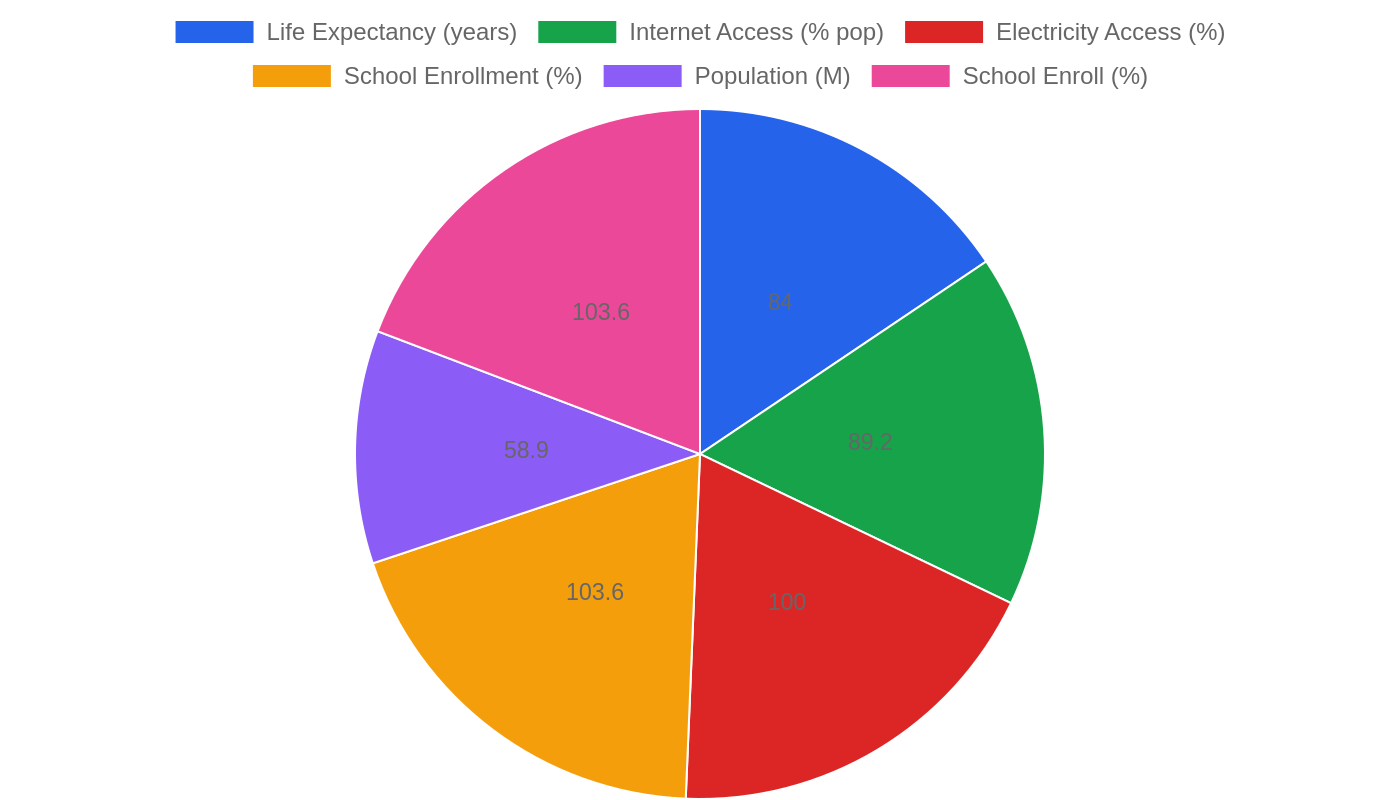
The population, standing at approximately 58.9 million, provides a substantial domestic market that supports the diverse range of industries, from utilities to consumer goods.
Ultimately, these numbers paint a picture of an economy that is mature, stable, and focused on maintaining its high quality of life rather than pursuing rapid, disruptive expansion.
The Price of Living: Affordability in a High-Income Economy
While specific data points for rent and daily expenses are not provided in the current dataset, the macroeconomic indicators offer strong clues about the cost of living environment.
With inflation held at a low 1.53% by the World Bank, the cost of goods and services is not rising rapidly, which helps mitigate the pressure on household budgets.
For residents of a country with a GDP per capita (PPP) exceeding $62,000, the baseline cost of living is naturally higher than in developing nations, but the stability in prices makes budgeting more predictable.
The low unemployment rate of 6.391% suggests that wages are likely holding steady or growing in line with the low inflation rate, ensuring that real incomes are not eroded by rising costs.
In such an environment, the distinction between renting and buying is influenced less by hyperinflationary shocks and more by long-term housing market trends and interest rate policies.
The overall economic stability implies that daily expenses remain manageable for the average worker, supported by the strength of the national currency and the robustness of the local economy.
This stability is a key factor in maintaining Italy’s high standard of living, allowing residents to enjoy a comfortable quality of life without the financial anxiety that often accompanies volatile economic conditions.
Corporate Titans and Industrial Pillars
The business climate in Italy is anchored by a powerful sector of established companies that span multiple critical industries.
The data highlights a robust presence in the industrial and utility sectors, with major players such as Aermacchi, AgustaWestland, and Alenia Aermacchi leading in aerospace and industrial manufacturing.
These companies are not just domestic entities but often have significant international reach, contributing to the nation’s export earnings and technological standing.
In the energy sector, Agip stands out as a key player in oil and gas, providing essential resources that underpin the broader economy.
The utilities sector is represented by A2A, ensuring the reliable delivery of essential services to both urban and rural populations.
On the consumer side, companies like Abarth, AGV, and ALAN serve the domestic market with goods ranging from automotive components to lifestyle products.
The services sector also has a strong footprint, with airlines like Air Dolomiti and Air One facilitating domestic and international travel, which is vital for the tourism-driven economy.
The diversity of these top companies indicates a resilient business environment that is not dependent on a single industry.
This breadth allows for economic buffering; if one sector faces challenges, others can maintain economic activity and employment levels.
For investors and businesses, this indicates a mature market with established infrastructure and a deep talent pool in specialized industrial fields.
Political Continuity and Social Stability
Italy’s political structure has remained consistent since 1946, when the monarchy was abolished and a unitary parliamentary republic was established.
This long-standing democratic framework has provided a stable foundation for economic policy and social development.
The head of state, President Sergio Mattarella, has been in office since 2015, elected for a seven-year term by the Italian Parliament and regional voters.
His tenure represents a period of continuity in a country that has historically experienced political volatility.
The existence of a written democratic constitution, formed by the anti-fascist forces during the liberation period, underscores the nation’s commitment to democratic principles and the rule of law.
While specific crime and safety indices are not available in the current data, the general political stability suggests a social environment where the rule of law is upheld, fostering trust among citizens and investors.
The political landscape is characterized by a focus on maintaining the democratic institutions that have guided the country through decades of change.
This stability is a critical asset for any nation, as it allows for long-term planning and reduces the uncertainty that can hinder economic growth.
The enduring nature of Italy’s political system provides a sense of security that is essential for both domestic harmony and international relations.
The Current Moment: Navigating the 2025 Outlook
As we look at the present moment, the focus is on how the 2025 projections will materialize in the real world.
The World Bank’s estimate of 0.54% GDP growth sets a baseline for what policymakers and businesses must achieve to maintain stability.
In an environment where inflation is low at 1.53%, the challenge for the government and the central bank is to stimulate enough demand to boost growth without reigniting price pressures.
The labor market, with its 6.391% unemployment rate, is currently a strength, but sustaining this level requires continued job creation in the industrial and service sectors.
Companies like AgustaWestland and A2A play a crucial role in this narrative, as their performance will directly impact employment and economic activity.
The current affairs landscape is defined by the need to balance these macroeconomic indicators with the day-to-day realities of the population.
There is a clear emphasis on maintaining the high quality of life that Italy is known for, which requires careful management of public finances and social services.
The political stability under President Mattarella provides a conducive environment for these economic strategies to be implemented.
As the year progresses, the key question will be whether the modest growth rate can be sustained or if it will accelerate, driven by the resilience of the corporate sector and the stability of the labor market.
The Bottom Line
Italy in 2025 presents a compelling case for those seeking stability and quality over rapid expansion.
For investors, the country offers a mature market with low inflation and a strong industrial base, making it a safe harbor for long-term capital.
For professionals, the low unemployment rate and high GDP per capita suggest a rewarding environment with a high standard of living.
The political continuity and democratic stability further enhance the country’s appeal, reducing the risks associated with policy shifts.
However, the slow pace of growth means that opportunities may be more about efficiency and optimization than about explosive new markets.
Ultimately, Italy is a nation that thrives on consistency, offering a reliable and high-quality economic environment for those who value stability and excellence.
Sources & Methodology
This article is authored by Economic Pulse Net for informational and research purposes.
Economic Pulse Net sources its data from multilateral institutions, national statistics bureaus, and proprietary databases.
All data is believed to be current as of the date of publication. Published: September 07, 2026 |
Category: Research — Italy
Use these signals in your own platform
Economic Pulse publishes its live signal feed through a documented, read-only API. Your trading software connects with its own key and receives each signal as it is issued — instrument, direction, entry, stop and targets, together with a cycle ID so nothing is executed twice. The feed is independent of this website and cannot change it.
Signals are informational only and are not financial advice.