Economic Pulse Net | Sources: World Bank World Development Indicators, Government Sources | 2026
Key Takeaways
* Italy’s economy is showing signs of fragile recovery in 2025, with GDP growth projected at a modest 0.54%, indicating a slow but positive trajectory out of stagnation.
Inflation remains under control at approximately 1.53%, providing households with some purchasing power stability despite broader global economic headwinds.
The labor market demonstrates resilience with an unemployment rate of 6.39%, significantly lower than many peer European economies, supported by a high GDP per capita of over $62,800 (PPP).
Political continuity under President Sergio Mattarella provides a stable institutional framework for long-term economic planning within the unitary parliamentary republic structure.
While major industrial and utility giants like A2A and Agip anchor the corporate landscape, the country faces ongoing challenges in translating political stability into robust, high-speed economic expansion.
Economic Pulse: Navigating Slow Growth
Italy’s economic performance in 2025 presents a narrative of cautious stabilization rather than explosive growth. According to World Bank data, the nation’s GDP growth is projected at 0.539583636778445% for 2025. While this figure may appear subdued compared to emerging markets, it signals a critical pivot away from contraction, suggesting that domestic demand and export sectors are finding their footing after periods of volatility.
This modest expansion is particularly notable when viewed against the backdrop of inflation, which stands at a manageable 1.5316682765282%. For consumers and businesses alike, this low inflation rate is a vital lifeline; it preserves real wages and allows for more predictable budgeting, unlike the hyper-inflationary pressures seen in other parts of the world. Furthermore, the labor market appears relatively healthy, with unemployment hovering at 6.391%.
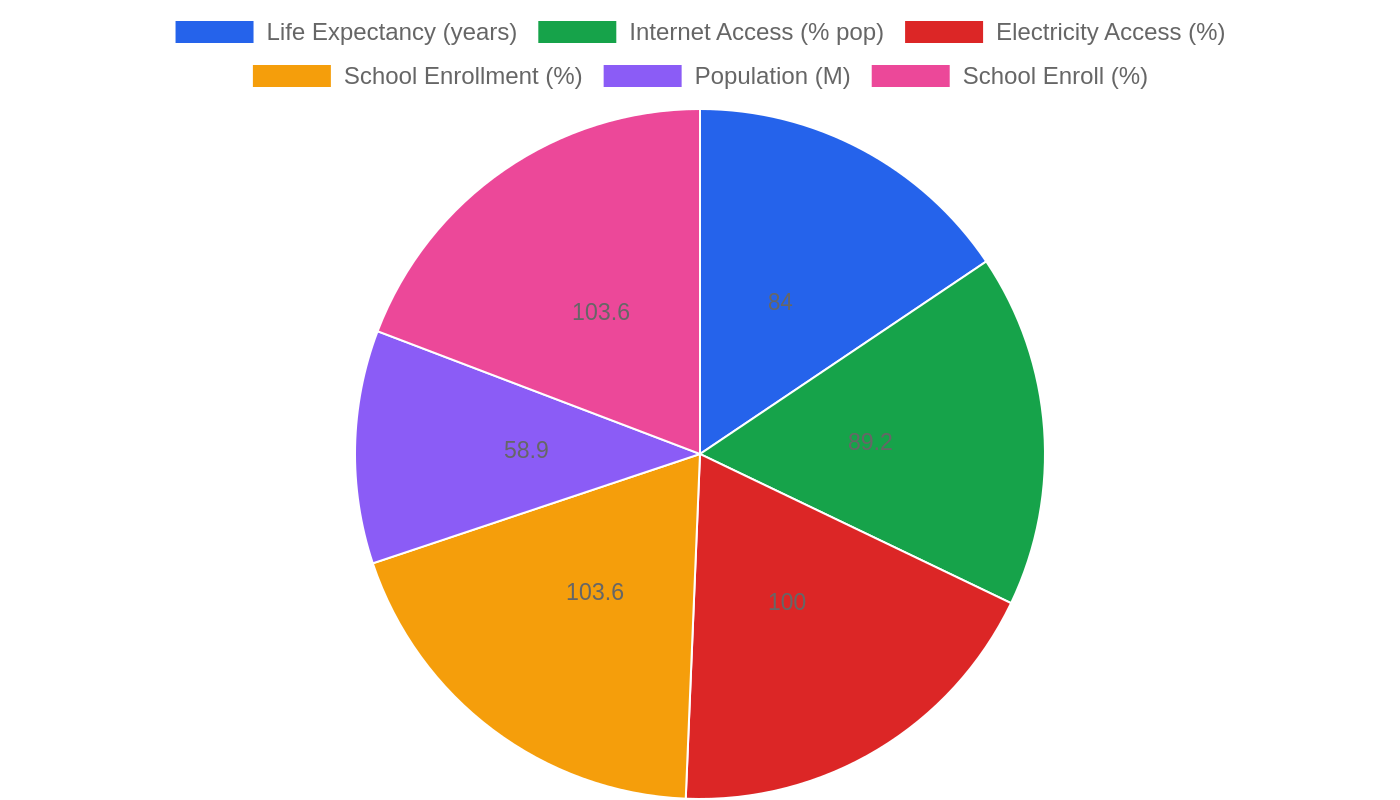
This rate indicates that nearly two-thirds of the workforce is fully engaged, a testament to the structural flexibility of the Italian job market. With a total GDP of roughly $2.55 trillion USD and a population of 58.9 million, the sheer scale of the economy ensures that even small percentage changes have significant national implications.
The high GDP per capita at purchasing power parity (PPP) of $62,802.51 underscores the high standard of living and productivity levels achieved by the average Italian worker, distinguishing the country as a mature, developed economy where quality of life often outweighs raw speed of growth.
Cost of Living: Affordability Amidst High Standards
The interplay between income and expenditure in Italy creates a unique cost-of-living dynamic that defies simple regional comparisons. With a GNI per capita of $42,080.0, the average citizen possesses substantial earning power, yet the actual daily experience is shaped by the moderate inflation rate of 1.53%. This low inflation environment suggests that essential goods and services are not spiraling in price, allowing families to maintain their consumption habits without severe financial strain.
However, the disparity between GDP per capita (PPP) and GNI highlights the importance of local purchasing power; while national averages are high, individual experiences can vary based on urban versus rural locations. Housing costs, while not explicitly detailed in the provided metrics, are generally influenced by these macroeconomic indicators. In cities like Milan or Rome, high demand likely keeps rental prices elevated, whereas smaller towns may offer more affordable entry points for buyers.
The combination of high per-capita wealth and controlled inflation means that Italians generally enjoy a high quality of life relative to their costs, though the modest GDP growth of 0.54% implies that wage increases may be incremental rather than dramatic. Consequently, household budgets are likely focused on efficiency and value, leveraging the stability of prices to manage savings and investments carefully.
Investment & Business Climate: Industrial Powerhouses
Italy’s business landscape is anchored by a diverse array of established corporations that span utilities, industrials, and consumer goods. Major players such as A2A dominate the utilities sector, ensuring critical infrastructure reliability, while Agip remains a cornerstone in the oil and gas industry, reflecting the country’s continued reliance on energy fundamentals.
In the industrials space, companies like Aermacchi and Alenia Aermacchi highlight Italy’s strength in aerospace and manufacturing, sectors that require high skill levels and technological integration. Consumer-facing brands such as Abarth, AGV, and ALAN cater to both domestic and international markets, driving revenue through lifestyle and automotive products. Service-oriented entities like Air Dolomiti and Air One facilitate connectivity, crucial for tourism and trade.
These top companies operate within a political framework defined by a written democratic constitution, established by a Constituent Assembly representing anti-fascist forces, which provides a predictable legal environment for investment. The presence of such a wide range of industries—from heavy industrials to niche consumer goods—suggests a resilient economic ecosystem capable of weathering sector-specific shocks.
Investors looking at Italy should consider these legacy firms as stable anchors, while also noting the potential for innovation within the consumer services and technology-adjacent segments represented by brands like AGV.
Safety, Politics & Quality of Life: Institutional Stability
Political stability remains one of Italy’s strongest assets, providing a consistent backdrop for social and economic activities. Since 1946, Italy has operated as a unitary parliamentary republic, a system that has endured for decades and fostered a deep sense of national identity rooted in democratic values.
President Sergio Mattarella, serving since 2015, acts as the head of state, elected for a seven-year term by Parliament and regional voters, ensuring a level of continuity that transcends short-term political cycles. This institutional permanence contributes to a general sense of safety and order, although specific crime and safety indices are currently listed as N/A in the available data.
Despite the lack of granular crime statistics, the political framework suggests a society governed by rule of law, with protections enshrined in a constitution derived from anti-fascist liberation forces. For expatriates and residents, this political maturity translates into reliable public services and legal recourse. The absence of extreme political volatility allows for long-term planning in both personal and professional spheres.
While happiness data is not explicitly quantified in the provided text, the high GDP per capita and low unemployment suggest a baseline of well-being that supports social cohesion. The focus on democratic institutions continues to shape the national discourse, prioritizing stability and constitutional integrity over rapid, disruptive change.
What’s Happening Now: Policy and Perception
The current economic climate in Italy is characterized by a careful balancing act between maintaining fiscal discipline and fostering growth. With GDP growth pinned at just over half a percent, policymakers are likely focusing on structural reforms to unlock higher productivity rather than relying on stimulus alone. The low inflation rate of 1.53% gives the central bank room to maneuver, though no specific monetary policy actions are detailed in the current data set.
Businesses are navigating this environment by leveraging their strong brand equity and industrial base, as seen in the performance of major companies like Agip and A2A. There is a growing emphasis on sustainability and efficiency, driven by the need to maximize output within a constrained growth model. The political landscape, underpinned by President Mattarella’s long tenure, provides a steady hand during these deliberations, reducing uncertainty for foreign and domestic investors alike.
Recent trends suggest a shift towards consolidating gains made in previous years, with a focus on preserving the high standards of living evidenced by the $62,802 PPP per capita figure. As the year progresses, attention will likely turn to how effectively these policies translate into tangible improvements for the unemployed 6.391% of the workforce, aiming to further reduce joblessness while keeping inflation in check.
The Bottom Line
Italy offers a compelling case for investors and observers seeking stability in a volatile global market. The combination of low inflation, manageable unemployment, and strong institutional frameworks makes it a safe harbor for capital preservation and steady, albeit slow, growth. Those interested in industrial, utility, and consumer sectors will find established leaders with deep market penetration.
Ultimately, Italy is best suited for stakeholders who prioritize long-term resilience and high quality of life over rapid, speculative returns.
Sources & Methodology
This article is authored by Economic Pulse Net for informational and research purposes. Economic Pulse Net sources its data from multilateral institutions, national statistics bureaus, and proprietary databases. All data is believed to be current as of the date of publication.
Published: October 04, 2026 | Category: Research — Italy
Use these signals in your own platform
Economic Pulse publishes its live signal feed through a documented, read-only API. Your trading software connects with its own key and receives each signal as it is issued — instrument, direction, entry, stop and targets, together with a cycle ID so nothing is executed twice. The feed is independent of this website and cannot change it.
Signals are informational only and are not financial advice.