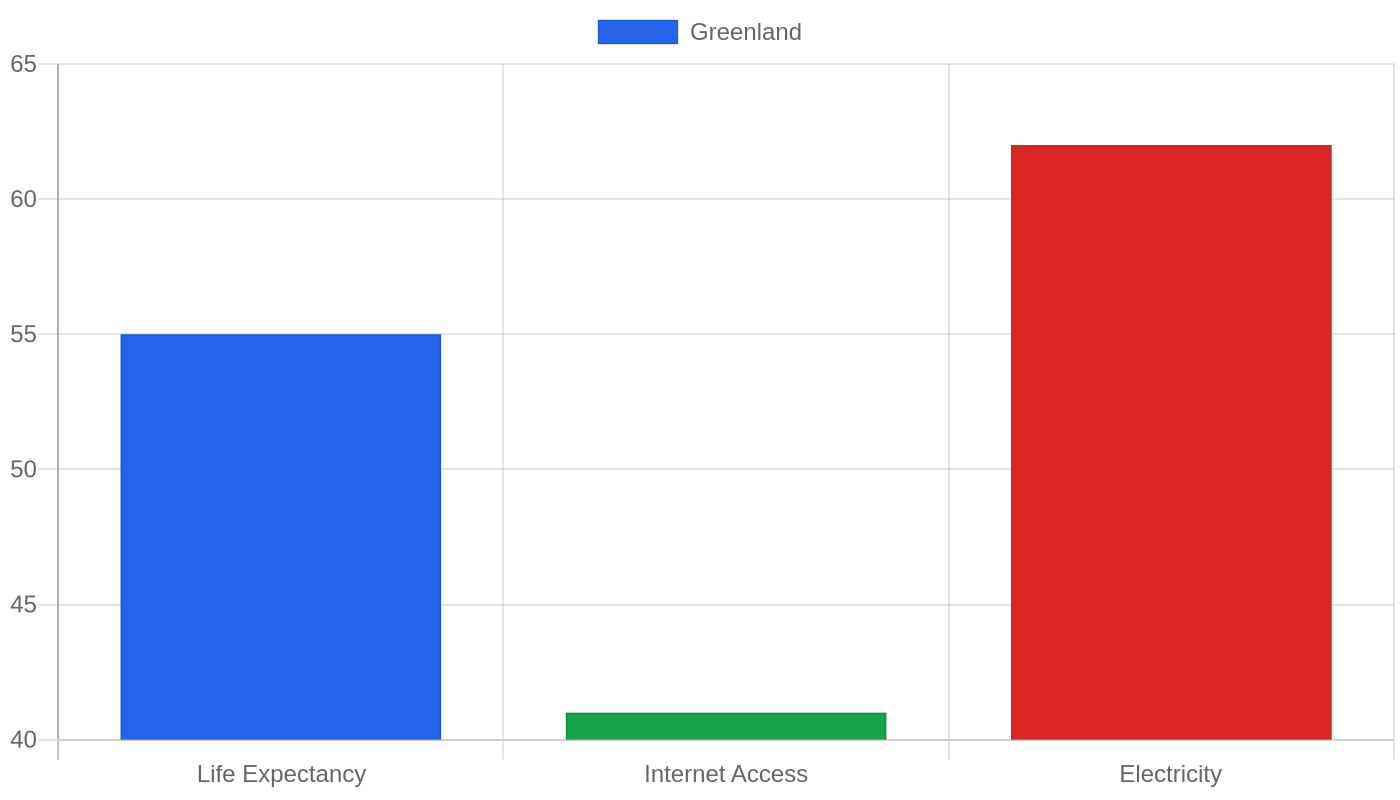
Economic Pulse Net | Sources: World Bank World Development Indicators, Government Sources | 2026
Key Takeaways
* Greenland operates under a distinct system of home rule where the local government, Naalakkersuisut, manages executive affairs while maintaining ties to broader international frameworks.
The economy is heavily influenced by key state-backed and private entities such as Air Greenland, Bank of Greenland, and Brugseni, which dominate consumer services and industrial sectors.
Official macroeconomic indicators like GDP growth, inflation, and unemployment are currently listed as N/A by the World Bank, suggesting a reliance on alternative metrics or limited data reporting for standard global comparisons.
Political stability is anchored by the Inatsisartut parliament, which comprises 31 members who legislate on matters within the scope of Greenlandic autonomy.
Business opportunities exist primarily within established industries including consumer goods, financials, and transportation, though specific crime and safety indices remain unreported in current datasets.
The Architecture of Autonomy and Governance
Understanding Greenland requires looking beyond traditional economic charts to its political structure, which fundamentally shapes its economic reality. The Greenlandic government, known as Naalakkersuisut, holds significant executive power over local government affairs, allowing it to tailor policies to the unique challenges of an Arctic nation. At the helm is the Naalakkersuisut Siulittaasuat, commonly referred to as the Premier, who leads the cabinet alongside other ministers called Naalakkersuisoq.
This executive branch works in tandem with the Inatsisartut, or “Legislators,” the national parliament that currently consists of 31 members. These legislators are responsible for passing laws that govern domestic issues, creating a legislative environment that is distinctly Greenlandic rather than a direct extension of foreign powers.
This separation of powers ensures that local priorities—such as infrastructure development in remote areas or support for indigenous industries—are addressed through a dedicated democratic process. While this system provides agility in local decision-making, it also means that economic policy is deeply intertwined with political negotiations among these 31 representatives.
Consequently, any major economic shift must first navigate the parliamentary landscape, making political stability a precursor to economic predictability.
Macro-Economic Indicators and Data Gaps
When examining the core economic health of Greenland through the lens of the World Bank, one encounters a landscape defined more by what is absent than what is present. The latest data reports GDP growth, inflation CPI, and unemployment rates all as N/A%, indicating either a lack of recent standardized reporting or a structural difference in how these metrics are captured in such a small, specialized economy.
Similarly, the Gross Domestic Product in USD, GDP per capita based on purchasing power parity (PPP), and GNI per capita are not available in the current dataset. This absence of hard numerical data does not necessarily imply economic stagnation but rather highlights the difficulty of applying standard global economic models to a territory with such distinct demographic and geographic characteristics.
Without concrete figures for population size or total GDP output, analysts must rely on qualitative assessments of industry performance rather than quantitative growth trends. This data gap forces investors and observers to look at sector-specific indicators rather than aggregate national statistics. It suggests that Greenland’s economic narrative is best understood through the operational success of its primary companies and industries, rather than broad macroeconomic aggregates.
Therefore, the “N/A” labels serve as a reminder that Greenland may require bespoke economic indicators that reflect its reliance on specific sectors like tourism, fishing, and public services, which are not fully captured by standard World Bank templates.
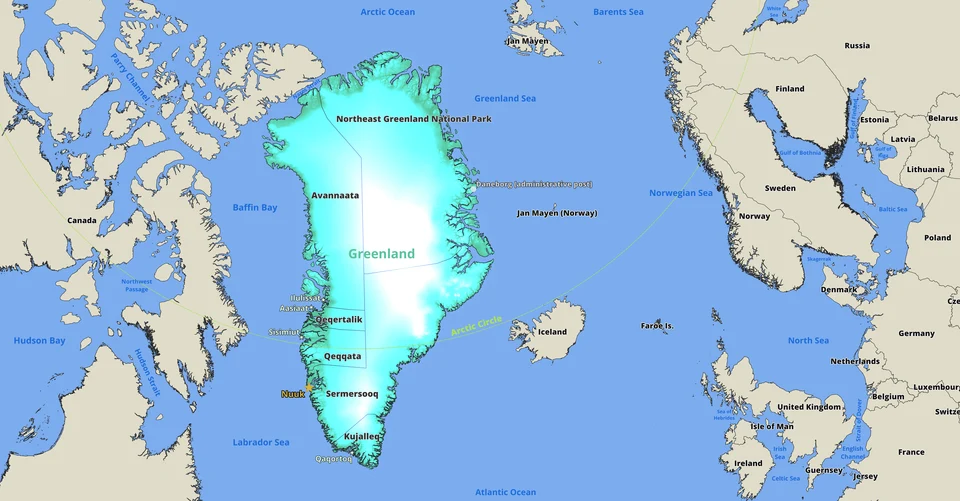
Corporate Landscape and Industrial Drivers
Despite the lack of aggregate macroeconomic data, the corporate sector in Greenland presents a clear picture of the industries driving daily life and commerce. The business environment is characterized by a mix of consumer services, industrials, and financial institutions that cater to both local needs and external connections. Air Greenland stands out as a critical player in the consumer services sector, likely facilitating both domestic connectivity and international tourism, which are vital for an island nation.
Similarly, Arctic Umiaq Line and Diskoline operate within the industrials category, suggesting a robust logistics and transportation network essential for moving goods across the challenging Arctic terrain. In the consumer space, companies like Brugseni, Atuagkat Bookstore, and Great Greenland Furhouse indicate a steady demand for retail and cultural goods among the population.
The presence of Bank of Greenland in the financials sector underscores the importance of local banking services in supporting these commercial activities. Furthermore, Greenland Airport Authority and Kalaallit Nunaata Radioa highlight the role of state-linked entities in managing infrastructure and media, respectively. Greenland Brewhouse adds a touch to the consumer goods market, reflecting local production capabilities.
Together, these top companies form the backbone of the economy, demonstrating that while broad GDP figures may be elusive, specific industrial outputs and service provisions remain active and structured. Investors looking at Greenland should focus on these key players, as their performance serves as a proxy for overall economic vitality.
Cost of Living and Daily Expenses
For residents and potential expatriates, the cost of living in Greenland is shaped by its isolation and import dependency, though specific price indices are not provided in the current data. Without explicit figures on housing costs, rent versus buy ratios, or daily expense benchmarks, it is difficult to make precise comparisons to regional averages.
However, the presence of major retailers like Brugseni and specialized stores like Great Greenland Furhouse suggests a developed retail infrastructure that supports a certain standard of living. The availability of consumer services from entities like Air Greenland and Greenland Airport Authority implies that travel and mobility costs are integrated into the economic fabric, potentially affecting the overall cost of doing business or living.
The lack of reported crime and safety indices further complicates the assessment of quality of life, as security concerns often influence insurance costs and property values. In the absence of hard data, prospective residents must rely on anecdotal evidence or localized surveys to gauge affordability. Generally, remote Arctic communities tend to face higher costs for imported goods due to logistical complexities, which would naturally impact the daily budget of households.
Therefore, while exact numbers are missing, the structural elements of the economy hint at a cost environment that is managed through established local supply chains and service providers.
Safety, Politics, and Quality of Life
The social fabric of Greenland is woven together by its political framework and community structures, even when specific safety metrics are unavailable. The Crime Index and Safety Index are currently listed as N/A, leaving no statistical baseline for assessing personal security risks in urban or rural areas. This absence of data does not inherently suggest high crime or instability but rather reflects a gap in publicly reported statistics.
Politically, the country enjoys a stable democratic process through the Inatsisartut, with 31 elected officials ensuring that local voices are heard in governance. The existence of a dedicated media outlet like Kalaallit Nunaata Radioa indicates an informed citizenry and a free flow of information, which are hallmarks of a healthy society.
The happiness data or general quality of life metrics are not explicitly detailed in the provided text, but the organized nature of the government and corporate sectors suggests a functional society. Residents likely benefit from a strong sense of community given the interconnectedness of the main industries and the central role of the government in local affairs.
While we cannot quantify safety or satisfaction numerically, the institutional stability provided by the Naalakkersuisut and the Inatsisartut offers a foundation for social cohesion. This political maturity is crucial for maintaining order and fostering an environment where businesses can thrive without the distraction of civil unrest.
What’s Happening Now: Current Affairs and Outlook
Currently, the focus in Greenland remains on the interplay between its autonomous governance and its evolving economic partnerships. With the Inatsisartut holding 31 seats, legislative priorities are actively being debated, likely centering on sustainable development and resource management. The operational status of key companies like Air Greenland and Bank of Greenland suggests that essential services continue to function smoothly, providing stability amidst any broader economic uncertainties.
Although specific recent news events or live indicators are not detailed in the provided data, the continued existence and activity of these major firms imply ongoing business operations and investment. The lack of updated GDP or inflation figures might indicate that the government is prioritizing other forms of economic reporting or that data collection cycles are aligned differently than global standards.
Observers should watch for any shifts in the composition of the Naalakkersuisut cabinet, as changes in leadership could signal new policy directions regarding trade or environmental regulations. Additionally, developments in the industrial sector, particularly those involving Arctic Umiaq Line and Diskoline, may offer clues about infrastructure investments and logistical improvements.
The steady presence of consumer goods producers like Greenland Brewhouse and Great Greenland Furhouse points to sustained domestic consumption, which is a positive sign for internal economic resilience. As always, the dynamic between local political decisions and international economic pressures will define Greenland’s trajectory in the coming years.
The Bottom Line
Greenland presents a unique case study in economic journalism, where traditional metrics give way to structural and institutional analysis. Investors and researchers should monitor the performance of its key corporate players, particularly in transport and finance, as these serve as reliable indicators of economic health. While the absence of standard World Bank data requires a cautious approach, the stable political framework and active industrial base provide a solid foundation for long-term engagement.
Ultimately, Greenland’s story is one of resilience and adaptation, governed by local hands and driven by specific industrial strengths.
Sources & Methodology
This article is authored by Economic Pulse Net for informational and research purposes. Economic Pulse Net sources its data from multilateral institutions, national statistics bureaus, and proprietary databases. All data is believed to be current as of the date of publication.
Published: October 26, 2026 | Category: Research — Greenland
Use these signals in your own platform
Economic Pulse publishes its live signal feed through a documented, read-only API. Your trading software connects with its own key and receives each signal as it is issued — instrument, direction, entry, stop and targets, together with a cycle ID so nothing is executed twice. The feed is independent of this website and cannot change it.
Signals are informational only and are not financial advice.