Economic Pulse Net | Sources: World Bank World Development Indicators, Government Sources | 2026
Key Takeaways
– Gibraltar’s economy remains heavily dependent on financial services, online gaming, and tourism, but official GDP, inflation, and unemployment figures are not currently published by the World Bank, making independent assessment challenging.
– The territory’s unique status as a British Overseas Territory on the southern tip of Iberia gives it a distinct regulatory and tax environment, but also leaves it exposed to post-Brexit negotiations with the European Union.
– Cost of living in Gibraltar is widely understood to be high relative to the surrounding Spanish region of Andalusia, driven by limited housing supply and its status as a hub for expatriate professionals.
– Crime and safety indices are not available from the provided data, but Gibraltar is generally perceived as a low-crime jurisdiction in international travel advisories.
– The absence of key macroeconomic indicators from the World Bank highlights a transparency gap that investors and analysts must navigate when assessing the territory’s economic health.
The Rock’s Economic Engine — Finance, Gaming, and the Fog of Data
Gibraltar’s economy does not fit neatly into the World Bank’s standard statistical framework. The provided data shows no figures for GDP growth, inflation, unemployment, or GDP per capita — a notable absence for a territory that markets itself as a sophisticated international finance centre. This does not mean the economy is stagnant. Rather, it reflects the challenges of measuring output in a small, specialised jurisdiction where many companies are registered but may not generate all their value locally.
The main industries of Gibraltar are financial services, online gaming, tourism, and shipping. The territory has long positioned itself as a low-tax gateway for insurers, reinsurers, and captive insurance companies, as well as a regulated hub for online gambling operators serving European markets. These sectors are not captured in traditional GDP metrics in the same way as manufacturing or agriculture, but they drive employment and government revenue.
The absence of unemployment data from the World Bank is particularly striking, given that Gibraltar’s labour market is heavily influenced by cross-border workers from Spain, who make up a significant portion of the workforce. Without official figures, analysts must rely on anecdotal reports and corporate disclosures to gauge the health of the job market.
Inflation is another blind spot. With no CPI data available from the World Bank, it is impossible to say with certainty how the cost of goods and services has moved in recent years. However, given Gibraltar’s reliance on imports and its close economic ties to the United Kingdom and the eurozone, it is reasonable to infer that global inflationary pressures have had some impact.
The lack of hard data makes it difficult to assess real wage growth or purchasing power, which is a significant concern for both residents and businesses planning long-term investments.
The World Bank’s silence on Gibraltar’s GDP and GNI per capita also raises questions about how the territory is classified in international economic comparisons. Without these figures, Gibraltar cannot be easily benchmarked against other small financial centres such as Monaco, Liechtenstein, or the Channel Islands. This data gap may hinder efforts to attract institutional investors who require transparent macroeconomic reporting as part of their due diligence.
Housing on the Rock — Premium Prices in a Pinched Market
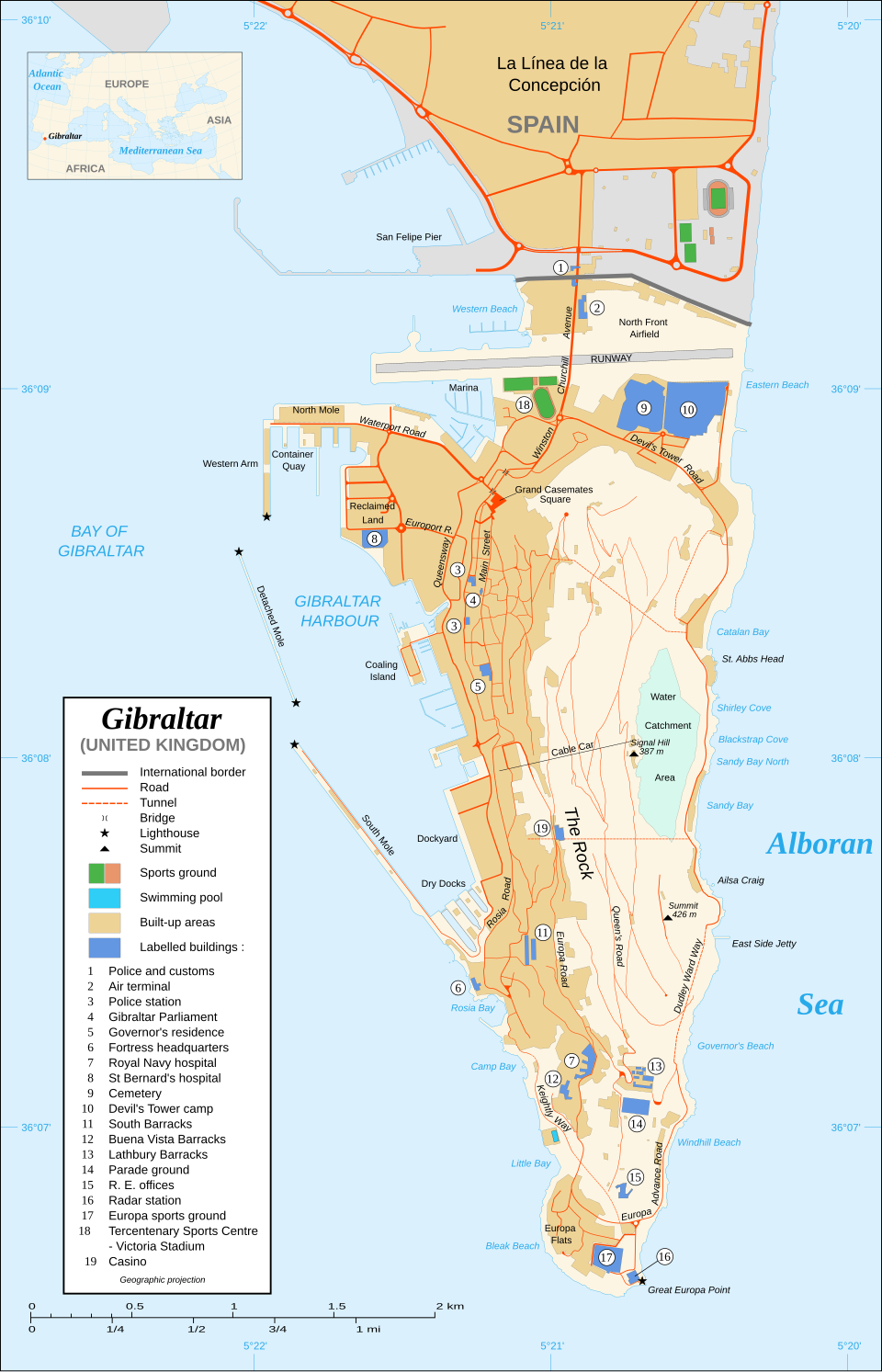
Housing in Gibraltar is notoriously expensive, driven by extreme land scarcity. The territory measures just 6.8 square kilometres, and with a population that has grown steadily over the past two decades, demand for residential property far outstrips supply. The provided data does not include specific cost-of-living figures, but it is widely understood among regional analysts that Gibraltar’s housing costs are among the highest in the Mediterranean, comparable to central London on a per-square-metre basis.
Renting is the dominant tenure for most workers, particularly those employed in the finance and gaming sectors. Many cross-border workers choose to live in the neighbouring Spanish towns of La Línea de la Concepción, San Roque, or Algeciras, where housing costs are significantly lower, and commute across the border daily.
This has created a bifurcated housing market: premium-priced properties within the territory for those who can afford them, and more affordable options across the frontier for those willing to tolerate border delays.
Buying property in Gibraltar is a complex process, with strict regulations on who can purchase and limited availability of new developments. The government has attempted to address the shortage through land reclamation projects and the construction of new residential towers, but progress has been slow. For the average worker, homeownership remains out of reach without significant financial backing or employer assistance.
The lack of official cost-of-living data from the World Bank means that comparisons with other jurisdictions are based on anecdotal evidence and real estate listings rather than systematic surveys.
Business and Investment — A Low-Tax Haven Under Scrutiny
Gibraltar’s business environment is defined by its corporate tax rate of just 10% for most companies, one of the lowest in Europe, and its status as a British Overseas Territory with access to English common law. The top companies operating in Gibraltar include major online gaming operators such as 888 Holdings, Entain, and Kindred Group, as well as a cluster of insurance and reinsurance firms that have established captive operations there.
The financial services sector is regulated by the Gibraltar Financial Services Commission, which has sought to align the territory with international standards set by the Financial Action Task Force.
For investors, Gibraltar offers a stable legal framework, no capital gains tax, and no wealth tax, making it attractive for high-net-worth individuals and corporate structures. However, the territory has faced increasing pressure from the European Union and the OECD to tighten its tax transparency and anti-money laundering regulations. The post-Brexit relationship with the EU remains unresolved, creating uncertainty for businesses that rely on access to the single market.
The absence of detailed economic data from the World Bank makes it harder for potential investors to conduct thorough due diligence, but the territory’s reputation as a well-regulated jurisdiction has so far sustained investor confidence.
Sectors to watch include fintech, where Gibraltar was an early adopter of distributed ledger technology regulation, and maritime services, given the port’s strategic location at the entrance to the Mediterranean. The government has also signalled interest in expanding the territory’s role as a hub for high-value services, including legal and accounting firms that serve international clients.
Safety, Politics, and Life on the Rock
Crime and safety indices are not provided in the available data, but Gibraltar is generally regarded as a safe jurisdiction with low levels of violent crime. The Royal Gibraltar Police maintains a visible presence, and the territory’s small size and close-knit community contribute to a sense of security. Petty crime such as pickpocketing can occur in tourist areas, but serious incidents are rare.
The absence of a formal crime index from the data does not necessarily indicate a problem; rather, it reflects the limited international statistical coverage of small territories.
Politically, Gibraltar is a British Overseas Territory with its own parliament and government, headed by the Chief Minister. The territory is not part of the United Kingdom but relies on London for defence and foreign policy. The political landscape is dominated by debates over sovereignty, with Spain continuing to claim the territory.
The post-Brexit negotiations have been the central political issue in recent years, with the government seeking to secure a deal that preserves frictionless movement across the border with Spain while maintaining Gibraltar’s autonomy.
Quality of life in Gibraltar is shaped by its Mediterranean climate, English-speaking environment, and access to both British and Spanish cultural influences. The territory offers good healthcare through the Gibraltar Health Authority, and education follows the British curriculum. However, the high cost of living and limited space can be drawbacks for residents.
The lack of happiness or well-being data from the World Bank means that subjective quality-of-life assessments are based on anecdotal reports rather than systematic surveys.
The Post-Brexit Tightrope — What’s Happening Now
The most pressing issue for Gibraltar today is the ongoing negotiation of its post-Brexit relationship with the European Union. A framework agreement was reached in principle in December 2020, but a final treaty has yet to be signed. The talks have been complicated by Spain’s insistence on having a role in Gibraltar’s border controls and airport management, which the Gibraltarian government has resisted.
The outcome of these negotiations will determine whether Gibraltar retains its status as a gateway for businesses serving both the UK and EU markets.
In the absence of a treaty, Gibraltar has been operating under temporary arrangements that allow for the free movement of people across the border with Spain. However, these arrangements are not permanent, and businesses are growing impatient with the uncertainty. The online gaming sector, which relies on access to European customers, has been particularly vocal about the need for a clear legal framework.
The government has sought to diversify the economy by promoting fintech and maritime services, but the core of Gibraltar’s economic model remains tied to its relationship with the EU.
On the domestic front, the government has been focused on housing policy, infrastructure improvements, and enhancing the territory’s digital economy. There have been efforts to increase transparency in financial reporting, partly in response to international pressure. The absence of updated World Bank data means that the impact of these policies cannot be measured through official statistics, but the government has published its own budget reports and economic forecasts.
For now, Gibraltar’s economy continues to function, but the lack of a permanent EU deal hangs over every business decision.
The Bottom Line
Gibraltar is a small territory with an outsized economic footprint, but the absence of comprehensive World Bank data makes it a challenging country to analyse with precision. Investors and businesses should watch Gibraltar for its low-tax environment, strategic location, and well-regulated financial services sector, but they must also account for the political uncertainty stemming from the unresolved post-Brexit negotiations.
For those willing to navigate the data gaps and the geopolitical complexities, Gibraltar offers opportunities in finance, gaming, and emerging technologies — but the window for action may narrow if a permanent EU agreement is not reached soon.
Sources & Methodology
This article is authored by Economic Pulse Net for informational and research purposes. Economic Pulse Net sources its data from multilateral institutions, national statistics bureaus, and proprietary databases. All data is believed to be current as of the date of publication.
Published: July 28, 2026 | Category: Research — Gibraltar
Use these signals in your own platform
Economic Pulse publishes its live signal feed through a documented, read-only API. Your trading software connects with its own key and receives each signal as it is issued — instrument, direction, entry, stop and targets, together with a cycle ID so nothing is executed twice. The feed is independent of this website and cannot change it.
Signals are informational only and are not financial advice.