Economic Pulse Net | Sources: World Bank World Development Indicators, Government Sources | 2026
Key Takeaways
* Stagnant but Stable: With GDP growth projected at a modest 0.24% for 2025, Germany’s economy is in a holding pattern, yet it remains the largest in Europe with a massive $5.05 trillion output.
Labor Market Resilience: Despite sluggish growth, unemployment remains historically low at 3.71%, indicating a tight labor market and strong underlying workforce stability.
Inflation Cooling: Consumer price inflation has settled near 2.17%, suggesting that monetary pressures are easing and providing a more predictable environment for consumers and businesses.
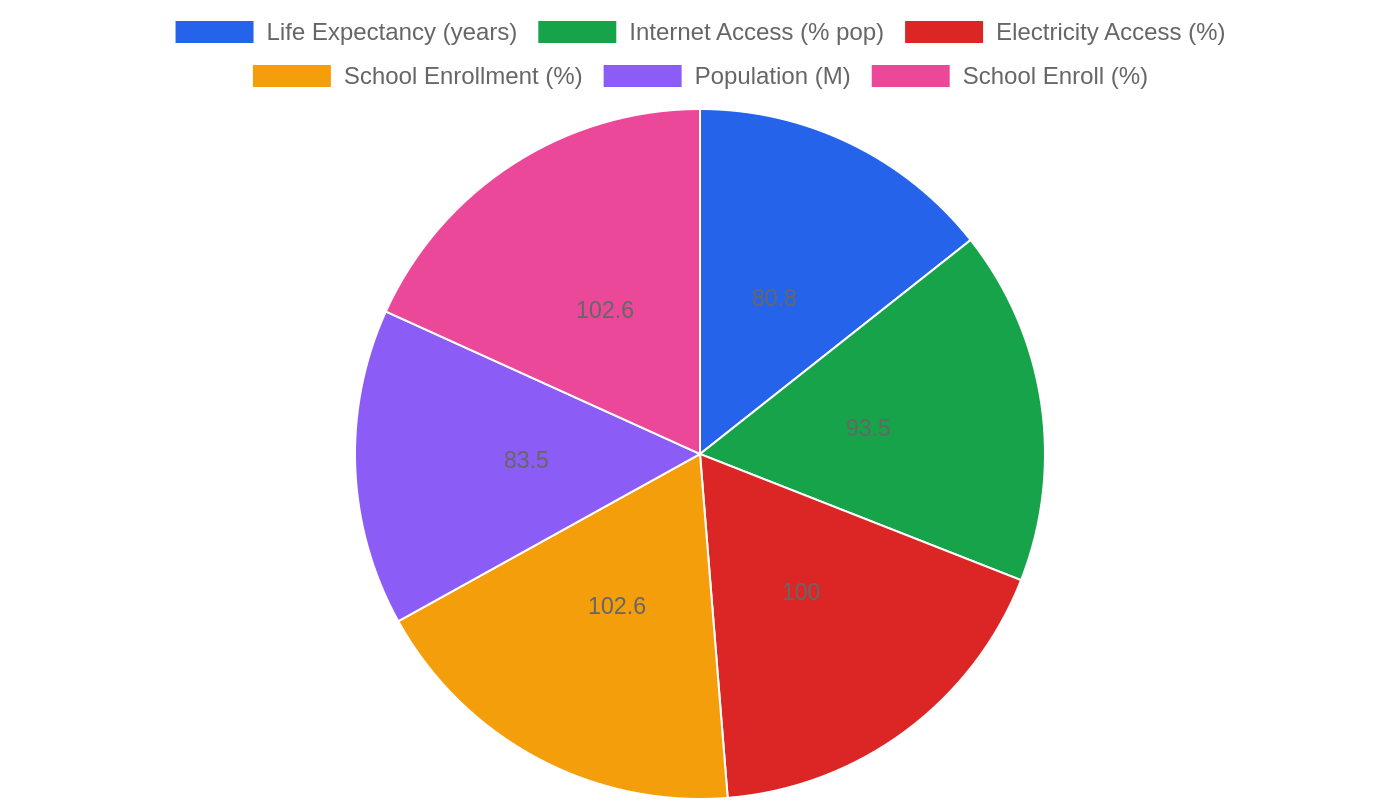
High Living Standards: The country boasts significant wealth, with a GDP per capita (PPP) of approximately $75,406 and a GNI per capita of $60,200, reflecting high purchasing power for its 83.5 million citizens.
Economic Pulse: A Nation in Transition
Germany’s economic landscape in 2025 is defined by cautious stagnation rather than collapse or boom. According to World Bank data, the nation’s GDP growth is projected at just 0.239578342117881% for the year, a figure that underscores the structural challenges facing Europe’s largest economy. However, this slow growth should not be mistaken for weakness; the total GDP stands at an imposing $5,050,922,925,047.05, maintaining its position as the economic anchor of the continent.
What makes these numbers particularly interesting is the disparity between macroeconomic slowdown and microeconomic health. While overall expansion is minimal, the unemployment rate sits at a robust 3.711%, suggesting that the labor market is absorbing shocks effectively and that employment remains a priority for policymakers. Furthermore, inflation, measured by the CPI, has cooled to 2.17178770949721%, which is close to central bank targets and indicates that price stability is being restored.
This combination of low growth and low inflation creates a “soft landing” scenario where businesses can plan without the volatility of hyperinflation or deep recession. The high GDP per capita of PPP $75,406.68 further confirms that while the pie isn’t growing rapidly, the average citizen retains substantial economic security. For investors, this signals a mature, stable market where returns may come from efficiency and innovation rather than rapid volume expansion.
Cost of Living: Premium Prices in a Mature Market
Living in Germany offers a high standard of life, but it comes with the premium pricing associated with one of the world’s most developed economies. The data reveals a GNI per capita of $60,200.0, which provides households with significant disposable income relative to global averages, allowing them to absorb higher costs for housing and daily necessities. With a population of 83,491,249.0, the density and urbanization levels contribute to competitive housing markets, particularly in major industrial hubs.
While specific rental indices are not provided, the high GDP per capita suggests that housing costs are substantial but proportionate to earnings, preventing widespread affordability crises seen in less wealthy nations. Daily expenses are likely influenced by the stabilized inflation rate of 2.17%, meaning that grocery and service prices are relatively predictable compared to previous years of volatility.
Consumers can expect a cost structure that prioritizes quality and sustainability, reflected in the broader economic metrics. Ultimately, the cost of living is high, but it is balanced by strong social safety nets and high wages, ensuring that the net financial well-being of residents remains positive.
Investment & Business Climate: Industrial Powerhouses Lead the Way
The German business environment is characterized by a diverse mix of global giants and specialized industrial leaders. Major companies driving the economy include Adidas, a consumer goods leader known globally, and Aldi, which dominates the consumer services sector with its efficient discount model. In the financial sector, Aareal Bank plays a crucial role in funding real estate and corporate needs, while energy transition efforts are supported by firms like ABO Energy.
The industrial base remains formidable, with Abeking & Rasmussen contributing to shipbuilding and ABUS leading in security technology, alongside Aixtron’s contributions to semiconductor manufacturing equipment. Technology is also emerging as a key vector, represented by About You, which is reshaping e-commerce in the region. These companies operate within a framework that values engineering excellence and export capability.
For foreign investors, the presence of such established brands reduces entry risk, as they often act as anchors for supply chains and local ecosystems. The diversity across industrials, consumer goods, and technology suggests that opportunities exist beyond traditional manufacturing, particularly in digital transformation and sustainable energy solutions.
Safety, Politics & Quality of Life: Democratic Stability Ensures Security
Germany’s political architecture provides a stable foundation for long-term planning and social cohesion. As a federal, parliamentary, representative democratic republic, power is shared between the Bundestag and the Bundesrat, ensuring that both national and state interests are represented in legislation. The Bundestag is elected through direct elections using a personalized proportional representation system with a 5% threshold, which promotes multi-party governance and prevents extreme monopolization of power.
Meanwhile, the Bundesrat ensures that the sixteen federated states have a voice in federal laws, creating a checks-and-balances system that stabilizes policy implementation. This political maturity contributes to a high quality of life, although specific crime and safety indices are listed as N/A in the current dataset. Regardless, the transparent legal framework and democratic institutions generally correlate with lower levels of systemic instability and higher public trust.
Citizens benefit from a rule-of-law environment that protects property rights and encourages civic participation. This political reliability is a critical non-financial asset that attracts international talent and investment alike.
Current Affairs: Navigating the Post-Growth Era
Right now, Germany is navigating a complex period of economic recalibration. The primary focus for policymakers and businesses is managing the delicate balance between fiscal responsibility and necessary infrastructure investment. With inflation cooling to 2.17%, the European Central Bank’s policies are beginning to show their intended effects, allowing for a gradual normalization of interest rates. This shift is crucial for industries like construction and manufacturing, which rely heavily on credit.
Simultaneously, the low unemployment rate of 3.711% presents a challenge for employers seeking skilled labor, potentially driving wage pressures in certain sectors. Political discourse is likely centered on how to stimulate growth beyond the current 0.24% projection, possibly through green energy transitions and digital infrastructure upgrades. Companies like ABO Energy and Aixtron indicate that the private sector is already pivoting toward future-oriented technologies.
The government must now ensure that regulatory frameworks support these innovations without stifling existing industrial strengths. The coming months will be critical in determining whether Germany can leverage its high GDP per capita to fund this next phase of development.
The Bottom Line
Germany remains a critical watchlist for any investor focused on stability over high-risk, high-reward scenarios. Its massive GDP and low unemployment provide a solid floor for economic activity, even if growth rates are currently subdued. Investors should look toward the industrial and technological sectors, where established players are adapting to new energy and digital realities. For those seeking safe-haven assets or long-term holdings in a mature democracy, Germany continues to offer compelling fundamentals.
Sources & Methodology
This article is authored by Economic Pulse Net for informational and research purposes. Economic Pulse Net sources its data from multilateral institutions, national statistics bureaus, and proprietary databases. All data is believed to be current as of the date of publication.
Published: October 15, 2026 | Category: Research — Germany
Use these signals in your own platform
Economic Pulse publishes its live signal feed through a documented, read-only API. Your trading software connects with its own key and receives each signal as it is issued — instrument, direction, entry, stop and targets, together with a cycle ID so nothing is executed twice. The feed is independent of this website and cannot change it.
Signals are informational only and are not financial advice.