Economic Pulse Net | Sources: World Bank World Development Indicators, Government Sources | 2026
Key Takeaways
* Stagnant Macro-Economy: Finland’s GDP growth is projected at a mere 0.17% for 2025, signaling a near-standstill in economic expansion despite high per-capita wealth.
High Cost of Living vs. Low Inflation: While inflation has cooled to approximately 0.33%, the cost of living remains elevated, with a GDP per capita (PPP) of nearly $65,884 indicating significant purchasing power disparity.
Labor Market Strain: Unemployment sits at 9.46%, suggesting structural challenges in integrating workers into a highly specialized economy dominated by technology and basic materials.
Welfare-State Resilience: The political landscape remains anchored in egalitarian ideals and robust social protections, maintaining high quality of life metrics despite economic headwinds.
Corporate Diversity: Key industries range from telecommunications and financials to consumer goods, with major players like Elisa and Amer Sports driving sector-specific innovation.
Economic Slowdown Amidst High Value
Finland’s economic trajectory in 2025 presents a complex picture of stability mixed with stagnation. According to World Bank data, the nation’s GDP growth is projected at a modest 0.173%, effectively flatlining compared to previous years’ expansions. This negligible growth stands in stark contrast to the country’s immense underlying wealth; the GDP per capita based on Purchasing Power Parity (PPP) is an impressive $65,884, reflecting a highly developed standard of living.
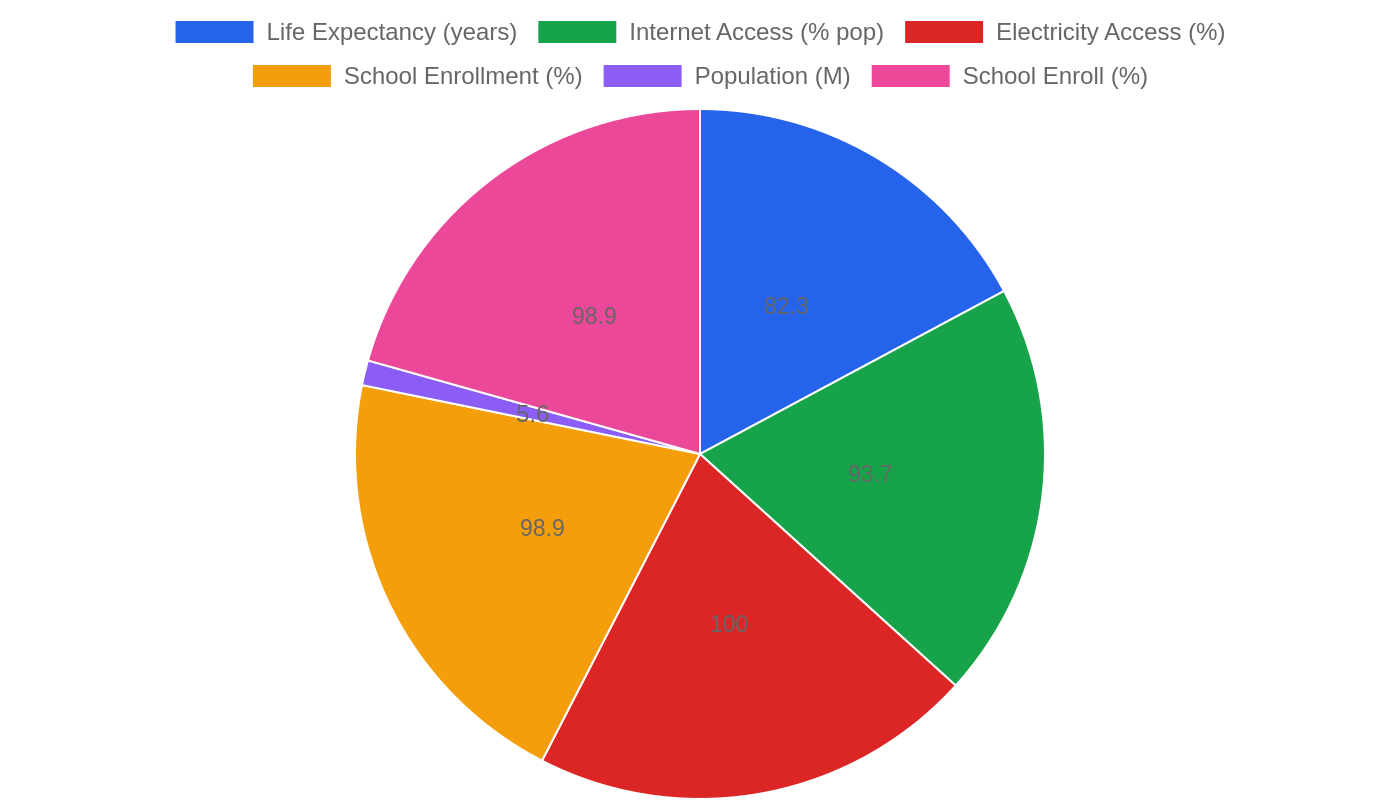
However, this wealth distribution is nuanced, with the Gross National Income (GNI) per capita recorded at $55,250, highlighting the gap between national output and individual income availability. The broader economic context is shaped by a population of roughly 5.65 million people, generating a total GDP of approximately $317 billion USD. While the economy is not shrinking, the lack of momentum suggests that domestic demand may be constrained by external pressures or internal structural rigidities.
The low inflation rate of 0.33% indicates that price stability is being maintained, but without corresponding job creation or industrial expansion, the benefits of this stability are limited to preserving existing purchasing power rather than generating new prosperity.
The Price of Northern Life
For residents and expatriates alike, the cost of living in Finland reflects its status as a high-income Nordic nation. With a GDP per capita (PPP) nearing $66,000, daily expenses and housing costs are inherently higher than global averages, though the specific CPI inflation figure of 0.33% suggests that recent price shocks have largely subsided. Housing markets in urban centers likely command premium rents, driven by the scarcity of supply and the high desirability of Finnish cities among skilled workers.
Daily expenditures, from groceries to utilities, are calibrated to support a high baseline of living standards, consistent with the country’s welfare model. While exact rental yields are not provided in the current dataset, the combination of high GNI per capita ($55,250) and minimal inflation implies that while incomes are strong, the threshold for entering the housing market remains steep.
Consumers can expect stable prices in the short term, but the overall cost burden requires careful budgeting, particularly for those earning below the median national income.
Investment Landscape and Corporate Power
The business environment in Finland is characterized by a blend of traditional industry and modern digital services. Major corporations dominate key sectors, offering a diverse investment palette. In the technology and telecommunications space, firms like Elisa and DNA Oyj are pivotal, providing essential infrastructure in a digitally advanced society. The consumer goods sector features prominent names such as Amer Sports and Bittium, leveraging Finland’s reputation for durable, high-quality manufacturing.
Meanwhile, the financial sector is supported by institutions like Aktia Bank and Bank of Åland, ensuring capital flow within the Nordic framework. Basic materials remain crucial, with Ahlstrom playing a significant role in industrial supply chains. Additionally, Alma Media and Codenomicon highlight the growing importance of media and cybersecurity in the national economy.
These companies operate within a regulatory environment that favors stability and long-term planning, making Finland an attractive destination for conservative, value-oriented investors seeking exposure to European tech and industrial leaders.
Safety, Politics, and Social Fabric
Finland’s social contract is built upon a foundation of egalitarianism and robust state intervention. The political landscape is defined by a Nordic welfare model that prioritizes significant state involvement in critical economic sectors to ensure equitable outcomes. This approach is underpinned by strong cultural values, including broad protections for women’s rights, robust LGBT rights, and a deep commitment to environmentalism and secularism.
These factors contribute to one of the highest levels of safety and trust in the world, although specific crime and safety indices are currently listed as N/A in the available data. The government’s efforts to eliminate poverty and maintain social cohesion are indicators of a system designed to minimize inequality. For citizens, this translates to a high degree of personal security and social mobility, even if the broader economy experiences periods of slow growth.
The alignment of political values with economic policy creates a predictable and secure environment for long-term residency and business operations.
Current Affairs and Policy Shifts
As Finland navigates the post-pandemic economic normalization, the focus remains on sustaining growth within a constrained global environment. The near-zero GDP growth projection for 2025 suggests that policymakers are grappling with sluggish domestic consumption and potentially weak export demand. Despite this, the ultra-low inflation rate of 0.33% provides a buffer against cost-of-living crises, allowing households to maintain their standard of living without severe austerity measures.
The unemployment rate of 9.46% remains a focal point for labor market reforms, with likely ongoing efforts to upskill workers for the tech and green energy sectors. Political discourse continues to emphasize the preservation of the Nordic welfare model, resisting pressures to dismantle state interventions that support critical industries. Recent developments indicate a steady hand at the helm, with no radical policy shifts anticipated in the immediate future.
Instead, the strategy appears to be one of consolidation, leveraging high PPP wealth to weather external economic storms while addressing structural unemployment through targeted education and industry incentives.
The Bottom Line
Finland offers a unique proposition for observers: a wealthy, safe, and politically stable society experiencing temporary economic stagnation. Investors should view this as a defensive hold rather than a high-growth opportunity, focusing on established players in telecom and finance. For individuals, the high cost of living is offset by exceptional social services and safety, making it ideal for those prioritizing quality of life over rapid career acceleration.
Ultimately, Finland remains a beacon of Nordic resilience, proving that economic speed is not the only metric of national success.
Sources & Methodology
This article is authored by Economic Pulse Net for informational and research purposes. Economic Pulse Net sources its data from multilateral institutions, national statistics bureaus, and proprietary databases. All data is believed to be current as of the date of publication.
Published: October 29, 2026 | Category: Research — Finland
Use these signals in your own platform
Economic Pulse publishes its live signal feed through a documented, read-only API. Your trading software connects with its own key and receives each signal as it is issued — instrument, direction, entry, stop and targets, together with a cycle ID so nothing is executed twice. The feed is independent of this website and cannot change it.
Signals are informational only and are not financial advice.