Economic Pulse Net | Sources: World Bank World Development Indicators, Government Sources | 2026
Key Takeaways
* Robust Economic Expansion: Denmark is projected to see GDP growth of nearly 3% in 2025, outpacing many European peers despite its small population base.
Price Stability: With inflation hovering just under 1.9%, the Danish economy offers a rare combination of growth and price stability for consumers and investors.
Wealth Concentration: As one of the wealthiest nations globally, Denmark boasts a GDP per capita (PPP) exceeding $83,000, signaling high living standards and purchasing power.
Stable Political Framework: The constitutional monarchy provides a steady backdrop for business, with executive power effectively managed by a representative parliamentary system.
Diverse Industrial Base: From global healthcare leaders like Ambu to consumer giants like Arla Foods, the corporate landscape is diversified and innovation-driven.
Economic Engine: Growth Amidst Stability
Denmark’s economic trajectory in 2025 presents a compelling case study in resilience and efficiency within a small-market context. According to World Bank data, the nation’s GDP is projected to reach approximately $462.5 billion USD, driven by a robust annual growth rate of 2.928%. This near-3% expansion is particularly significant for an advanced economy, suggesting that domestic consumption and industrial output are both healthy.
Crucially, this growth is not coming at the expense of price stability; the Consumer Price Index (CPI) inflation stands at a manageable 1.89%, well below the double-digit spikes seen in other regions recently. This low inflation environment preserves the real value of wages and savings, allowing households to maintain their standard of living even as the economy expands.
Furthermore, the labor market remains relatively tight but functional, with an unemployment rate of 5.529%, indicating that while there is room for improvement, the majority of the workforce is engaged in productive activity. For international observers, these figures suggest that Denmark has successfully navigated post-pandemic adjustments without succumbing to the stagflation risks plaguing larger economies.
Living Standards: The Cost of Prosperity
The financial reality for residents in Denmark is defined by exceptional wealth metrics rather than affordability challenges typically associated with high-income zones. The country’s Gross National Income (GNI) per capita sits at $77,190, reflecting a highly skilled workforce and strong social safety nets that translate into disposable income. When adjusted for purchasing power parity, the GDP per capita reaches an impressive $83,218, underscoring the immense value generated per individual.
While specific housing cost indices were not provided in the current dataset, the high GNI suggests that housing markets are likely priced to reflect the high average income levels, potentially making homeownership accessible relative to earnings compared to lower-income nations. Daily expenses, therefore, must be viewed through the lens of high baseline income; what might seem expensive in absolute terms is often mitigated by the substantial wage structures prevalent in the Danish labor market.
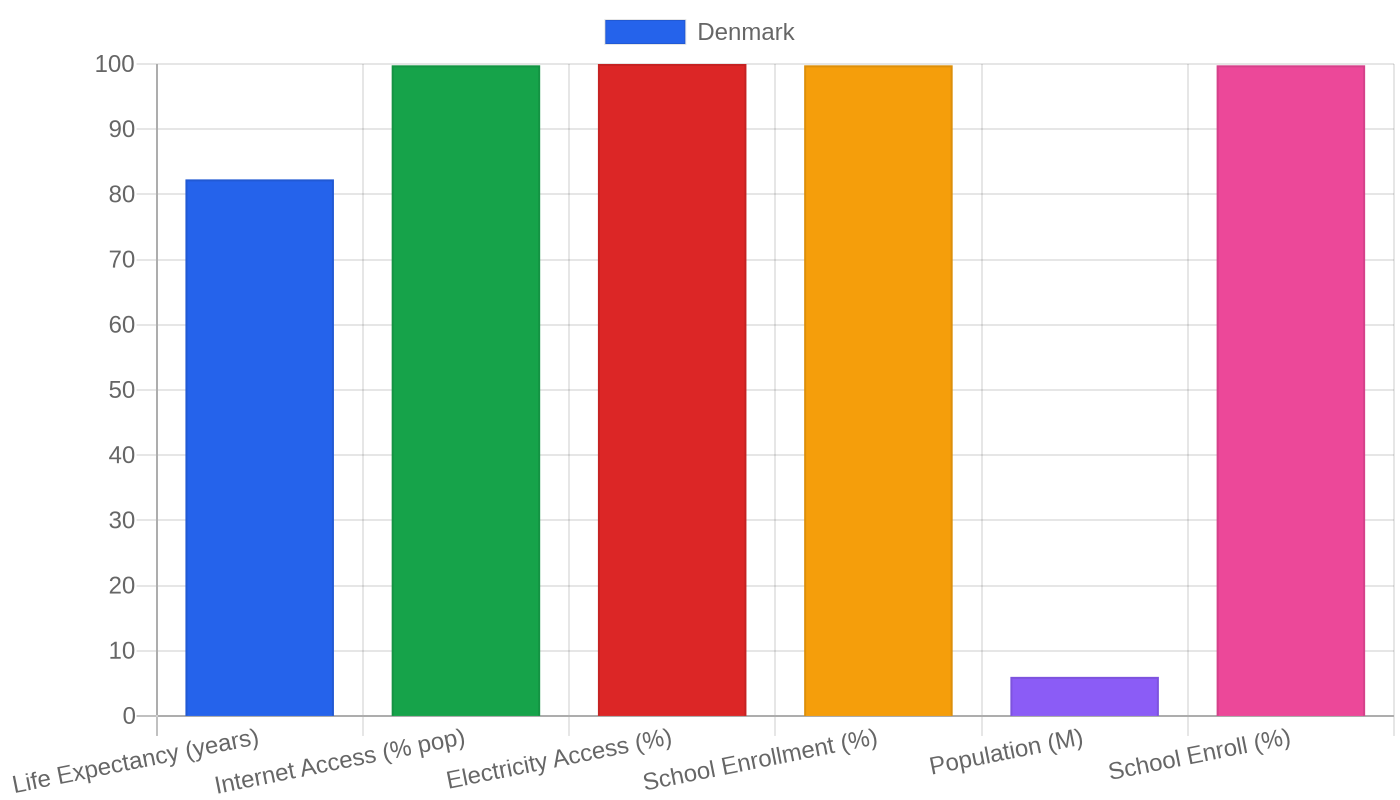
The population of roughly 6 million people contributes to a dense, efficient urban infrastructure, which can help keep certain service-related costs lower than in sprawling metropolitan areas elsewhere. Ultimately, the cost of living is balanced by the quality of life and economic security afforded to citizens, creating a unique equilibrium where high prices coexist with high purchasing power.
Corporate Landscape: Innovation and Global Reach
The Danish business ecosystem is anchored by a diverse array of top-tier companies that dominate niche sectors globally. In the industrial space, firms like Alectia and Arkitema Architects contribute to infrastructure and design excellence, while Bjarke Ingels Group has become synonymous with innovative architectural solutions worldwide.
The healthcare sector is particularly strong, featuring ALK-Abelló and Ambu, which lead in medical devices and allergy treatments, highlighting Denmark’s strength in specialized biotech and medtech. Consumer goods remain a pillar of the economy, with Arla Foods serving as a global dairy giant and Bestseller A/S leading in fashion retail. Additionally, Bang & Olufsen continues to define luxury audio and design, appealing to high-end global markets. Financial stability is supported by Alm.
Brand, ensuring that the capital flows necessary for these enterprises are available domestically. This concentration of industry leaders across healthcare, industrials, and consumer services indicates a mature economy that relies less on raw material exports and more on intellectual property, brand equity, and specialized manufacturing. Investors looking at Denmark should note that these companies are not merely local entities but global players with significant revenue streams outside the Nordic region.
Governance and Social Fabric: Safety and Structure
Denmark’s political and social environment provides a stable foundation for long-term economic planning. The country operates under the Constitution of Denmark, first established in 1849, which defines it as a sovereign constitutional monarchy. While the monarch officially retains executive power and presides over the Council of State, in practice, these duties are strictly representative and ceremonial.
Real political power lies with the unicameral parliament, which appoints and dismisses the Prime Minister, ensuring a responsive democratic process. This separation between ceremonial head of state and functional parliamentary government reduces political volatility and fosters consistent policy implementation.
Regarding safety, specific crime and safety indices were not available in the current data set; however, the general reputation of Nordic countries for low crime rates and high social trust remains a key asset for expatriates and businesses alike. The political landscape is characterized by consensus-building and transparency, which minimizes regulatory shocks for foreign investors.
This stability, combined with the absence of immediate political turbulence, allows businesses to focus on long-term strategy rather than short-term risk mitigation.
Current Affairs: Navigating the Modern Era
The freshest developments in Denmark center on maintaining its competitive edge in a rapidly changing global economy. With GDP growth projected at nearly 3% for 2025, the government and private sector are likely focusing on sustaining this momentum through digital transformation and green energy initiatives, although specific recent news items were not detailed in the provided text.
The low inflation rate of 1.89% suggests that monetary policy has been effective in curbing price pressures without stifling growth, a delicate balance that policymakers are closely monitoring. As major corporations like Arla Foods and Ambu continue to expand internationally, there is an ongoing emphasis on trade agreements and supply chain resilience. The political framework remains unchanged, with the constitutional monarchy providing continuity amidst shifting global alliances.
Businesses are adapting to the new normal of high-value specialization, moving away from volume-based competition toward innovation-led strategies. The focus now is on leveraging the high GDP per capita to invest in future technologies and sustainable practices, ensuring that Denmark remains a leader in quality of life and economic efficiency.
The Bottom Line
Denmark stands out as a beacon of stability and high-value economic activity in Europe. Investors and expatriates should watch this country not for explosive, risky growth, but for reliable, high-quality returns and exceptional living standards. The combination of strong GDP growth, low inflation, and a robust corporate sector makes it an ideal destination for those seeking security and prosperity.
For global businesses, Denmark offers a gateway to the Nordic market with a sophisticated, educated workforce and a transparent legal framework.
Sources & Methodology
This article is authored by Economic Pulse Net for informational and research purposes. Economic Pulse Net sources its data from multilateral institutions, national statistics bureaus, and proprietary databases. All data is believed to be current as of the date of publication.
Published: October 05, 2026 | Category: Research — Denmark
Use these signals in your own platform
Economic Pulse publishes its live signal feed through a documented, read-only API. Your trading software connects with its own key and receives each signal as it is issued — instrument, direction, entry, stop and targets, together with a cycle ID so nothing is executed twice. The feed is independent of this website and cannot change it.
Signals are informational only and are not financial advice.