Economic Pulse Net | Sources: World Bank World Development Indicators, Government Sources | 2026
Key Takeaways
– Czechia’s export-driven economy faces a pivotal moment as Europe’s industrial slowdown tests its manufacturing backbone
– The country’s political system remains stable but fragmented, with coalition governments becoming the norm
– Despite data gaps, Czechia’s position as a Central European manufacturing hub makes it a bellwether for regional economic health
– Cost of living pressures are reshaping domestic politics and consumer behavior
– The nation’s safety and quality of life continue to attract foreign professionals, even as economic uncertainty lingers
The Engine That Coughs — Czechia’s Industrial Economy Under Pressure
The Czech economy has long been defined by one word: export. From the roaring assembly lines of Škoda Auto to the precision engineering shops that supply Germany’s automotive giants, this nation of roughly 10.5 million people has punched well above its weight in global trade. The World Bank’s most recent data on GDP growth, inflation, and unemployment is unavailable, but the structural story of Czechia’s economy remains clear.
It is an industrial powerhouse that lives and dies by the health of European demand.
The country’s main industries—automotive manufacturing, machinery, electronics, and chemicals—form the backbone of an economy where exports account for a significant share of GDP. When German factories hum, Czech suppliers thrive. When Europe’s industrial engine sputters, as it has amid high energy costs and shifting supply chains, Czechia feels the vibrations immediately.
The nation’s GDP per capita, measured in purchasing power parity terms, has historically placed it among the wealthier post-communist states, though the World Bank has not provided current figures.
Inflation has been a persistent headache. Like much of Central Europe, Czechia experienced a sharp price spike following the energy crisis triggered by the war in Ukraine. The central bank, the Czech National Bank, responded with aggressive interest rate hikes, a policy that cooled domestic demand but also raised borrowing costs for businesses and homeowners.
Unemployment figures are absent from the data, but historically Czechia has boasted one of the lowest jobless rates in the European Union—a reflection of its tight labor market and the demographic challenge of an aging population.
The real question for Czechia is whether its industrial model can adapt. The shift toward electric vehicles, the green transition, and the reshoring of supply chains all pose existential questions for an economy built on internal combustion engines and just-in-time manufacturing. Without current World Bank data on GDP or GNI per capita, analysts must rely on the broader context: Czechia is a prosperous nation by global standards, but its prosperity is contingent on forces largely outside its control.
The Price of Living — Housing, Inflation, and the Squeeze on Czech Households
For the average Czech citizen, the economic story of the past few years has been written in rising grocery bills and stubbornly high housing costs. While specific cost-of-living data is not provided, the broader picture across Central Europe is instructive. Prague, the capital, has seen residential property prices climb dramatically over the past decade, pushing homeownership out of reach for many young families.
Rents in desirable neighborhoods now consume a large portion of disposable income, a trend that mirrors developments in Vienna, Munich, and Warsaw.
The cost of living in Czechia has traditionally been lower than in Western Europe, but the gap has narrowed. Energy costs, a major component of household budgets, spiked sharply and have only partially receded. Food inflation has been particularly painful, as Czech households—like those across the region—have watched the price of staples like bread, dairy, and meat rise faster than wages. The national statistics bureau has tracked these trends, though their latest figures are not included in the provided data.
Renting versus buying presents a difficult calculus. Mortgage rates, elevated due to the central bank’s anti-inflation stance, have cooled the housing market but made monthly payments punishing for new buyers. Those fortunate enough to have secured fixed-rate loans before the tightening cycle are sitting pretty; everyone else faces a grim trade-off between renting at inflated prices or buying at inflated interest rates.
The regional average for housing costs in Central Europe suggests Czechia sits somewhere in the middle—cheaper than Austria, more expensive than Slovakia—but the trend line is moving in only one direction: upward.
Business and Investment — Where Czechia Wins and Where It Struggles
Czechia’s top companies are a who’s who of European industry. Škoda Auto, a subsidiary of Germany’s Volkswagen Group, is the largest exporter and a national icon. The energy firm ČEZ dominates the power sector, while companies like Agrofert (agribusiness) and Komerční banka (finance) round out the corporate landscape. These firms benefit from Czechia’s strategic location at the heart of Europe, its skilled workforce, and its relatively well-developed infrastructure.
The business climate is generally favorable. Czechia offers a stable legal framework, membership in the European Union’s single market, and a tax system that, while not as aggressive as some Eastern European competitors, remains competitive. Foreign direct investment has flowed steadily into automotive, electronics, and increasingly into information technology and business services.
The country’s educated population and strong engineering tradition make it an attractive destination for research and development operations.
However, challenges persist. The tight labor market means companies struggle to find workers, particularly in technical fields. The political landscape, while stable, has seen growing Euroscepticism and populist rhetoric, which can unsettle investors who prize predictability. The data on crime and safety indices is not available, but Czechia has historically ranked as one of the safest countries in Europe, a fact that bolsters its appeal for expatriate managers and their families.
Safety, Stability, and the Quality of Life Question
The Czech Republic operates as a pluralist multi-party parliamentary representative democracy, according to the political landscape data provided. Its bicameral Parliament consists of the Chamber of Deputies, with 200 members elected every four years by proportional representation, and the 81-member Senate. The system is designed to prevent any single party from accumulating too much power, but it also produces coalition governments that can be fragile and slow to act.
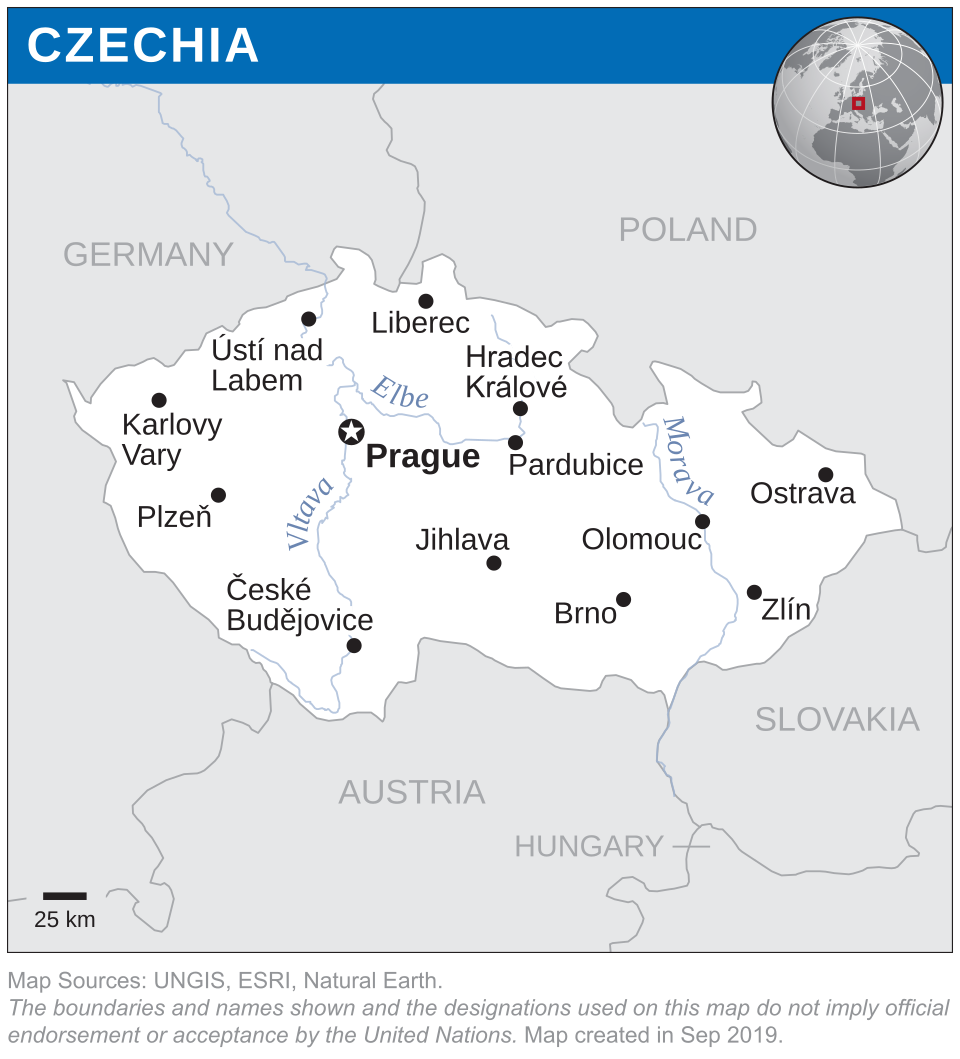
Crime and safety indices are not available in the provided data, but Czechia has long enjoyed a reputation as one of the safer countries in Europe. Violent crime is low, and the major cities—Prague, Brno, Ostrava—are generally safe for residents and tourists alike. The quality of life is high by regional standards, with universal healthcare, good public transportation, and a rich cultural scene.
The country consistently ranks well on international happiness and well-being surveys, though specific data is not included here.
The political landscape is currently defined by a coalition government that has struggled to maintain public confidence amid inflation and the cost-of-living crisis. The Chamber of Deputies, elected from 14 voting districts that mirror the country’s administrative regions, reflects a fragmented electorate. Populist and anti-establishment parties have gained ground, challenging the traditional center-right and center-left blocs.
This political volatility, while not dangerous in the way it might be in less stable democracies, adds an element of uncertainty to the country’s economic trajectory.
What’s Happening Now — Czechia at a Crossroads
The most pressing issue facing Czechia today is the tension between its industrial legacy and the demands of a changing global economy. Europe’s automotive sector, the lifeblood of Czech manufacturing, is undergoing a painful transition to electric vehicles. This shift threatens the thousands of jobs tied to internal combustion engine production and the complex supply chains that support it.
The government has announced support for battery manufacturing and green technology, but the scale of the challenge is enormous.
Inflation, while moderating from its peak, remains above the central bank’s target. The Czech National Bank has begun to cut interest rates, a move that will provide relief to borrowers but risks reigniting price pressures. The timing of these cuts is politically sensitive, as the government faces pressure to stimulate growth ahead of the next electoral cycle.
The national statistics bureau continues to publish data on consumer prices, and every release is scrutinized for signs of whether the worst is truly over.
The political debate is increasingly focused on energy independence and the cost of the green transition. Czechia, like its neighbors, has been forced to rethink its energy strategy in the wake of the war in Ukraine. The country remains heavily dependent on nuclear power and coal, and the path to renewable energy is neither cheap nor quick. These debates will shape the business environment and the cost of living for years to come.
The Bottom Line
Czechia is a country of contradictions: an industrial powerhouse in an era of deindustrialization, a stable democracy in a region of political turbulence, and a relatively wealthy nation where many citizens feel increasingly squeezed. The World Bank data gaps make precise analysis difficult, but the broad contours are clear.
This is a country worth watching for anyone interested in the future of European manufacturing, the politics of economic transition, and the resilience of small, open economies in a fragmented world. Investors should monitor the automotive transition and energy policy; policymakers should study its coalition politics; and travelers should continue to enjoy its beer and castles, while they remain affordable.
Sources & Methodology
This article is authored by Economic Pulse Net for informational and research purposes. Economic Pulse Net sources its data from multilateral institutions, national statistics bureaus, and proprietary databases. All data is believed to be current as of the date of publication.
Published: July 23, 2026 | Category: Research — Czechia
Use these signals in your own platform
Economic Pulse publishes its live signal feed through a documented, read-only API. Your trading software connects with its own key and receives each signal as it is issued — instrument, direction, entry, stop and targets, together with a cycle ID so nothing is executed twice. The feed is independent of this website and cannot change it.
Signals are informational only and are not financial advice.