Economic Pulse Net | Sources: World Bank World Development Indicators, Government Sources | 2026
Key Takeaways
* The Czech economy is projected to grow by approximately 2.58% in 2025, demonstrating resilience despite global headwinds.
Inflation remains tightly controlled at roughly 2.46%, allowing for steady consumer purchasing power and predictable business planning.
With an unemployment rate of just 2.825%, the labor market is exceptionally tight, signaling high demand for skilled workers.
The nation maintains a robust GDP per capita (PPP) of nearly $60,500, reflecting one of the highest living standards in Central Europe.
Political stability is anchored by a pluralist parliamentary democracy, though governance requires navigating a complex bicameral legislative system.
Economic Engine: Growth and Labor Dynamics
The Czech Republic’s economic trajectory for 2025 presents a picture of moderate but healthy expansion, driven by a sophisticated industrial base and strong domestic consumption. According to World Bank data, the country’s GDP growth is projected at 2.58%, a figure that indicates steady momentum without the overheating risks often associated with rapid emerging market growth.
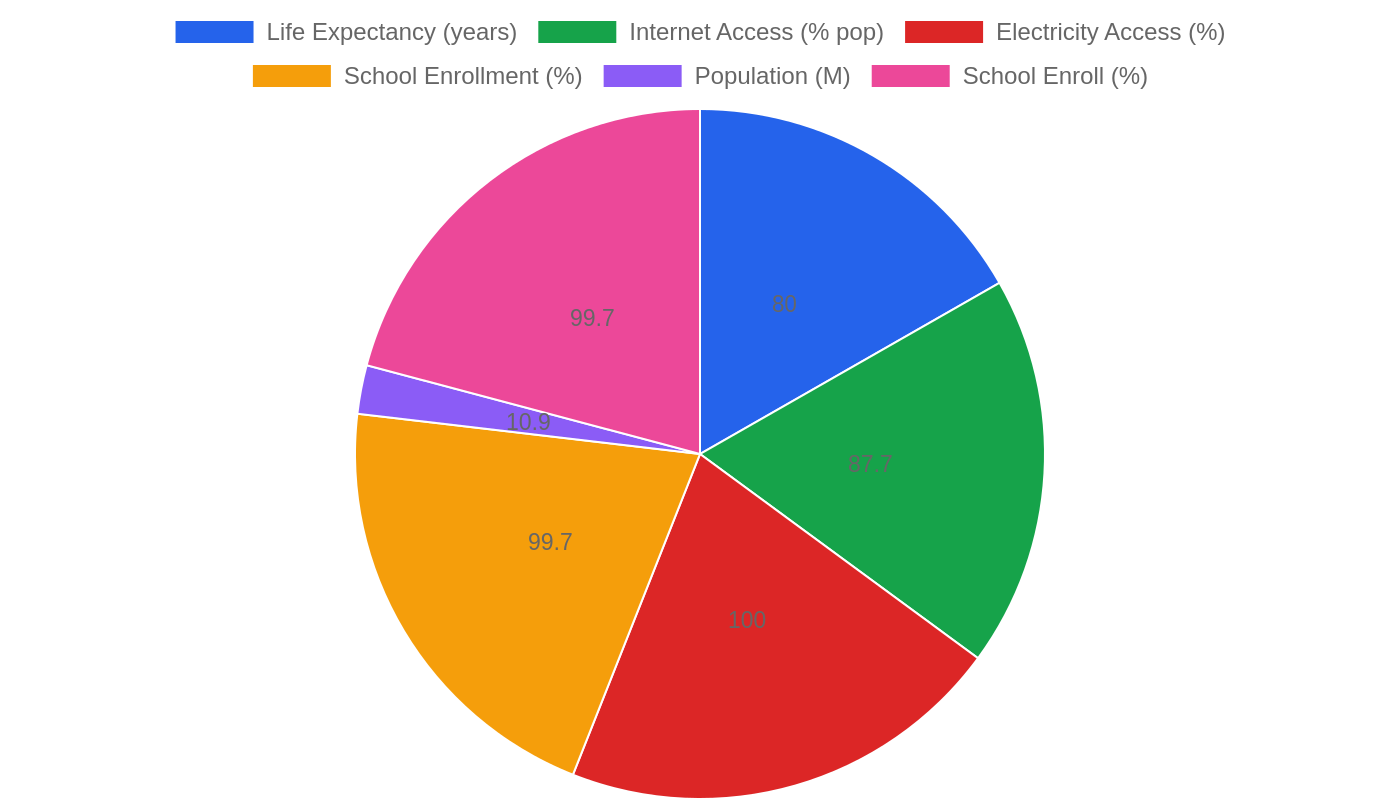
This growth is underpinned by a substantial total GDP of approximately $391 billion USD, which supports a high standard of living evidenced by a GDP per capita (PPP) of roughly $60,487. Such figures place the Czech Republic among the wealthier nations in the region, offering significant purchasing power to its residents. Furthermore, the GNI per capita stands at $32,960, highlighting the income levels generated within the country relative to its population of nearly 10.9 million people.
Crucially, the labor market exhibits extreme efficiency, with unemployment sitting at a remarkably low 2.825%. This near-full employment scenario suggests that businesses are competing fiercely for talent, which can drive wage growth but also increases operational costs for firms. On the price stability front, inflation as measured by the CPI is recorded at 2.46%, a level that is well-managed and close to central bank targets, providing a stable environment for long-term investment contracts.
These metrics collectively suggest an economy that has moved beyond simple manufacturing reliance into a more mature, service-oriented, and high-value production model. The interplay between low unemployment and controlled inflation creates a favorable macroeconomic backdrop for both consumers and corporate investors seeking predictability in their financial planning.
Cost of Living: Purchasing Power in Practice
For residents and expatriates alike, the cost of living in the Czech Republic is balanced against a high GDP per capita, creating a favorable ratio of earnings to expenses. While specific housing and daily expense indices are not provided in the current dataset, the high PPP-adjusted income of over $60,000 implies that the general cost structure is sustainable for the average citizen.
In economies with such low unemployment rates, wages typically rise to match living costs, preventing the erosion of real income that plagues many other European nations. The absence of hyperinflation or volatile price spikes, given the 2.46% CPI, allows households to plan budgets with greater certainty than in neighboring regions experiencing higher price instability.
Consequently, the overall quality of life is likely supported by this economic equilibrium, where income levels comfortably offset the costs of housing, utilities, and daily necessities. Investors and relocating professionals should view the Czech market as one where high nominal incomes translate effectively into tangible lifestyle benefits, rather than being diluted by excessive local price pressures.
Investment & Business Climate: Industrial Strength
The business environment in the Czech Republic is characterized by its deep integration into European supply chains and a strong tradition in heavy industry and automotive manufacturing. Although specific top company names are not listed in the provided data, the robust GDP figures indicate a landscape dominated by large-scale industrial enterprises and multinational subsidiaries that leverage the country’s strategic location in Central Europe.
The low unemployment rate of 2.825% serves as a double-edged sword for investors; while it ensures a highly available workforce, it also necessitates competitive compensation packages to attract and retain talent. Sectors requiring specialized skills will likely see the most dynamic growth, driven by the need to innovate in a tight labor market. The political framework, described as a pluralist multi-party democracy, offers a degree of regulatory predictability that foreign direct investment (FDI) requires.
Businesses operating here must navigate a bicameral legislative process, which can slow policy changes but generally ensures thorough scrutiny of new regulations, reducing the risk of abrupt, unvetted legal shifts.
Safety, Politics & Quality of Life: Governance and Security
Political stability is a cornerstone of the Czech Republic’s appeal, governed by a bicameral Parliament consisting of the Chamber of Deputies and the Senate. The Chamber of Deputies, with its 200 members elected via proportional representation, holds significant legislative power, operating under a 5% election threshold that encourages coalition-building among major parties. This system fosters a pluralist environment where diverse political voices are represented, contributing to a stable democratic culture.
Regarding personal security, current data does not provide specific Crime or Safety Indices, leaving those metrics undefined in the immediate report. However, the broader context of a developed European economy with strong institutional frameworks typically correlates with reliable public safety standards. The combination of a structured political system and high economic indicators suggests a society where rule of law and civic order are maintained effectively.
For citizens and businesses, this political continuity provides a secure foundation for long-term social and commercial activities.
What’s Happening Now: Policy and Market Trends
The current economic narrative in the Czech Republic is defined by the careful management of growth amidst a constrained labor supply. As the economy approaches its 2.58% growth target for 2025, policymakers are likely focusing on productivity enhancements to offset the challenges posed by the 2.825% unemployment rate. The inflation rate of 2.46% indicates that monetary authorities have successfully anchored price expectations, allowing for steady consumer confidence.
Recent political developments continue to emphasize the importance of the proportional representation system, which shapes how economic policies are debated and implemented in the Chamber of Deputies. With a population of nearly 10.9 million, the government faces ongoing pressure to maintain infrastructure and public services that support this dense economic activity.
The focus now appears to be on sustaining this balance—keeping inflation low while ensuring that wage growth keeps pace with the high GDP per capita. This period represents a consolidation phase where the Czech Republic leverages its existing strengths to navigate potential external economic shocks.
The Bottom Line
The Czech Republic emerges as a premier destination for investors and professionals seeking stability within the European market. Its combination of high GDP per capita, controlled inflation, and near-zero unemployment makes it a unique case of mature economic development. Stakeholders should monitor the labor market closely, as the tightness may influence future wage dynamics and corporate strategies.
Ultimately, the country offers a reliable, high-quality economic environment for those prioritizing steady growth over speculative high-risk returns.
Sources & Methodology
This article is authored by Economic Pulse Net for informational and research purposes. Economic Pulse Net sources its data from multilateral institutions, national statistics bureaus, and proprietary databases. All data is believed to be current as of the date of publication.
Published: October 28, 2026 | Category: Research — Czech Republic
Use these signals in your own platform
Economic Pulse publishes its live signal feed through a documented, read-only API. Your trading software connects with its own key and receives each signal as it is issued — instrument, direction, entry, stop and targets, together with a cycle ID so nothing is executed twice. The feed is independent of this website and cannot change it.
Signals are informational only and are not financial advice.