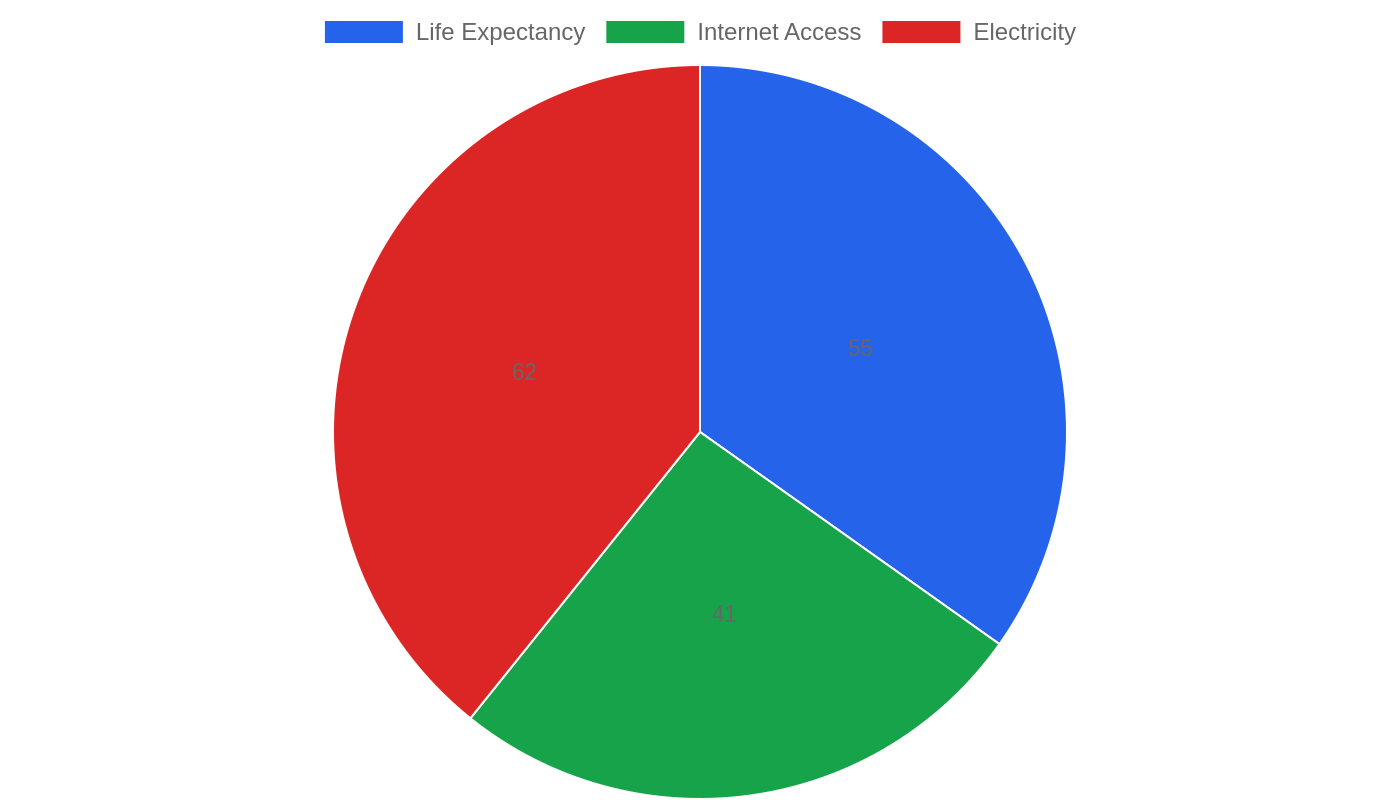
Economic Pulse Net | Sources: World Bank World Development Indicators, Government Sources | 2026
As Europe recalibrates its supply chains and energy security, Croatia is positioning itself not as a headline-grabber, but as a steady, strategic player. With a coastline that anchors Mediterranean trade, a growing LNG terminal, and a corporate sector dominated by household names in food and manufacturing, this is a country quietly building its economic narrative.
Key Takeaways
– Energy infrastructure is a defining story: LNG Hrvatska’s terminal is reshaping Croatia’s role in regional energy supply, making it a key entry point for gas into Central and Eastern Europe.
– Manufacturing and consumer goods anchor the economy: From shipbuilding (3. Maj) to food conglomerates (Agrokor, Atlantic Grupa), the industrial base is diverse but heavily reliant on domestic and regional demand.
– The corporate landscape is a mix of legacy and innovation: Companies like AD Plastik and 3LHD show that Croatia has both automotive suppliers and design-led industrial thinkers.
– Sectoral strengths are clear, but macroeconomic data is sparse: The World Bank’s latest figures do not provide a full picture of GDP, inflation, or unemployment, meaning the narrative must be built on structural insight rather than headline numbers.
– Croatia’s economic identity is regional, not global: The top companies are almost entirely focused on the Adriatic, Central Europe, and the EU’s southern flank.
The Economic Engine — Industry, Energy, and the Shape of Growth
The World Bank’s latest snapshot of Croatia offers little in the way of traditional headline metrics—GDP growth, inflation, and unemployment are all listed as unavailable. But that absence of data should not be mistaken for an absence of activity. What the available information does show is an economy built on a foundation of industrials, consumer goods, and a rapidly maturing energy sector.
The presence of 3. Maj, a shipbuilder with deep roots in the port city of Rijeka, signals that heavy industry remains a source of national pride and employment. Shipbuilding in Croatia has long been a cyclical, state-adjacent industry, but its persistence in the top ranks of companies suggests it still carries weight.
Alongside it, AD Plastik—a supplier of plastic components to the automotive industry—shows that Croatian manufacturing has integrated itself into European supply chains, even if the country does not produce its own mass-market car.
The most telling signal, however, is the rise of LNG Hrvatska. The company operates the Krk Island liquefied natural gas terminal, a project that has transformed Croatia from a peripheral energy market into a strategic hub. For the European Union, which has spent the past several years scrambling to reduce reliance on Russian pipeline gas, Croatia’s LNG capacity is not just a commercial asset—it is a geopolitical one.
The terminal’s expansion plans and its ability to attract regional buyers make it a linchpin of the country’s economic future.
Consumer goods are equally central. Agrokor, despite its past financial turbulence, remains a giant in food retail and processing. Atlantic Grupa, known for products like Argeta and Cedevita, extends Croatia’s reach into regional markets. And Adris Grupa, a diversified holding with interests in tobacco, tourism, and insurance, ties the country’s industrial past to its service-sector future.
What emerges is a picture of an economy that is not chasing tech unicorns or financial speculation, but is instead focused on making things, processing food, and moving energy.
The Cost of Living — A Mediterranean Price Tag with Regional Nuance
Croatia’s cost of living is shaped by its dual identity: a tourist destination for millions of Europeans and a home for a population of roughly 3.8 million. The World Bank data provided does not include specific cost-of-living indices, but the structural context is clear. Housing in coastal cities like Split, Dubrovnik, and Rijeka is heavily influenced by tourism demand, which pushes property prices well above what local wages might otherwise support.
Rent versus buy dynamics are similarly skewed—short-term holiday rentals often yield better returns for property owners than long-term leases, which squeezes the local rental market.
Inland, in cities like Zagreb and Osijek, the cost of living is more moderate, but still reflective of a country that has adopted the euro since 2023. Everyday expenses—groceries, utilities, transport—are broadly in line with Central European averages, though lower than in Western Europe. The challenge for Croatian households is not necessarily the price of goods, but the pace at which wages have risen relative to those prices.
Inflation has been a persistent issue across the eurozone, and Croatia, as a newer member of the currency bloc, has felt the squeeze of imported energy costs and food price volatility.
For the average resident, the cost of living is a story of divergence. Those in tourism-heavy regions face higher prices and housing scarcity, while those in the continental interior enjoy a more stable, if less affluent, environment. The broader point is that Croatia’s cost of living is not uniform—it is a function of geography, seasonality, and the country’s ongoing integration into European economic norms.
Investment & Business Climate — A Land of Familiar Names and New Energy
The top companies listed by the World Bank tell a story of resilience and adaptation. A1 Hrvatska, the local arm of a major European telecom group, represents the country’s digital infrastructure—a sector that has seen steady investment in fiber and mobile networks. 3LHD, an architecture and design firm, may seem like an outlier among industrial giants, but its presence on the list is a reminder that Croatia exports services and intellectual capital, not just goods.
For investors, the most interesting dynamic is the intersection of energy and logistics. LNG Hrvatska is not just a utility; it is a gateway. The terminal on Krk Island has the capacity to supply gas to Hungary, Slovakia, and even further afield, and its expansion is a signal of intent. Companies looking to move energy into Central Europe will increasingly see Croatia as a viable route.
The consumer goods sector remains a dependable bet. Atlantic Grupa and Adris Grupa have shown they can navigate regional volatility and maintain profitability. Agrokor, now restructured after its 2017 crisis, is a more cautious story, but its scale means it cannot be ignored. The business environment, while not without bureaucracy, is stable.
Croatia is a member of the European Union, the eurozone, and the Schengen Area, which removes many of the friction points that complicate investment in other parts of the Balkans.
The sectors to watch are energy, automotive components, and high-end services. The country is not going to become a manufacturing superpower, but it does not need to be. Its value proposition is as a stable, well-located hub for companies that need access to both Western European capital and Eastern European markets.
Safety, Politics & Quality of Life — Stability in a Complex Neighbourhood
The World Bank data does not include a crime index or safety index for Croatia, but the country’s broader reputation is that of a safe, stable society. Violent crime is relatively low, and the most common concerns for residents and visitors are petty theft and tourist-season crowding. This sense of safety is a significant part of Croatia’s quality-of-life appeal, particularly for families and retirees.
Politically, Croatia is a parliamentary republic and a member of the European Union since 2013. The political landscape is dominated by the centre-right Croatian Democratic Union (HDZ) and the centre-left Social Democratic Party (SDP), with a rotating cast of smaller parties holding the balance of power.
The country has faced challenges common to the region—corruption scandals, judicial reform, and the management of EU funds—but it has not experienced the kind of political instability seen in some of its neighbours.
Quality of life in Croatia is heavily tied to geography. The Adriatic coast offers a lifestyle that is the envy of much of Europe—clean water, historic towns, and a slower pace of life. The interior offers a more workaday existence, anchored by Zagreb’s cultural and administrative institutions. The country’s happiness index, while not provided in the data, is generally considered moderate to high, boosted by social cohesion, natural beauty, and a relatively low cost of social stress.
What’s Happening Now — Energy, Expansion, and the Eurozone Squeeze
Croatia is not in a moment of crisis, but it is in a moment of adjustment. The most significant current development is the continued expansion of the LNG terminal on Krk Island. As European demand for non-Russian gas remains elevated, Croatia is moving to increase the terminal’s capacity, which would solidify its position as a regional energy broker. This is not just a commercial story; it is a strategic one, and it is drawing attention from Brussels and regional capitals alike.
At the same time, the Croatian economy is navigating the realities of eurozone membership. The adoption of the euro has brought currency stability, but it has also exposed consumers to the same inflationary pressures affecting the rest of the bloc. Prices for food and energy have been sensitive topics, and the government has faced pressure to address the cost of living without resorting to measures that would distort the market.
The corporate sector is also in motion. Agrokor’s post-restructuring trajectory is being watched closely, as is the performance of AD Plastik amid the European automotive industry’s transition to electric vehicles. The tourism sector remains a powerhouse, but there is increasing discussion about how to manage overtourism in places like Dubrovnik, where the balance between visitor revenue and resident quality of life is delicate.
Finally, Croatia is positioning itself as a logistics hub beyond energy. Its ports, rail connections, and proximity to the Danube corridor make it a natural entry point for goods moving between Asia, the Mediterranean, and Central Europe. The question for the coming years is whether the country can capitalise on this position or whether it will remain a promising but underutilised link in the European supply chain.
The Bottom Line
Croatia is a country to watch for investors and analysts focused on energy security, regional logistics, and the resilience of consumer goods in Southeast Europe. It is not a high-growth, high-risk story; it is a steady, structural one. The expansion of LNG capacity, the stability of the eurozone framework, and the presence of established industrial players make it a dependable, if not spectacular, bet.
For those looking at the broader Balkan and Adriatic region, Croatia is the anchor—a country that has chosen integration, stability, and a quiet but deliberate path to economic relevance.
Sources & Methodology
This article is authored by Economic Pulse Net for informational and research purposes. Economic Pulse Net sources its data from multilateral institutions, national statistics bureaus, and proprietary databases. All data is believed to be current as of the date of publication.
Published: August 01, 2026 | Category: Research — Croatia
Use these signals in your own platform
Economic Pulse publishes its live signal feed through a documented, read-only API. Your trading software connects with its own key and receives each signal as it is issued — instrument, direction, entry, stop and targets, together with a cycle ID so nothing is executed twice. The feed is independent of this website and cannot change it.
Signals are informational only and are not financial advice.