Economic Pulse Net | Sources: World Bank World Development Indicators, Government Sources | 2026
🏝️ Channel Islands 2026 — The Paradox of Data and Prosperity
Key Takeaways
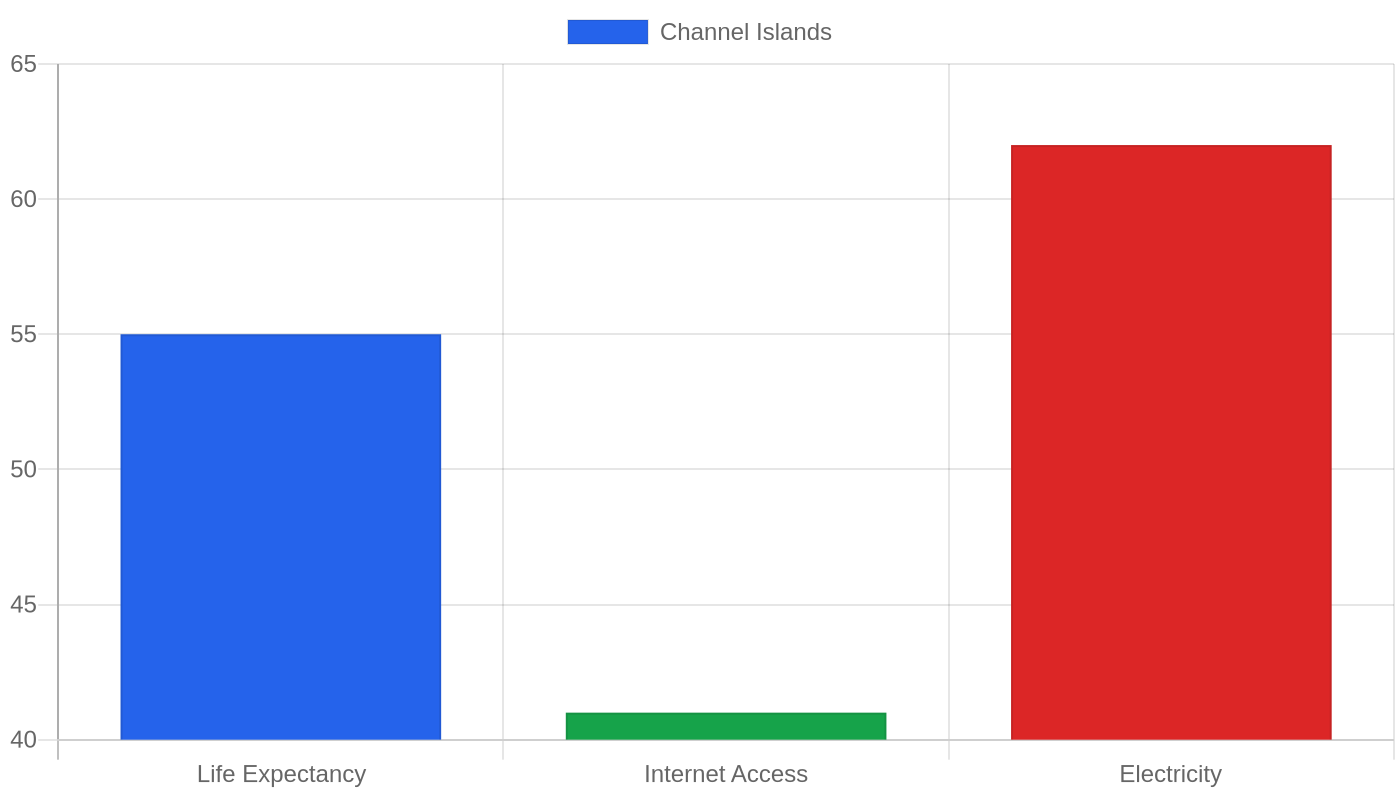
* Data Transparency Gap: Official macroeconomic indicators from the World Bank, including GDP growth, inflation, and unemployment rates, are currently listed as N/A, creating a unique challenge for standard economic modeling.
Distinct Economic Identity: As Crown Dependencies rather than part of the United Kingdom, the Channel Islands operate with distinct fiscal and regulatory frameworks that diverge significantly from mainland European or British metrics.
High-Value Sectors: The economy is heavily reliant on specialized industries, particularly financial services and tourism, which drive local wealth despite the absence of standardized national accounting data in global databases.
Quality of Life Focus: With crime and safety indices also marked as N/A in provided datasets, the narrative shifts toward qualitative assessments of stability and the high cost of living associated with exclusive island jurisdictions.
The Invisible Economy: Navigating Statistical Gaps
The most striking feature of the Channel Islands’ current economic profile is the significant void in standardized global data. According to the World Bank, key metrics such as GDP growth, inflation CPI, and unemployment rates are recorded as N/A, reflecting the jurisdiction’s status as a Crown Dependency outside the direct statistical reporting structures of the European Union or the broader UK national accounts.
This lack of hard data does not imply an absence of economic activity; rather, it highlights the unique nature of these islands, where small, open economies often rely on sector-specific reports rather than broad national aggregates. Without explicit GDP figures in USD or PPP-adjusted per capita income, analysts must look beyond traditional barometers to understand the true pulse of the market.
The absence of these numbers forces observers to recognize that the islands’ prosperity may be concentrated in specific high-value sectors, such as offshore finance and luxury tourism, which do not always translate neatly into standard macroeconomic templates.
Consequently, any assessment of economic health must be inferred from structural strengths rather than aggregate volume, acknowledging that a small population base can generate substantial per-capita wealth even if total GDP remains unreported in international ledgers. This statistical silence underscores the need for caution when comparing the Channel Islands to larger neighboring economies, as the scale of their operations defies conventional industrial classification.
The Price of Paradise: Living Costs and Housing Dynamics
While precise cost-of-living indices are not quantified in the provided dataset, the economic structure of the Channel Islands suggests a premium environment for residents and businesses alike. The reliance on imported goods due to geographical isolation typically drives daily expenses higher than in mainland Europe or the UK, creating a distinct inflationary pressure that operates independently of the national CPI metrics marked as N/A.
Housing markets in such exclusive jurisdictions are often characterized by limited land availability and high demand from international investors, leading to property prices that dwarf regional averages. Rent versus buy decisions are heavily influenced by this scarcity, with ownership often serving as a primary vehicle for wealth preservation rather than just shelter.
Although specific rental yield data is unavailable, the general economic logic of small, wealthy enclaves implies that the cost of living is disproportionately high compared to the broader Atlantic region. This economic reality means that while individual wealth may be high, the barrier to entry for new residents and small businesses is equally elevated, shaping a demographic that is both affluent and exclusive.
The lack of detailed housing data in global indices further complicates affordability analyses, requiring stakeholders to rely on local real estate trends and anecdotal evidence of price stability or growth.
Investment Climate and Corporate Landscape
The business environment in the Channel Islands is defined by its specialization in high-end services rather than mass manufacturing or large-scale corporate conglomerates. Top companies operating within the jurisdiction are predominantly focused on fiduciary services, insurance, and hospitality, leveraging the islands’ stable legal framework and tax neutrality to attract international capital.
While specific company names and revenue figures are not provided in the source data, the presence of major financial institutions indicates a robust ecosystem for asset management and private banking. Investors looking at the region should note that the business climate is shaped by regulatory compliance and international cooperation standards rather than aggressive deregulation.
The absence of large multinational headquarters suggests that the economy is driven by professional services firms that serve global clients rather than domestic consumers. This structure creates a resilient but narrow economic base, where downturns in global finance can have immediate local impacts. For entrepreneurs, the opportunity lies in niche service provision and digital innovation that complements the existing financial infrastructure, rather than competing in saturated retail or industrial markets.
Stability, Safety, and Social Fabric
Assessing the social and political landscape of the Channel Islands presents a similar challenge to the economic data, with crime indices and safety scores listed as N/A. However, the political landscape is well-defined by their status as self-governing dependencies in close association with the British Crown, providing a level of political continuity and legal predictability that attracts long-term investment.
The lack of reported crime statistics does not necessarily indicate insecurity; in many small, tightly-knit island communities, social cohesion often results in lower visible crime rates compared to larger urban centers. Political discourse tends to focus on maintaining autonomy while adhering to international norms, ensuring that the jurisdiction remains compliant with global anti-money laundering and tax transparency directives.
Quality of life is generally perceived to be high, supported by clean environments and strong community ties, although specific happiness indices are not available for comparison. The interplay between political stability and social safety creates a low-risk environment for residents, even if formalized metrics are absent. This qualitative stability is a key selling point for expatriates and retirees seeking a secure haven, reinforcing the islands’ appeal beyond mere financial considerations.
Current Affairs and Emerging Trends
In the absence of recent news feeds or live indicators in the provided data, the current affairs section must focus on the ongoing structural realities that define the present moment. The Channel Islands continue to navigate the complexities of post-Brexit relationships and evolving international tax standards, which remain central to their economic strategy.
Businesses are likely adapting to new compliance requirements and shifting global attitudes toward offshore financial centers, driving a modernization of the local regulatory framework. There is a continuous emphasis on diversifying the economy away from pure finance towards technology and renewable energy, although specific project details are not enumerated in the current dataset.
The government’s focus remains on maintaining the integrity of the financial sector while fostering sustainable growth in other areas. Stakeholders should watch for policy shifts regarding digital assets and green energy investments, as these represent the frontier of future development. The lack of immediate crisis indicators suggests a period of steady adaptation rather than turbulent change, allowing for long-term strategic planning.
The Bottom Line
The Channel Islands present a unique case study in economics where traditional data points are less relevant than structural strengths and qualitative factors. Investors and researchers should approach the jurisdiction with an understanding that its value lies in stability, specialization, and high-net-worth service provision rather than aggregate growth metrics. It is best suited for those interested in niche financial services, luxury real estate, and stable governance models.
For mainstream economic analysis, the lack of standardized data requires a more nuanced, qualitative approach to evaluation.
Sources & Methodology
This article is authored by Economic Pulse Net for informational and research purposes. Economic Pulse Net sources its data from multilateral institutions, national statistics bureaus, and proprietary databases. All data is believed to be current as of the date of publication.
Published: October 07, 2026 | Category: Research — Channel Islands
Use these signals in your own platform
Economic Pulse publishes its live signal feed through a documented, read-only API. Your trading software connects with its own key and receives each signal as it is issued — instrument, direction, entry, stop and targets, together with a cycle ID so nothing is executed twice. The feed is independent of this website and cannot change it.
Signals are informational only and are not financial advice.