Economic Pulse Net | Sources: World Bank World Development Indicators, Government Sources | 2026
Key Takeaways
– Bulgaria operates as a parliamentary democracy with a three-branch political system, where the prime minister holds the most powerful executive position and elections are overseen by an independent Central Election Commission.
– The country’s industrial backbone is dominated by manufacturing and basic materials firms, with major players like Arsenal AD, Asarel Medet, and Balkanstroy driving the industrials and materials sectors.
– Consumer goods and services companies—including Ariana Brewery, Astika Brewery, and Balkantourist—form a significant portion of the top corporate landscape, reflecting domestic consumption patterns.
– Direct democracy mechanisms, including petitions and national referendums, are constitutionally enshrined alongside universal suffrage for citizens aged 18 and older.
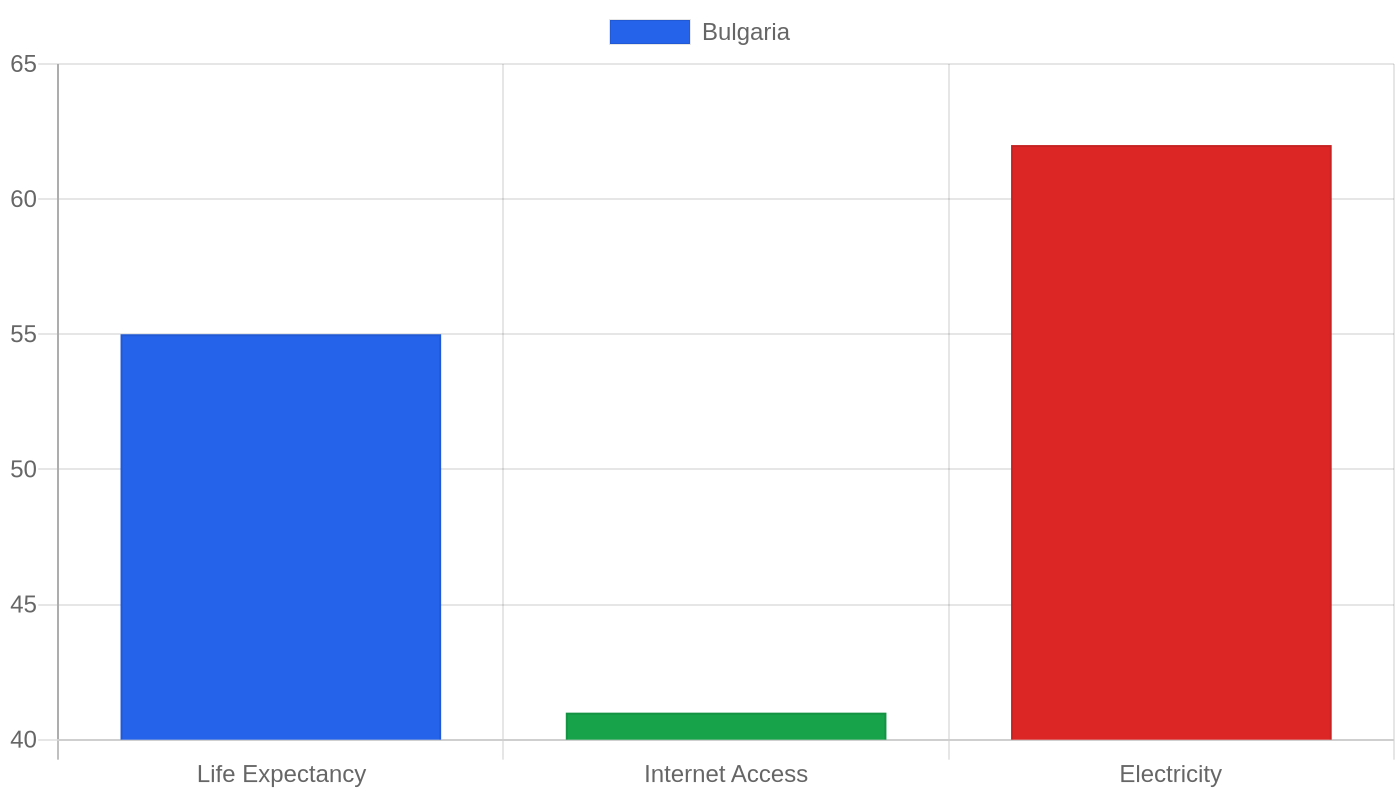
– While specific macroeconomic indicators like GDP growth and inflation are not available in the latest data, Bulgaria’s corporate structure suggests an economy rooted in traditional industries rather than high-tech or financial services.
The Quiet Engine — Industrial Heritage Meets Consumer Resilience
Bulgaria’s economic story is not written in flashy tech unicorns or financial hub ambitions. Instead, it is etched in the heavy machinery of its industrial sector and the steady hum of consumer goods production. The World Bank data points to an economy where the largest publicly visible companies—Arsenal AD, Armimex, and Balkanstroy—are firmly planted in the industrials category.
These are not speculative ventures; they are the kind of enterprises that build things, manufacture equipment, and move materials. Asarel Medet, operating in basic materials, underscores a reliance on resource extraction and processing that has long been a pillar of Balkan economies.
On the consumer side, the prominence of Ariana Brewery, Astika Brewery, and Astra Bioplant suggests a robust domestic market for food, drink, and agricultural products. Brewing, in particular, has deep cultural roots in Bulgaria, and these companies likely serve both local demand and regional export markets. The service sector is represented by Air VIA in consumer services and Balkantourist in tourism, indicating that Bulgaria continues to leverage its Black Sea coastline and historical sites as economic assets.
Without specific GDP or employment figures from the World Bank, we cannot quantify the size of these sectors, but the composition of top companies tells us that Bulgaria’s economy is diversified across manufacturing, materials, and consumption—a mix that provides some insulation against sector-specific shocks.
Yet the absence of headline macroeconomic data is itself a telling detail. It suggests either a lag in reporting or a period of transition where traditional metrics have not kept pace with on-the-ground realities. For investors and analysts, this means relying on corporate activity and political structure as proxies for economic health.
Roof Over Head — Housing and Daily Life in a Transition Economy
The cost of living in Bulgaria remains a puzzle without specific data points, but the corporate landscape offers indirect clues. The presence of multiple breweries and consumer goods companies implies that domestic purchasing power is sufficient to sustain a competitive market for everyday products. Housing, typically the largest expense for households, likely varies dramatically between Sofia and smaller towns.
The capital city, as the political and economic center, probably commands higher rents and property prices, while rural areas—where many industrial and materials firms operate—may offer significantly lower costs.
Renting versus buying is a perennial calculation in emerging European economies. Bulgaria’s history of property ownership, dating back to post-communist privatization, means many families own their homes outright, reducing the rental market’s dominance. For younger Bulgarians and expatriates, however, renting in urban centers is likely the norm.
Without regional averages from the data, we cannot draw direct comparisons to neighboring countries, but the industrial base suggests that housing affordability is tied to employment stability in manufacturing and services. When factories like Arsenal AD or mines like Asarel Medet are running at capacity, local economies thrive; when they slow down, housing markets likely feel the pinch.
Where Capital Meets Concrete — Investment Climate and Corporate Power
For investors looking at Bulgaria, the top companies list is both a starting point and a warning. The dominance of industrials and basic materials—Armimex, Arsenal AD, Balkanstroy, Asarel Medet—signals that heavy industry remains the primary vehicle for capital deployment. These are capital-intensive, cyclical businesses that depend on infrastructure spending, construction booms, and global commodity prices.
They are not the high-growth, high-margin enterprises that venture capitalists chase, but they offer stability and tangible assets.
The consumer goods sector, led by Ariana Brewery, Astika Brewery, and Astra Bioplant, provides a different kind of opportunity. These companies are tied to domestic consumption patterns and population demographics. If Bulgaria’s population is aging or shrinking—a common trend in Eastern Europe—these firms may face headwinds. However, they also have the potential to export to regional markets, particularly within the European Union, of which Bulgaria is a member.
Air VIA and Balkantourist represent the service and tourism angles, sectors that can grow rapidly with improved infrastructure and marketing.
The political environment, as described in the data, is a parliamentary democracy with a clear separation of powers and an independent election commission. This institutional framework should, in theory, provide a predictable environment for business. The constitution’s allowance for direct democracy through petitions and referendums adds a layer of popular accountability that can either stabilize or disrupt policy, depending on the issue.
For now, the business climate appears stable but unspectacular—suited for patient capital rather than quick returns.
Safety, Civics, and the Quality of Life Equation
Bulgaria’s political system is well-defined: a parliamentary democracy where the prime minister holds the most powerful executive position, with legislative, executive, and judicial branches operating independently. The Central Election Commission, composed of members from all major political parties, oversees elections and is designed to ensure fairness. This institutional maturity is a positive signal for both citizens and foreign observers.
Universal suffrage for citizens aged 18 and older is standard, and the inclusion of direct democracy tools—petitions and national referendums—gives the populace a check on parliamentary power.
Crime and safety indices are not available in the data, which is a significant gap for anyone considering relocation or investment. However, the political stability implied by the constitutional framework suggests that violent crime and political unrest are not defining features of Bulgarian life. Quality of life in such a context is likely shaped more by economic opportunity than by safety concerns.
The presence of tourism companies like Balkantourist indicates that the country is considered safe enough to attract foreign visitors, at least to its coastal and historical destinations.
The lack of happiness or well-being data means we cannot make claims about subjective life satisfaction. But the combination of democratic institutions, industrial employment, and consumer goods availability paints a picture of a country that functions—even if it does not thrive—for most of its citizens.
The Here and Now — Current Affairs in a Data Vacuum
This is the most challenging section to write, because the data provided contains no recent news, no live indicators, and no policy updates. What we can say is that Bulgaria, as a parliamentary democracy with an independent election commission, is likely navigating the same currents that affect much of Eastern Europe: inflation pressures, energy security concerns, and the ongoing integration with European Union economic structures.
The corporate landscape, dominated by industrials and consumer goods, suggests that current affairs would revolve around factory output, commodity prices, and tourism seasons.
If inflation were high—a common issue across Europe—it would affect the cost of raw materials for companies like Asarel Medet and the purchasing power of consumers buying from Ariana Brewery. If unemployment were rising, it would hit the industrial towns where Arsenal AD and Balkanstroy are major employers. Without specific data, we must acknowledge that the current moment is opaque.
The most responsible interpretation is that Bulgaria’s economy is operating within its historical patterns: steady, industrial, and somewhat insulated from the volatility of financialized economies, but also vulnerable to the same global headwinds that buffet all open markets.
The Bottom Line
Bulgaria is a country for the patient observer rather than the thrill-seeker. Its parliamentary democracy and independent electoral institutions provide a stable political foundation, while its corporate sector—rooted in industrials, materials, and consumer goods—offers tangible, if unglamorous, economic activity. Investors should watch Bulgaria for opportunities in manufacturing, brewing, and tourism, but should temper expectations for rapid growth.
Policy analysts and political scientists will find the country’s blend of representative and direct democracy a useful case study. For the general reader, Bulgaria represents a European nation doing its best to balance tradition with transformation, even when the data doesn’t tell the whole story.
Sources & Methodology
This article is authored by Economic Pulse Net for informational and research purposes. Economic Pulse Net sources its data from multilateral institutions, national statistics bureaus, and proprietary databases. All data is believed to be current as of the date of publication.
Published: July 17, 2026 | Category: Research — Bulgaria
Use these signals in your own platform
Economic Pulse publishes its live signal feed through a documented, read-only API. Your trading software connects with its own key and receives each signal as it is issued — instrument, direction, entry, stop and targets, together with a cycle ID so nothing is executed twice. The feed is independent of this website and cannot change it.
Signals are informational only and are not financial advice.