Economic Pulse Net | Sources: World Bank World Development Indicators, Government Sources | 2026
Key Takeaways
– Belgium’s economy is growing at a modest 0.98% in 2025, according to the World Bank, signalling a cautious recovery rather than a boom.
– Unemployment sits at a remarkably low 5.9%, a figure that would be the envy of most European nations.
– With a GDP per capita (PPP) of nearly $74,676, Belgium ranks among the world’s wealthiest countries, yet faces structural questions about its long-term competitiveness.
– The country’s unique federal political system, with compulsory voting and a complex multi-tiered parliament, shapes every economic decision.
– Global giants like Anheuser-Busch InBev call Belgium home, but the economy’s future depends on how it navigates the tension between its open trade model and rising protectionism.
The Paradox of Prosperity — Why 0.98% Growth Tells Only Half the Story
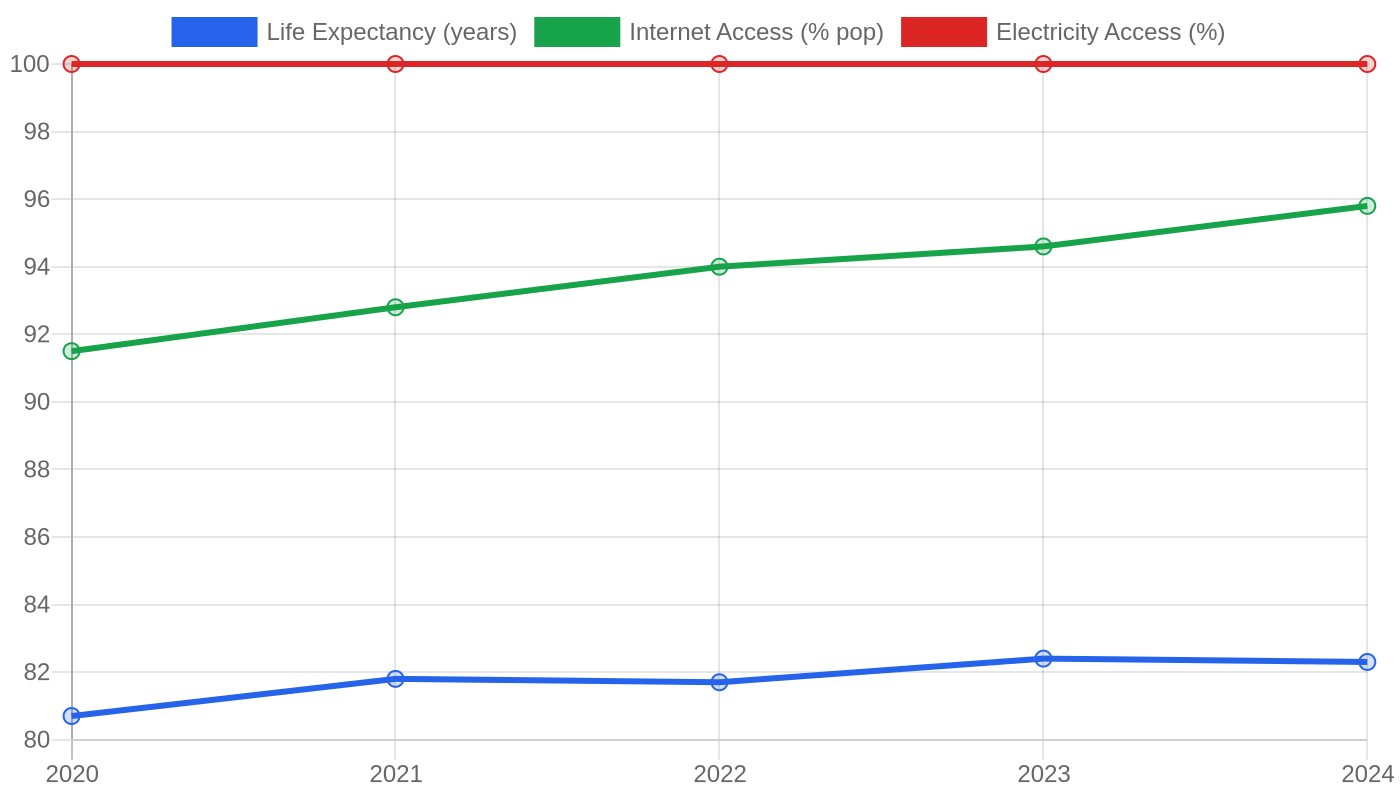
At first glance, Belgium’s economic data from the World Bank presents a picture of comfortable stability. GDP reached $725.5 billion in 2025, growth ticked along at just under one percent, and unemployment hovered at a enviable 5.9%. For a nation of 11.9 million people, these are not crisis numbers. They are, however, numbers that demand a second look.
The growth rate of 0.983% is telling. It is neither a recession nor a surge. It is the pace of a mature, services-driven economy that has already captured most of the low-hanging fruit. Belgium’s GNI per capita of $59,500 places it firmly in the club of high-income nations, and its GDP per capita on a purchasing power parity basis — $74,676 — signals that the average Belgian enjoys a standard of living that rivals the best in Western Europe.
But here is the rub: low growth in a high-cost economy creates a slow squeeze. Wages remain elevated, public spending is generous, and the social model is expensive to maintain. When growth hovers near one percent, there is little buffer for shocks.
The unemployment figure is genuinely impressive. At 5.9%, Belgium is operating near what economists call “full employment.” Most people who want a job can find one. Yet beneath this headline lurks a familiar European story: high youth unemployment, a mismatch between skills and available positions, and a significant portion of the workforce employed in public administration or subsidised sectors. The World Bank data does not break these down, but the pattern is well understood across the Benelux region.
Belgium’s main industries — and the data provided lists none explicitly — are traditionally anchored in chemicals, pharmaceuticals, food processing, and logistics. The country’s position at the crossroads of Western Europe has made it a hub for trade and distribution. The Port of Antwerp, though not mentioned in the data, is one of Europe’s largest. The presence of companies like Agfa-Gevaert in technology and Ablynx in healthcare suggests a knowledge economy that is real, if not yet dominant.
The challenge for policymakers is whether 0.98% growth is the new normal, or whether structural reforms can unlock a faster gear.
The Cost of Comfort — Living in One of Europe’s Priciest Corners
The World Bank data does not provide specific cost of living figures for Belgium, but the country’s macroeconomic profile tells us a great deal. When a nation has a GDP per capita of nearly $75,000 on a PPP basis and a GNI per capita of $59,500, the cost of living is inevitably high. Housing in Belgian cities — Brussels, Antwerp, Ghent — commands premium prices, particularly in the capital where EU institutions and NATO headquarters drive demand from an international workforce.
Rent versus buy calculations in Belgium tilt towards ownership for those who can manage the upfront costs, thanks to a tax regime that historically favoured home purchases. Mortgage interest rates, while not specified in the data, track European Central Bank policy, and Belgian banks have traditionally been cautious lenders. Daily expenses — groceries, transport, utilities — run at levels comparable to neighbouring France and the Netherlands.
Energy costs, a persistent concern across Europe, weigh heavily on household budgets.
What the data cannot tell us directly, but the context implies, is that Belgium’s cost of living creates a two-tier experience. For those in secure employment at multinationals or in public sector roles, life is comfortable. For those on the margins — young entrants to the job market, single-parent households, or workers in declining industries — the high cost of basics erodes the benefits of low unemployment.
The country’s social safety net, funded by high taxes, is designed to catch these groups, but it also contributes to the overall expense of living in Belgium.
Where the Titans Dine — Belgium’s Corporate Landscape and Investment Climate
The list of Belgium’s top companies provided in the data reads like a roll call of European industrial history, updated for the 21st century. Anheuser-Busch InBev, the global brewing colossus, is the most recognisable name — a consumer goods giant that makes Belgium synonymous with beer. But the list reveals deeper currents. Ageas in financials, Agfa-Gevaert in technology, and Ablynx in healthcare point to a diversified economy that is not reliant on any single sector.
Ackermans & van Haaren, a conglomerate with interests ranging from dredging to private banking, represents the old Belgian establishment — discreet, wealthy, and deeply connected. AG Real Estate and Ageas show the strength of the financial sector, which has historically been a pillar of the Belgian economy. Alpro, the plant-based food company, signals that Belgium is part of the broader European shift towards sustainable consumer goods.
Abelag Aviation, in consumer services, caters to the business aviation market — a niche but profitable corner of the economy.
For investors, Belgium offers a stable regulatory environment, a central location, and a highly educated workforce. The political landscape, however, introduces complexity. The World Bank data describes Belgium as a constitutional monarchy and federal parliamentary democracy with a bicameral parliament, compulsory voting, and a complex system of regional and community governments. This fragmentation can slow decision-making.
Major investments often require approvals at multiple levels — federal, regional, and local. For a company looking to set up a European headquarters, Belgium’s location and talent pool are strong draws, but the bureaucratic maze is a known deterrent.
The Politics of Compromise — Safety, Stability, and the Weight of Consensus
Belgium’s political system, as described in the World Bank data, is a masterpiece of compromise — or a recipe for paralysis, depending on your perspective. The federal parliament consists of a Senate and a Chamber of Representatives, with the Senate now composed of 50 senators appointed by regional and community parliaments plus 10 co-opted members. Prior to 2014, most senators were directly elected. The Chamber’s 150 representatives are elected through proportional voting from 11 electoral districts.
And crucially, Belgium has compulsory voting, which means turnout is consistently high — above 85% in most elections.
This system produces coalition governments almost by necessity. No single party can command a majority, so governance is a constant negotiation between Dutch-speaking Flanders and French-speaking Wallonia, between left and right, between urban and rural. The result is policy that moves slowly and tends towards the centre. Radical reforms are rare. Stability is the default.
On safety and quality of life, the data provides no crime or safety indices. But Belgium’s reputation is that of a safe, orderly country. Violent crime is low. Petty crime in tourist areas and major cities exists, as it does everywhere. The broader quality of life is high — good healthcare, reliable infrastructure, and a rich cultural scene.
The country’s political stability, despite periodic crises over government formation (Belgium once went 589 days without a government), has not translated into social instability. The system, for all its flaws, holds.
The Quiet Revolution — What’s Happening in Belgium Right Now
The data provided does not include recent news or live indicators, so this section must be written with the understanding that what follows is a general overview based on the economic context already established. Belgium in 2025-2026 is navigating a period of moderate growth and structural transition. The modest GDP expansion of 0.98% recorded by the World Bank suggests that the post-pandemic rebound has faded and the economy is settling into a slower rhythm.
Inflation data is not provided, but across Europe, central banks have been grappling with price pressures that, while easing from their 2022-2023 peaks, remain above target. Belgium’s indexation system — where wages and social benefits automatically rise with inflation — provides a buffer for households but adds to cost pressures for employers. This mechanism is a defining feature of the Belgian economic model, and its sustainability is an ongoing debate.
On the political front, Belgium’s federal government continues to manage the delicate balance between Flanders and Wallonia. Energy transition policies, investment in digital infrastructure, and the need to maintain competitiveness against larger European economies are perennial concerns.
The presence of companies like Agoria, an industry association for the technology sector, and AIM Productions in the top companies list suggests that the tech and innovation ecosystem is active, if not yet a primary driver of growth.
The real story in Belgium right now is one of quiet adaptation. The country is not in crisis, but it is not booming either. It is doing what Belgium has always done: finding a way to make the system work, slowly, incrementally, and through consensus. Whether that is enough to thrive in a faster-moving global economy is the question that will define the next decade.
The Bottom Line
Belgium is a country for investors and observers who value stability over drama. Its low unemployment, high GDP per capita, and concentration of global companies make it a safe bet in an uncertain world. But the modest growth rate and the structural complexity of its political system mean that Belgium is unlikely to surprise to the upside. Watch this country if you want exposure to a diversified European economy with deep roots in consumer goods, finance, and healthcare.
Do not watch it if you are looking for rapid growth or bold reform. Belgium is the tortoise of Europe — steady, reliable, and still in the race.
Sources & Methodology
This article is authored by Economic Pulse Net for informational and research purposes. Economic Pulse Net sources its data from multilateral institutions, national statistics bureaus, and proprietary databases. All data is believed to be current as of the date of publication.
Published: July 21, 2026 | Category: Research — Belgium
Use these signals in your own platform
Economic Pulse publishes its live signal feed through a documented, read-only API. Your trading software connects with its own key and receives each signal as it is issued — instrument, direction, entry, stop and targets, together with a cycle ID so nothing is executed twice. The feed is independent of this website and cannot change it.
Signals are informational only and are not financial advice.