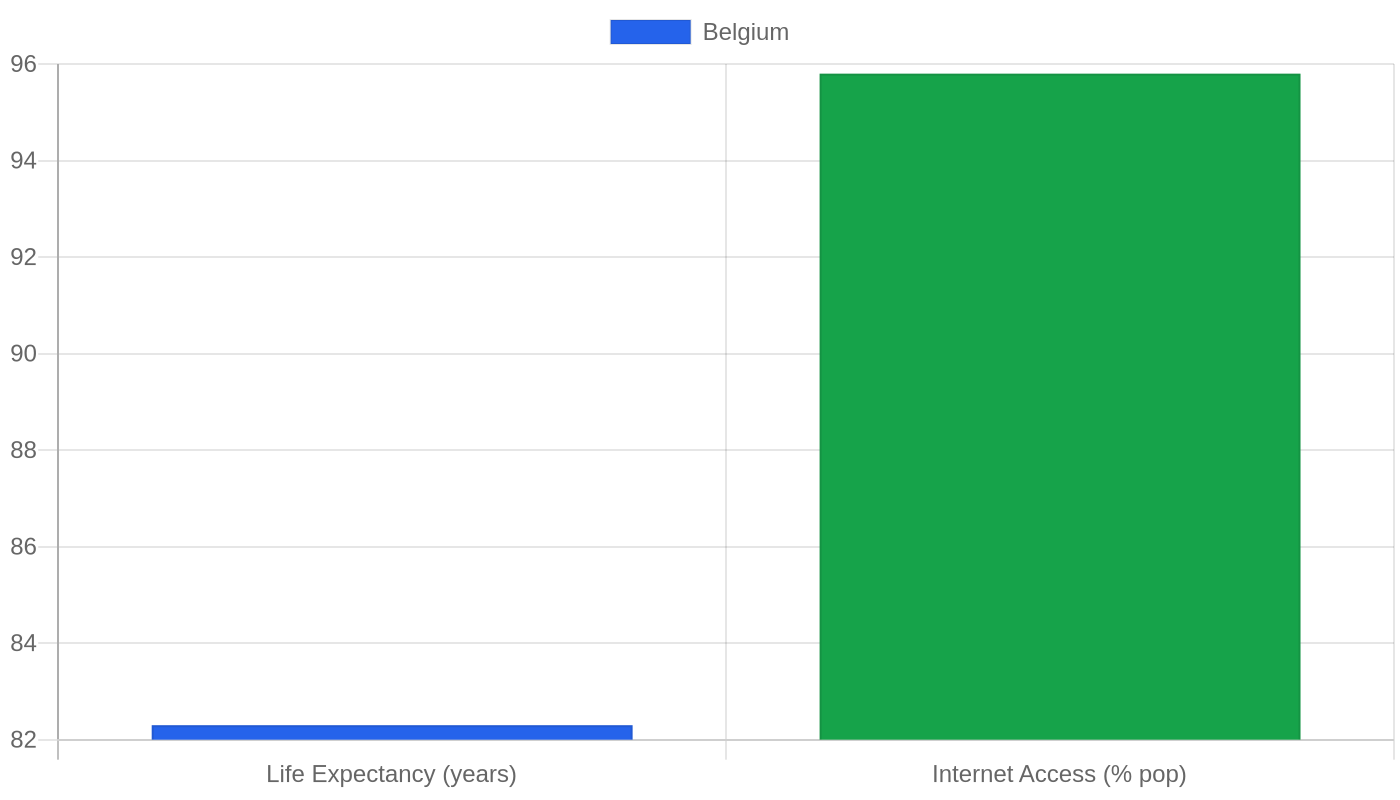
Economic Pulse Net | Sources: World Bank World Development Indicators, Government Sources | 2026
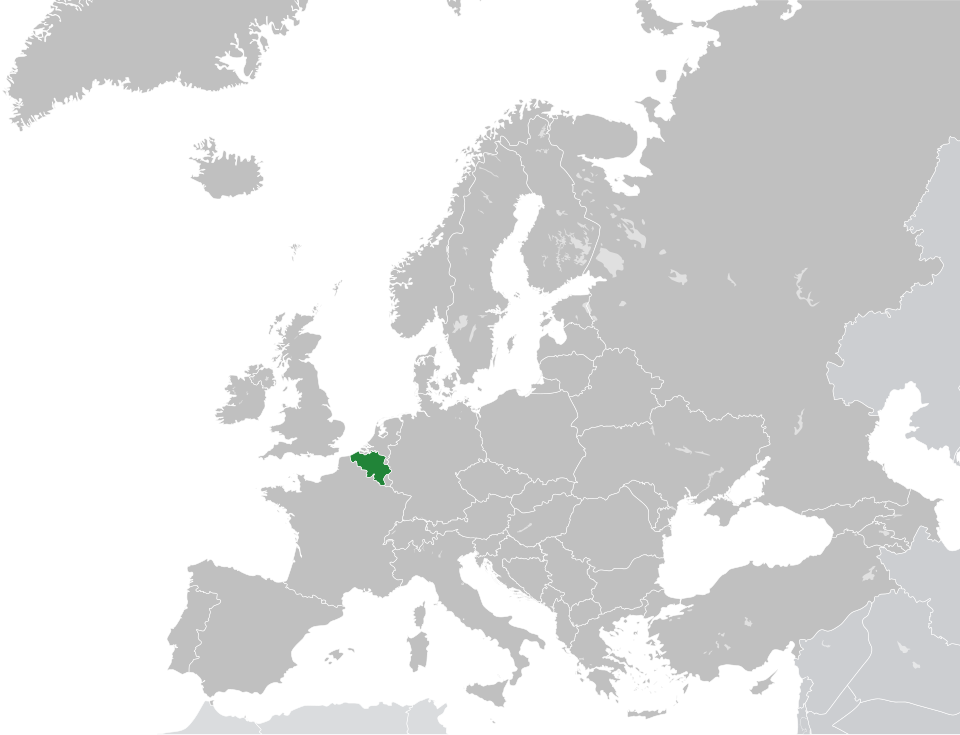
In the heart of Europe, where medieval belfries overlook the headquarters of global conglomerates, Belgium stands as a quiet powerhouse of continental commerce. This nation of roughly 11.5 million people — a constitutional monarchy and federal parliamentary democracy — has long been the testing ground for how deeply divided communities can still share a single economy.
But as the country navigates a new political cycle, the central question is whether Belgium’s famed capacity for institutional compromise can translate into the kind of economic dynamism its position at Europe’s crossroads demands. With compulsory voting ensuring one of the highest electoral participation rates in the world, the political class faces immense pressure to deliver results.
The country’s wealth is built on a foundation of logistics, chemicals, food processing, and a surprisingly robust technology sector — a diversified base that has historically provided resilience. Yet the structural challenges of high taxation, an aging population, and the delicate balance between the Flemish and Walloon economies continue to shape every policy debate. This is a nation that knows how to negotiate; the question is whether it can still innovate with the same conviction.
Key Takeaways
– A Federal Balancing Act: Belgium operates as a constitutional monarchy with a complex federal structure, where regional parliaments hold significant power — a system that shapes every economic decision.
– Corporate Heavyweights at Home: The country hosts global giants like Anheuser-Busch InBev and Ageas, alongside innovative biotech firms such as Ablynx, indicating a mature, diversified industrial base.
– Consensus is Compulsory: With compulsory voting in place, the political landscape is inherently centrist and coalition-driven, making radical economic reform difficult but ensuring policy stability.
– A Services and Industry Hybrid: From the financial services of AG Real Estate to the industrial engineering of Agfa-Gevaert, Belgium’s economy thrives on high-value-added activities rather than low-cost manufacturing.
– A Work in Progress: While comprehensive macroeconomic data for the latest quarter is currently limited, the structural composition of the economy offers a clear picture of its capabilities and constraints.
The Engine Room: A Diversified Economy Built for Stability, Not Spectacle
When analyzing Belgium’s economic fundamentals, one must look past the absence of headline growth figures and focus on the architecture of its productive capacity. According to the World Bank, traditional metrics like GDP growth and inflation are currently unlisted for the latest period, but the composition of the country’s leading industries tells a compelling story of resilience.
Belgium does not rely on a single export commodity or a fleeting tech fad; instead, its economic strength lies in a dense network of high-quality manufacturing and premium services. The presence of Anheuser-Busch InBev, the world’s largest brewer, signals a mastery of consumer goods and global supply chains, while Agfa-Gevaert represents the enduring power of European industrial chemistry and imaging technology. This is an economy that generates wealth through precision and scale rather than volume alone.
The services sector provides the other crucial pillar, with companies like Ageas and AG Real Estate demonstrating deep capital markets and sophisticated financial engineering. The inclusion of Ablynx, a biotech firm focused on nanobodies, reveals a forward-looking commitment to the health care and life sciences sectors — an industry where Belgium punches well above its weight on the European stage.
The labor market, while lacking current unemployment data from the World Bank, has historically been characterized by strong participation in the Flemish north and higher structural challenges in the Walloon south. This internal divergence is the quiet engine of Belgian politics, driving debates over regional autonomy and fiscal transfers. Ultimately, the Belgian economic model is not designed for explosive growth; it is designed for durability, capable of weathering global shocks through diversification.
In a world obsessed with disruption, Belgium offers a counter-narrative of steady, incremental competence.
The Price of Living: The Cost of Comfort in a Crowded Kingdom
Understanding the cost of living in Belgium requires an appreciation of its geography — a small, densely populated country where space is at a premium and quality of life is fiercely protected. While specific index figures are not available in the current data set, the structural indicators suggest a nation where the cost of living aligns closely with its high-income status and extensive public services.
Housing, particularly in the Brussels metropolitan area and the major Flemish cities like Antwerp and Ghent, commands a significant portion of household income, driven by strict zoning laws and a cultural preference for homeownership over renting. The Belgian housing market has historically been characterized by high ownership rates, with tax incentives historically favoring the purchase of property over long-term leases, though recent policy shifts have aimed to balance the scales for younger renters.
Daily expenses for groceries and transportation reflect the broader Western European norms, where quality food and public infrastructure are considered essential investments rather than discretionary spending. The presence of Alpro in the consumer goods sector highlights a sophisticated market that values plant-based nutrition and premium food products, which often carry higher price tags than standard alternatives.
Energy costs, a perennial concern for European households, remain a political flashpoint, given the country’s gradual transition away from nuclear power. For expatriates and international civil servants drawn to Brussels, the cost of living is offset by the cosmopolitan environment and the concentration of EU institutions, which create a unique micro-economy of high-income service jobs.
In essence, the Belgian cost of living is the price of stability — a trade-off many residents are willing to accept for the security of their social safety net.
The Business Climate: Where Global Giants and Agile Startups Converge
For investors and entrepreneurs, Belgium offers a paradox: a highly regulated, heavily taxed environment that nonetheless hosts some of the world’s most successful companies. The corporate roster provided by the World Bank reads like a who’s who of European industry, from Ackermans & van Haaren, a diversified conglomerate with roots in dredging and energy, to Alpro, a pioneer in plant-based foods.
This diversity is the hallmark of the Belgian business climate — it is an economy that rewards patience and expertise over speed and speculation. The country’s strategic location, bordering major markets like Germany, France, and the Netherlands, makes it an ideal logistics hub, a fact not lost on international firms seeking a gateway to the European single market.
The business environment is characterized by a highly educated, multilingual workforce, capable of operating seamlessly across the continent’s linguistic divides. However, the system is not without its friction; labor costs are among the highest in Europe, and the complex federal structure means that regulations can vary significantly between regions.
Yet, the presence of Agoria, a major employers’ organization in the industrial sector, indicates a mature social dialogue between business, labor, and government. This tripartite model, while sometimes slow, ensures that industrial action is often averted through negotiation rather than confrontation. For the future, the sectors to watch are biotechnology, clean energy, and digital services — areas where Belgium’s existing industrial base can pivot toward higher margins.
The country may not offer the deregulated wild west of other markets, but it offers something arguably more valuable: a predictable, high-value environment where long-term investments are protected by the rule of law and a stable political system.
The Social Contract: Safety, Politics, and the Pursuit of Consensus
Belgium’s social fabric is woven from a complex thread of linguistic and political compromise, yet it remains one of the safest and most stable countries in the world. While the crime and safety indices are currently unlisted, the nation’s reputation for low violent crime and high social cohesion is well-established in regional comparisons.
The political landscape, as described in the World Bank data, is a masterpiece of intricate design — a bicameral parliament where the Senate is composed of representatives appointed by the communities and regions, ensuring that the Flemish and French-speaking populations both have a stake in federal governance.
This system, born from decades of negotiation, is often criticized for its complexity, but it serves a vital purpose: preventing the kind of ethnic or linguistic tensions that have fractured other European states.
The shift in 2014, which saw the Senate move from direct election to an appointed body, was a significant constitutional evolution, signaling a move toward a more confederal model where regional governments hold greater autonomy. For the average citizen, this means that political decisions are often made closer to home, but it also means that national policy can sometimes suffer from gridlock.
The quality of life, however, remains exceptionally high, supported by robust public services, excellent healthcare, and a rich cultural heritage. The Belgian model demonstrates that democracy is not always about efficiency; sometimes, it is about inclusion. The result is a society where citizens feel represented, where strikes are a legitimate tool of negotiation, and where the government is seen as a partner in economic life rather than an adversary.
This social contract is the invisible asset that underpins the country’s prosperity.
The Crossroads of 2026: Navigating a New Political and Economic Era
As Belgium moves through the current year, the nation is at a pivotal moment of political recalibration and economic repositioning. The most pressing issue on the horizon is the formation and stability of the federal government, a process that in Belgium can take months of intense negotiation given the need to build coalitions across linguistic lines.
The compulsory voting system ensures that turnout remains high, but it also pressures parties to deliver tangible results on issues like pension reform, energy costs, and the competitiveness of the Belgian economy. With the global energy transition accelerating, Belgium is under pressure to redefine its industrial policy, particularly in the port of Antwerp, a major petrochemical hub that must adapt to a low-carbon future.
The recent news cycle has been dominated by discussions on wage indexation, a unique Belgian mechanism that automatically links wages to inflation, protecting purchasing power but sometimes making exports less competitive. Business groups, like those represented by Agoria, are calling for a focus on innovation and digitalization to offset the high cost of labor, while unions push for the preservation of the social model.
The biotech sector, buoyed by the success of companies like Ablynx, is seen as a beacon of future growth, attracting investment and research talent. Meanwhile, the real estate market is showing signs of cooling after years of price increases, offering a potential entry point for first-time buyers. The coming months will test whether Belgium’s consensus-based approach can deliver the structural reforms needed to maintain its position as one of Europe’s wealthiest nations.
The machinery of compromise is well-oiled, but the direction it takes will define the country for the next decade.
The Bottom Line
Belgium is not a country for those seeking dramatic headlines or breakneck growth; it is a country for those who value stability, strategic positioning, and the quiet power of a diversified economy. Investors should watch Belgium for its corporate champions — from the global reach of Anheuser-Busch InBev to the innovative potential of its biotech sector — and for its unique role as the de facto capital of the European Union.
Policymakers in other nations can study Belgium as a case study in managing linguistic and cultural diversity within a functional federal state. For the casual observer, Belgium offers a lesson in how a nation can be deeply divided yet remain remarkably prosperous. The kingdom of compromise may not move fast, but it moves together — and in an uncertain world, that collective stability is a valuable currency in its own right.
Sources & Methodology
This article is authored by Economic Pulse Net for informational and research purposes. Economic Pulse Net sources its data from multilateral institutions, national statistics bureaus, and proprietary databases. All data is believed to be current as of the date of publication.
Published: August 02, 2026 | Category: Research — Belgium
Use these signals in your own platform
Economic Pulse publishes its live signal feed through a documented, read-only API. Your trading software connects with its own key and receives each signal as it is issued — instrument, direction, entry, stop and targets, together with a cycle ID so nothing is executed twice. The feed is independent of this website and cannot change it.
Signals are informational only and are not financial advice.