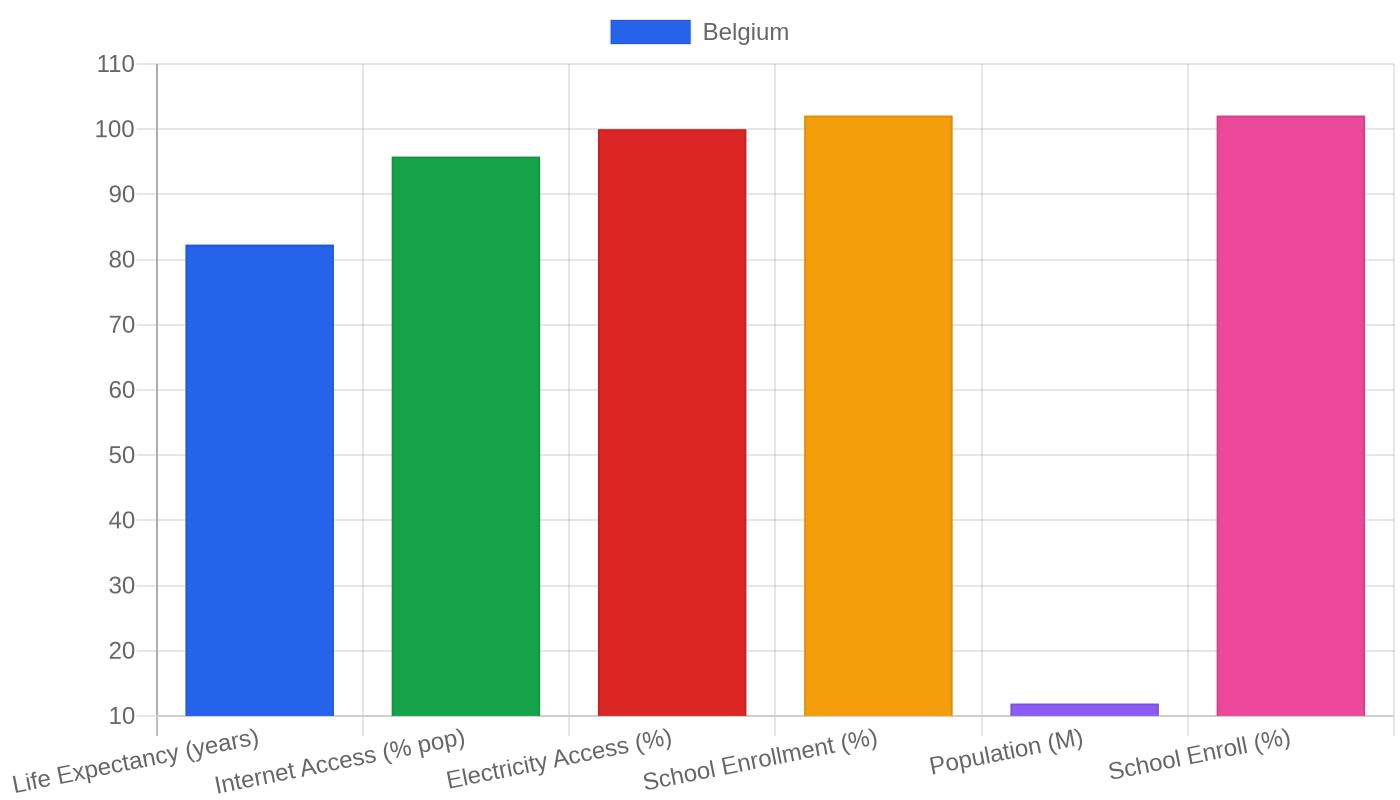
Economic Pulse Net | Sources: World Bank World Development Indicators, Government Sources | 2026
Key Takeaways
* High-Value Economy: Belgium maintains a robust standard of living with a GDP per capita (PPP) of approximately $74,675, despite modest overall growth.
Low Unemployment: The labor market remains tight, with an unemployment rate hovering near 5.9%, indicating structural resilience in job creation.
Corporate Powerhouse: Home to global giants like Anheuser-Busch InBev and Ageas, the country serves as a critical hub for consumer goods, financials, and industrials.
Complex Governance: As a federal parliamentary democracy with compulsory voting, political decisions require navigating a intricate bicameral system that balances regional and community interests.
Stable Prices: Inflation is contained at roughly 2.47%, allowing for predictable cost structures for both residents and international businesses.
Economic Engine: Growth Amidst Modest Expansion
Belgium’s economic landscape in 2025 presents a picture of steady, albeit slow, expansion within a highly developed framework. According to World Bank data, the nation’s GDP growth stands at 0.983117967125935%, reflecting a period of consolidation rather than explosive acceleration. This moderate pace is typical for mature European economies facing global headwinds, yet it underscores the stability of the underlying industrial base.
Crucially, this growth occurs alongside a very low unemployment rate of 5.906%, suggesting that the economy is efficiently absorbing labor despite slower top-line expansion. The population of 11,941,781 supports a substantial domestic market, but the true strength lies in productivity; the GDP per capita (PPP) reaches 74675.607672673, one of the highest figures globally. This disparity between modest aggregate growth and high per-capita output highlights an economy focused on value-added sectors rather than volume.
Furthermore, the GNI per capita of 59500.0 indicates that income generation is strong and widely distributed across the populace. While specific total GDP figures in USD are not available, the per-capita metrics paint a clear picture of a wealthy, high-efficiency economy. The inflation rate of 2.46705543774613% is well-controlled, providing a stable environment for long-term planning and investment.
These numbers matter because they signal that Belgium is not chasing rapid, potentially volatile growth, but rather maintaining a sustainable, high-quality economic equilibrium.
Living Standards: Affordability in a Wealthy Nation
The cost of living in Belgium is shaped by its status as a high-income country, where purchasing power parity plays a significant role in daily expenses. With a GDP per capita (PPP) of 74675.607672673, residents generally enjoy a high standard of living, though this comes with corresponding price levels for housing and services. Specific rental or housing cost data is not provided in the current dataset, making direct comparisons to regional averages difficult without external information.
However, the controlled inflation rate of 2.46705543774613% suggests that daily essentials and service costs are rising at a manageable pace, preserving real wages for households. For expatriates and investors, the high GNI per capita of 59500.0 implies that disposable income remains robust even after accounting for higher baseline costs. The absence of specific crime or safety indices prevents a detailed assessment of security-related costs, such as insurance premiums linked to risk.
Nevertheless, the economic data suggests that while entry-level costs may be high, the overall economic capacity of the population allows for significant consumption power. The balance between high earnings and moderate inflation creates a relatively stable consumer environment, where savings retain value better than in high-inflation jurisdictions. This stability is crucial for long-term residents looking to establish roots in cities like Brussels or Antwerp.
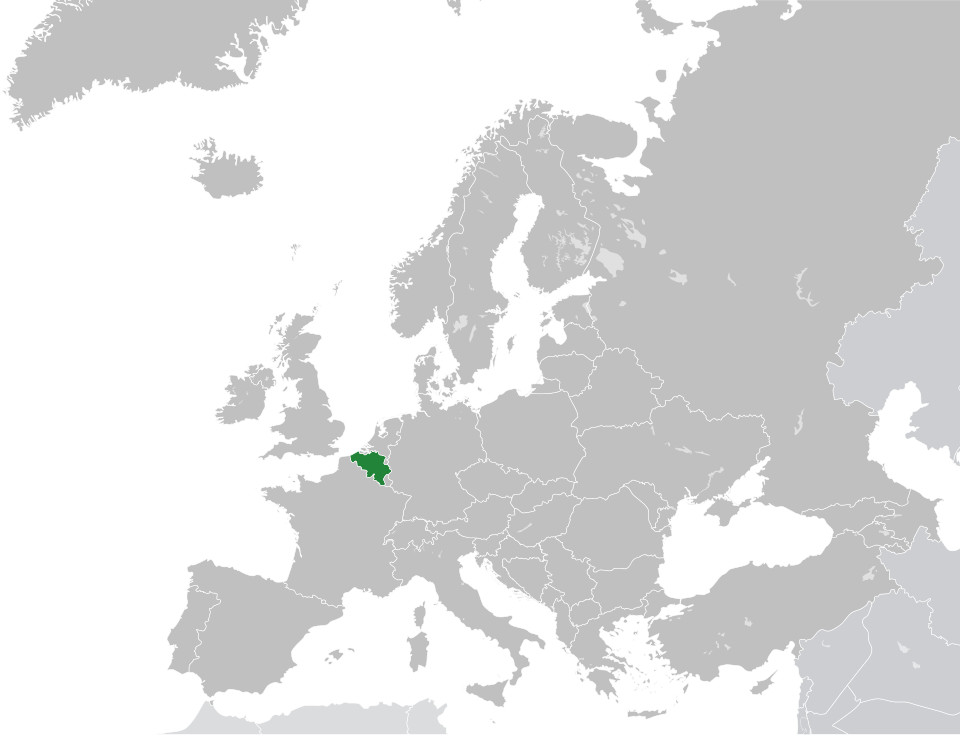
Investment & Business Climate: A Hub of Industrial Innovation
Belgium’s business environment is anchored by a diverse array of major corporations that dominate their respective global niches. The corporate landscape features heavyweights such as Anheuser-Busch InBev in the consumer goods sector, which leverages massive scale in brewing and beverages. In the financial services space, companies like Ageas and AG Real Estate provide essential capital and risk management solutions, supporting both domestic and international markets.
The industrial sector is equally vibrant, with Agfa-Gevaert and Agoria driving innovation in imaging, healthcare, and digital technologies. Ackermans & van Haaren operates as a significant conglomerate, demonstrating the country’s appetite for diversified holding structures. Meanwhile, emerging players like Abelag Aviation and Ablynx highlight strengths in specialized consumer services and healthcare, respectively.
Technology is also gaining ground, represented by firms like AIM Productions, signaling a shift toward digital and creative industries. This mix of established giants and specialized innovators creates a resilient ecosystem for foreign direct investment. Businesses entering the market can tap into a skilled workforce and a strategic location within Europe. The presence of these top companies indicates a mature regulatory environment that supports large-scale operations and complex supply chains.
Investors should note that the diversity of sectors reduces reliance on any single industry, mitigating systemic risk.
Safety, Politics & Quality of Life: Navigating a Federal Democracy
Political stability in Belgium is underpinned by its unique constitutional monarchy and federal parliamentary democracy structure. The bicameral federal parliament consists of a Chamber of Representatives with 150 members elected via proportional voting from 11 electoral districts, ensuring broad representation. The Senate, composed of 50 appointed senators from communities and regions plus 10 co-opted members, adds a layer of regional oversight that reflects the country’s federal nature.
Compulsory voting is a distinctive feature of the Belgian system, ensuring high civic participation and forcing political parties to appeal to a wide spectrum of voters. This complex political architecture can sometimes lead to prolonged coalition negotiations, but it ultimately ensures that minority voices are heard. Regarding safety, specific Crime Index and Safety Index data are not currently available, leaving a gap in quantifiable security metrics.
However, the structured political process and high income levels generally correlate with stable social conditions. The lack of explicit happiness data in the provided text means we must infer quality of life from economic indicators, which remain strong. The federal system allows regions to tailor policies to local needs, potentially enhancing local governance effectiveness. For expats, understanding this political nuance is key to navigating bureaucratic processes.
The combination of democratic engagement and federal decentralization creates a unique, if sometimes cumbersome, political landscape.
What’s Happening Now: Policy Shifts and Corporate Dynamics
Currently, the focus in Belgium is on maintaining economic stability amidst global uncertainties. The recent GDP growth figure of 0.983117967125935% suggests that policymakers are prioritizing sustainable expansion over aggressive stimulus. With inflation held at 2.46705543774613%, the central bank and government appear to have successfully managed price pressures without stifling demand.
The low unemployment rate of 5.906% indicates that labor market reforms are likely having a positive effect, keeping workers employed and engaged. In the corporate sphere, companies like Anheuser-Busch InBev and Ageas continue to drive economic activity, adapting to changing consumer behaviors in health care and financial services. The involvement of firms like Ablynx in health care points to ongoing investments in biotechnology and medical innovation, sectors that are likely to receive continued policy support.
The compulsory voting system ensures that any new political coalitions will have a strong mandate to implement their agendas, reducing the risk of sudden policy reversals. Businesses are likely adjusting to the nuanced federal regulations, particularly in environmental and digital sectors where Agoria and AIM Productions operate. The stability of the GNI per capita at 59500.0 shows that wage growth is keeping pace with productivity, supporting domestic consumption.
Analysts are watching how the federal parliament navigates upcoming budgetary decisions, given the complex composition of the Senate and Chamber.
The Bottom Line
Belgium offers a compelling case for investors and residents seeking stability and high living standards in a politically complex but functional democracy. The combination of high GDP per capita (PPP) and low unemployment makes it an attractive destination for talent and capital. While specific data gaps exist regarding crime and housing costs, the strong economic fundamentals provide a reliable foundation for decision-making.
Those who understand the nuances of its federal political system will find ample opportunities in its diversified industrial and service sectors.
Sources & Methodology
This article is authored by Economic Pulse Net for informational and research purposes. Economic Pulse Net sources its data from multilateral institutions, national statistics bureaus, and proprietary databases. All data is believed to be current as of the date of publication.
Published: September 27, 2026 | Category: Research — Belgium
Use these signals in your own platform
Economic Pulse publishes its live signal feed through a documented, read-only API. Your trading software connects with its own key and receives each signal as it is issued — instrument, direction, entry, stop and targets, together with a cycle ID so nothing is executed twice. The feed is independent of this website and cannot change it.
Signals are informational only and are not financial advice.