Economic Pulse Net | Sources: World Bank World Development Indicators, Government Sources | 2026
Key Takeaways
* Steady but Slow Growth: Belgium’s economy is projected to expand by just under 1% in 2025, reflecting a period of consolidation rather than rapid acceleration.
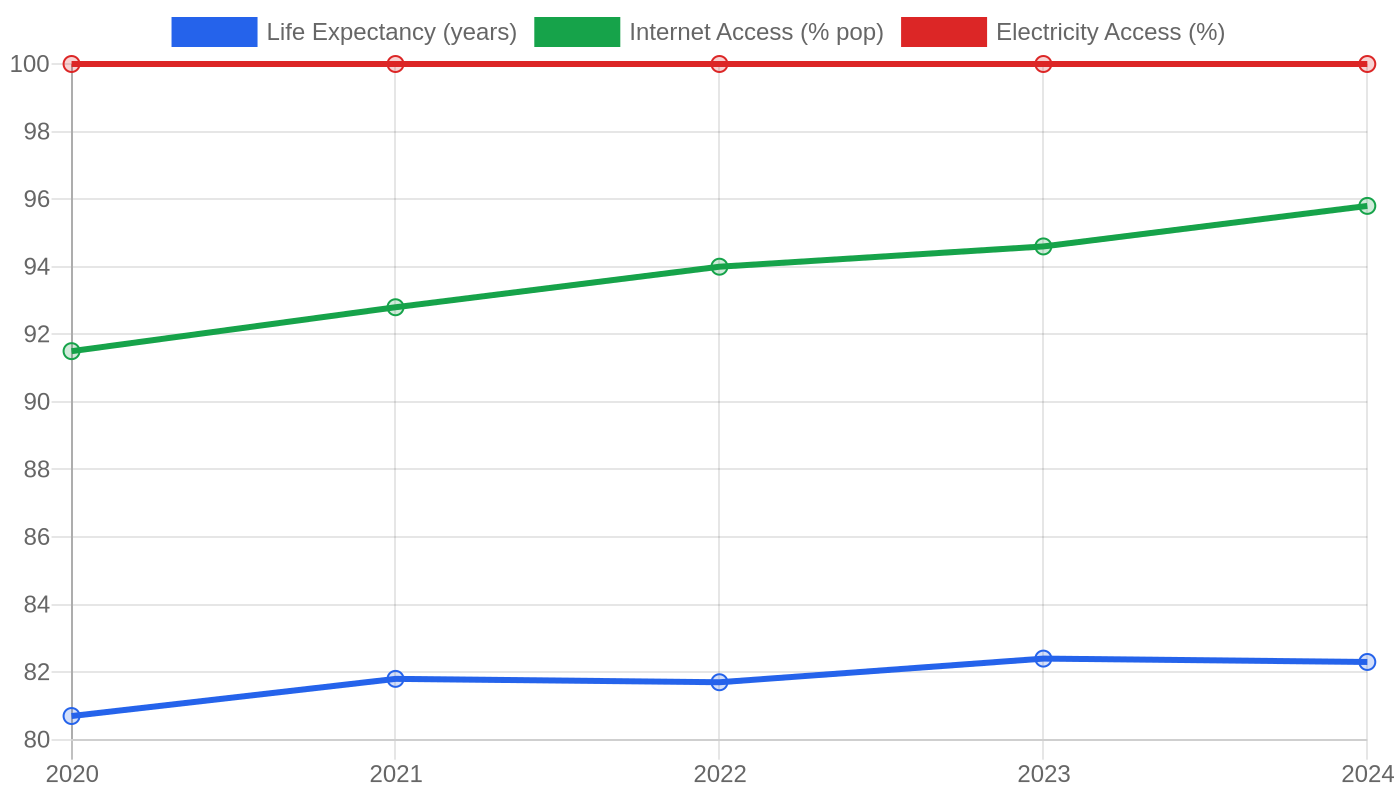
High Living Standards: With a GDP per capita (PPP) exceeding $74,000 and a GNI per capita near $60,000, the country maintains one of the highest standards of living globally.
Tight Labor Market: Unemployment sits at a relatively low 5.9%, supported by a system of compulsory voting that ensures high civic engagement and political stability.
Diverse Industrial Base: From global beverage giants like Anheuser-Busch InBev to specialized healthcare innovators like Ablynx, the corporate landscape is varied and robust.
Economic Pulse: Measuring Momentum in a Mature Market
Belgium’s economic trajectory for 2025 suggests a narrative of cautious stabilization rather than explosive growth. According to World Bank data, the nation’s Gross Domestic Product (GDP) is expected to grow by approximately 0.98%, a figure that underscores the challenges faced by mature European economies in navigating post-pandemic adjustments and global geopolitical shifts.
While this growth rate may appear modest, it indicates resilience in a complex federal structure where regional disparities can often slow national consensus. The underlying value of this economy remains substantial, with the total GDP standing at roughly $725 billion USD, providing a solid foundation for public services and infrastructure investment.
Furthermore, inflation has cooled to an estimated 2.47%, bringing price pressures closer to central bank targets and offering some relief to consumers who have endured years of volatility. This moderation in cost increases is critical for maintaining real wage growth and consumer confidence, even as the broader expansion remains subdued. Ultimately, these metrics reveal an economy that is prioritizing stability and affordability over aggressive expansion, a strategic choice that aligns with its high-income status.
Cost of Living: The Price of Premium Stability
For residents and expatriates alike, Belgium offers a high-quality lifestyle that comes with a correspondingly premium price tag. The country’s wealth is evident in its macroeconomic indicators; with a GDP per capita based on Purchasing Power Parity (PPP) of nearly $74,675, the average citizen enjoys significant purchasing power relative to many other nations.
This high standard of living is further reflected in the Gross National Income (GNI) per capita, which stands at $59,500, indicating that income levels are robust across the population. However, this prosperity is concentrated within a small population of approximately 11.9 million people, meaning that housing and daily expenses in major urban centers like Brussels, Antwerp, and Ghent can be steep.
While specific rental indices are not detailed in the current dataset, the high per-capita income suggests that the cost of living is calibrated to support a comfortable middle-to-upper-class existence. Daily expenses, from groceries to utilities, are likely aligned with Western European averages, requiring careful budgeting for those earning below the national median. Nevertheless, the social safety net and public services funded by this wealthy base help mitigate the raw costs of urban living.
Investment & Business Climate: Giants and Innovators Alike
The Belgian business environment is characterized by a unique blend of industrial heritage and cutting-edge innovation. At the forefront of the consumer goods sector is Anheuser-Busch InBev, a global powerhouse in brewing that exemplifies Belgium’s ability to produce world-leading multinational corporations.
Beyond beverages, the industrial sector remains vital, with companies like Agfa-Gevaert contributing significantly to imaging and healthcare technologies, while Ackermans & van Haaren operates as a diversified conglomerate managing assets across multiple sectors. The financial sector is equally prominent, anchored by major players such as Ageas and AG Real Estate, which provide essential capital and insurance services to both domestic and international clients.
In the technology and healthcare spaces, firms like AIM Productions and Ablynx highlight Belgium’s growing reputation as a hub for specialized scientific and digital innovation. This diversity reduces systemic risk, ensuring that a downturn in one sector does not cripple the entire economy. For investors, the presence of these established top-tier companies offers a degree of predictability and access to deep liquidity markets.
Safety, Politics & Quality of Life: The Federal Framework
Political stability in Belgium is deeply rooted in its constitutional monarchy and federal parliamentary democracy, a system designed to manage the country’s linguistic and regional diversity. The bicameral federal parliament consists of the Chamber of Representatives, with 150 members elected via proportional voting, and the Senate, which includes senators appointed by regional parliaments.
This complex political architecture ensures that various communities have a voice in national governance, although it can sometimes lead to slower decision-making processes. A distinctive feature of this democratic framework is compulsory voting, which mandates participation and thus maintains high levels of civic engagement and political legitimacy.
Regarding personal security, specific crime and safety indices are currently listed as N/A, leaving precise quantification of local safety levels unavailable in this dataset. However, the overall institutional strength and high income levels suggest a generally stable and secure environment for residents. The focus on federal representation helps maintain social cohesion, which is a key component of the country’s quality of life.
Current Affairs: Navigating a Complex Federal Landscape
As we look at the immediate horizon, Belgium’s political and economic story is defined by the ongoing dynamics of its federal structure. The recent history of the Senate, particularly the shift prior to 2014 away from direct elections toward appointment by regional parliaments, continues to shape legislative priorities and inter-regional cooperation.
This structural evolution means that economic policies must often balance the interests of Flanders, Wallonia, and Brussels, leading to a nuanced approach to fiscal reform. With inflation hovering around 2.47%, policymakers are likely focused on sustaining this downward trend without stifling the fragile 0.98% growth outlook. The labor market, with unemployment at 5.9%, remains tight, suggesting that any future reforms will need to address skill mismatches or demographic changes rather than sheer job scarcity.
Corporate developments among top firms like Ablynx and Anheuser-Busch InBev will also drive news cycles, as their global performance impacts national export figures and tax revenues. Consequently, the current affairs landscape is less about dramatic shocks and more about the meticulous management of a sophisticated, multi-layered state.
The Bottom Line
Belgium presents a compelling case for observers interested in stable, high-income markets with strong institutional frameworks. Investors and analysts should watch this country not for hyper-growth, but for resilience, high per-capita wealth, and a diverse industrial base that spans from traditional manufacturing to biotech. The combination of compulsory voting and federal decentralization creates a unique political ecosystem that prioritizes consensus and long-term stability.
For those seeking exposure to European consumer goods and specialized healthcare innovations, Belgium’s corporate giants offer a reliable entry point into the broader EU market.
Sources & Methodology
This article is authored by Economic Pulse Net for informational and research purposes. Economic Pulse Net sources its data from multilateral institutions, national statistics bureaus, and proprietary databases. All data is believed to be current as of the date of publication.
Published: October 14, 2026 | Category: Research — Belgium
Use these signals in your own platform
Economic Pulse publishes its live signal feed through a documented, read-only API. Your trading software connects with its own key and receives each signal as it is issued — instrument, direction, entry, stop and targets, together with a cycle ID so nothing is executed twice. The feed is independent of this website and cannot change it.
Signals are informational only and are not financial advice.