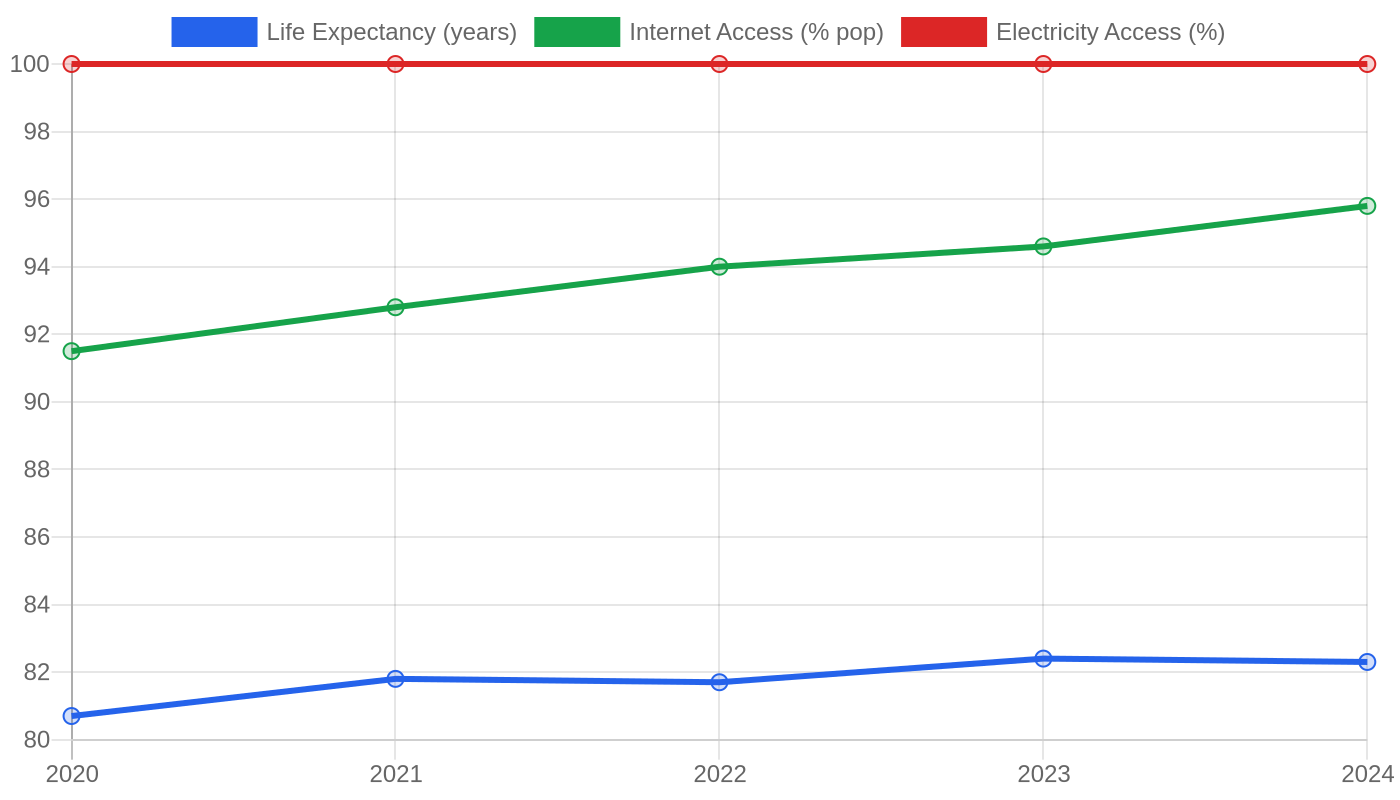
Economic Pulse Net | Sources: World Bank World Development Indicators, Government Sources | 2026
Key Takeaways
* Authoritarian Consolidation: Belarus remains under the tight control of President Alexander Lukashenko, described by international observers as “Europe’s last dictatorship,” creating a political environment defined by centralization and limited separation of powers.
Industrial Heavyweights: The economy is anchored by major state-linked entities in industrials and financials, including Belaruskali, Belarusian Railway, and Belarusbank, which dominate key sectors.
Data Transparency Gap: Official macroeconomic indicators such as GDP growth, inflation rates, and unemployment figures are currently listed as unavailable (N/A) by the World Bank, complicating standard economic assessments.
Diverse Corporate Landscape: Beyond heavy industry, the country hosts notable players in telecommunications (A1), technology (Aliasworlds Entertainment), and consumer services (BelaPAN, Belavia).
Safety and Governance Uncertainty: With crime and safety indices also marked as N/A, potential investors and residents face significant uncertainty regarding both regulatory stability and personal security metrics.
The Architecture of Centralized Power
The economic reality of Belarus cannot be separated from its political structure, which functions as a semi-presidential republic on paper but operates as a highly centralized autocracy in practice. According to constitutional definitions, the nation is governed by a president and the National Assembly with a theoretical separation of powers; however, in reality, power is ultimately concentrated in the hands of the executive branch.
This political framework has led media outlets, politicians, and authors to frequently label Belarus as “Europe’s last dictatorship” and President Alexander Lukashenko as “Europe’s last dictator.” Such descriptions highlight an environment where institutional checks and balances are weak, and decision-making is top-down.
For economists and analysts, this concentration of authority means that economic policy shifts can occur rapidly without the friction of democratic debate or independent legislative oversight. While this may allow for swift implementation of state directives, it also creates an opaque business climate where rule of law can be subordinate to political loyalty.
Understanding Belarus requires recognizing that its economic trajectory is intrinsically linked to the stability and preferences of a single leadership core rather than broad market consensus.
Industrial Giants and the Missing Macro Picture
When examining the fundamental health of the Belarusian economy, one encounters a significant data void: key World Bank metrics for GDP growth, inflation (CPI), unemployment, total GDP in USD, GDP per capita (PPP), GNI per capita, and population are all currently reported as N/A. This absence of hard statistical data makes traditional comparative analysis difficult, forcing observers to rely on structural indicators and corporate activity to gauge economic momentum.
Despite the lack of aggregate numbers, the industrial landscape reveals a robust presence of large-scale enterprises. The industrials sector is particularly prominent, featuring global names like BelAZ, known for massive mining trucks, and Belaruskali, a dominant force in potash fertilizers. Logistics and transport are similarly critical, with Belarusian Railway playing a pivotal role in regional connectivity. The financial sector is anchored by Belarusbank, ensuring state influence over credit flows.
These companies operate within a system where production and distribution are heavily managed, suggesting an economy that prioritizes industrial output and strategic exports over consumer-driven growth metrics. Without official inflation or unemployment figures, the true cost of living for citizens and the efficiency of these industrial giants remain subjects of estimation rather than precise calculation.
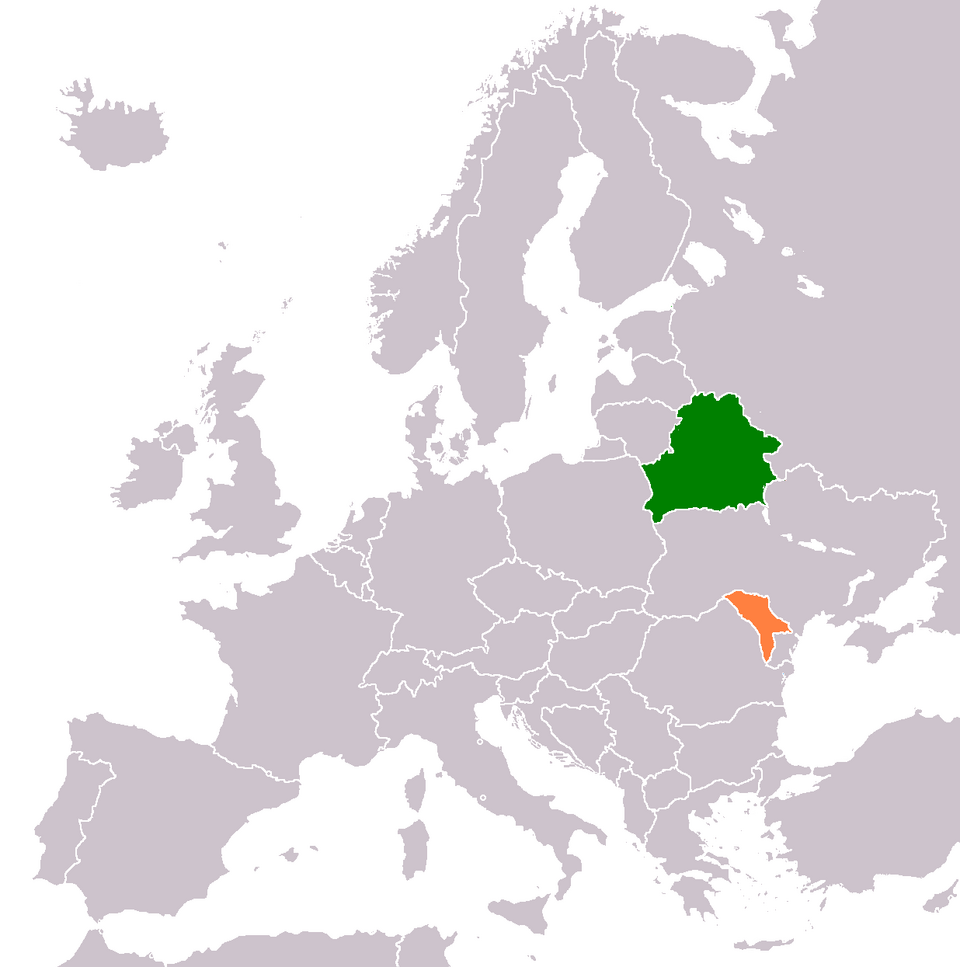
Navigating Business and Investment Risks
For foreign entities and local stakeholders alike, the investment climate in Belarus is characterized by a mix of established corporate strength and heightened political risk. The top companies list provides a snapshot of the most influential economic actors, ranging from A1 in telecommunications to Aliasworlds Entertainment in the technology space. BelaPAN and Belavia serve as key pillars in consumer services, indicating that despite geopolitical tensions, domestic consumption and mobility continue to function.
The presence of the Belarus High Technologies Park suggests a niche effort to foster innovation in financials and tech, offering a counterpoint to the traditional heavy-industry focus. However, the business environment is undeniably shaped by the authoritarian governance model. Investors must navigate a landscape where legal protections may be secondary to state interests, and where the “last dictator” label implies potential exposure to international sanctions or diplomatic isolation.
While specific crime and safety indices are unavailable (N/A), the general atmosphere of political rigidity adds a layer of non-market risk that sophisticated investors must weigh against the potential opportunities presented by resource-rich industries like mining and agriculture.
Stability, Safety, and the Human Element
Assessing the quality of life and social stability in Belarus presents unique challenges due to the scarcity of standardized safety data. Both the Crime Index and Safety Index are currently recorded as N/A, leaving residents and expatriates without clear benchmarks for personal security compared to regional neighbors. This data gap often reflects either a lack of transparent reporting mechanisms or a deliberate obfuscation of social conditions.
Politically, the landscape is dominated by the narrative of autocracy, with power firmly held by the presidency. This centralization affects daily life, influencing everything from freedom of movement to access to information. Happiness data and broader well-being indices are not provided in the current dataset, making it difficult to quantify public sentiment accurately.
Consequently, the experience of living in Belarus is likely heterogeneous, varying significantly based on one’s proximity to political centers and integration into state-approved economic structures. For those considering relocation or long-term residence, the absence of clear safety metrics necessitates extreme caution and reliance on real-time, ground-level intelligence rather than aggregated national statistics.
Current Affairs and the Path Forward
The freshest developments in Belarus are defined less by economic reforms and more by the persistence of the existing political order. Recent discussions and media analyses continue to focus on the characterization of the government as authoritarian, reinforcing the view that significant democratic reforms are unlikely in the near term. Without new live indicators regarding inflation trends or specific policy shifts in taxation or trade, the current affairs landscape appears static in terms of structural change.
The focus remains on maintaining the status quo through centralized control rather than adapting to global economic pressures through liberalization. Companies like Belarusian Railway and Belaruskali continue to operate, suggesting that essential infrastructure and export revenues remain functional despite external pressures. However, the lack of updated GDP or employment data hints at a possible disconnect between official narratives and measurable economic performance.
Observers should watch for any subtle shifts in the relationship between the state and private entities, particularly in the technology and financial sectors, as these may signal early signs of adaptation to a changing geopolitical environment.
The Bottom Line
Belarus presents a complex case study for investors and researchers, offering a glimpse into an economy driven by state-controlled industrials and hampered by political opacity. Those who should watch this country include multinational corporations with supply chain ties to fertilizers, mining equipment, and regional logistics, as well as geopolitical analysts monitoring Eastern European stability.
The primary reason to keep Belarus on the radar is its strategic position and industrial capacity, despite the severe risks associated with its authoritarian governance. Ultimately, while the lack of transparent data limits immediate investment decisions, the underlying industrial assets remain significant factors in the broader Eurasian economic landscape.
Sources & Methodology
This article is authored by Economic Pulse Net for informational and research purposes. Economic Pulse Net sources its data from multilateral institutions, national statistics bureaus, and proprietary databases. All data is believed to be current as of the date of publication.
Published: October 30, 2026 | Category: Research — Belarus
Use these signals in your own platform
Economic Pulse publishes its live signal feed through a documented, read-only API. Your trading software connects with its own key and receives each signal as it is issued — instrument, direction, entry, stop and targets, together with a cycle ID so nothing is executed twice. The feed is independent of this website and cannot change it.
Signals are informational only and are not financial advice.