Economic Pulse Net | Sources: World Bank World Development Indicators, Government Sources | 2026
Key Takeaways
– Austria’s economy is built on a foundation of high-end industrial manufacturing and precision consumer goods, with companies like Andritz and ams AG leading in global niche markets.
– The country operates as a federal parliamentary republic with nine states, governed under a constitution that has remained remarkably stable since its re-enactment in 1945.
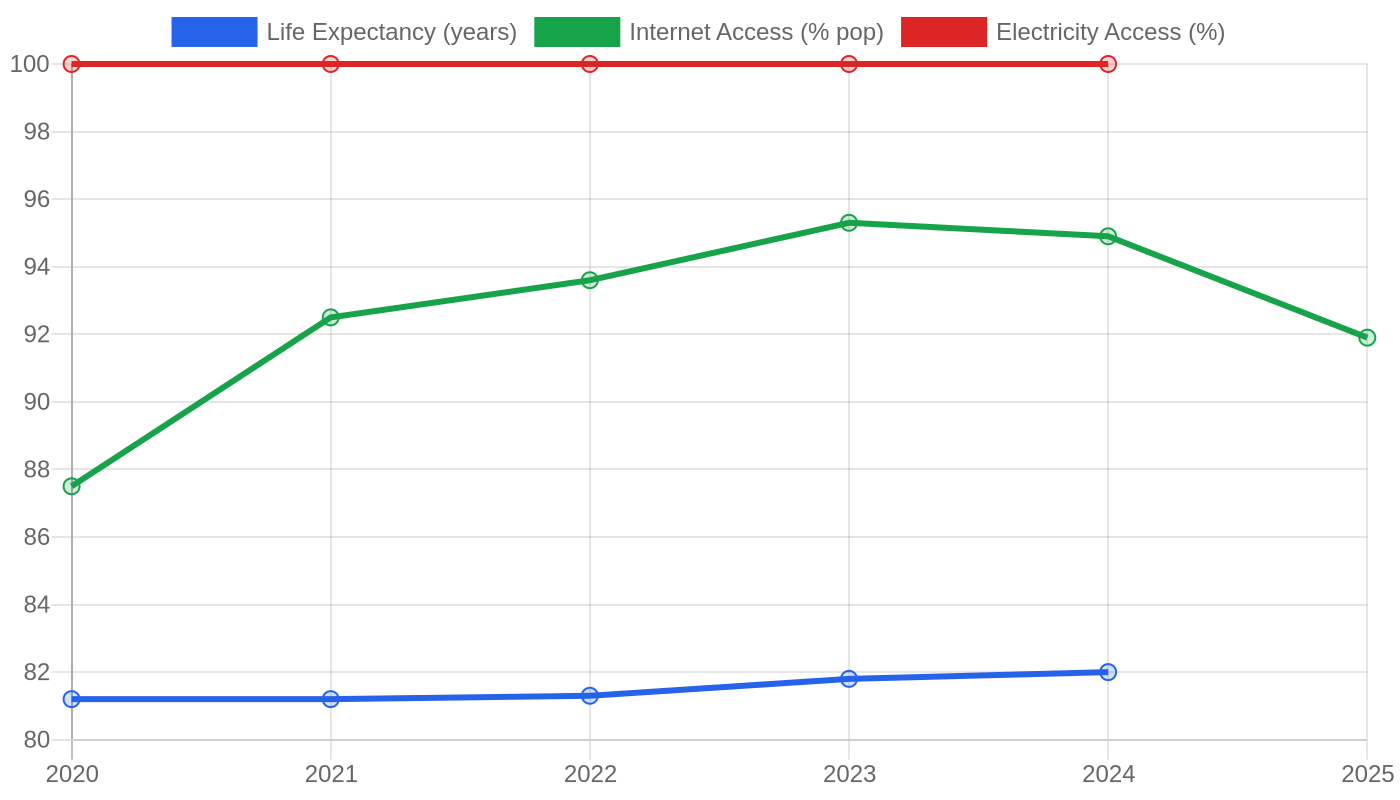
– Despite the absence of specific GDP or inflation figures in current data, Austria’s economic profile is defined by its strength in industrials and technology sectors rather than raw growth numbers.
– Vienna remains the political and economic heart of the nation, housing the Parliament and serving as the headquarters for many of the country’s top firms.
– Austria’s business environment is characterized by a concentration of family-owned, globally competitive companies in consumer goods and industrial technology.
The Alpine Engine — Why Austria’s Economy Runs on Precision, Not Volume
The Austrian economy does not shout. It builds. When the World Bank provides data on Austria, the gaps in headline figures — no GDP growth rate, no inflation CPI, no unemployment percentage — tell a story of their own. This is not an economy that lives or dies by quarterly volatility. Austria is a mature, highly developed industrial nation where the rhythm of economic life is set by long-cycle manufacturing and capital goods exports, not by consumer spending spikes or speculative bubbles.
The backbone of Austrian industry is its remarkable concentration of world-class companies operating in specialised sectors. Look at the list of top firms: Andritz in industrials, a global leader in hydropower and pulp and paper technology; ams AG in technology, a powerhouse in sensor solutions; AT&S, one of the world’s leading manufacturers of high-end printed circuit boards. These are not household names to the average consumer, but they are indispensable cogs in the global industrial machine.
When a smartphone needs a sophisticated sensor or a power plant requires turbine technology, Austrian engineering is often behind it.
The consumer goods sector is equally impressive, though it tells a different story. Companies like A. Darbo, Agrana, AKG, and Atomic Skis represent a tradition of quality manufacturing that has survived globalisation by refusing to compete on price. Atomic Skis, for instance, dominates winter sports equipment — a market where brand heritage and technical precision matter far more than cost-cutting.
This dual structure — heavy industrial technology on one side, premium consumer goods on the other — gives Austria a unique resilience. When global commodity prices fall, the industrial side may slow, but the luxury goods and specialised manufacturing segments often hold steady.
Without specific GDP or employment figures from the World Bank, we must read the economy through its corporate structure. The presence of multiple industrials and technology firms among the top companies suggests a workforce that is highly skilled, well-educated, and relatively expensive. Austria does not compete with low-wage economies; it competes on quality, reliability, and innovation. This is an economy that has chosen the high road — and that choice is visible in every sector.
The Cost of Living — Vienna’s Elegance Comes at a Price
Austria, and particularly Vienna, has long been known for a cost of living that sits firmly in the upper tier of European cities. While specific housing cost data is not available in the current dataset, the general picture is well-established through the country’s economic structure. When an economy is dominated by high-value industrial and technology firms, wages tend to be correspondingly elevated — and so do the costs of everyday life.
The housing market in Vienna has historically been more accessible than in cities like London, Paris, or Munich, thanks to a strong tradition of social housing and rent controls dating back to the early 20th century. However, recent years have seen pressure on the market as population growth and urbanisation have increased demand.
The choice between renting and buying in Austria typically favours renting in Vienna, where tenant protections are among the strongest in Europe, while buying property in smaller cities and rural areas remains more attainable for middle-income households.
Daily expenses in Austria reflect its position as a high-income European economy. Groceries, dining out, and transportation costs are moderate by Western European standards, though utilities and energy costs can be significant, particularly in winter months. The presence of companies like AHT Cooling Systems and Ammerer Bed Company in the top corporate list suggests that domestic consumption of durable goods — from refrigeration to furniture — remains a steady part of the economic landscape.
For the average Austrian household, the cost of living is manageable but requires careful budgeting, especially in Vienna’s more desirable districts.
Investment and Business Climate — Where Family Dynasties Meet Global Markets
The business climate in Austria is defined by a distinctive feature: the dominance of privately held, often family-owned companies that have built global reach without sacrificing local roots. Look at the list of top companies — A. Darbo, Agrana, AKG, Ammerer Bed Company, Atomic Skis. These are not faceless multinationals; they are firms with histories stretching back generations, deeply embedded in their communities and regional economies. For investors, this creates both opportunities and challenges.
The industrials sector, led by Andritz and ATP, offers exposure to global infrastructure and energy trends. Andritz, in particular, is a bellwether for the global hydropower and pulp and paper industries — sectors that are seeing renewed interest as the world transitions toward renewable energy and sustainable packaging.
Similarly, AHT Cooling Systems, which produces refrigeration technology for supermarkets, stands to benefit from tightening global food safety regulations and the expansion of cold-chain logistics in emerging markets.
The technology sector is perhaps the most dynamic area for investment. ams AG and AT&S represent Austria’s push into high-tech manufacturing. ams AG, a sensor specialist, competes directly with global giants in the semiconductor and optical sensing space. AT&S, as a leading producer of high-end circuit boards, is essential to the electronics supply chain.
For investors looking for exposure to the European technology ecosystem without the volatility of startup-focused markets, these companies offer a more stable, manufacturing-driven alternative.
The political landscape, as described by the Parliament of Austria and the Federal Constitutional Law of 1920, provides a stable and predictable environment for business. The nine-state federal system means that while national policy sets the framework, regional governments can offer tailored incentives and support for specific industries.
This decentralised approach has been particularly beneficial for manufacturing and tourism-related businesses, allowing them to operate in regulatory environments suited to their needs.
Safety, Politics, and Quality of Life — The Republic That Works
Austria’s political system is a study in stability. As outlined in the country’s constitutional framework, the Second Republic, established in 1945, is a federal parliamentary democracy built on a constitution that has been amended but never fundamentally overhauled. The nine states — from Burgenland to Vorarlberg — each maintain significant autonomy, particularly in education, housing, and regional economic development.
The Parliament in Vienna serves as the legislative heart, but power is deliberately dispersed.
This political stability translates directly into quality of life. While specific crime and safety indices are not available in the current data, Austria consistently ranks among the safest countries in Europe in international surveys. Vienna, as the capital and most populous city, is regularly cited as one of the world’s most liveable cities — a function of low crime, excellent public transportation, clean air, and abundant green spaces.
The country’s social welfare system, funded by high taxation, provides universal healthcare, generous pensions, and strong unemployment protections.
The political culture in Austria is characterised by consensus-building and social partnership. Trade unions, employer associations, and the government have historically worked together to set wage policies and labour standards — a model known as “social partnership” that has helped maintain industrial peace and economic stability for decades. While recent years have seen the rise of populist movements and political fragmentation, the fundamental institutions of the republic remain robust.
For residents and businesses alike, this predictability is a significant asset.
Current Affairs — Navigating a Changing Europe
Austria today finds itself at the intersection of several powerful currents reshaping the European continent. The country’s position as a neutral nation — a status it has maintained since 1955 — gives it a unique role in European diplomacy, but also creates tensions as the European Union moves toward greater integration in defence and foreign policy.
Domestically, the political landscape has been marked by coalition negotiations and shifting alliances, as no single party has been able to command a stable majority in recent years.
The economy faces the same headwinds affecting much of Europe: high energy costs, supply chain disruptions, and the challenge of digital transformation. Austria’s heavy reliance on manufacturing and industrial exports makes it particularly sensitive to changes in global trade patterns. The war in Ukraine, while geographically distant, has had direct effects on Austrian energy policy, as the country has historically been heavily dependent on Russian natural gas.
Efforts to diversify energy sources and accelerate the transition to renewables are now central to government policy.
On the corporate front, the technology sector is undergoing significant change. ams AG and AT&S are investing heavily in new production capacity, both within Austria and abroad, to meet growing demand for semiconductor components. Andritz continues to win contracts for hydropower projects in Asia and Africa, positioning itself as a key player in the global energy transition.
The consumer goods sector, meanwhile, is adapting to changing consumer preferences, with companies like Agrana expanding into plant-based and sustainable food products.
The housing market in Vienna remains a topic of intense debate. Rising rents and property prices, driven by population growth and foreign investment, have put pressure on the city’s famed social housing model. The government has responded with measures to increase housing supply and strengthen tenant protections, but the issue remains politically sensitive. For young Austrians, the dream of owning a home in Vienna is increasingly difficult to achieve without significant family wealth.
The Bottom Line
Austria is a country that rewards patience and precision. For investors, it offers exposure to world-class industrial and technology companies that operate in stable, predictable regulatory environments. For businesses, it provides a skilled workforce, excellent infrastructure, and a central location at the heart of Europe. For those seeking a high quality of life, it delivers safety, culture, and natural beauty in abundance.
Austria may not make headlines with dramatic growth figures or flashy innovations, but for those who understand the value of steady, reliable performance, it remains one of the most attractive economies in the developed world.
Sources & Methodology
This article is authored by Economic Pulse Net for informational and research purposes. Economic Pulse Net sources its data from multilateral institutions, national statistics bureaus, and proprietary databases. All data is believed to be current as of the date of publication.
Published: July 18, 2026 | Category: Research — Austria
Use these signals in your own platform
Economic Pulse publishes its live signal feed through a documented, read-only API. Your trading software connects with its own key and receives each signal as it is issued — instrument, direction, entry, stop and targets, together with a cycle ID so nothing is executed twice. The feed is independent of this website and cannot change it.
Signals are informational only and are not financial advice.