Economic Pulse Net | Sources: World Bank World Development Indicators, Government Sources | 2026
Key Takeaways
* Modest but Steady Growth: Austria’s economy is projected to grow by approximately 0.6% in 2025, reflecting a period of cautious expansion amidst broader European headwinds.
High Value Per Citizen: With a GDP per capita (PPP) nearing $77,000 and a GNI per capita of over $60,000, the country maintains a high standard of living for its roughly 9.2 million residents.
Industrial & Tech Strength: Key sectors ranging from industrial machinery (Andritz, AHT) to technology (ams AG, AT&S) drive significant export value and innovation.
Political Continuity: The federal constitutional framework established in 1920 and re-enacted in 1945 provides a stable democratic backdrop for economic planning.
Economic Resilience Amidst Slow Growth
Austria’s economic trajectory in 2025 presents a picture of cautious stability rather than explosive growth. According to World Bank data, the country’s GDP growth is projected at a modest 0.6157%, indicating an economy that is expanding but doing so at a measured pace. This slow burn is typical for mature European economies navigating post-pandemic adjustments and global supply chain complexities.
However, the underlying strength of the Austrian economy remains robust when viewed through the lens of wealth distribution. The Gross National Income (GNI) per capita stands at a substantial $60,360, while the GDP per capita adjusted for Purchasing Power Parity (PPP) reaches an impressive $76,777. These figures suggest that despite slower headline growth, the average Austrian citizen retains significant purchasing power and economic security.
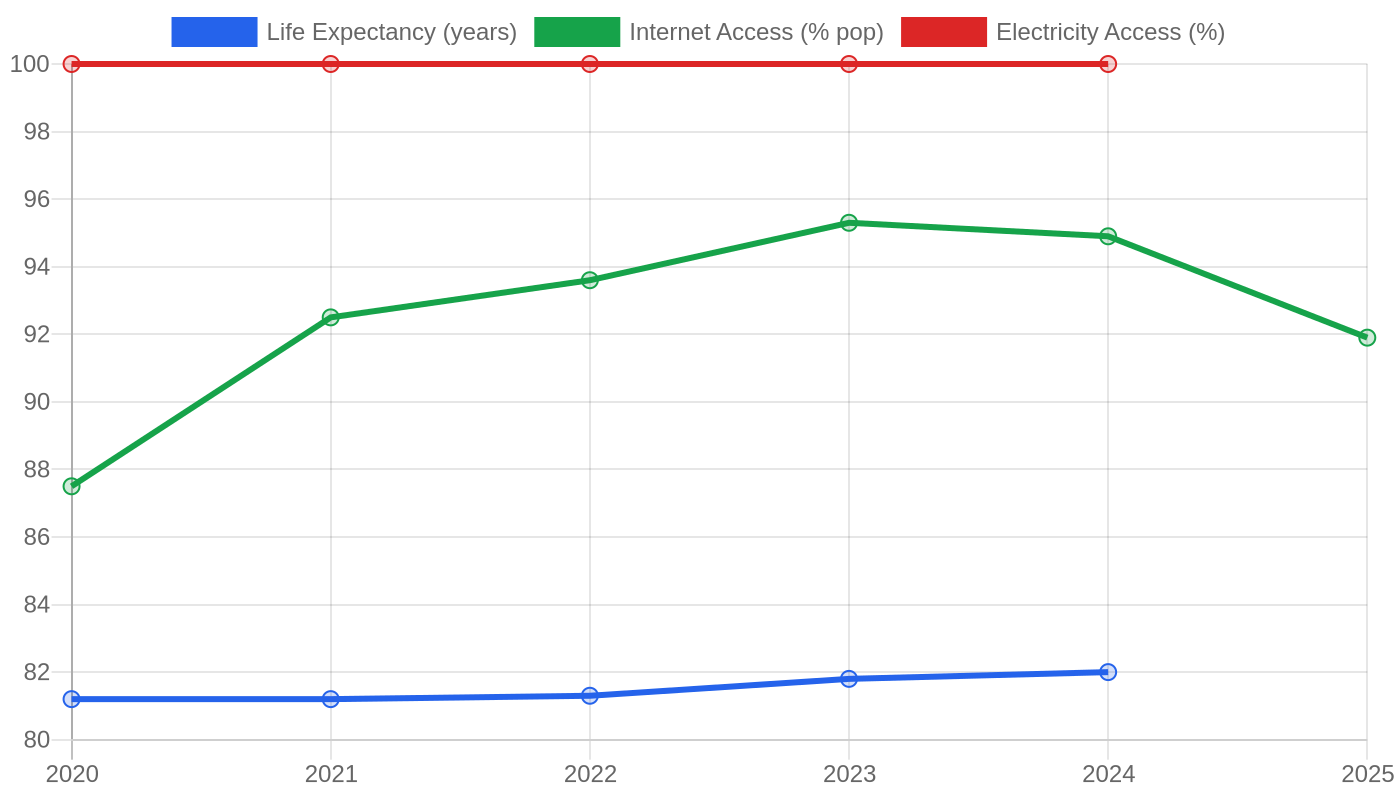
Furthermore, the labor market appears relatively healthy, with unemployment holding steady at 5.582%. This level of employment suggests that businesses are still absorbing workers, even if hiring rates have cooled compared to previous years. The total GDP of the nation sits at approximately $579.47 billion USD, supported by a population of just over 9.2 million people. This density allows for efficient infrastructure utilization and concentrated economic activity in urban centers like Vienna.
The combination of low inflation—recorded at 3.527%—and stable employment creates a predictable environment for both consumers and investors, even if the overall expansion rate lacks the vigor seen in emerging markets.
Cost of Living and Housing Dynamics
While specific housing cost indices are not provided in the current dataset, the high income metrics offer a clear window into the cost of living landscape. With a GNI per capita exceeding $60,000, Austrian households generally possess the financial capacity to absorb higher daily expenses without significant strain. The inflation rate of 3.527% indicates that prices for goods and services are rising, but at a controlled pace that does not typically erode savings rapidly.
For residents, this means that while the cost of essentials such as food, energy, and transportation may be elevated compared to lower-cost regions, it is balanced against strong wage levels. The absence of extreme inflationary pressure helps maintain social cohesion and consumer confidence. In terms of housing, the high GDP per capita (PPP) implies that property values and rental costs in major hubs like Vienna are likely premium, yet affordable relative to local incomes.
Families and individuals can expect a high quality of life where basic needs are met comfortably, though discretionary spending may be influenced by the gradual uptick in consumer price indices. The economic structure supports a middle-class lifestyle that prioritizes stability and access to services over rapid asset appreciation, distinguishing it from speculative real estate markets found elsewhere.
Investment Landscape and Corporate Power
The Austrian business environment is characterized by a mix of traditional industrial strength and modern technological innovation. Major players dominate key sectors, creating a diverse economic base that attracts foreign direct investment. In the industrials sector, companies like Andritz and AHT Cooling Systems are global leaders, providing critical infrastructure and engineering solutions worldwide.
Similarly, ATP contributes significantly to the industrial output, reinforcing Austria’s reputation for high-quality manufacturing. On the technology front, firms such as ams AG and AT&S are pivotal, driving growth in sensors and printed circuit boards, which are essential components in the global electronics supply chain. Consumer goods also play a vital role, with brands like Agrana, A. Darbo, AKG, and Ammerer Bed Company securing strong domestic and international market shares.
Atomic Skis further diversifies the portfolio, showcasing Austria’s ability to excel in niche luxury and sporting goods markets. This corporate diversity reduces reliance on any single industry, making the economy more resilient to sector-specific shocks. Investors looking at Austria should note the presence of these established multinationals, which often serve as anchors for smaller suppliers and startups in their respective ecosystems.
The concentration of talent in Vienna and other urban centers supports a vibrant entrepreneurial culture alongside these large incumbents.
Safety, Politics, and Quality of Life
Austria offers a politically stable and safe environment, which is a crucial factor for long-term economic planning. The political system is a federal, representative democratic republic, governed by the Federal Constitutional Law of 1920, which was amended in 1929 and re-enacted on May 1, 1945. This historical continuity ensures that policy shifts occur within a well-defined legal framework, reducing uncertainty for businesses and citizens alike.
The Parliament, located in Vienna, serves as the central hub for legislative activity, overseeing the nine states that make up the federation. While specific crime and safety indices are listed as N/A in the current data, Austria is widely recognized globally for its high standards of public safety and low violent crime rates. This perceived safety enhances the quality of life, making it attractive for expatriates and skilled workers.
The political landscape, rooted in the Second Republic’s constitution, emphasizes consensus and stability, which translates into consistent regulatory environments. Citizens benefit from strong social protections and infrastructure, contributing to overall societal well-being. The combination of political maturity and physical safety creates a secure foundation for economic activities to flourish without the disruptions often seen in less stable regions.
Current Affairs and Policy Focus
As we look at the immediate horizon, Austria’s focus remains on maintaining its economic equilibrium while addressing global pressures. The recent data points to a government strategy centered on sustaining employment levels and managing inflation carefully. With unemployment at 5.582%, policymakers are likely prioritizing job retention programs and workforce development to prevent any rise in joblessness.
The inflation rate of 3.527% suggests that monetary and fiscal policies are actively working to keep price increases in check, avoiding the pitfalls of stagflation. Businesses are adapting to this environment by focusing on efficiency and innovation, particularly in the tech and industrial sectors where companies like ams AG and Andritz are leading the way.
There is also a continued emphasis on leveraging Austria’s position in Central Europe to facilitate trade and logistics, benefiting from its strategic location. Recent discussions in political circles likely revolve around balancing federal budgets while investing in green technologies and digital infrastructure. The re-enactment of the 1945 constitutional framework continues to provide a reliable backdrop for these debates, ensuring that reforms are implemented legally and democratically.
As the year progresses, stakeholders will be watching how Austria navigates the interplay between modest GDP growth and the need for structural modernization.
The Bottom Line
Austria represents a compelling case study in mature economic stability, offering high living standards and a diversified industrial base. Investors and observers should watch this country not for hyper-growth, but for resilience, quality, and steady returns. Its strong corporate giants and political continuity make it a safe harbor in turbulent times. For those seeking exposure to European industrial and tech excellence, Austria remains a top-tier destination.
Sources & Methodology
This article is authored by Economic Pulse Net for informational and research purposes. Economic Pulse Net sources its data from multilateral institutions, national statistics bureaus, and proprietary databases. All data is believed to be current as of the date of publication.
Published: October 25, 2026 | Category: Research — Austria
Use these signals in your own platform
Economic Pulse publishes its live signal feed through a documented, read-only API. Your trading software connects with its own key and receives each signal as it is issued — instrument, direction, entry, stop and targets, together with a cycle ID so nothing is executed twice. The feed is independent of this website and cannot change it.
Signals are informational only and are not financial advice.