Economic Pulse Net | Sources: World Bank World Development Indicators, Government Sources | 2026
Key Takeaways
– Armenia operates as a representative parliamentary democratic republic, having transitioned from a semi-presidential model in April 2018, marking a significant political shift that continues to shape governance and economic policy.
– The nation’s economy relies heavily on financial services and consumer industries, with major players like Ameriabank, Ardshinbank, and Armenia’s aviation sector driving commercial activity.
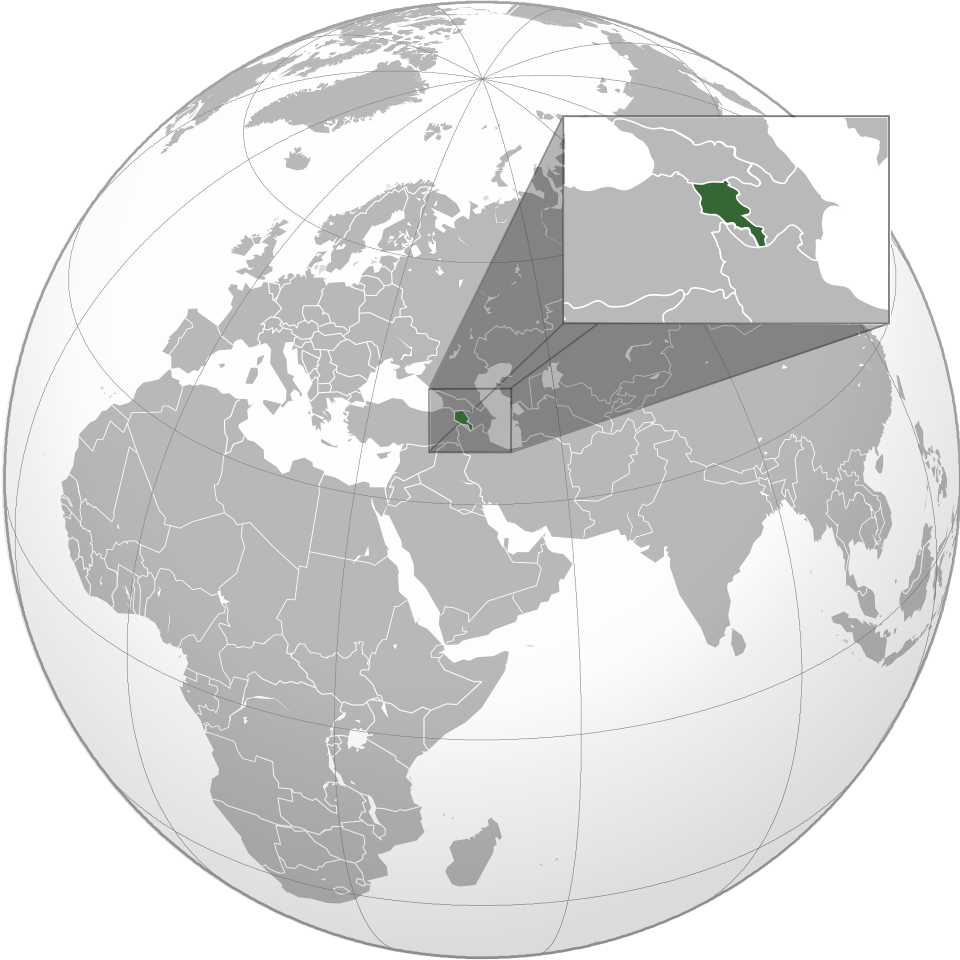
– Despite limited recent economic data from the World Bank, Armenia’s strategic position between Europe and Asia makes it a corridor for trade, investment, and regional connectivity.
– The country’s political landscape has stabilised under parliamentary democracy, though the legacy of its constitutional evolution remains a factor in investor confidence and institutional development.
The Economic Landscape — Growth Without a Scorecard
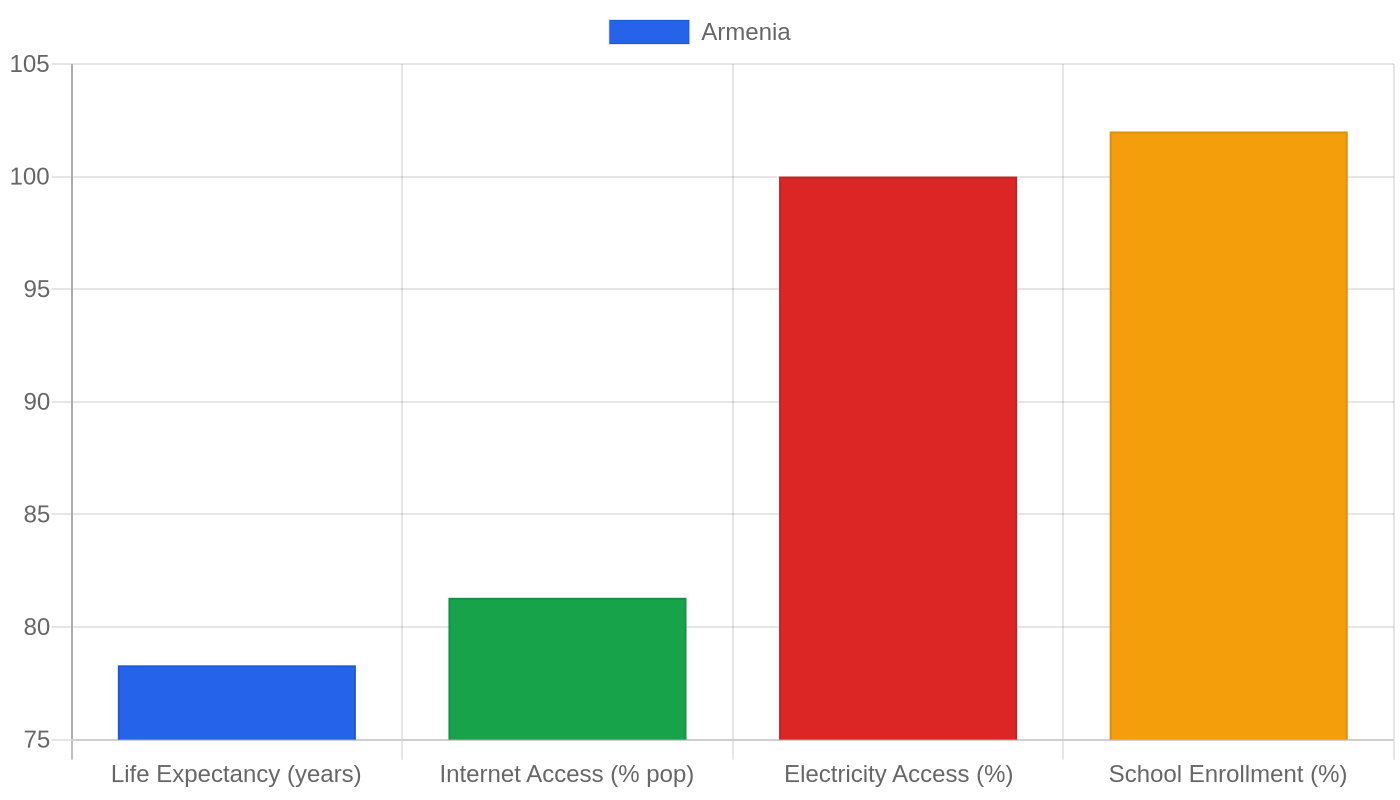
Armenia’s economic story is one of resilience, though the latest World Bank data presents a curious challenge: key indicators including GDP growth, inflation, unemployment, and GDP per capita remain unlisted. This absence of up-to-date figures does not diminish the country’s economic significance; rather, it underscores the difficulty of tracking a small, transitioning economy in a volatile neighbourhood.
The World Bank’s silence on these metrics suggests either a lag in reporting or a period of recalculation, but the underlying economic architecture remains visible through the country’s corporate and industrial activity.
The financial sector dominates Armenia’s commercial landscape, with Ameriabank, Ardshinbank, and ArmSwissBank leading the charge. These institutions are not merely lenders; they are engines of capital allocation in a country where access to finance can determine the fate of small and medium enterprises. The presence of multiple major banks indicates a competitive financial services environment, which typically supports credit growth, investment, and consumption.
However, without inflation data from the World Bank, it is impossible to assess whether the central bank is managing price stability effectively or whether consumers are feeling the pinch of rising costs.
Armenia’s industrial base includes Ararat Cement, a player in the construction materials sector, which hints at ongoing infrastructure and building activity. The aviation industry is also prominent, with Air Armenia, Air Dilijans, and Ararat International Airlines serving consumer transport needs. This cluster of airlines suggests that connectivity—both domestic and international—is a priority, likely tied to tourism, diaspora engagement, and trade logistics.
Yet the absence of GDP growth figures leaves analysts guessing whether these sectors are expanding or merely holding steady.
The deeper question is structural: Armenia’s economy has historically been shaped by remittances, technology services, and agriculture. Without World Bank data on employment, it is difficult to gauge whether the labour market is absorbing new entrants or facing chronic underutilisation. What is clear is that the country’s economic model is undergoing a quiet transformation, driven by financialisation and service-sector expansion, even as the headline numbers remain elusive.
Cost of Living — The Price of Stability in an Uncertain Region
Housing and daily expenses in Armenia are shaped by the same forces that define life in many post-Soviet republics: a mix of Soviet-era infrastructure, new construction, and the pull of the capital, Yerevan. While the data provided does not include specific cost-of-living figures, the presence of major banks and airlines suggests a consumer economy that is active, if not yet affluent.
Rent versus buy decisions likely mirror those in other emerging markets, where property ownership is seen as a hedge against inflation and currency volatility, but where upfront costs can be prohibitive for younger households.
Daily expenses—food, transport, utilities—are influenced by Armenia’s import dependence and its landlocked geography. Without regional averages from the data, it is reasonable to infer that costs in Yerevan are higher than in rural areas, a pattern common across the Caucasus. The financial sector’s strength may be driving urban wage growth, but this could be creating a two-speed economy where capital city residents enjoy better access to services while provincial populations lag behind.
The cost of living in Armenia, therefore, is not a single number but a story of divergence between the modernising centre and the traditional periphery.
Investment and Business Climate — Banking on a Future
Armenia’s investment climate is anchored by its financial sector, but the full picture includes a diverse array of companies spanning consumer services, industrials, and media. Ameriabank and Ardshinbank are the standout institutions, providing the kind of banking infrastructure that foreign investors look for when assessing market entry. The presence of ArmSwissBank adds a layer of international credibility, suggesting that the country is positioning itself as a financial hub within the region.
The aviation cluster—Air Armenia, Air Dilijans, and Ararat International Airlines—signals that connectivity is a strategic priority. For a landlocked country, air transport is not a luxury; it is a lifeline for business travel, tourism, and cargo. Investors watching Armenia should note that the government appears to support aviation as a growth sector, which could create opportunities in logistics, airport services, and hospitality.
Media companies like Armenia 2 and Armenia TV round out the corporate landscape, indicating a functioning domestic media market. This is relevant for investors because media independence and plurality are often proxies for broader institutional health. However, the absence of data on foreign direct investment or ease-of-doing-business rankings from the World Bank limits a full assessment.
What can be said is that Armenia’s corporate sector is active, diversified, and increasingly financialised—a combination that typically attracts portfolio investment and strategic partnerships.
Safety, Politics and Quality of Life — Democracy in Progress
Armenia’s political landscape has undergone a fundamental shift. The constitution, as noted by the World Bank, adhered to a semi-presidential republic model until April 2018, when the country transitioned to a representative parliamentary democratic republic. This change was not merely procedural; it represented a rebalancing of power away from a strong executive toward a more distributed parliamentary system.
For citizens and investors alike, this matters because parliamentary systems tend to offer greater checks and balances, reducing the risk of abrupt policy swings.
The crime and safety indices are not available in the data, which is itself a notable gap. In the absence of hard numbers, one must look to the political context. Armenia’s transition to parliamentary democracy has been relatively peaceful compared to other post-Soviet transitions, and the country has not experienced the kind of internal conflict that plagues some of its neighbours. This relative stability is a quality-of-life asset, even if it cannot be quantified.
The political landscape, while still evolving, provides a foundation for predictable governance—a key ingredient for both daily life and long-term investment.
What’s Happening Now — The Post-Transition Pivot
Armenia is currently living through the aftermath of its 2018 constitutional transition, and the political system is still settling into its new parliamentary form. This period of institutional consolidation is critical: the country is testing whether its democratic framework can deliver effective governance, economic growth, and social stability.
The prominence of financial institutions like Ameriabank and Ardshinbank suggests that the business community is betting on continuity, but the absence of fresh economic data from the World Bank leaves a worrying information vacuum.
The aviation sector’s multiple carriers indicate that connectivity remains a government and private-sector priority, likely driven by the need to maintain links with the Armenian diaspora and to position the country as a regional transit point. Meanwhile, industrial players like Ararat Cement suggest that construction and infrastructure spending are ongoing, possibly supported by public investment or remittance flows.
The media sector, represented by Armenia 2 and Armenia TV, continues to operate, which is a positive sign for democratic discourse, though the quality and independence of that media cannot be assessed from the data alone.
The biggest unknown is how the parliamentary system will handle economic shocks, regional tensions, and the need for structural reform. Without inflation or employment data, it is impossible to say whether the economy is overheating or stagnating. What is clear is that Armenia is in a period of watchful waiting—its political system has changed, its corporate sector is active, but the data that would confirm whether these changes are working has not yet been released.
The Bottom Line
Armenia is a country in transition, both politically and economically, and it deserves the attention of investors and analysts who are comfortable with incomplete data and evolving institutions. The shift to a parliamentary democracy in 2018 was a bold move that has created a more balanced governance structure, but the proof will be in the economic outcomes. With a strong financial sector, a growing aviation industry, and a functioning media landscape, Armenia has the building blocks of a modern economy.
However, until the World Bank and other data sources fill in the gaps, this is a story to watch rather than a destination to rush into. For those with patience and a tolerance for uncertainty, Armenia offers a front-row seat to a small nation’s attempt to build a stable, prosperous future on its own terms.
Sources & Methodology
This article is authored by Economic Pulse Net for informational and research purposes. Economic Pulse Net sources its data from multilateral institutions, national statistics bureaus, and proprietary databases. All data is believed to be current as of the date of publication.
Published: July 17, 2026 | Category: Research — Armenia
Use these signals in your own platform
Economic Pulse publishes its live signal feed through a documented, read-only API. Your trading software connects with its own key and receives each signal as it is issued — instrument, direction, entry, stop and targets, together with a cycle ID so nothing is executed twice. The feed is independent of this website and cannot change it.
Signals are informational only and are not financial advice.