Economic Pulse Net | Sources: World Bank World Development Indicators, Government Sources | 2026
Key Takeaways
– Vietnam remains one of only two communist states in Southeast Asia, yet its economic trajectory has shifted decisively toward market-oriented capitalism, creating a unique hybrid system that puzzles external observers.
– The country’s corporate landscape is dominated by financial institutions and consumer services firms, reflecting a domestic economy still heavily reliant on banking and domestic consumption rather than high-tech exports.
– Despite being officially committed to socialism, Vietnam’s political leadership has been characterised by *The Economist* as “ardently capitalist communists,” signalling a pragmatic embrace of private enterprise.
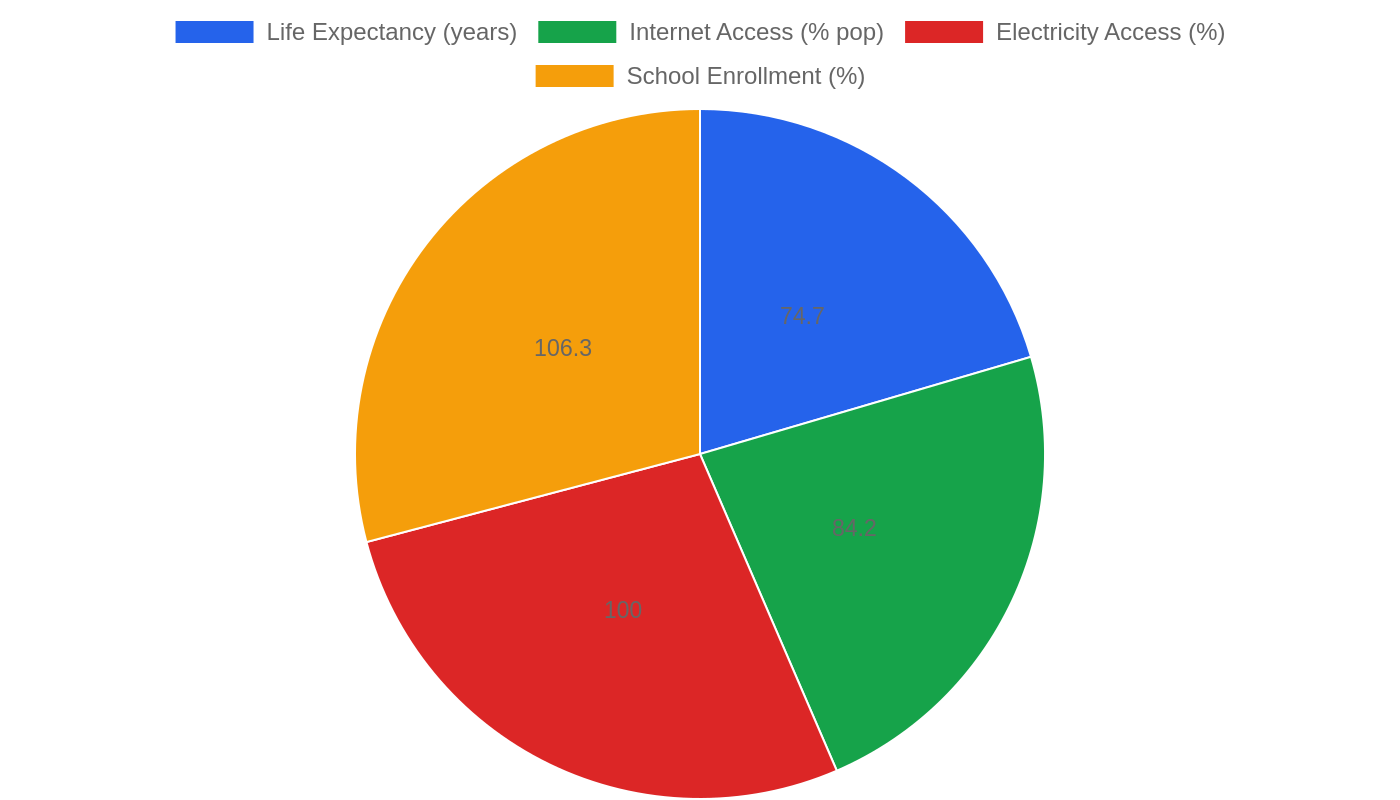
– Key economic indicators such as GDP growth, inflation, and unemployment are not currently available from the World Bank data provided, making precise assessment difficult but highlighting transparency challenges.
– Vietnam’s cost of living and safety data are also absent from the available dataset, leaving significant gaps in understanding daily life for residents and foreign observers alike.
The Great Economic Contradiction
Vietnam presents one of the most fascinating economic puzzles in modern Asia. Officially a unitary communist state and self-designated socialist republic, the country has nonetheless pursued economic policies that external observers have described as “increasingly capitalist,” according to the World Bank and other international institutions.
The *Economist* magazine has gone further, characterising the country’s leadership as “ardently capitalist communists” — a phrase that captures the ideological tension at the heart of Vietnam’s development model.
This contradiction is not merely academic. It shapes every aspect of how Vietnam interacts with global markets, foreign investors, and its own citizens. The Communist Party of Vietnam (CPV) asserts its constitutional role as the sole leading force in society, yet the economy it oversees has embraced private enterprise, foreign direct investment, and integration into global supply chains with an enthusiasm that would surprise many outside observers.
The available data from the World Bank on key metrics such as GDP growth, inflation, and unemployment is notably absent, which itself tells a story. For a country that has been one of Southeast Asia’s fastest-growing economies in recent decades, the lack of current baseline figures raises questions about data transparency and the challenges facing analysts trying to track Vietnam’s economic trajectory.
What is clear, however, is that Vietnam’s economic model — whatever one calls it — has produced significant results, transforming the country from one of the world’s poorest nations into a lower-middle-income economy.
Living Costs in the Socialist Marketplace
The cost of living in Vietnam presents a mixed picture that reflects the country’s transitional economic status. Without specific data from the World Bank on housing costs, rent-to-buy comparisons, or daily expenses, one must look to the broader economic structure for clues about what life costs in this communist-capitalist hybrid.
Vietnam’s major cities — Hanoi and Ho Chi Minh City — have experienced rapid urbanisation and rising property values, driven by the same market forces that the CPV officially views with ideological suspicion.
The presence of major financial institutions such as Asia Commercial Bank, Bank for Investment and Development of Vietnam, and Bao Viet Holdings on the list of top companies suggests a sophisticated banking sector that has enabled property financing and consumer lending, both of which influence living costs.
For the average Vietnamese citizen, daily expenses are shaped by the tension between socialist welfare commitments and market realities. The government maintains some price controls and subsidies on essential goods, reflecting its socialist orientation, while other sectors operate with considerable market freedom. This creates an uneven cost landscape where some necessities remain affordable while others — particularly in major urban centres — have risen sharply.
Banking on the Future
Vietnam’s investment and business climate is substantially shaped by its financial sector, which dominates the list of top companies provided in the data. Of the ten largest firms identified, five are financial institutions: Asia Commercial Bank, Bank for Investment and Development of Vietnam, Bao Viet Holdings, and Bien Viet Securities. This concentration suggests a business environment where access to capital and financial services remains a critical driver of economic activity.
The consumer services sector is also well-represented, with Air Mekong, Airports Corporation of Vietnam, and An Giang Coffee among the top companies. This mix of aviation, agriculture, and finance indicates an economy that is both serving domestic consumers and connecting to regional markets. The presence of Appota Corporation in the technology sector, alongside Bidiphar in healthcare and Bien Hoa Sugar in consumer goods, rounds out a diverse corporate landscape.
For investors watching Vietnam, the key question is how the political commitment to socialist ideology will interact with the practical need for continued market liberalisation. The companies on this list suggest a business environment that is open to private enterprise and foreign participation, but the constitutional role of the CPV creates an overlay of political oversight that can shift with leadership changes or external pressures.
Safety, Surveillance, and the Socialist Contract
Vietnam’s political landscape is defined by its unique position as one of only two communist states in Southeast Asia, alongside Laos. The CPV’s constitutional assertion of its leading role means that political freedom is circumscribed in ways that affect both quality of life and business operations. The crime and safety indices for Vietnam are not available in the provided data, making direct assessment impossible, but the country’s political structure provides important context.
In Vietnam, the socialist contract offers stability and security in exchange for political conformity. The state maintains order through a combination of ideological commitment, surveillance, and legal controls that would be unacceptable in Western democracies but are largely tolerated by a population that values the economic progress achieved under CPV rule. The lack of crime data may reflect either a genuinely safe society or gaps in reporting and transparency.
Quality of life in Vietnam is thus a trade-off between economic opportunity and political constraint. The country has achieved remarkable poverty reduction and infrastructure development, but these gains have come within a system that limits political expression and civil society organisation. For many Vietnamese, this bargain is acceptable; for external observers, it remains a source of ongoing debate about what constitutes genuine development.
The Current Conundrum
Right now, Vietnam stands at a crossroads that its leadership may not fully acknowledge. The characterisation by *The Economist* of Vietnamese leaders as “ardently capitalist communists” captures a tension that is becoming harder to manage. As the economy grows more sophisticated and interconnected with global markets, the gap between socialist ideology and capitalist practice widens.
External observers have noted that Vietnam’s economic policies have grown increasingly capitalist, even as the CPV maintains its constitutional monopoly on political power. This creates a situation where business leaders and foreign investors must navigate a system that officially rejects the very market principles it depends upon for growth. The result is a business environment that can be simultaneously dynamic and unpredictable.
The absence of current World Bank data on GDP growth, inflation, and unemployment makes it difficult to assess Vietnam’s immediate economic health. However, the structure of its corporate sector — dominated by banks and consumer services — suggests an economy that is still heavily dependent on domestic demand and financial intermediation rather than the export-led manufacturing that has driven growth in other Southeast Asian nations.
The Bottom Line
Vietnam deserves the attention of anyone interested in the future of alternative economic models in Asia. Its experiment in blending communist political control with capitalist economic practice offers lessons — both positive and cautionary — for other developing nations. Investors should watch Vietnam for its potential as a manufacturing hub and consumer market, while political analysts should study it as a test case for whether authoritarian systems can sustain long-term economic modernisation.
The country’s success or failure in managing this contradiction will shape not only its own future but also the broader conversation about what forms of governance are compatible with twenty-first century economic development.
Sources & Methodology
This article is authored by Economic Pulse Net for informational and research purposes. Economic Pulse Net sources its data from multilateral institutions, national statistics bureaus, and proprietary databases. All data is believed to be current as of the date of publication.
Published: July 26, 2026 | Category: Research — Vietnam
Use these signals in your own platform
Economic Pulse publishes its live signal feed through a documented, read-only API. Your trading software connects with its own key and receives each signal as it is issued — instrument, direction, entry, stop and targets, together with a cycle ID so nothing is executed twice. The feed is independent of this website and cannot change it.
Signals are informational only and are not financial advice.