Economic Pulse Net | Sources: World Bank World Development Indicators, Government Sources | 2026
🇻🇳 Vietnam 2026 — The Paradox of Capitalist Communism
In the dynamic landscape of Southeast Asian economics, few narratives are as compelling or complex as that of Vietnam. For decades, the nation has been celebrated for its rapid industrialization and integration into global supply chains, yet it remains governed by a unique political framework that defies traditional Western categorization.
As we look at the current economic pulse, we see a country where state planning meets market fervor, creating an environment that is simultaneously stable and fiercely competitive. This feature explores the intricate balance between ideological commitment and pragmatic economic survival in one of Asia’s most watched emerging markets.
Key Takeaways
* Ideological Duality: Vietnam operates as a unitary communist state with socialist aspirations, yet its economic policies have drawn comparisons to capitalist models, leading observers to describe its leadership as “ardently capitalist communists.”
Sectoral Diversity: The corporate landscape features a mix of consumer services, financial institutions, and technology firms, indicating a broadening economy beyond traditional manufacturing.
Political Stability vs.
Economic Liberalization: While the Communist Party of Vietnam (CPV) retains constitutional authority and defines the state’s socialist creed, external analysis suggests a growing divergence between political rhetoric and economic reality.
Data Transparency Gaps: Current available datasets present significant gaps in standard macroeconomic indicators such as GDP growth, inflation rates, and unemployment figures, necessitating a qualitative approach to understanding the nation’s trajectory.
The Engine of Contradiction: Political Economy and Industrial Structure
Vietnam presents a fascinating case study in political economy, functioning as one of only two communist states in Southeast Asia alongside Laos. Under its constitution, the Communist Party of Vietnam asserts its central role in guiding the nation, maintaining official commitment to socialism as its defining creed. However, this political structure coexists with an economic engine that many international observers argue has grown increasingly capitalist.
*The Economist* has notably characterized the country’s leadership as “ardently capitalist communists,” highlighting the tension between ideological purity and the practical demands of global trade and investment. This duality allows Vietnam to leverage state control for strategic direction while opening doors to foreign capital and private enterprise.
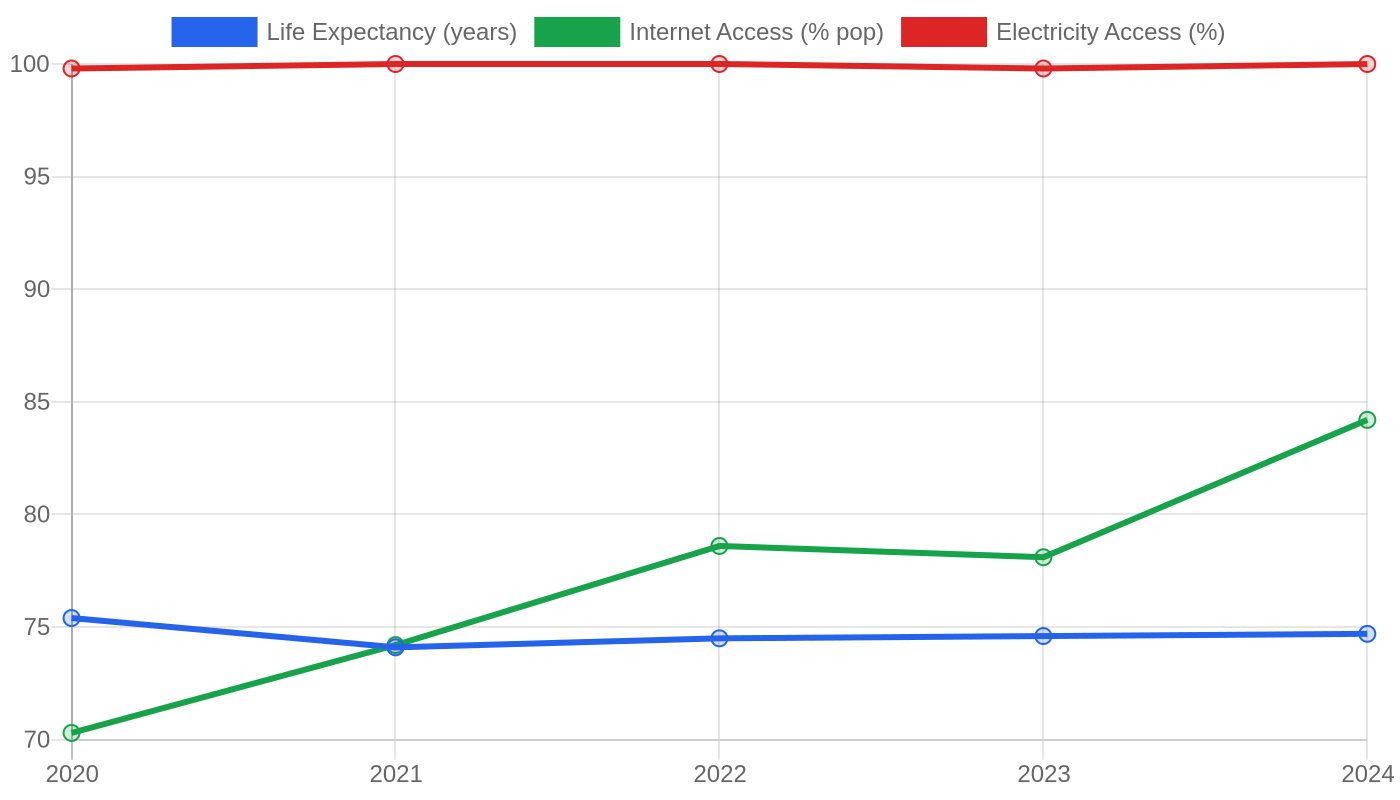
Although specific data points for GDP growth, inflation, and unemployment remain unavailable in current World Bank aggregates, the structural shift toward market-oriented mechanisms is evident in the diversification of its main industries. The absence of precise numerical metrics does not diminish the significance of this transformation; rather, it underscores the need to look beyond raw statistics to understand the underlying policy shifts driving growth.
The country’s ability to maintain political stability while pursuing aggressive economic liberalization serves as a critical foundation for its ongoing development strategy.
Navigating the Consumer Landscape: Industries and Corporate Players
While comprehensive cost-of-living indices and housing data are currently listed as unavailable, the composition of Vietnam’s top companies offers a window into the daily economic life of its citizens. The presence of major entities in consumer services, such as Air Mekong, Airports Corporation of Vietnam, and An Giang Coffee, indicates a robust domestic demand for travel and everyday goods.
Similarly, the prominence of Bien Hoa Sugar and Bidiphar in the consumer goods and health care sectors reflects a population with evolving consumption patterns and health needs. In the financial sector, institutions like Asia Commercial Bank, the Bank for Investment and Development of Vietnam, Bao Viet Holdings, and Bien Viet Securities play pivotal roles in channeling capital and managing risk.
Meanwhile, Appota Corporation’s inclusion in the technology sector highlights the growing importance of digital infrastructure and fintech solutions within the broader economy. These companies operate within a framework that blends state oversight with market competition, shaping the availability and price of essential services.
Without explicit data on rent-to-income ratios or daily expense averages, the focus must remain on the supply side—how these key players are structuring their offerings to meet the needs of a modernizing populace. The diversity of these top firms suggests a resilient domestic market capable of supporting various layers of economic activity.
Investment Climate: A Hub for Financial and Technological Growth
For international investors and business leaders, Vietnam’s corporate landscape offers distinct opportunities across multiple verticals. The financial sector appears particularly active, with a cluster of banks and securities firms suggesting deep engagement in capital markets and wealth management.
Asia Commercial Bank and the Bank for Investment and Development of Vietnam likely serve as key conduits for both domestic savings and foreign direct investment, facilitating the flow of capital into productive assets. Bao Viet Holdings and Bien Viet Securities further indicate a matured insurance and brokerage environment, which is essential for long-term economic stability and individual wealth protection.
On the technology front, Appota Corporation represents the push toward digital innovation, signaling that Vietnam is not just a manufacturing hub but also a center for software and service-based growth. The consumer services sector, anchored by air travel and coffee brands, points to a rising middle class with disposable income and mobility.
Business environments in such hybrid economies often require navigating regulatory frameworks that may evolve rapidly as the state seeks to balance socialist principles with capitalist efficiency. Investors must therefore remain agile, recognizing that success depends on aligning with both market forces and state priorities. The presence of these established players provides a degree of predictability in a market that is otherwise defined by its transitional nature.
Safety, Politics, and the Human Element
Understanding Vietnam requires looking beyond spreadsheets to the lived experience of its residents and the political realities that shape their lives. The crime index and safety index are currently marked as unavailable, leaving a gap in quantitative assessments of personal security. However, the political landscape provides context for social order: as a unitary state under the firm guidance of the Communist Party, Vietnam maintains a centralized approach to governance and public administration.
This political structure, described by some as a blend of socialism and capitalism, creates a unique social contract where stability is prioritized in exchange for gradual economic openness. External observers note that while the leadership remains ideologically committed to socialism, their policies often mirror those of capitalist economies, aiming to attract investment and improve living standards.
This “ardently capitalist” approach influences everything from urban development to labor laws, affecting the quality of life for millions. Without happiness data or specific safety metrics, the narrative relies on the broader observation that political continuity has historically correlated with steady, if uneven, improvements in infrastructure and public services.
The interplay between strict political control and economic freedom defines the daily rhythm of business and life in Hanoi and Ho Chi Minh City alike.
What’s Happening Now: The Evolution of State-Led Markets
The current affairs surrounding Vietnam are dominated by the ongoing negotiation between its socialist identity and its capitalist practices. Recent analyses suggest that the Communist Party of Vietnam continues to assert its constitutional role while allowing market mechanisms to dictate much of the economic output.
This dual-track system is evolving, with external commentary increasingly focusing on the “capitalist” nature of recent policy decisions aimed at boosting export competitiveness and attracting foreign technology firms. The inclusion of tech company Appota among top enterprises signals a strategic pivot toward high-value services, moving beyond traditional low-cost manufacturing.
Meanwhile, the robust representation of financial institutions indicates that capital formation and risk management are becoming more sophisticated, reflecting deeper integration with global financial systems.
Although specific news items regarding immediate reforms or elections are not detailed in the provided text, the overarching trend is clear: Vietnam is refining its model of “socialist-oriented market economy.” This evolution is driven by the need to sustain growth amid global headwinds, requiring constant adjustments to regulatory frameworks and investment incentives.
The country stands at a crossroads where ideological consistency must be balanced against the pragmatic demands of economic survival and expansion.
The Bottom Line
Vietnam remains a critical watchlist item for investors and policymakers interested in the intersection of political ideology and economic performance. Its unique status as a communist state with capitalist tendencies offers a laboratory for understanding how authoritarian governance can coexist with market-driven growth. While data gaps prevent a full quantitative assessment, the qualitative evidence points to a resilient, diversifying economy with strong potential in finance, technology, and consumer services.
Stakeholders should monitor the pace of regulatory reform and the continued influence of the Communist Party on business operations. Ultimately, Vietnam’s story is one of adaptation, proving that economic development can proceed even within unconventional political structures.
Sources & Methodology
This article is authored by Economic Pulse Net for informational and research purposes. Economic Pulse Net sources its data from multilateral institutions, national statistics bureaus, and proprietary databases. All data is believed to be current as of the date of publication.
Published: October 06, 2026 | Category: Research — Vietnam
Use these signals in your own platform
Economic Pulse publishes its live signal feed through a documented, read-only API. Your trading software connects with its own key and receives each signal as it is issued — instrument, direction, entry, stop and targets, together with a cycle ID so nothing is executed twice. The feed is independent of this website and cannot change it.
Signals are informational only and are not financial advice.