Economic Pulse Net | Sources: World Bank World Development Indicators, Government Sources | 2026
Key Takeaways
* Explosive Growth Trajectory: Vietnam is projected to deliver a remarkable GDP growth rate of over 8% in 2025, signaling a robust recovery and sustained momentum despite global headwinds.
Stable Macro Environment: With inflation held firmly in check at approximately 3.3% and unemployment remaining exceptionally low at 1.5%, the economy offers stability rarely seen in emerging markets.
Unique Political-Economic Model: The nation operates as a unitary communist state that has increasingly embraced capitalist policies, creating a distinct “ardently capitalist communist” framework that drives foreign investment.
Consumer-Centric Corporate Landscape: Major domestic players are heavily concentrated in consumer services, financials, and technology, reflecting a growing middle class and digital adoption.
Engine of Expansion: Unpacking the Growth Metrics
Vietnam’s economic performance for 2025 presents a compelling case study in rapid development within a constrained political system. According to World Bank data, the country is poised for a staggering GDP growth rate of 8.01882998978245%. This figure is not merely a statistical outlier; it represents a significant acceleration that suggests Vietnam is successfully capitalizing on global supply chain shifts and domestic consumption.
Crucially, this high growth is occurring alongside a controlled inflation environment, with the Consumer Price Index (CPI) sitting at a manageable 3.30999314219739%. Such price stability allows businesses to plan long-term investments without the fear of eroding margins caused by hyperinflation. Furthermore, the labor market appears tight yet healthy, with an unemployment rate recorded at just 1.523%.
While some might interpret such low unemployment as a sign of underemployment or informal sector dominance, in this context, it highlights a labor force that is fully engaged in productive activity. The combination of double-digit potential in output expansion and single-digit inflation creates a favorable real-growth environment for both local enterprises and international partners seeking entry into Southeast Asia.
Living Standards and Purchasing Power
The daily economic reality for Vietnamese citizens is shaped by a complex interplay of rising incomes and accessible living costs. While specific housing rental metrics are not detailed in the current dataset, broader indicators suggest improving prosperity. The Gross National Income (GNI) per capita stands at $4,970.0, providing a baseline for household earnings that is steadily climbing as the economy expands.
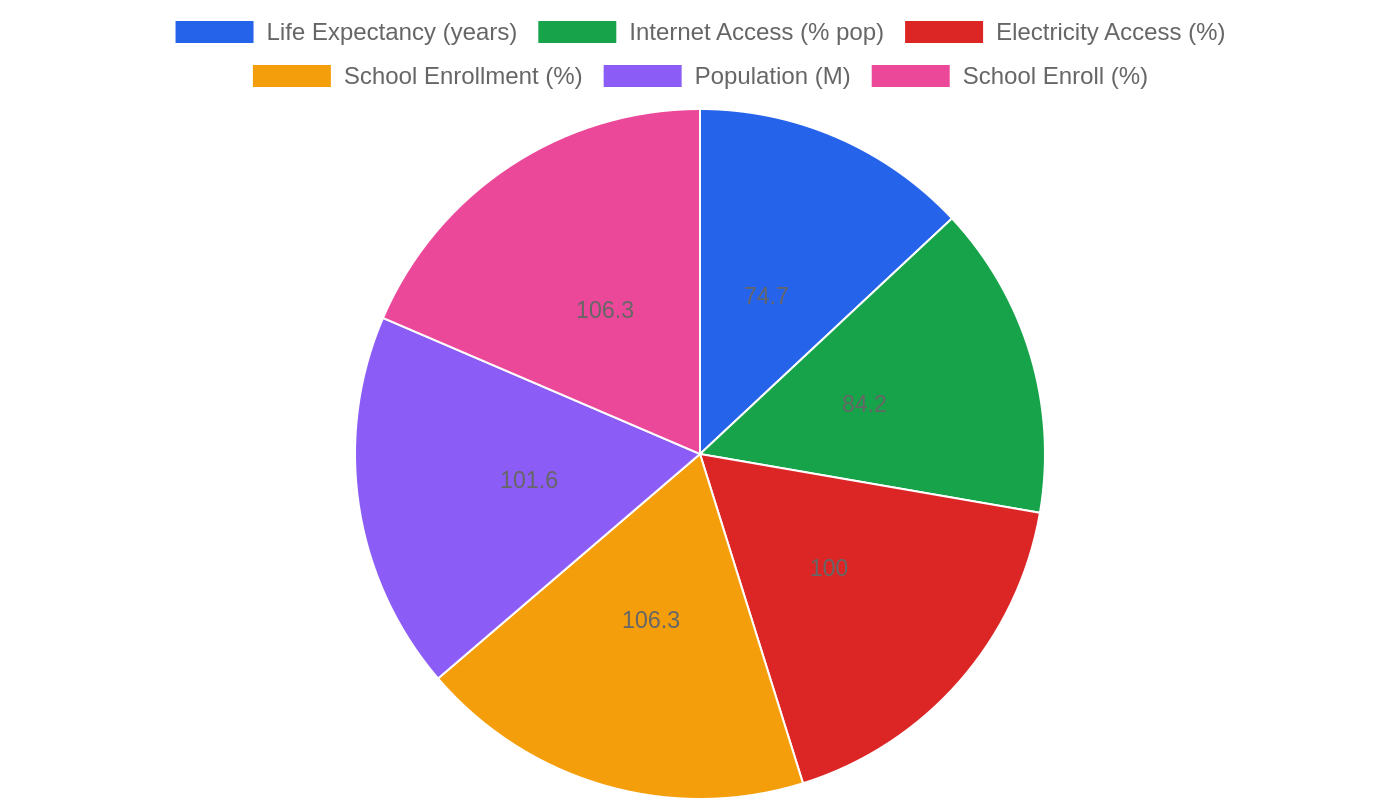
More telling is the GDP per capita measured in Purchasing Power Parity (PPP), which reaches $18,088.491587163. This PPP figure is particularly insightful because it adjusts for the cost of living differences between countries, offering a more accurate picture of what residents can actually buy with their income compared to global averages. For a population of 101,598,527.0, this suggests a vast and expanding consumer base with increasing discretionary spending power.
As the workforce remains efficiently employed, the pressure on essential goods prices—kept in check by the moderate CPI—means that wage gains are likely translating into tangible improvements in quality of life rather than being swallowed by inflation.
Investment Climate and Corporate Leaders
For investors looking at the corporate landscape, Vietnam offers a unique mix of traditional industries and modern tech-driven services. The business environment is dominated by entities that serve the immediate needs of the population, particularly in consumer services and financials. Prominent companies such as Air Mekong and the Airports Corporation of Vietnam indicate a strong focus on mobility and tourism infrastructure, sectors that are vital for connecting the nation to global markets.
In the financial sector, institutions like Asia Commercial Bank, the Bank for Investment and Development of Vietnam, Bao Viet Holdings, and Bien Viet Securities form a robust backbone for capital allocation and insurance services. These financial giants are supported by technological innovators like Appota Corporation, signaling a shift toward digital finance and IT solutions.
Additionally, healthcare and consumer goods remain critical pillars, with Bidiphar addressing medical needs and Bien Hoa Sugar representing the agricultural processing sector. This diversity ensures that investment opportunities are not reliant on a single commodity but are spread across a resilient ecosystem of service-oriented and industrial enterprises.
Political Stability and Social Order
Understanding Vietnam requires navigating its dual identity as both a socialist republic and a pragmatic economic actor. Politically, it is a unitary communist state, one of only two in Southeast Asia alongside Laos, where the Communist Party of Vietnam (CPV) asserts its leading role under the constitution. However, the economic narrative diverges from strict ideological orthodoxy.
External observers and publications like *The Economist* have characterized the leadership as “ardently capitalist communists,” noting that while socialism remains the official creed, economic policies have grown increasingly market-oriented. This hybrid approach provides a degree of political continuity that appeals to long-term investors, even as it challenges traditional Western definitions of governance.
Regarding social conditions, specific Crime and Safety Indices are currently listed as N/A in the provided data, leaving a gap in quantifiable safety metrics. Nevertheless, the political structure emphasizes state control and order, which historically correlates with lower levels of civil unrest compared to other regional peers, creating a predictable, if tightly managed, social environment for expatriates and businesses alike.
Current Affairs and Policy Shifts
The freshest developments in Vietnam center on the ongoing tension and synergy between political ideology and economic liberalization. The country is currently navigating a phase where its commitment to socialism coexists with aggressive integration into global capitalist networks. This duality is evident in how the CPV manages economic reforms that encourage private enterprise and foreign direct investment while maintaining strict political oversight.
The recent characterization of the leadership by *The Economist* as “ardently capitalist” underscores a significant shift in policy implementation, suggesting that regulatory frameworks are becoming more conducive to business operations. As the economy targets nearly 8% growth, policymakers are likely focusing on sustaining this momentum through infrastructure development and technological adoption, evidenced by the rise of firms like Appota Corporation.
The low unemployment rate further indicates that current labor policies are effectively matching job creation with workforce availability. Moving forward, the key narrative will be whether this capitalist efficiency can continue to outpace the constraints of a centralized political system without triggering social friction.
The Bottom Line
Vietnam represents a high-conviction opportunity for investors willing to navigate a complex political landscape in exchange for exceptional economic returns. The combination of near-8% GDP growth, stable inflation, and a young, employed population creates a fertile ground for expansion in consumer services and finance. While the lack of specific crime indices and housing data requires cautious due diligence, the macroeconomic fundamentals are overwhelmingly positive.
Stakeholders should watch Vietnam closely as it continues to refine its unique model of market socialism, which has proven capable of delivering rapid wealth generation in a volatile global era.
Sources & Methodology
This article is authored by Economic Pulse Net for informational and research purposes. Economic Pulse Net sources its data from multilateral institutions, national statistics bureaus, and proprietary databases. All data is believed to be current as of the date of publication.
Published: October 13, 2026 | Category: Research — Vietnam
Use these signals in your own platform
Economic Pulse publishes its live signal feed through a documented, read-only API. Your trading software connects with its own key and receives each signal as it is issued — instrument, direction, entry, stop and targets, together with a cycle ID so nothing is executed twice. The feed is independent of this website and cannot change it.
Signals are informational only and are not financial advice.