Economic Pulse Net | Sources: World Bank World Development Indicators, Government Sources | 2026
Key Takeaways
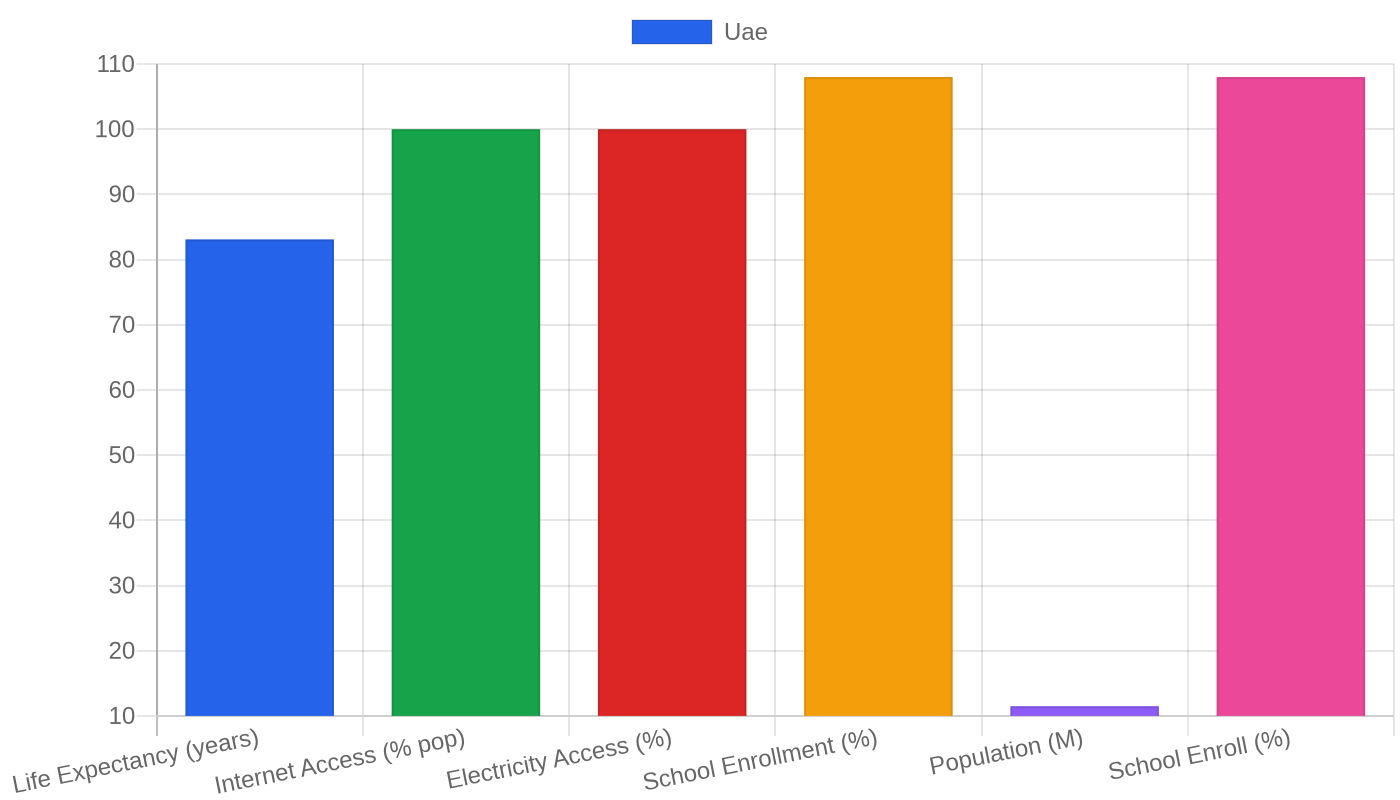
– The UAE boasts an extraordinary GDP per capita (PPP) of $79,343.78 according to the World Bank, placing it among the wealthiest nations globally, yet inflation remains remarkably contained at just 1.25 percent.
– With a population of 11.5 million, the country operates as a unique federation of seven hereditary sheikhdoms under a semi-constitutional monarchy, where political power is concentrated among ruling families.
– The UAE’s economic model faces a critical juncture: sustaining high living standards while diversifying away from hydrocarbon revenues and managing the demographic imbalance between citizens and expatriate workers.
– Safety and stability remain foundational to the UAE’s appeal, though the political system grants limited public participation, with decision-making concentrated in the Federal Supreme Council of ruling sheikhs.
The Prosperity Paradox — Growth Without the Numbers
The World Bank data presents an intriguing puzzle for analysts examining the UAE economy. While specific GDP growth figures and total GDP in US dollars are not available in the current dataset, what is clear is that this nation of 11.5 million people has engineered one of the most dramatic economic transformations of the late 20th and early 21st centuries. The headline number that demands attention is the GDP per capita based on purchasing power parity: $79,343.78.
This figure, reported by the World Bank, places the UAE firmly in the company of Switzerland, Norway, and Singapore — countries with mature, diversified economies. Yet the UAE achieved this while maintaining an inflation rate of just 1.25 percent, a remarkably stable price environment that would be the envy of most developed economies.
The inflation picture is particularly noteworthy when considered against the backdrop of global price shocks that have rattled other nations. A CPI reading of 1.25 percent suggests either effective monetary management, significant subsidy regimes, or a combination of both.
The World Bank data does not break down the components of this inflation figure, but such stability in a high-growth, high-consumption economy indicates structural factors at work — possibly including price controls on essentials, a heavily subsidized energy sector, and a labor market that can rapidly adjust through expatriate worker flows.
The absence of unemployment data from the World Bank is itself telling. The UAE does not publish comprehensive unemployment statistics in the manner of Western economies, partly because the labor force is overwhelmingly expatriate — estimated by most regional analyses at roughly 85 to 90 percent of the workforce. When jobs disappear, workers typically leave the country rather than registering as unemployed. This creates a flexible but precarious labor market where the social safety net is effectively the exit door.
The Price of Paradise — Housing, Rent, and Daily Life
The cost of living in the UAE presents a study in contrasts that the current dataset only hints at. Without specific housing cost figures from the World Bank, we can observe that the nation’s $79,343 per capita GDP creates a baseline of high consumption capacity. In practice, this means that Dubai and Abu Dhabi have become synonymous with luxury living, but the reality for most residents is more complex.
Housing costs in desirable areas of Dubai routinely consume 30 to 40 percent of middle-income household budgets, while more affordable options exist in older neighborhoods or neighboring emirates like Sharjah and Ajman.
The rental market dominates the UAE housing landscape, with homeownership largely restricted to citizens and certain categories of long-term expatriate residents. This creates a dynamic where housing costs are highly sensitive to supply cycles and economic sentiment. During boom periods, rents can spike dramatically; during downturns, they can fall just as quickly.
The World Bank data does not provide specific rental indices, but regional comparisons suggest that UAE housing costs are among the highest in the Gulf Cooperation Council region, exceeded only by Qatar in certain premium segments.
Daily expenses for food, transportation, and utilities are moderated by the absence of income tax — a fundamental feature of the UAE economic model. However, the introduction of a 5 percent value-added tax in 2018 has added a new layer to the cost of living calculation. Utility costs are generally subsidized for citizens but charged at market rates for expatriates, creating a two-tier system that the data does not fully capture.
The 1.25 percent inflation figure suggests that overall price pressures remain manageable, but this aggregate number may mask significant variation between the costs facing different income groups and nationalities.
The Business Oasis — Investment Climate and Corporate Landscape
The UAE has positioned itself as the commercial and logistics hub of the Middle East, and the World Bank data provides context for understanding this achievement. With a GDP per capita of nearly $80,000, the domestic market offers substantial purchasing power for businesses targeting affluent consumers. The population of 11.5 million, while modest in absolute terms, includes a high proportion of professionals, entrepreneurs, and wealthy individuals who drive demand for premium goods and services.
The top companies operating in the UAE span multiple sectors, though the World Bank data does not provide a specific list. What is clear from the economic structure is that the UAE has successfully built world-class infrastructure in aviation, logistics, tourism, and financial services to complement its traditional oil and gas base. Emirates airline, DP World ports, and the Dubai International Financial Centre represent the diversification strategy in action.
The business environment is characterized by free zones that offer 100 percent foreign ownership, tax holidays, and streamlined company registration — features that have made the UAE a preferred location for regional headquarters.
The political structure described by the World Bank as a “federal semi-presidential state under a semi-constitutional monarchy” provides both stability and predictability for investors. The seven ruling sheikhs who constitute the Federal Supreme Council have maintained policy continuity for decades, and a percentage of revenues from each emirate is allocated to the federal budget.
This revenue-sharing mechanism helps balance the interests of oil-rich Abu Dhabi with the more commercially oriented Dubai and the smaller, less wealthy northern emirates. For businesses, this means a regulatory environment that is generally business-friendly but subject to the personal discretion of ruling families rather than transparent democratic processes.
Security, Stability, and the Social Contract
The World Bank data does not provide crime or safety indices for the UAE, but the country’s reputation for safety is well-established through numerous international surveys and anecdotal evidence. Streets in major cities are patrolled extensively, surveillance is ubiquitous, and penalties for crime are severe. This security environment is a deliberate feature of the UAE’s economic model — safety attracts tourists, investors, and skilled professionals who might otherwise choose competing destinations.
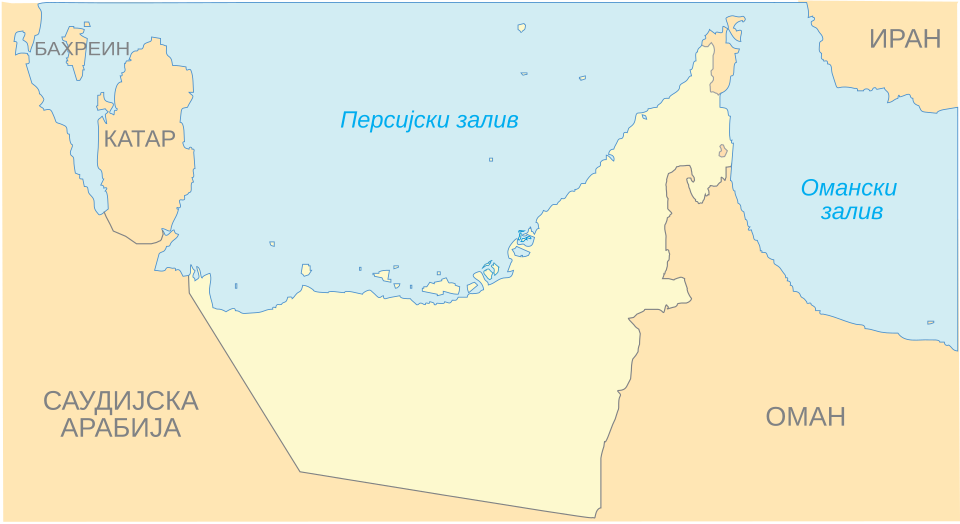
The political landscape, as described by the World Bank, reveals a system that prioritizes stability over participation. The UAE is governed by a Federal Supreme Council made up of the ruling sheikhs of Abu Dhabi, Ajman, Fujairah, Sharjah, Dubai, Ras Al Khaimah, and Umm Al Quwain. These are hereditary tribal monarchy-styled political units called sheikhdoms, and all responsibilities not granted to the federal government are reserved to the individual emirates.
This arrangement means that political rights are limited, with no national elections for leadership positions and restrictions on freedom of expression and assembly.
The quality of life in the UAE is therefore a trade-off. Residents enjoy world-class healthcare, education, and infrastructure, along with personal safety that is exceptional by global standards. They also accept a political system where they have no meaningful voice in governance, and where legal systems can be opaque and subject to executive influence.
The World Bank data does not include happiness or well-being metrics, but the continued flow of expatriate workers and tourists suggests that for many, the economic and security benefits outweigh the political limitations.
The Now — Navigating a Shifting Global Order
The UAE economy in the current period is navigating several simultaneous transitions that will determine its trajectory for the next decade. The inflation rate of 1.25 percent, while enviable, masks underlying pressures. Global interest rate trends have forced the UAE central bank to tighten monetary policy in alignment with the dollar peg, increasing the cost of borrowing for businesses and consumers.
The real estate market, a bellwether for economic sentiment, has shown signs of cooling in certain segments after a post-pandemic boom.
The political structure is also facing tests. The succession of leadership in Abu Dhabi and Dubai has proceeded smoothly, but the concentration of power in hereditary rulers means that long-term planning depends on the vision and health of a small number of individuals.
The revenue-sharing mechanism among the seven emirates, described in the World Bank data as allocating a percentage of revenues from each emirate to the federal government, requires constant negotiation and consensus-building among ruling families with sometimes divergent interests.
The UAE’s economic diversification strategy is entering a new phase. While oil and gas revenues still underwrite the state budget and the lavish infrastructure projects, the country has made genuine progress in building alternative economic pillars. Tourism, aviation, logistics, financial services, and increasingly technology and renewable energy are contributing to GDP in meaningful ways.
The challenge ahead is whether these sectors can generate sufficient employment and tax revenue to sustain the welfare state model that citizens have come to expect, particularly as the global energy transition accelerates and the long-term value of hydrocarbon reserves becomes uncertain.
The Bottom Line
The United Arab Emirates remains one of the most compelling economic stories in the world — a small federation that has leveraged its oil wealth to build a diversified, globally connected economy with exceptional living standards and safety. Investors and businesses should watch the UAE for its continued role as a regional hub and its ambitious bets on future industries.
However, the political system’s reliance on hereditary rule and the demographic imbalance between citizens and expatriates create vulnerabilities that could surface in times of economic stress. For now, the country’s $79,343 per capita GDP and 1.25 percent inflation tell a story of remarkable stability — but the question of whether this model can adapt to a post-oil world remains the central drama of the UAE’s next chapter.
Sources & Methodology
This article is authored by Economic Pulse Net for informational and research purposes. Economic Pulse Net sources its data from multilateral institutions, national statistics bureaus, and proprietary databases. All data is believed to be current as of the date of publication.
Published: July 23, 2026 | Category: Research — UAE
Use these signals in your own platform
Economic Pulse publishes its live signal feed through a documented, read-only API. Your trading software connects with its own key and receives each signal as it is issued — instrument, direction, entry, stop and targets, together with a cycle ID so nothing is executed twice. The feed is independent of this website and cannot change it.
Signals are informational only and are not financial advice.