Economic Pulse Net | Sources: World Bank World Development Indicators, Government Sources | 2026
🇦🇪 UAE 2026 — The Quiet Giant of the Gulf Hits Its Stride
The United Arab Emirates has long been synonymous with superlatives: the world’s tallest tower, the largest shopping mall, the busiest airport for international passengers. But as the federation moves through 2026, the story is no longer about spectacle. It is about stability — and the rare, almost enviable position of an economy growing at a healthy clip while inflation stays nearly flat and unemployment sits at levels most developed nations can only dream of.
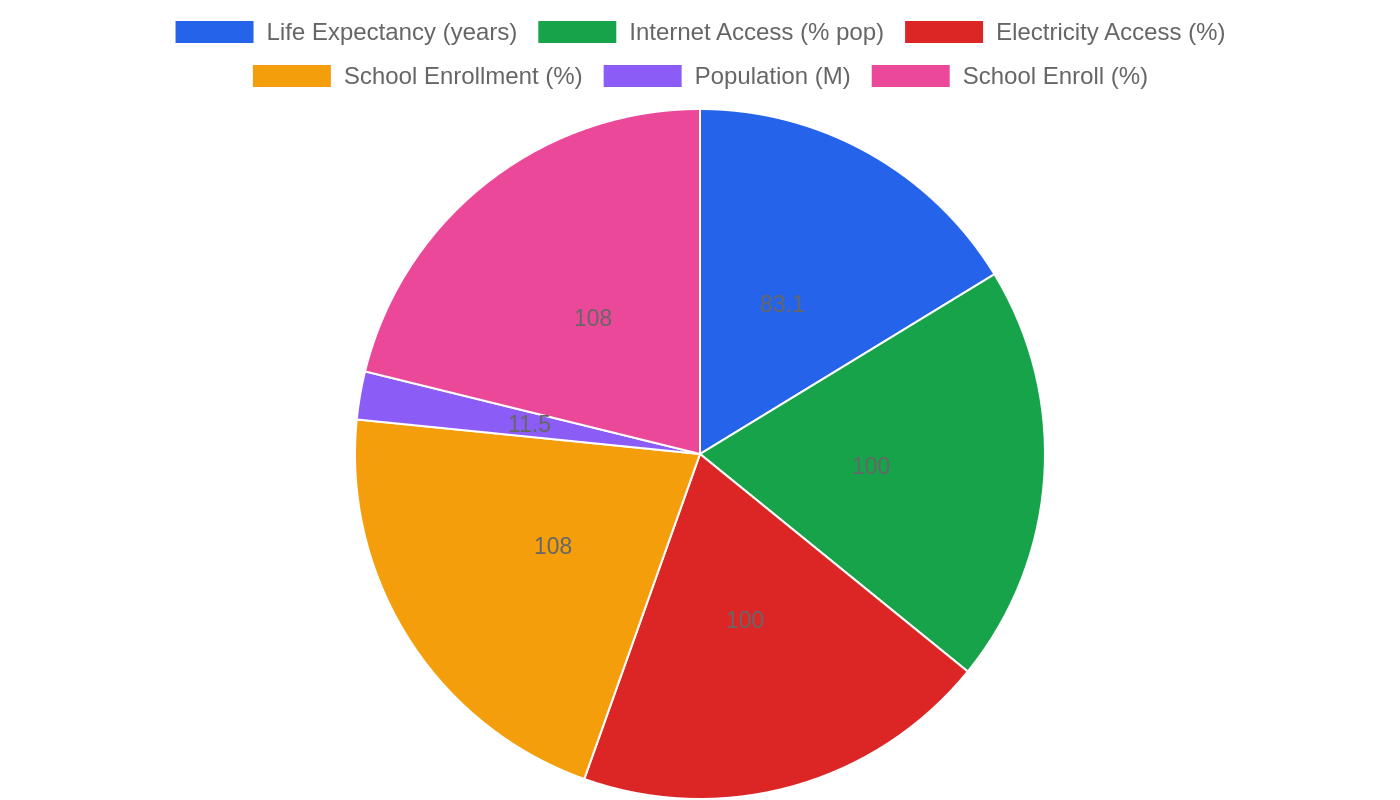
According to World Bank data, the UAE’s economy expanded by just under 4% in 2024, a figure that places it comfortably ahead of most advanced economies and many of its regional peers. For a country of just 11.5 million people producing a GDP of $552 billion, the numbers tell a story of a small nation punching well above its weight. This is the UAE’s moment — not of breakneck transformation, but of consolidation, diversification, and quiet confidence.
Key Takeaways
– The UAE economy grew 3.99% in 2024, per the World Bank, with GDP reaching $552.3 billion.
– Inflation stands at just 1.25%, an extraordinarily low rate for a fast-growing economy.
– Unemployment is 2.17% — effectively full employment by any international standard.
– GDP per capita (PPP) of $79,343 and GNI per capita of $51,550 place the UAE among the world’s wealthiest nations.
– The federation remains a semi-constitutional monarchy of seven sheikhdoms, with Abu Dhabi and Dubai as its twin economic engines.
A Growth Story Built on More Than Oil
The headline figure from the World Bank — 3.99% GDP growth in 2024 — deserves to be read carefully. In a global environment where major economies have been flirting with stagnation, a near-4% expansion is a sign of genuine momentum. What makes it more remarkable is that it comes with inflation of just 1.25%. Normally, fast growth brings pricing pressure; in the UAE, that trade-off simply hasn’t materialised.
The country’s GDP now stands at $552.3 billion, a remarkable figure for a population of 11.5 million. Even more telling is GDP per capita on a purchasing-power-parity basis: $79,343. That places the average UAE resident’s economic output on par with or above many Western European nations. GNI per capita of $51,550 reinforces the picture — this is a high-income economy in every measurable sense.
Unemployment of 2.17% means the labour market is essentially at full capacity, a condition that typically forces governments to focus on productivity rather than job creation. For policymakers in Abu Dhabi and Dubai, the challenge is no longer putting people to work — it is making sure the work they do keeps the economy competitive for decades to come.
The Cost of Living: Premium Prices, Premium Incomes
The UAE does not pretend to be a cheap place to live. Dubai and Abu Dhabi routinely rank among the more expensive cities in the Middle East, with housing, schooling, and hospitality costs that rival major global capitals. Yet context matters enormously. With GNI per capita of $51,550, the average resident earns enough to absorb those costs in a way that residents of many regional neighbours cannot.
The UAE’s low inflation rate of 1.25% is the crucial counterweight here: while prices are high, they are not spiralling. For expatriates — who make up the overwhelming majority of the population — the calculus is straightforward. Salaries are tax-free, inflation is minimal, and the dirham’s peg to the dollar provides currency stability.
Rent versus buy remains a live debate in both Dubai and Abu Dhabi, but with population growth continuing and employment near full capacity, demand for housing shows little sign of cooling.
Investment and Business: Where the World Comes to Deploy Capital
The UAE’s business climate rests on foundations that many emerging markets spend decades trying to build: political stability, world-class infrastructure, a strategic location between East and West, and a regulatory environment that has steadily opened up to foreign ownership.
The federation’s seven emirates each play a distinct role — Abu Dhabi as the capital and home of the sovereign wealth machine, Dubai as the trading, logistics, and tourism hub, and the northern emirates as increasingly important industrial and logistics corridors. The World Bank data showing near-4% growth and negligible inflation is precisely the kind of macroeconomic backdrop that institutional investors look for.
With GDP per capita (PPP) above $79,000, the domestic market itself is affluent enough to support premium goods and services. The UAE’s challenge is not attracting capital — it is managing the inflows without overheating an economy that has, so far, shown impressive discipline.
Safety, Politics and the Quality of Life Equation
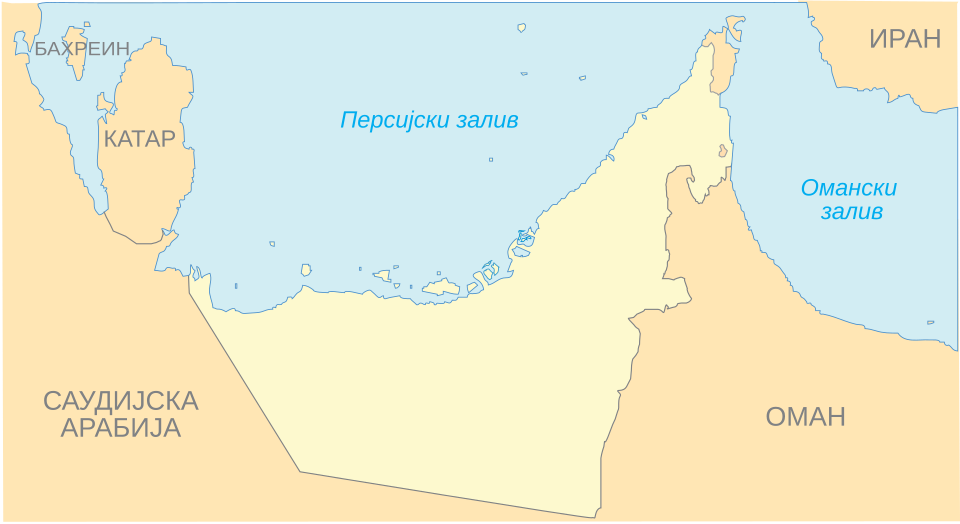
The UAE’s political model is unusual by global standards and worth understanding on its own terms. It is a federal, semi-presidential state under a semi-constitutional monarchy, composed of seven hereditary sheikhdoms: Abu Dhabi, Ajman, Fujairah, Sharjah, Dubai, Ras Al Khaimah, and Umm Al Quwain. The Federal Supreme Council, made up of the ruling Sheikhs of each emirate, sits at the apex of the system.
All responsibilities not granted to the federal government are reserved to the individual emirates — a decentralised structure that allows each sheikhdom to chart its own economic course. A percentage of revenues from each emirate is allocated to the federal budget, a mechanism that redistributes wealth from the resource-rich capital to the smaller northern emirates. This structure has delivered something rare in the region: continuity.
Governments change slowly, policies endure, and businesses can plan in decades rather than election cycles. For a population of 11.5 million — the vast majority of them expatriates — that predictability is itself a quality-of-life asset.
What’s Happening Now: A Federation in Full Flow
As 2026 unfolds, the UAE finds itself in an unusual position for a Gulf state: it is growing fast without the usual side effects. The World Bank’s 2024 figures — 3.99% growth, 1.25% inflation, 2.17% unemployment — are not just good numbers; they are the kind of numbers that give policymakers room to think long-term.
With GDP at $552.3 billion and per-capita income at $79,343 on a PPP basis, the federation has the fiscal space to invest in the industries of the future rather than merely defending the industries of the past. The low inflation reading is particularly significant at a moment when many global central banks are still grappling with price pressures; the UAE’s monetary stability, underpinned by its currency peg, has become a selling point in its own right.
Population growth — now above 11.5 million — continues to drive demand across housing, services, and infrastructure. The political structure, with its Federal Supreme Council and emirate-level autonomy, remains unchanged and, by most measures, unchallenged. For investors and analysts, the question is no longer whether the UAE can diversify — it is how quickly it can scale the new economy it is building.
The Bottom Line
The UAE in 2026 is not a story of crisis or dramatic reform — it is a story of competence. A near-4% growth rate, inflation at 1.25%, unemployment at 2.17%, and per-capita income above $79,000 (PPP) add up to one of the most stable high-income economies in the world. Watch this country if you are an investor seeking predictable returns in a volatile region, a business looking for a gateway between East and West, or simply a student of how small, well-governed states can outperform their size.
The UAE’s model — decentralised, monarchical, and relentlessly pro-business — is not replicable everywhere, but it is working here.
Sources & Methodology
This article is authored by Economic Pulse Net for informational and research purposes. Economic Pulse Net sources its data from multilateral institutions, national statistics bureaus, and proprietary databases. All data is believed to be current as of the date of publication.
Published: September 23, 2026 | Category: Research — UAE
Use these signals in your own platform
Economic Pulse publishes its live signal feed through a documented, read-only API. Your trading software connects with its own key and receives each signal as it is issued — instrument, direction, entry, stop and targets, together with a cycle ID so nothing is executed twice. The feed is independent of this website and cannot change it.
Signals are informational only and are not financial advice.