Economic Pulse Net | Sources: World Bank World Development Indicators, Government Sources | 2026
Key Takeaways
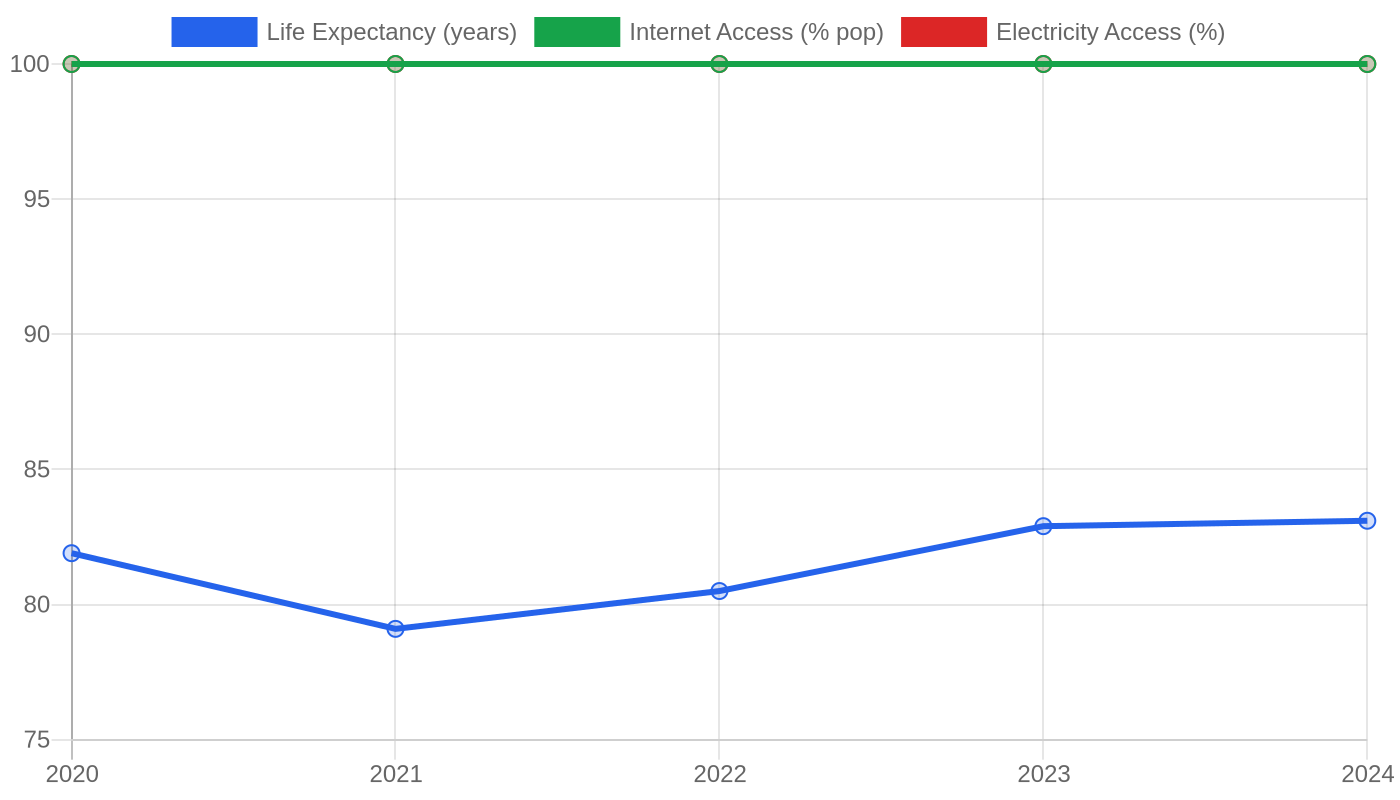
– The UAE’s economy grew at a robust 3.99% in 2024, according to World Bank data, outpacing many global peers and demonstrating the resilience of its post-oil diversification strategy.
– Inflation remains remarkably contained at just 1.25%, giving policymakers rare breathing room to pursue ambitious long-term reforms without the pressure of overheating.
– Unemployment sits at an exceptionally low 2.17%, reflecting a dynamic labor market that continues to attract global talent to the Emirates.
– With GDP per capita reaching $79,344 (PPP) and GNI per capita at $51,550, the UAE ranks among the world’s wealthiest nations, though the distribution of that wealth across its population tells a more nuanced story.
– The political structure remains a unique federation of seven hereditary monarchies, a system that has provided remarkable stability but concentrates power in the hands of ruling families.
The Growth Engine: Diversification Beyond the Pump
The headline numbers from the World Bank tell a story of a maturing economy that has successfully weaned itself off an exclusive dependency on hydrocarbon revenues. GDP growth of 3.99% in 2024 is not the explosive expansion of a frontier market, but rather the steady, confident pace of a country that has deliberately positioned itself as the commercial and logistical hub of the Middle East. This is growth built on trade, tourism, financial services, and increasingly, technology and innovation.
What makes this figure particularly impressive is the context of global economic uncertainty. While many nations have struggled with sluggish growth and productivity concerns, the UAE has maintained momentum. The inflation rate of 1.25% is the envy of central bankers worldwide — comfortably below most targets and indicative of an economy that has managed the tricky balance between stimulating demand and maintaining price stability.
For residents, this means their purchasing power is largely intact, and for businesses, it translates into predictable input costs and a stable planning environment.
The employment picture reinforces this narrative of economic health. At 2.17%, unemployment is effectively frictional — the natural churn of people between jobs rather than a structural problem. The UAE has become a magnet for skilled professionals from around the world, drawn by tax-free salaries, world-class infrastructure, and a lifestyle that blends luxury with opportunity.
The GDP per capita figure of $79,344 on a purchasing power parity basis places the country firmly in the top tier of global wealth rankings, while GNI per capita of $51,550 reflects the income actually accruing to residents. It is worth noting that this wealth is not uniformly distributed — the expatriate majority and the Emirati minority experience different economic realities — but the overall prosperity is undeniable.
The main industries driving this growth are well-established but evolving. Beyond oil and gas, the UAE has built formidable strengths in aviation, logistics, real estate, tourism, and financial services. Dubai has transformed itself into a global city that rivals Singapore and Hong Kong as a business hub, while Abu Dhabi has leveraged its hydrocarbon wealth to build sovereign investment funds that invest globally.
The services sector now dominates the economy, and the country is actively courting technology companies, fintech startups, and renewable energy investors as it looks toward a post-oil future.
The Cost of Living Paradox: Luxury and Affordability
The UAE presents a fascinating cost-of-living landscape that defies simple characterisation. On one hand, the country offers some of the world’s most luxurious real estate, from the Palm Jumeirah’s villas to Downtown Dubai’s high-rise apartments with Burj Khalifa views. On the other, it maintains a tax regime that is extraordinarily favorable — there is no personal income tax, which effectively boosts take-home pay by 20-30% compared to Western jurisdictions.
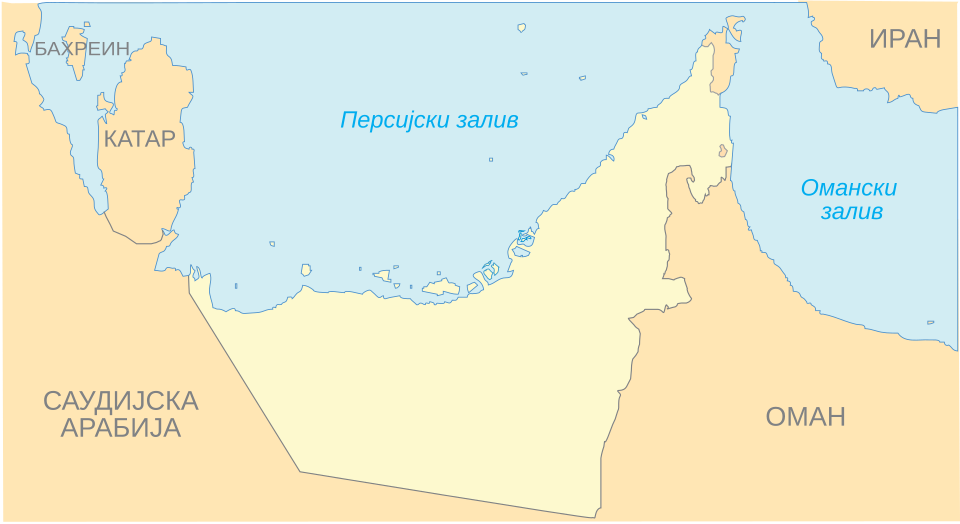
Housing costs vary dramatically across the seven emirates. Dubai and Abu Dhabi command premium prices that rival London, New York, or Singapore, particularly for prime locations. However, the rental market has developed a two-tier structure: high-end properties attract international executives and wealthy investors, while more affordable options exist in the older districts and in the northern emirates like Sharjah and Ajman, which have become commuter belts for those working in Dubai.
The rent-versus-buy calculation has shifted in recent years, with property ownership becoming increasingly popular among long-term expatriates as the government has introduced long-term visas and golden residency programs.
Daily expenses for groceries, dining, and entertainment are broadly comparable to other major global cities, with the notable exception of alcohol, which carries significant taxes. Utilities are subsidized for citizens but cost expatriates market rates. The lack of income tax means that the true cost of living must be measured against take-home pay rather than gross salary — and by that measure, the UAE remains attractive for skilled professionals.
The country’s continued population growth suggests that, despite the costs, the value proposition remains compelling.
Business Climate: Where the World Sets Up Shop
The UAE has spent decades building a business environment that is deliberately designed to attract foreign investment. The results are visible in the country’s position as a regional headquarters for multinational corporations, its world-class airports and ports, and its reputation as a gateway between East and West.
The government has consistently pursued policies that reduce friction for businesses: free zones offering 100% foreign ownership, streamlined company registration processes, and a legal framework increasingly aligned with international commercial standards.
The companies operating here span every sector imaginable — from energy giants to boutique consultancies, from global banks to cryptocurrency exchanges. The Emirates has positioned itself as the financial technology hub of the region, with Dubai’s DIFC and Abu Dhabi’s ADGM offering regulatory sandboxes that encourage innovation. The tourism and hospitality sector continues to expand, with new hotels, attractions, and entertainment venues opening regularly.
The aviation industry, anchored by Emirates and Etihad, connects the country to virtually every major city on Earth.
For investors, the UAE offers a combination that is hard to match elsewhere: political stability, strategic location, world-class infrastructure, and a regulatory environment that respects property rights and enforces contracts. The government has also shown a willingness to reform — introducing bankruptcy laws, expanding long-term residency options, and easing social restrictions to make the country more attractive to international talent.
The business climate is not without challenges — the summer heat limits outdoor activity, the cost of establishing operations can be high, and the legal system can still be opaque for those unfamiliar with it — but the overall trajectory is clearly positive.
Stability, Safety, and the Politics of Prosperity
The UAE’s political system is as distinctive as its skyline. It is a federation of seven hereditary monarchies, each with its own ruler, brought together under a Federal Supreme Council. This arrangement, while unusual in the modern world, has delivered remarkable stability. The ruling families have maintained a social contract that provides citizens with generous benefits in exchange for political loyalty, while the expatriate majority enjoys economic opportunity without political participation.
The safety and security situation is one of the country’s most compelling features. Violent crime is exceptionally rare, and the streets feel safe at any hour. The legal system, based on a blend of Sharia and civil law, is strict by Western standards, and the penalties for crimes like theft or assault are severe. This has created an environment where residents feel secure in a way that is increasingly uncommon in major cities worldwide.
The country’s crime rate is among the lowest in the world, and this perception of safety is a major draw for families and businesses alike.
Quality of life extends beyond safety. The UAE offers excellent healthcare, international-standard schools, and a calendar of events that rivals any global city. The country has made significant investments in culture, with museums, galleries, and performance venues that would be the pride of any nation.
The social environment, while conservative in some respects, has liberalized considerably in recent years — alcohol laws have been relaxed, unmarried couples can live together, and there is a growing tolerance for diverse lifestyles. The trade-off for this security and stability is a political system with limited public participation, but for many residents, the benefits outweigh the constraints.
The Current Moment: Ambition Meets Reality
The UAE in 2026 is a country operating at full throttle, driven by a leadership that is determined to position the nation for a post-hydrocarbon future. The government has announced ambitious plans across multiple sectors — from renewable energy to artificial intelligence, from space exploration to advanced manufacturing. These are not merely aspirational statements; they are backed by substantial sovereign wealth and a track record of delivering megaprojects on schedule.
The economic indicators support the narrative of a country in transition. Growth remains steady, inflation is contained, and the labor market is tight. The government is actively courting skilled professionals with golden visas and has simplified the process for starting businesses. At the same time, the country is navigating a complex geopolitical environment, balancing its traditional alliances with new partnerships across Asia and Africa.
The recent expansion of the BRICS grouping to include the UAE signals its ambition to be a player on the global stage, not just a regional one.
Perhaps the most significant development is the country’s accelerated push into technology and innovation. The UAE has positioned itself as a testbed for everything from autonomous vehicles to blockchain-based government services. The leadership has made clear that it intends to be a creator of the future economy, not just a consumer of it.
The challenges are real — the climate crisis poses an existential threat to the region, and the country’s water and food security depend on imported resources — but the UAE has consistently demonstrated an ability to overcome obstacles through investment and ingenuity. The coming years will test whether that formula continues to work.
The Bottom Line
The UAE is a country that has successfully transformed itself from a collection of pearling villages into a global powerhouse in just fifty years. It offers a unique combination of stability, opportunity, and ambition that attracts investors, entrepreneurs, and professionals from around the world. The economic fundamentals are strong, the leadership is determined, and the trajectory is upward.
For anyone looking to do business in the Middle East, or to diversify their portfolio with exposure to one of the world’s most dynamic economies, the UAE deserves serious attention. The story is not without its complications — the political system is autocratic, the labor market relies heavily on foreign workers, and the long-term sustainability of the economic model remains to be proven — but the Emirates has consistently defied expectations. It would be unwise to bet against it now.
Sources & Methodology
This article is authored by Economic Pulse Net for informational and research purposes. Economic Pulse Net sources its data from multilateral institutions, national statistics bureaus, and proprietary databases. All data is believed to be current as of the date of publication.
Published: August 25, 2026 | Category: Research — UAE
Use these signals in your own platform
Economic Pulse publishes its live signal feed through a documented, read-only API. Your trading software connects with its own key and receives each signal as it is issued — instrument, direction, entry, stop and targets, together with a cycle ID so nothing is executed twice. The feed is independent of this website and cannot change it.
Signals are informational only and are not financial advice.