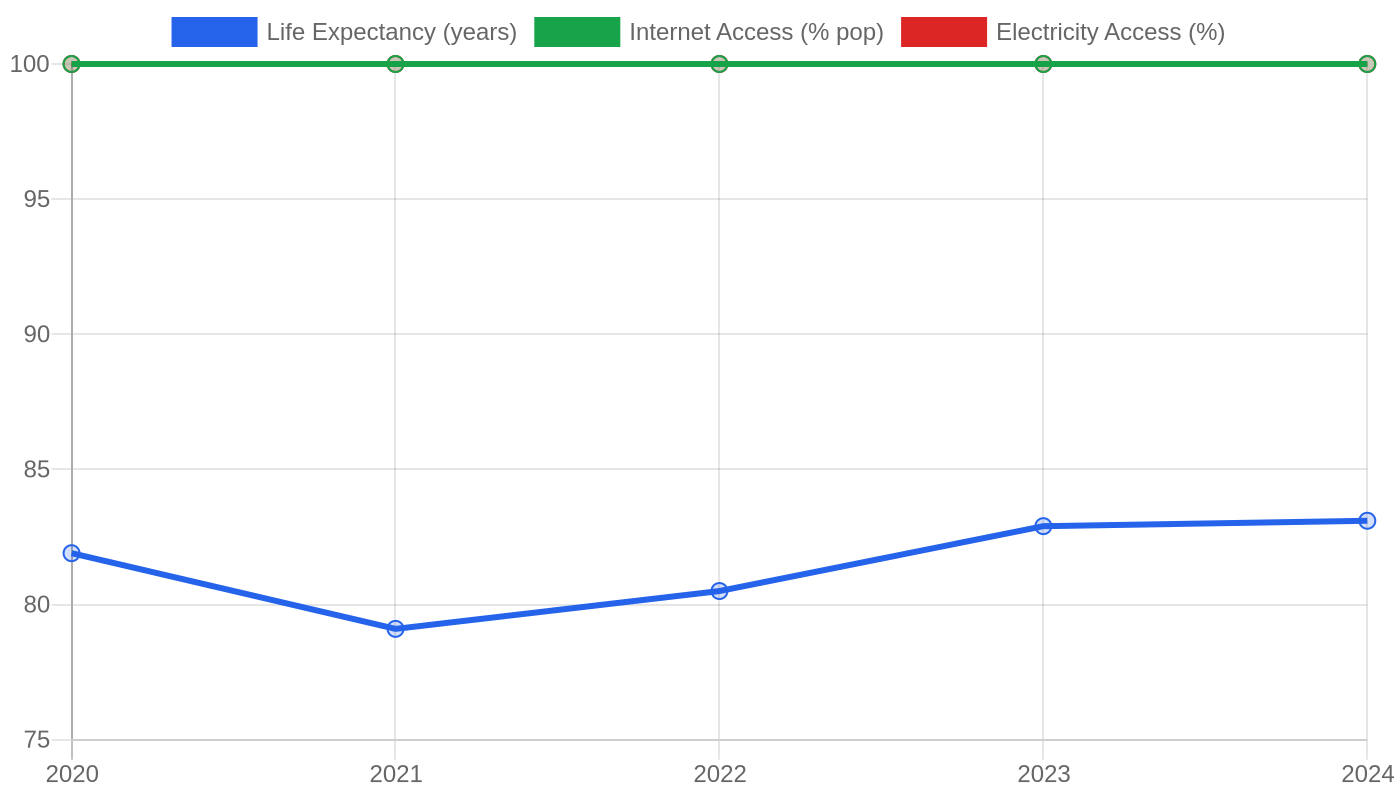
Economic Pulse Net | Sources: World Bank World Development Indicators, Government Sources | 2026
Key Takeaways
* Robust Expansion: The United Arab Emirates recorded a GDP growth of nearly 4% in 2024, signaling resilience in a volatile global market.
Price Stability: With inflation hovering at a modest 1.25%, the economy maintains significant purchasing power stability compared to regional peers.
Wealth Concentration: A high GNI per capita of $51,550 underscores the nation’s wealth distribution, though population dynamics play a critical role.
Federal Complexity: Governance remains a delicate balance between seven hereditary emirates and a central federal authority, shaping policy implementation.
Data Transparency Gaps: Critical metrics such as unemployment rates and detailed crime indices remain unreported, highlighting areas where economic visibility is limited.
Economic Engine: Navigating Growth and Inflation
The United Arab Emirates demonstrated notable economic vitality in 2024, achieving a GDP growth rate of 3.99%, according to World Bank data. This expansion occurred within an economy valued at approximately $552 billion USD, reflecting a substantial aggregate output that underpins its status as a regional financial hub. Crucially, this growth was accompanied by remarkably low inflation, with the Consumer Price Index (CPI) rising by only 1.25%.
Such price stability is vital for maintaining consumer confidence and preserving real wages, allowing households to plan expenditures without the fear of rapid eroding value. However, the human capital side of this equation presents a statistical void; official unemployment figures are listed as N/A, making it difficult to assess labor market tightness or the effectiveness of employment policies.
Furthermore, while the Gross National Income (GNI) per capita stands at a robust $51,550, indicating high average income levels, the lack of PPP-adjusted per capita data limits our understanding of actual living standards relative to local costs. These numbers suggest an economy that is expanding efficiently but lacks comprehensive transparency regarding its workforce utilization and equitable wealth distribution across its 11.5 million residents.
Cost of Living: The Premium of Prosperity
While specific cost-of-living metrics are not provided in the current dataset, the macroeconomic indicators offer clues about the financial environment. The combination of a high GNI per capita of $51,550 and extremely low inflation suggests that while incomes are strong, the cost of daily expenses may be moderated by price controls or competitive market forces.
For residents, the absence of reported CPI spikes implies that essential goods and services have remained relatively affordable despite global supply chain pressures. However, the lack of granular data on housing rents versus buying costs leaves investors and expatriates navigating the property market based on sentiment rather than hard statistics.
Without comparative regional averages, it is challenging to determine if the UAE offers a distinct advantage in disposable income retention compared to neighboring Gulf states. Ultimately, the low inflation rate serves as a buffer, ensuring that the high nominal incomes translate into tangible purchasing power for those employed in the formal sector.
Investment & Business Climate: The Federal Structure
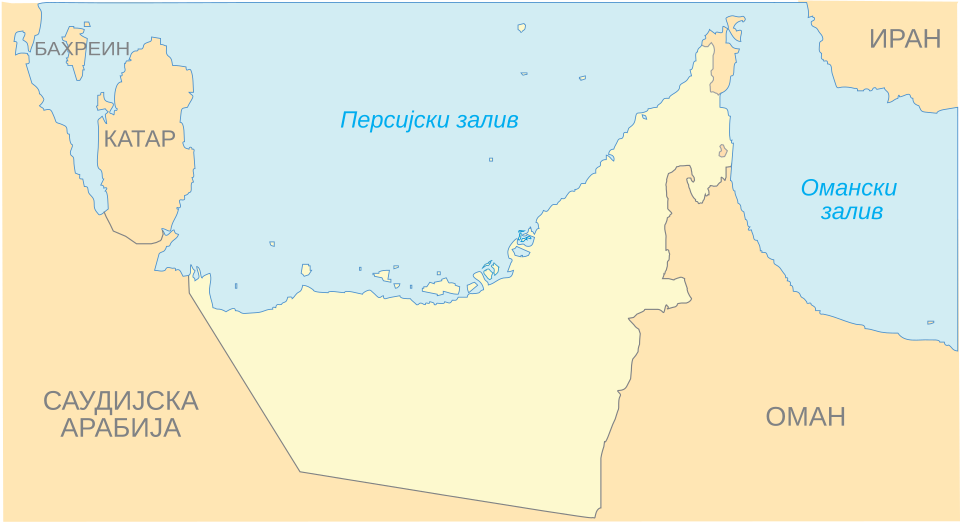
The business landscape in the UAE is deeply intertwined with its unique political architecture, which consists of seven emirates operating under a semi-constitutional monarchy. Each emirate—Abu Dhabi, Dubai, Sharjah, Ajman, Fujairah, Ras Al Khaimah, and Umm Al Quwain—retains significant autonomy over resources not explicitly granted to the federal government. This decentralization creates a fragmented yet competitive investment climate, where each Sheikhdom can tailor regulations to attract specific industries.
Revenue sharing mechanisms ensure that each emirate contributes to the federal budget, fostering a degree of inter-emirate cooperation necessary for large-scale infrastructure projects. While top companies are not individually listed, the aggregate GDP figure indicates a mature market capable of supporting major multinational corporations and local conglomerates alike.
Investors must navigate this dual-layer system, recognizing that federal reforms may take time to permeate through to the individual emirate-level operations.
Safety, Politics & Quality of Life: A Complex Governance Model
Political stability in the UAE is maintained through a Federal Supreme Council composed of the ruling Sheikhs of the seven emirates, creating a semi-presidential state structure. This system reserves all non-federal responsibilities to the individual emirates, allowing for localized governance that reflects tribal and monarchical traditions. Regarding personal security, both Crime and Safety Indices are currently listed as N/A, preventing a quantitative assessment of public safety levels.
Nevertheless, the political framework emphasizes continuity and hereditary leadership, which often correlates with long-term policy consistency beneficial for foreign direct investment. The happiness and quality of life metrics, while not explicitly quantified here, are implicitly supported by the high GNI per capita and stable inflation rates.
However, the opacity of crime data raises questions about transparency in social reporting, leaving international observers to rely on anecdotal evidence rather than statistical verification.
What’s Happening Now: Policy Shifts and Data Gaps
Currently, the UAE is navigating a period where economic growth outpaces the availability of detailed social indicators. The recent 3.99% GDP expansion suggests that business activities are accelerating, likely driven by strategic sectors within the emirates. However, the persistent “N/A” status for unemployment and crime indices highlights a disconnect between economic performance and social data publication.
Policymakers appear focused on maintaining the low inflation trend of 1.25%, which supports ongoing commercial activity without triggering price shocks. The federal structure continues to evolve as revenues are allocated from each emirate to the central government, reinforcing the union’s fiscal cohesion. As the country moves forward, the challenge lies in balancing the rapid economic integration with the need for transparent, accessible data on labor and safety.
Stakeholders are watching closely to see if future reports will bridge these informational gaps, providing a more holistic view of the nation’s progress.
The Bottom Line
The United Arab Emirates presents a compelling case for investors seeking exposure to a high-income, low-inflation market with strong aggregate growth. Its unique federal structure offers diverse regulatory environments across seven emirates, catering to various business needs. However, the lack of data on unemployment and safety indices requires caution for analysts relying on comprehensive risk assessments.
Those interested in the region should monitor how the federal government manages revenue distribution and whether upcoming reports will fill the current statistical voids.
Sources & Methodology
This article is authored by Economic Pulse Net for informational and research purposes. Economic Pulse Net sources its data from multilateral institutions, national statistics bureaus, and proprietary databases. All data is believed to be current as of the date of publication.
Published: October 08, 2026 | Category: Research — UAE
Use these signals in your own platform
Economic Pulse publishes its live signal feed through a documented, read-only API. Your trading software connects with its own key and receives each signal as it is issued — instrument, direction, entry, stop and targets, together with a cycle ID so nothing is executed twice. The feed is independent of this website and cannot change it.
Signals are informational only and are not financial advice.