Economic Pulse Net | Sources: World Bank World Development Indicators, Government Sources | 2026
Key Takeaways
* Exceptional Wealth Metrics: The United Arab Emirates boasts one of the highest GDP per capita (PPP) figures globally at approximately $79,344, alongside a GNI per capita of $51,550, signaling profound economic prosperity for its residents.
Tight Labor Market: With an unemployment rate recorded at just 2.174%, the nation maintains a remarkably tight labor market, suggesting high demand for skilled and unskilled labor alike.
Price Stability: Inflation remains subdued and stable, with the Consumer Price Index (CPI) holding steady at roughly 1.25%, providing a predictable environment for consumers and investors.
Complex Governance: The country operates under a unique semi-constitutional monarchy structure, where seven hereditary Sheikhdoms retain significant autonomy while contributing to a central Federal Supreme Council.
Economic Engine: Prosperity Amidst Data Gaps
The United Arab Emirates presents a compelling economic paradox: it is a high-income powerhouse with some of the most robust wealth indicators in the world, yet official GDP growth and total GDP figures remain officially listed as N/A in recent datasets. According to World Bank data, the nation’s GDP per capita based on purchasing power parity (PPP) stands at an impressive $79,343.78, reflecting the high value generated per individual within its borders.
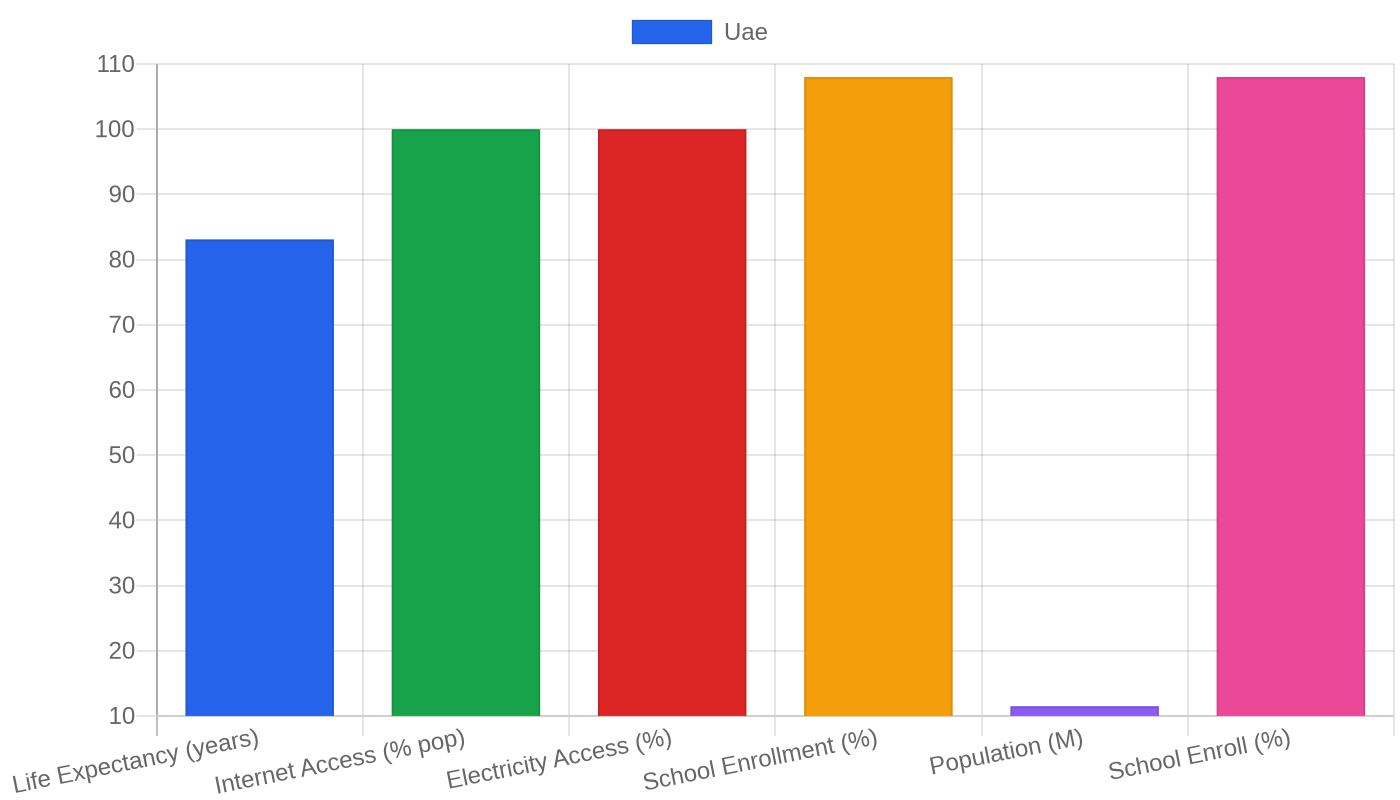
This figure is complemented by a Gross National Income (GNI) per capita of $51,550, further underscoring the substantial income levels achieved across the population. The scale of this economy is supported by a diverse demographic base, with a total population recorded at 11,513,149 individuals, creating a dense consumer market that drives internal demand.
Crucially, the labor market appears highly efficient; the unemployment rate is exceptionally low at 2.174%, indicating that nearly all willing workers are engaged in productive economic activity. While specific sectoral contributions to GDP growth are not quantified in the current dataset, the stability of these macroeconomic indicators suggests an economy that is less reliant on volatile expansion rates and more focused on maintaining high-value output and financial health.
The absence of explicit GDP growth percentages does not diminish the strength of the underlying metrics, which point to a mature, affluent economy rather than a developing one seeking rapid scaling.
Cost of Living: Affordability Within Affluence
For residents and expatriates alike, the cost of living in the UAE is shaped by its unique position as a wealthy hub with controlled inflation. The Consumer Price Index (CPI) has been recorded at a modest 1.250865245598%, a figure that suggests prices for goods and services are relatively stable compared to many other global economies experiencing higher inflationary pressures.
This low inflation rate helps preserve the real value of incomes, allowing the high GNI per capita of $51,550 to translate effectively into purchasing power for housing, food, and transportation. While specific rental yields or property prices are not detailed in the provided data, the combination of high per-capita income and low price growth implies that housing costs, while potentially significant in absolute terms, are manageable relative to earnings.
Daily expenses appear to be well-contained, enabling a standard of living that aligns with the country’s status as a premium destination for business and leisure. The stability of the CPI also benefits long-term planning for businesses and households, reducing the uncertainty often associated with volatile cost-of-living environments.
Consequently, the economic experience for the average citizen is likely characterized by financial predictability, even amidst the broader complexities of a federal system with varying emirate-level regulations.
Investment & Business Climate: A Federated Opportunity
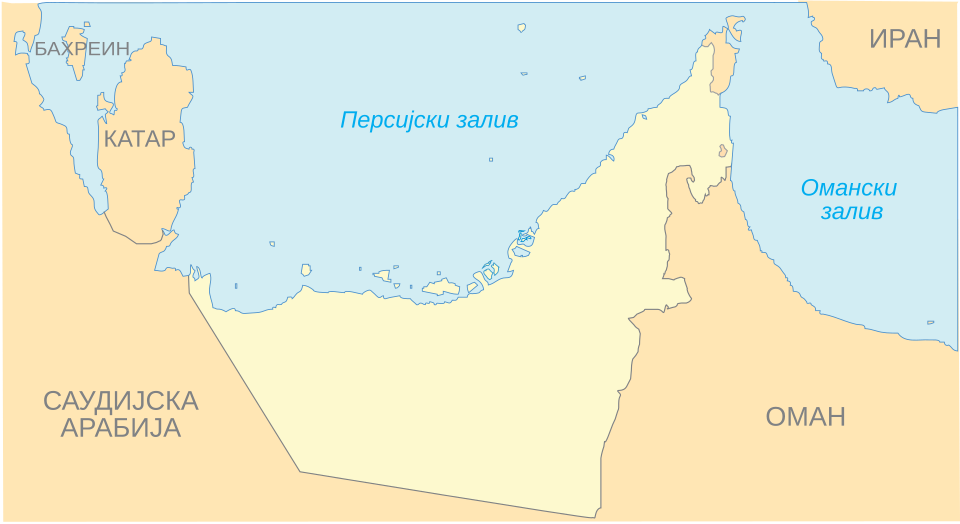
The investment landscape in the UAE is defined by its political structure and the autonomy granted to its constituent parts. As a federation of seven hereditary tribal monarchy-styled political units—Abu Dhabi, Ajman, Fujairah, Sharjah, Dubai, Ras Al Khaimah, and Umm Al Quwain—the business environment can vary significantly depending on the specific emirate in which operations take place.
The Federal Supreme Council, composed of the ruling Sheikhs of these emirates, oversees national policy, but all responsibilities not explicitly granted to the federal government are reserved to the individual emirates. This decentralization allows each Sheikhdom to tailor its regulatory and tax environments to attract specific types of foreign direct investment and talent.
Revenues from each emirate are allocated to the federal government, ensuring a degree of fiscal unity while preserving local economic incentives. Although specific top companies are not listed in the current data, the high GDP per capita PPP indicates a market capable of supporting large-scale corporate structures and sophisticated financial services.
Investors must navigate this dual-layered governance, leveraging the federal framework for broad stability while engaging with local emirate authorities for operational specifics. The tight unemployment rate of 2.174% further supports a vibrant business climate, suggesting that firms can find the necessary human capital to execute their strategies without facing severe labor shortages.
Safety, Politics & Quality of Life: Stability Through Structure
Political stability and safety form the bedrock of the UAE’s appeal as a global hub. The country is governed as a federal semi-presidential state under a semi-constitutional monarchy, a system designed to balance traditional leadership with modern administrative needs. The Federal Supreme Council ensures that the interests of all seven emirates are represented at the highest level, fostering a sense of shared national purpose despite local variations.
From a safety perspective, while specific Crime and Safety Indices are listed as N/A in the provided data, the political structure itself implies a high degree of order and control, typical of such governance models. The low unemployment rate and high income levels contribute to social cohesion, which is often correlated with lower crime rates and higher public satisfaction.
For quality of life, the combination of high purchasing power (GDP per capita PPP of ~$79,344) and stable prices (CPI ~1.25%) creates an environment where residents can enjoy a high standard of living without the stress of hyperinflation or job insecurity. The demographic size of over 11.5 million people adds to the vibrancy of urban centers, offering a cosmopolitan lifestyle that attracts international talent.
Ultimately, the political framework provides a predictable backdrop for daily life, allowing citizens and expats to focus on professional and personal development within a secure society.
What’s Happening Now: Navigating the Federal Dynamic
Current affairs in the UAE are centered on the interplay between federal mandates and emirate-specific initiatives. The ongoing allocation of revenues from each emirate to the federal government continues to shape national budget priorities, influencing infrastructure and social spending across the union. With inflation held at a minimal 1.25%, policymakers appear to be successfully managing price stability, a key concern for maintaining consumer confidence in a post-pandemic global economy.
The extremely low unemployment rate of 2.174% suggests that the labor market is absorbing workforce demands efficiently, possibly driven by continued expansion in non-oil sectors and tourism. However, the lack of specific GDP growth data highlights a period of consolidation or perhaps a statistical reporting gap that observers are closely watching.
Businesses are likely adapting to the nuanced regulatory landscapes of individual emirates, taking advantage of the autonomy granted to Abu Dhabi, Dubai, and others to innovate in finance, technology, and logistics. The political stability ensured by the Federal Supreme Council provides a consistent platform for these developments, allowing the UAE to maintain its competitive edge in regional trade and investment flows.
As the nation navigates these dynamics, the focus remains on sustaining high living standards while managing the complex federal relationships that define its governance.
The Bottom Line
The United Arab Emirates offers a unique investment proposition: a high-income, low-inflation economy with a stable political framework and a tight labor market. While some headline growth figures are missing, the underlying metrics of wealth and employment suggest a resilient and mature economic engine. Investors and expatriates should view the UAE not just as a single entity, but as a collection of seven distinct markets united under a stable federal roof.
It is a destination best suited for those seeking financial security, political stability, and access to a wealthy, diverse consumer base.
Sources & Methodology
This article is authored by Economic Pulse Net for informational and research purposes. Economic Pulse Net sources its data from multilateral institutions, national statistics bureaus, and proprietary databases. All data is believed to be current as of the date of publication.
Published: October 10, 2026 | Category: Research — UAE
Use these signals in your own platform
Economic Pulse publishes its live signal feed through a documented, read-only API. Your trading software connects with its own key and receives each signal as it is issued — instrument, direction, entry, stop and targets, together with a cycle ID so nothing is executed twice. The feed is independent of this website and cannot change it.
Signals are informational only and are not financial advice.