Economic Pulse Net | Sources: World Bank World Development Indicators, Government Sources | 2026
Key Takeaways
* Thailand’s economy is navigating a period of subdued expansion, with GDP growth projected at just 2.44% for 2025, reflecting structural headwinds rather than acute crisis.
Despite low headline inflation of -0.13%, the country maintains a robust labor market with an unemployment rate of only 0.78%, suggesting tightness in specific skill sectors.
With a GDP per capita (PPP) of $26,250, Thailand offers a higher standard of living relative to its GNI per capita of $7,690, indicating significant purchasing power parity advantages for residents and expatriates.
The corporate landscape is dominated by diversified conglomerates in telecommunications, consumer services, and industrials, signaling a mature but competitive business environment.
Political stability remains rooted in a complex historical evolution from absolute monarchy to modern constitutional frameworks, providing a backdrop of institutional continuity despite periodic shifts in governance.
Economic Headwinds and Structural Realities
Thailand’s economic trajectory in 2025 presents a nuanced picture of moderate stagnation coupled with underlying resilience. According to World Bank data, the nation’s GDP growth is forecasted at 2.44%, a figure that underscores a slowdown from previous highs but still indicates positive, albeit cautious, expansion. This modest growth rate is set against a backdrop of deflationary pressures, with the Consumer Price Index (CPI) registering a slight contraction of -0.13%.
While negative inflation can sometimes signal weak demand, in Thailand’s context, it may also reflect efficient supply chains and stable commodity prices, allowing consumers to stretch their budgets further. Crucially, the labor market tells a different story of strength; the unemployment rate stands at a remarkably low 0.78%. This near-full employment scenario suggests that while new job creation might be slow, the existing workforce is highly utilized, reducing social unrest associated with joblessness.
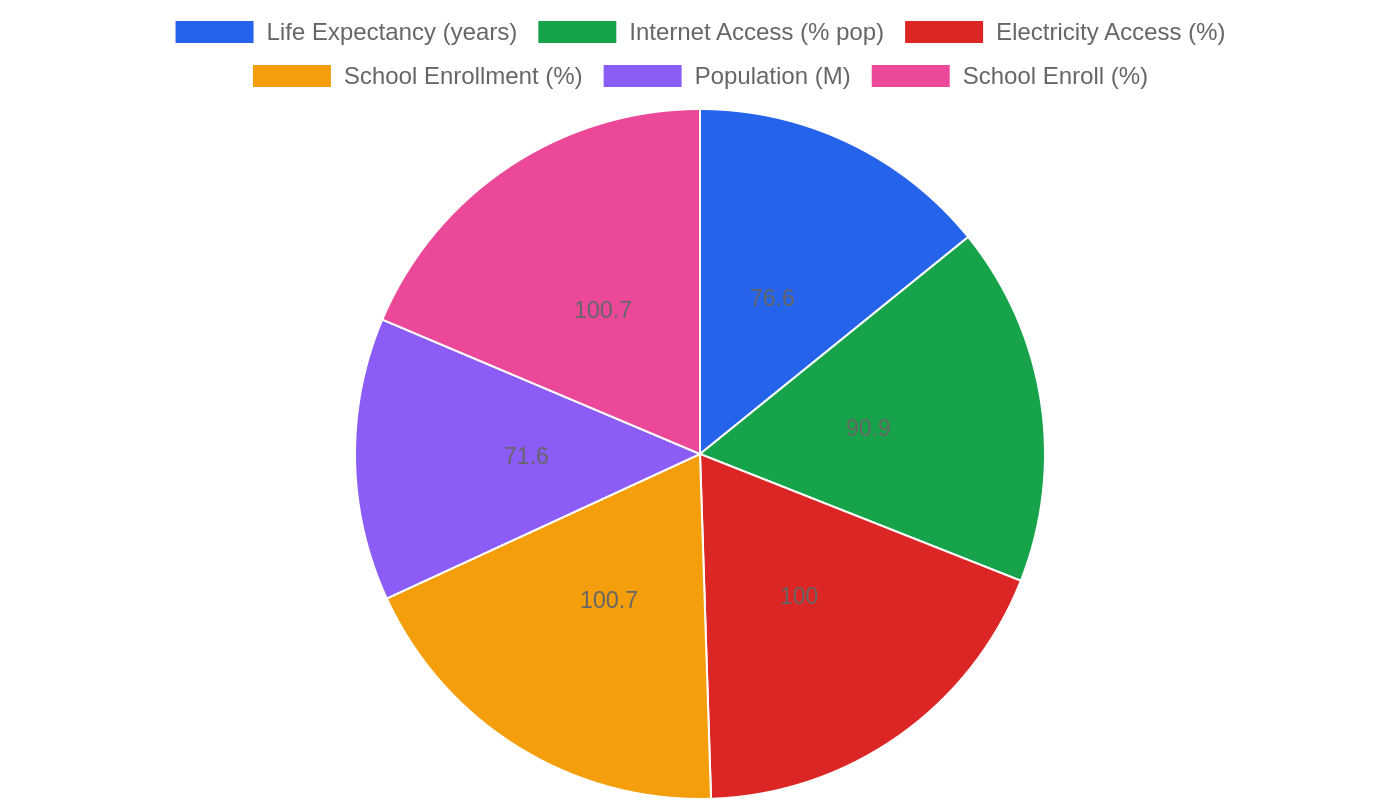
The total GDP of approximately $577 billion supports a population of over 71.6 million people, creating a unique dynamic where aggregate economic output is substantial, yet per-capita benefits are distributed unevenly. The disparity between the GDP per capita at Purchasing Power Parity (PPP) of $26,250 and the nominal GNI per capita of $7,690 highlights the importance of local cost structures in determining actual living standards.
For policymakers, the challenge lies in stimulating productivity to move beyond this 2.4% growth plateau without triggering inflationary spikes that could erode the current deflationary advantage.
Living Standards and Cost Dynamics
For residents and investors alike, understanding the cost of living in Thailand requires looking beyond nominal income figures to the reality of purchasing power. The significant gap between the PPP-adjusted GDP per capita ($26,250) and the nominal GNI per capita ($7,690) reveals that everyday expenses are considerably lower than what global averages might suggest for a middle-income nation.
This disparity means that while official income metrics appear modest, the actual quality of life supported by local wages can be quite high, particularly in urban centers where infrastructure is developed. Although specific housing indices and detailed rent comparisons are not explicitly quantified in the provided dataset, the low inflation rate of -0.13% implies that essential goods and services are either stable or becoming more affordable, easing the burden on household budgets.
In a region often characterized by volatile currency fluctuations and rising living costs, Thailand’s ability to maintain such low price increases is a notable feature for long-term planning. Expatriates and digital nomads often find that their foreign currencies go significantly further here, leveraging the PPP advantage to access premium services and housing.
However, this affordability must be balanced against the realities of a small domestic market for luxury goods, which may remain expensive due to import dependencies. Ultimately, the cost structure supports a lifestyle that prioritizes value, making it an attractive destination for those seeking stability without the exorbitant price tags found in neighboring economic hubs.
Corporate Landscape and Investment Opportunities
The Thai business ecosystem is anchored by a diverse array of established players across key sectors, offering clear avenues for investment and partnership. Major corporations such as Advanced Info Service dominate the telecommunications space, providing critical infrastructure that underpins the digital economy. In the consumer services sector, entities like 108 Shop and 2Spot Communications illustrate a vibrant retail and media landscape that caters to both local needs and broader regional trends.
The industrial sector is equally prominent, with companies like 3K Battery and Airports of Thailand PCL highlighting the nation’s focus on energy transition and connectivity. These firms represent more than just individual business ventures; they are pillars of an economy that is gradually shifting towards higher-value services and sustainable technologies.
For international investors, the presence of these well-capitalized domestic giants provides a degree of stability, as they often lead partnerships and joint ventures that bring in foreign expertise. The education sector, represented by Aksorn Education, also points to a growing emphasis on human capital development, which is essential for sustaining long-term economic growth.
While the crime index is listed as N/A, the operational environments of these top companies suggest a functional legal and regulatory framework that supports corporate governance. Investors should watch the interplay between traditional industries like aviation and emerging sectors like battery technology, as this transition will likely define Thailand’s competitive edge in Southeast Asia over the next decade.
Political Continuity and Social Stability
Thailand’s political landscape is deeply influenced by its historical evolution, which has shaped its current approach to governance and social order. Prior to 1932, the nation operated under feudal or absolute monarchies, with kings viewed as *dharmaraja*—rulers who governed in accordance with moral law. This historical context laid the groundwork for a centralized state, a transformation accelerated by King Chulalongkorn, who converted a decentralized protectorate system into a unitary state.
The pivotal moment came on June 24, 1932, when the Khana Ratsadon (People’s Party) executed a bloodless revolution, marking the end of absolute monarchy and the beginning of modern constitutional governance. This historical shift created a political culture that values stability and gradual reform over radical upheaval, a trait that continues to influence policy-making today.
While specific crime and safety indices are currently unavailable, the historical emphasis on national unity and hierarchical respect contributes to a generally orderly society. The legacy of the Sukhothai Kingdom’s tributary system and subsequent centralization efforts ensures that the state retains significant authority in managing regional disparities.
For observers, understanding this deep-rooted political history is crucial to interpreting current policy decisions, which often seek to balance modern democratic aspirations with traditional royalist values. This unique blend of historical reverence and modern administrative structure provides a predictable, if complex, environment for social and economic planning.
Current Affairs and Future Trajectory
As Thailand moves through 2025, the immediate economic narrative is defined by cautious optimism amidst structural adjustments. The government is likely focusing on measures to boost the sluggish 2.44% GDP growth, possibly through targeted infrastructure investments or incentives for high-tech industries like battery manufacturing.
With inflation running slightly negative at -0.13%, policymakers have room to implement supportive fiscal policies without risking immediate price surges, a rare luxury in many emerging markets. The extremely low unemployment rate of 0.78% suggests that any stimulus efforts must be carefully calibrated to avoid overheating the labor market or causing wage inflation.
Recent developments in the corporate sector, such as expansions by major telecom and airport operators, indicate that private sector confidence remains intact despite macroeconomic headwinds. International partners are closely watching how Thailand leverages its PPP-adjusted living standards to attract talent and tourism, which are vital for rebalancing the economy away from pure manufacturing reliance.
The ongoing dialogue between traditional political structures and modern economic demands will likely shape the regulatory environment for foreign investors in the coming months. As the nation navigates this period of slow but steady growth, the focus remains on sustaining the low unemployment achieved while finding new engines for GDP expansion.
The Bottom Line
Thailand represents a compelling case study in economic resilience, offering a stable environment with low labor risk and favorable living costs relative to income. Investors and businesses should view the current 2.44% growth not as a failure, but as a phase of consolidation before potential acceleration driven by service and tech sectors. The country is best suited for long-term strategic investors who appreciate historical continuity and are willing to navigate a complex political heritage.
For now, Thailand remains a safe harbor in Southeast Asia, prioritizing stability and purchasing power over rapid, volatile expansion.
Sources & Methodology
This article is authored by Economic Pulse Net for informational and research purposes. Economic Pulse Net sources its data from multilateral institutions, national statistics bureaus, and proprietary databases. All data is believed to be current as of the date of publication.
Published: October 17, 2026 | Category: Research — Thailand
Use these signals in your own platform
Economic Pulse publishes its live signal feed through a documented, read-only API. Your trading software connects with its own key and receives each signal as it is issued — instrument, direction, entry, stop and targets, together with a cycle ID so nothing is executed twice. The feed is independent of this website and cannot change it.
Signals are informational only and are not financial advice.