Economic Pulse Net | Sources: World Bank World Development Indicators, Government Sources | 2026
Key Takeaways
* Financial Sector Dominance: The corporate landscape is heavily skewed toward banking, with six of the top ten listed companies operating in the financial services sector, indicating a capital-intensive economy.
Historical Geopolitical Weight: The nation’s modern political stability is rooted in a complex civil war history where Russia and Iran played pivotal roles in mediating peace and securing borders against external influences.
Transportation & Connectivity: Key industrial players are concentrated in aviation and postal services, highlighting the critical importance of logistics and cross-border connectivity for this landlocked Central Asian state.
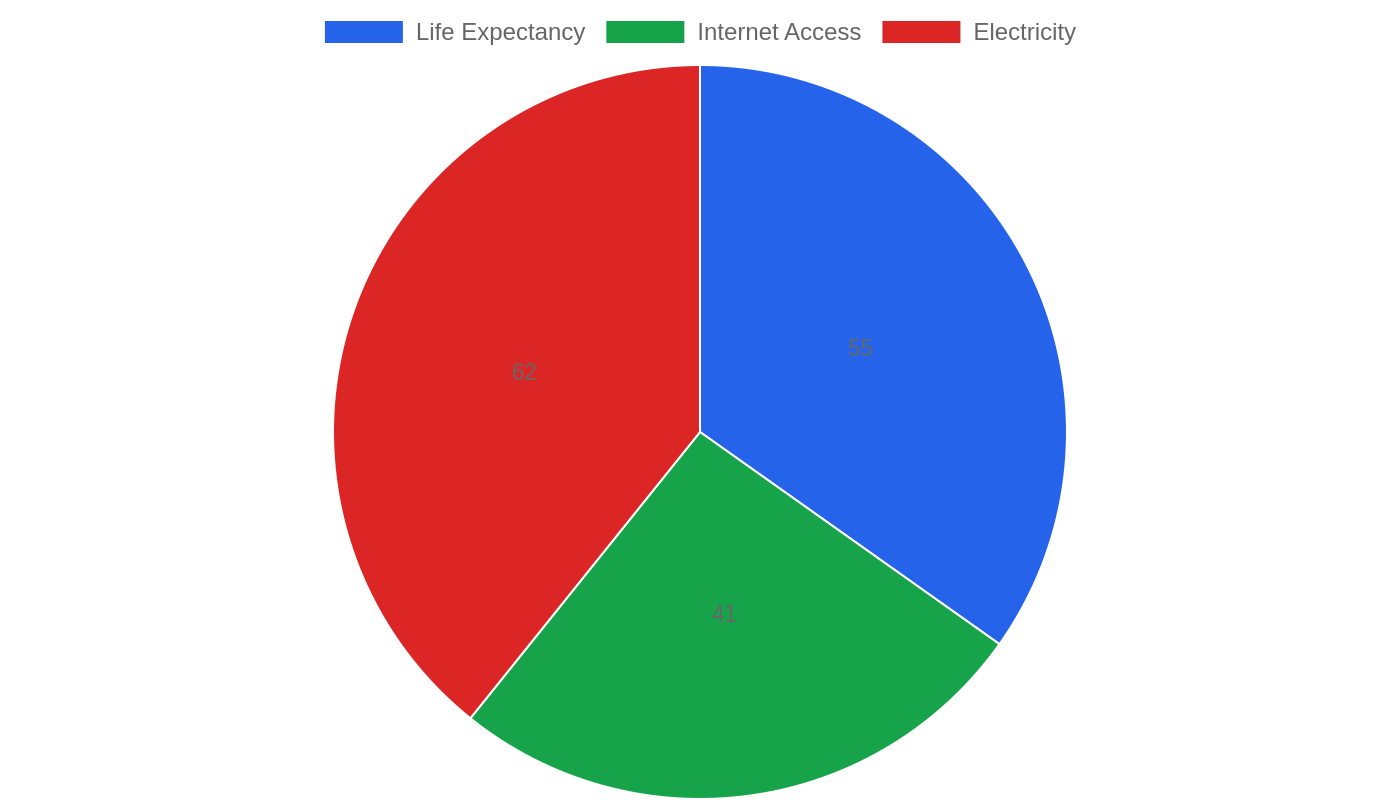
Data Gaps in Macro Metrics: Current macroeconomic indicators such as GDP growth, inflation rates, and unemployment figures are not currently available from the World Bank, requiring investors to rely on structural and historical analysis rather than real-time performance metrics.
Economic Foundations and Structural Shifts
The economic narrative of Tajikistan is defined less by current quarterly fluctuations and more by its structural composition and historical resilience. While specific World Bank data points for GDP growth, inflation CPI, and unemployment remain unavailable, the underlying architecture of the economy reveals a system where finance serves as the primary engine of corporate activity.
The presence of major institutions like AccessBank Tajikistan, Bank Eskhata, Orienbank, and Spitamen Bank within the top company rankings suggests that credit availability and financial intermediation are central to business operations in the region. This concentration in financials implies that economic health is closely tied to banking liquidity and regulatory frameworks rather than broad-based industrial manufacturing or service exports.
Without concrete figures on GDP per capita PPP or GNI, analysts must look at the dominance of these financial entities as a proxy for economic formalization; when banks are among the largest employers and asset holders, it often signals an economy in transition from informal cash-based transactions toward a more regulated monetary system.
Furthermore, the inclusion of consumer service giants like Somon Air and Tajik Air indicates that mobility and tourism—or at least domestic transport—remain vital components of the national output, even if precise volume data is obscured. The absence of explicit population data further complicates per-capita assessments, forcing observers to evaluate the country’s economic weight through the lens of institutional strength rather than aggregate size.
Ultimately, the lack of standard macroeconomic metrics does not imply stagnation but rather a need for deeper qualitative assessment of how financial institutions support the broader industrial base, including the industrial transportation sector represented by Tajik Post. Understanding Tajikistan requires looking past the missing numbers to see the scaffolding of its market: a system held together by strong banking ties and essential logistical networks.
Cost of Living and Daily Realities
For residents and expatriates alike, understanding the cost of living in Tajikistan involves navigating a landscape where official price indices are not currently published. Without specific CPI data or housing cost benchmarks, the daily expense profile remains somewhat opaque to international comparison tools.
However, the structure of the top companies offers indirect clues about the commercial environment; the prominence of local airlines and postal services suggests that transportation and communication costs may be significant factors in household budgets. In many developing economies with similar corporate profiles, the cost of basic utilities and imported goods often drives inflationary pressure, yet without World Bank inflation data, we cannot quantify this pressure accurately.
Rent versus buy decisions are similarly difficult to model without housing market data, though the dominance of financial institutions might suggest that mortgage markets are either nascent or heavily regulated, potentially keeping rental yields distinct from global averages. The lack of safety and crime indices further adds to the uncertainty, as security costs can influence insurance premiums and property values in ways that are hard to predict without statistical backing.
Consequently, individuals moving to Tajikistan must rely on anecdotal evidence and direct inquiry rather than standardized cost-of-living calculators. This opacity means that budgeting for daily expenses requires a flexible approach, acknowledging that while core necessities may be affordable relative to Western standards, the lack of transparent data makes long-term financial planning challenging.
The absence of these metrics does not mean the costs are low or high, but rather that they are not systematically tracked in a way that allows for easy regional benchmarking.
Investment and Business Climate
Investing in Tajikistan presents a unique opportunity to engage with a market where the corporate hierarchy is distinctly vertical, dominated by financial services and strategic infrastructure. For foreign investors, the list of top companies provides a clear map of where capital is currently concentrated and where regulatory oversight is most mature.
Banks such as First MicroFinance Bank and National Bank of Tajikistan indicate a dual-track system involving both micro-level lending to small businesses and centralized monetary policy management, suggesting that financial inclusion efforts are a priority for the state. The presence of Asia Airways and Somon Air highlights the potential for growth in the travel and tourism sector, which could benefit from improved regional connectivity and visa policies.
Meanwhile, Tajik Post’s inclusion in the top ten underscores the importance of last-mile delivery and logistics in an increasingly digital economy, offering opportunities for tech-driven supply chain innovations. The heavy weighting of financial firms means that entering the market often requires partnering with established local banks for trade finance, currency exchange, and regulatory compliance.
Investors should note that the business environment is likely shaped by the legacy of the post-independence era, where stability was paramount, and thus regulatory frameworks may prioritize security and control over rapid deregulation. The lack of specific industry breakdowns beyond these top names means that smaller sectors like agriculture or mining are not immediately visible in the corporate leaderboard, leaving room for niche investments outside the financial and transport umbrellas.
Success in this market will depend on building strong relationships with the dominant financial players who act as gatekeepers to the broader economy.
Safety, Politics, and Quality of Life
The quality of life in Tajikistan is deeply intertwined with its turbulent political history and ongoing geopolitical alignments. After gaining independence, the country endured a devastating civil war fueled by factional conflicts supported by neighboring countries including Afghanistan, Iran, Pakistan, Uzbekistan, and Russia. This period of instability has left a lasting imprint on the national psyche and the current political landscape.
Russia and Iran were instrumental in maintaining peace, primarily to prevent involvement from the United States or Turkey, thereby shaping the country’s foreign policy orientation toward traditional allies. Russia backed the pro-government faction and deployed troops from the Commonwealth of Independent States (CIS) to guard the sensitive Tajikistan-Afghan border, a move that has provided a layer of security but also entrenched Russian military influence.
The demographic impact of this conflict was severe, with all but 25,000 of the more than 400,000 ethnic Russians emigrating, leading to a significant cultural and economic shift as a large segment of the skilled workforce departed. While specific crime and safety indices are not available, the historical context suggests that security concerns have been a primary driver of policy, particularly regarding border control and internal stability.
The happiness data or general well-being metrics are similarly absent, making it difficult to assess the social fabric beyond the political sphere. For residents, the legacy of the war means that community cohesion and national identity are constantly negotiated in the shadow of past violence.
The current political stability appears to be maintained through strong state control and external military support, creating an environment where political risk is managed through authoritarian structures rather than democratic pluralism.
What’s Happening Now / Current Affairs
The current affairs surrounding Tajikistan are best understood through the lens of its enduring post-conflict stabilization and its strategic role in Central Asian security dynamics. Although recent news feeds do not provide specific updates on new legislation or immediate economic reforms, the historical data points to a government that prioritizes regime survival and border security above all else.
The continued presence of CIS troops along the Afghan border indicates that the threat of spillover instability from Afghanistan remains a live issue for policymakers in Dushanbe. This security focus likely dictates current budget allocations, with defense and internal security taking precedence over social welfare or infrastructure development.
The emigration of the ethnic Russian population continues to shape the labor market, potentially creating shortages in technical and administrative fields that were previously filled by Russian specialists. As the country moves further into 2026, the absence of new major political upheavals suggests that the power-sharing agreements reached after the civil war are holding, albeit under strict supervision.
The dominance of state-aligned financial institutions in the corporate sector implies that economic policy is still heavily influenced by political considerations, with credit flowing to sectors deemed strategically important by the government. Investors and observers should watch for any shifts in the relationship with Russia and Iran, as changes in their engagement levels could significantly impact Tajikistan’s security and economic outlook.
The lack of new data does not mean stagnation, but rather a continuation of the status quo established in the early post-independence years.
The Bottom Line
Tajikistan is a country where structural insights must substitute for missing macroeconomic data, requiring investors to look at corporate hierarchies and historical precedents. It is best suited for those interested in emerging market finance and logistics, particularly those willing to navigate a business environment dominated by a few key banking groups.
The political stability achieved since the civil war offers a predictable, if rigid, framework for long-term engagement, though the lack of transparency in safety and cost-of-living metrics demands caution. Ultimately, Tajikistan represents a niche opportunity for specialized investors who value geopolitical alignment and financial sector growth over broad-based consumer market expansion.
Sources & Methodology
This article is authored by Economic Pulse Net for informational and research purposes. Economic Pulse Net sources its data from multilateral institutions, national statistics bureaus, and proprietary databases. All data is believed to be current as of the date of publication.
Published: October 16, 2026 | Category: Research — Tajikistan
Use these signals in your own platform
Economic Pulse publishes its live signal feed through a documented, read-only API. Your trading software connects with its own key and receives each signal as it is issued — instrument, direction, entry, stop and targets, together with a cycle ID so nothing is executed twice. The feed is independent of this website and cannot change it.
Signals are informational only and are not financial advice.