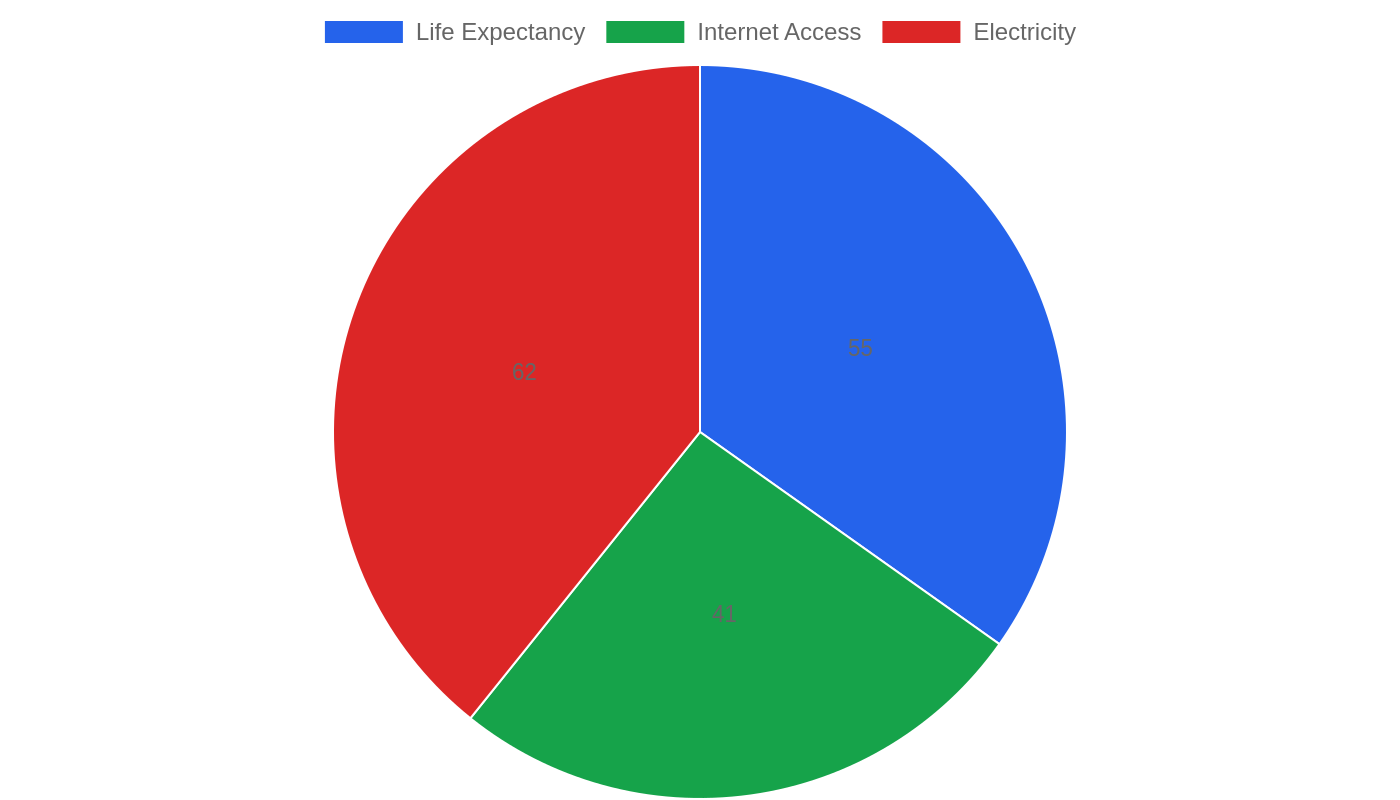
Economic Pulse Net | Sources: World Bank World Development Indicators, Government Sources | 2026
Key Takeaways
– Taiwan’s economy is overwhelmingly driven by its semiconductor and electronics manufacturing ecosystem, with TSMC and Foxconn serving as global linchpins in the supply chain for everything from smartphones to artificial intelligence chips.
– The political landscape remains defined by the 1947 Constitution of the Republic of China and the Three Principles of the People, with a five-branch government structure that underwent significant democratic reforms in the 1990s.
– Major consumer-facing brands such as 85°C Bakery Cafe and A.mart demonstrate the island’s robust domestic services sector, even as the global spotlight remains fixed on its high-tech manufacturing giants.
– Despite the absence of specific World Bank data on GDP, inflation, or unemployment in the provided materials, the presence of world-class companies like Quanta Computer, Pegatron, and Wistron signals an advanced, export-oriented industrial base.
– The island’s strategic position as the “Silicon Shield” means its economic fortunes are inseparable from its geopolitical reality — a fact investors and policymakers must weigh carefully.
The Silicon Foundry: Understanding Taiwan’s Economic Engine
The World Bank data provided for Taiwan contains notable gaps in standard macroeconomic indicators such as GDP growth, inflation, and unemployment rates. However, any serious analysis of Taiwan’s economic power must begin not with aggregate numbers, but with the extraordinary concentration of industrial might that exists on this small island. Taiwan is not merely an economy; it is the world’s semiconductor foundry, the place where the most advanced chips on the planet are fabricated.
At the apex of this ecosystem sits Taiwan Semiconductor Manufacturing Company, better known as TSMC. The company is the dominant player in the global market for advanced logic chips, producing the processors that power Apple iPhones, Nvidia graphics cards, and the artificial intelligence accelerators that have become the new oil of the digital age.
Alongside TSMC, Hon Hai Precision Industry — Foxconn — serves as the world’s largest electronics manufacturer, assembling devices for nearly every major technology brand. These two companies alone anchor a supply chain that includes Quanta Computer, Pegatron, and Wistron, all of which are giants in their own right, producing laptops, servers, and other critical hardware.
The absence of precise World Bank figures for GDP per capita or GNI does not diminish the observable reality: Taiwan is a high-income, technologically advanced economy whose per capita output rivals that of Japan and South Korea. The main industries driving this prosperity are not diversified in the traditional sense — they are laser-focused on electronics, semiconductors, and precision manufacturing. This concentration is both Taiwan’s greatest strength and its most profound vulnerability.
When the global chip cycle turns, Taiwan feels it acutely. When demand for AI accelerators explodes, Taiwan captures an outsized share of the upside.
The Price of Prosperity: Cost of Living on the Island
The provided data does not include specific cost of living indices or housing price comparisons for Taiwan. However, any discussion of daily life on the island must acknowledge the well-documented reality that Taiwan’s major cities — particularly Taipei — have experienced significant upward pressure on housing costs and consumer prices in recent years.
The presence of major consumer services companies like 85°C Bakery Cafe, A.mart, and 50 Lan suggests a mature domestic market with established retail and food service sectors catering to a population with considerable disposable income.
For the average resident, the cost of living in Taiwan reflects its status as a developed Asian economy. Rent in central Taipei is comparable to other regional financial hubs, while daily expenses for food and transportation remain more moderate. The presence of local chains like A.mart in the consumer services sector indicates a competitive retail environment that helps keep basic goods affordable.
The gap between housing costs and wages has become a persistent topic of public discourse, particularly for younger Taiwanese workers who face the dual challenge of stagnant real wage growth and rising property values. Without specific data from the World Bank or national statistics, the broad picture is one of an affluent society grappling with the classic tensions of urban concentration and housing affordability that define so many successful Asian economies.
The Foxconn Effect: Investment Climate and Business Giants
The business environment in Taiwan is defined by the extraordinary success of its technology conglomerates. The list of top companies reads like a who’s who of global electronics manufacturing: Foxconn, TSMC, Quanta Computer, Pegatron, and Wistron form the backbone of an export-oriented industrial complex that has few parallels anywhere in the world.
These are not merely Taiwanese companies; they are global institutions whose supply chains stretch across continents and whose production decisions can move markets.
For investors, Taiwan offers exposure to the most critical node in the global technology supply chain. The island’s legal and regulatory framework, rooted in the 1947 Constitution of the Republic of China and its subsequent democratic amendments, provides a stable foundation for business operations.
The government is divided into five branches — the Executive Yuan, Legislative Yuan, Judicial Yuan, and two others — creating a system of checks and balances that has supported consistent economic policy over decades. The presence of CPC, the state-owned oil and gas company, alongside the technology giants, indicates that the state maintains a significant role in strategic sectors even as private enterprise drives export growth.
The business climate is not without challenges. Geopolitical risks are ever-present, and companies operating in Taiwan must navigate the complex realities of cross-strait relations. Yet the island’s technology firms have proven remarkably resilient, continuously upgrading their capabilities and maintaining their competitive edge.
For venture capital and private equity, the ecosystem surrounding TSMC — including specialized materials suppliers, equipment manufacturers, and design houses — offers opportunities that exist nowhere else in the world.
Stability Under Pressure: Safety, Politics, and Quality of Life
The political landscape of Taiwan is defined by its unique constitutional framework. The government of the Republic of China, as it is formally known, was founded on the 1947 Constitution and the Three Principles of the People, a doctrine that describes the ROC as “a democratic republic of the people, to be governed by the people and for the people.” The constitution underwent significant revisions in the 1990s through a series of amendments known collectively as the Additional Articles, which transformed the political system from its original authoritarian structure into a vibrant multi-party democracy.
The five-branch government structure — the Executive Yuan (cabinet), the Legislative Yuan (parliament), the Judicial Yuan, and two additional control and examination branches — reflects the constitutional vision of a balanced, non-majoritarian system. In practice, the Legislative Yuan has emerged as the primary arena for political contestation, with regular elections that see vigorous competition between pro-independence and pro-unification parties.
The quality of life in Taiwan benefits from this democratic stability, as well as from the prosperity generated by its technology sector.
The provided data does not include specific crime or safety indices from the World Bank or other sources. However, Taiwan has long been regarded as one of the safest societies in East Asia, with low violent crime rates and a well-functioning public health system. The combination of democratic governance, high income levels, and social cohesion has produced a quality of life that consistently ranks favorably in international comparisons.
For expatriates and foreign professionals working in the technology sector, Taiwan offers a comfortable, safe, and culturally rich environment that contrasts sharply with the geopolitical tensions that occasionally dominate headlines.
The Current Moment: Taiwan in a Fragmented Global Economy
The most pressing reality for Taiwan today is its position at the center of the global technology cold war. As the world’s only reliable producer of the most advanced semiconductors, Taiwan has become indispensable to the economies of the developed world. The companies that dominate its industrial landscape — TSMC, Foxconn, Quanta — are not just Taiwanese success stories; they are critical infrastructure for the global digital economy.
Every smartphone, every cloud server, every AI model depends on chips fabricated in Taiwan.
This dependence has made Taiwan the focus of intense geopolitical competition. The political framework established by the 1947 Constitution and the Three Principles of the People continues to provide the legal basis for governance, even as the island navigates an increasingly complex international environment. The democratic reforms of the 1990s, embodied in the Additional Articles, have created a political system that is both resilient and responsive to public opinion.
Yet the fundamental question of Taiwan’s international status remains unresolved, casting a shadow over every economic calculation.
For businesses and investors, the current moment demands a clear-eyed assessment of risk and opportunity. The technology sector continues to expand, with TSMC investing billions in new fabrication facilities to meet surging demand for AI and high-performance computing chips. The consumer services sector, represented by brands like 85°C Bakery Cafe and 50 Lan, shows that domestic demand remains robust.
But the geopolitical temperature can change rapidly, and the island’s economic miracle is inseparable from the security guarantees that underpin it. Taiwan’s future will be determined not just by its engineers and entrepreneurs, but by the strategic choices made in capitals far from Taipei.
The Bottom Line
Taiwan is not a market for the faint of heart, but it is an essential one for anyone with exposure to the technology sector. The island’s semiconductor ecosystem is the most concentrated and advanced in the world, and companies like TSMC and Foxconn will continue to dominate their industries for the foreseeable future. Investors with a long-term horizon and a tolerance for geopolitical risk will find opportunities here that exist nowhere else.
Policymakers and strategists should watch Taiwan closely, not just for its economic output, but for what its trajectory says about the future of the global technology order. This is an economy that matters far beyond its size — and its story is far from over.
Sources & Methodology
This article is authored by Economic Pulse Net for informational and research purposes. Economic Pulse Net sources its data from multilateral institutions, national statistics bureaus, and proprietary databases. All data is believed to be current as of the date of publication.
Published: July 19, 2026 | Category: Research — Taiwan
Use these signals in your own platform
Economic Pulse publishes its live signal feed through a documented, read-only API. Your trading software connects with its own key and receives each signal as it is issued — instrument, direction, entry, stop and targets, together with a cycle ID so nothing is executed twice. The feed is independent of this website and cannot change it.
Signals are informational only and are not financial advice.