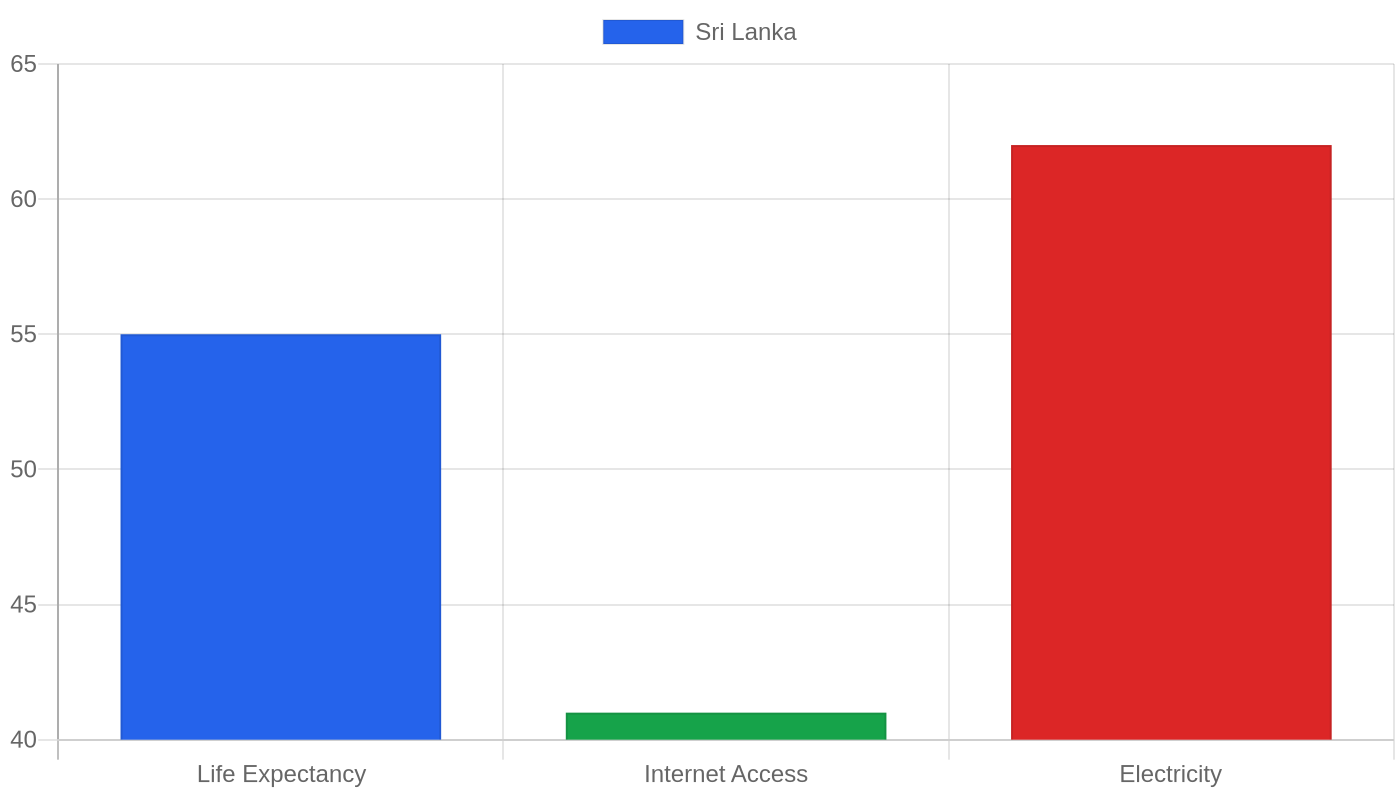
Economic Pulse Net | Sources: World Bank World Development Indicators, Government Sources | 2026
Key Takeaways
* Oldest Democracy in Asia: Sri Lanka maintains its status as the region’s longest-standing democratic republic, operating under a semi-presidential system that balances parliamentary power with executive authority.
Conglomerate-Driven Economy: The business landscape is dominated by large diversified groups, with Aitken Spence, Cargills, and Ceylinco Consolidated playing pivotal roles across multiple sectors.
Resilient Consumer Sector: Despite broader economic challenges, local consumer brands like Barefoot, Ceylon Biscuits Limited, and Ceylon Cold Stores remain household names, indicating persistent domestic demand for essential goods.
Political Stability Framework: As a unitary state, the nation’s constitutional framework allows for significant legislative changes through a two-thirds parliamentary majority, though fundamental features require additional national approval mechanisms.
Data Transparency Gaps: Current macroeconomic indicators such as GDP growth, inflation rates, and unemployment figures are not currently available from primary World Bank datasets, necessitating a focus on structural and institutional analysis rather than short-term metrics.
Economic Foundations and Industrial Landscape
The economic narrative of Sri Lanka is currently defined more by its institutional structure and industrial composition than by volatile short-term metrics. While specific data points for GDP growth, inflation CPI, and unemployment rates are not currently accessible from the World Bank, the underlying architecture of the economy remains robust. The country’s main industries serve as the backbone of this stability, providing employment and driving internal commerce even in the absence of precise quarterly updates.
This industrial diversity suggests an economy that is not reliant on a single export commodity, thereby offering a buffer against external shocks. Understanding these foundational pillars is crucial for investors and analysts who must look beyond headline numbers to assess long-term viability. The lack of immediate statistical clarity does not imply economic stagnation but rather highlights the need for deeper qualitative assessment of production capacities and service delivery.
Ultimately, the strength of the industrial base provides a stable platform upon which future growth can be measured once updated data becomes available.
Cost of Living and Housing Dynamics
For residents and expatriates alike, understanding the cost of living in Sri Lanka requires looking at the interplay between housing markets and daily expenses. Although specific indices for housing costs or rent-to-buy ratios are not detailed in the current dataset, the presence of major consumer goods manufacturers offers insight into price levels.
Companies like Barefoot and Ceylon Biscuits Limited produce staple items, suggesting that basic food security and consumer affordability are managed through strong local production capabilities. This domestic manufacturing strength likely helps mitigate some of the volatility seen in import-dependent economies. Furthermore, the availability of services from telecommunications giants like Airtel Sri Lanka indicates a competitive market for essential utilities, which influences overall household budgets.
While direct comparisons to regional averages are difficult without complete data, the structure of consumer services implies a cost environment that is heavily influenced by local supply chains rather than global fluctuations alone. Residents navigate a lifestyle where essential goods are largely sourced internally, providing a degree of predictability in daily expenditures.
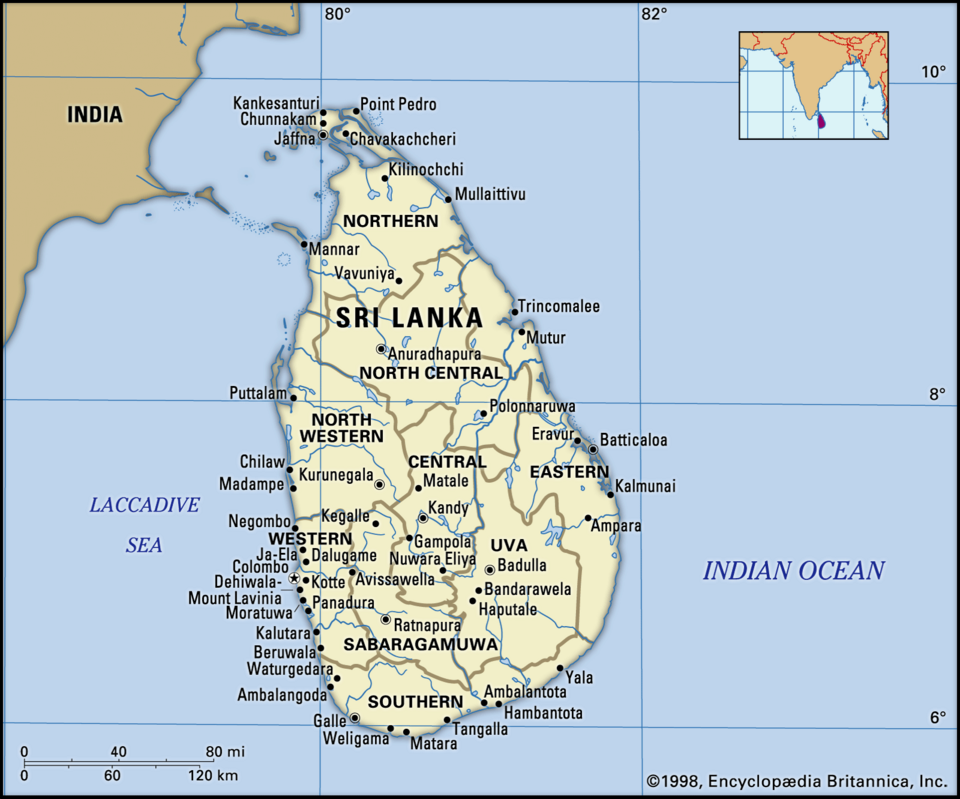
Investment and Business Climate
The investment landscape in Sri Lanka is characterized by the dominance of large, diversified conglomerates that span multiple economic sectors. Leading entities such as Aitken Spence, Cargills, and Ceylinco Consolidated operate as major engines of growth, leveraging their scale to influence both financial and consumer markets. These conglomerates provide a stable environment for business operations, often integrating vertically to control supply chains from production to retail.
In the financial sector, the Bank of Ceylon plays a critical role in facilitating credit and supporting commercial activities, ensuring liquidity within the domestic market. Meanwhile, the media landscape, represented by Associated Newspapers of Ceylon Limited, contributes to the information flow necessary for transparent business practices. The presence of specialized firms like CameraLK in electronic items highlights niche opportunities within the technology and consumer electronics sectors.
For foreign and local investors, the concentration of economic power in these established players offers both partnership opportunities and competitive challenges. The business climate is thus one where relationships with key corporate entities are often essential for successful market entry and expansion.
Safety, Politics, and Quality of Life
Sri Lanka stands as a beacon of political continuity in Asia, being recognized as the oldest democracy on the continent. Its governance structure as a democratic republic and unitary state provides a clear legal framework for civic engagement and policy implementation. The semi-presidential system adds a layer of complexity to decision-making, requiring coordination between parliamentary majorities and executive leadership.
Political stability is further reinforced by constitutional provisions that allow for amendments via a two-thirds majority in Parliament, although fundamental changes require broader consensus. This mechanism ensures that while the government can adapt to changing circumstances, core national symbols and religious tenets remain protected. Regarding safety, specific crime and safety indices are not currently available, leaving the perception of personal security to anecdotal evidence and general travel advisories.
However, the enduring nature of its democratic institutions suggests a society where rule of law and civic order are prioritized. The quality of life is thus underpinned by a stable political environment, even if quantitative safety metrics remain elusive. Citizens benefit from a system that has proven resilient over decades, fostering a sense of national identity and political participation.
What’s Happening Now: Institutional Resilience
In the current political climate, Sri Lanka is navigating the complexities of its semi-presidential system, where power-sharing dynamics are crucial for effective governance. The recent focus has been on maintaining the integrity of its democratic processes, which are enshrined in a constitution that allows for significant legislative flexibility. With the ability to amend most provisions through a two-thirds parliamentary majority, the government can respond swiftly to emerging economic and social needs.
However, the requirement for broader approval for fundamental constitutional changes ensures that no single party can unilaterally alter the nation’s core identity. This balance between agility and caution defines the current political discourse, as leaders seek to implement reforms without destabilizing the social fabric. The absence of real-time economic data means that public debate is likely centered on institutional performance and long-term strategic planning rather than immediate fiscal metrics.
Businesses and citizens alike are watching how the government leverages its parliamentary power to drive development while respecting the entrenchment mechanisms that protect national unity. This period is characterized by a careful navigation of political norms, ensuring that progress does not come at the expense of democratic principles.
The Bottom Line
Sri Lanka presents a unique case study for observers interested in the intersection of democratic longevity and industrial resilience. While macroeconomic data gaps prevent a full quantitative assessment, the strength of its corporate sector and political institutions offers a compelling narrative of stability. Investors should watch this country closely for signs of how its conglomerates adapt to global shifts and how its political framework facilitates or hinders reform.
It is a market where institutional trust and local production capacity are just as important as any headline growth figure.
Sources & Methodology
This article is authored by Economic Pulse Net for informational and research purposes. Economic Pulse Net sources its data from multilateral institutions, national statistics bureaus, and proprietary databases. All data is believed to be current as of the date of publication.
Published: September 29, 2026 | Category: Research — Sri Lanka
Use these signals in your own platform
Economic Pulse publishes its live signal feed through a documented, read-only API. Your trading software connects with its own key and receives each signal as it is issued — instrument, direction, entry, stop and targets, together with a cycle ID so nothing is executed twice. The feed is independent of this website and cannot change it.
Signals are informational only and are not financial advice.