Economic Pulse Net | Sources: World Bank World Development Indicators, Government Sources | 2026
🇵🇭 Philippines 2026 — Resilience Amidst Low Inflation and Structural Shifts
The Philippine economy stands at a unique juncture in 2025-2026, characterized by a distinct decoupling from the global inflationary pressures that have plagued many other emerging markets. With consumer prices stabilizing at remarkably low levels and unemployment remaining historically tight, the nation presents a paradox of stability amidst a complex political and industrial landscape.
This feature explores how these macroeconomic indicators shape the daily reality for its 116 million citizens and what they signal for future investment flows.
Key Takeaways
* Price Stability: The Consumer Price Index (CPI) has cooled significantly to approximately 1.66%, offering consumers unprecedented purchasing power relative to recent years.
Labor Tightness: Unemployment has dropped to an impressive 2.235%, indicating a labor market where job opportunities outpace available workers.
Demographic Weight: With a population exceeding 116 million, the sheer scale of the domestic market drives GDP growth to 4.4%, despite modest per capita wealth.
Political Structure: The presidential system allows for separate executive branches, creating potential for coalition dynamics between the president and vice president.
Economic Pulse: Growth and Purchasing Power
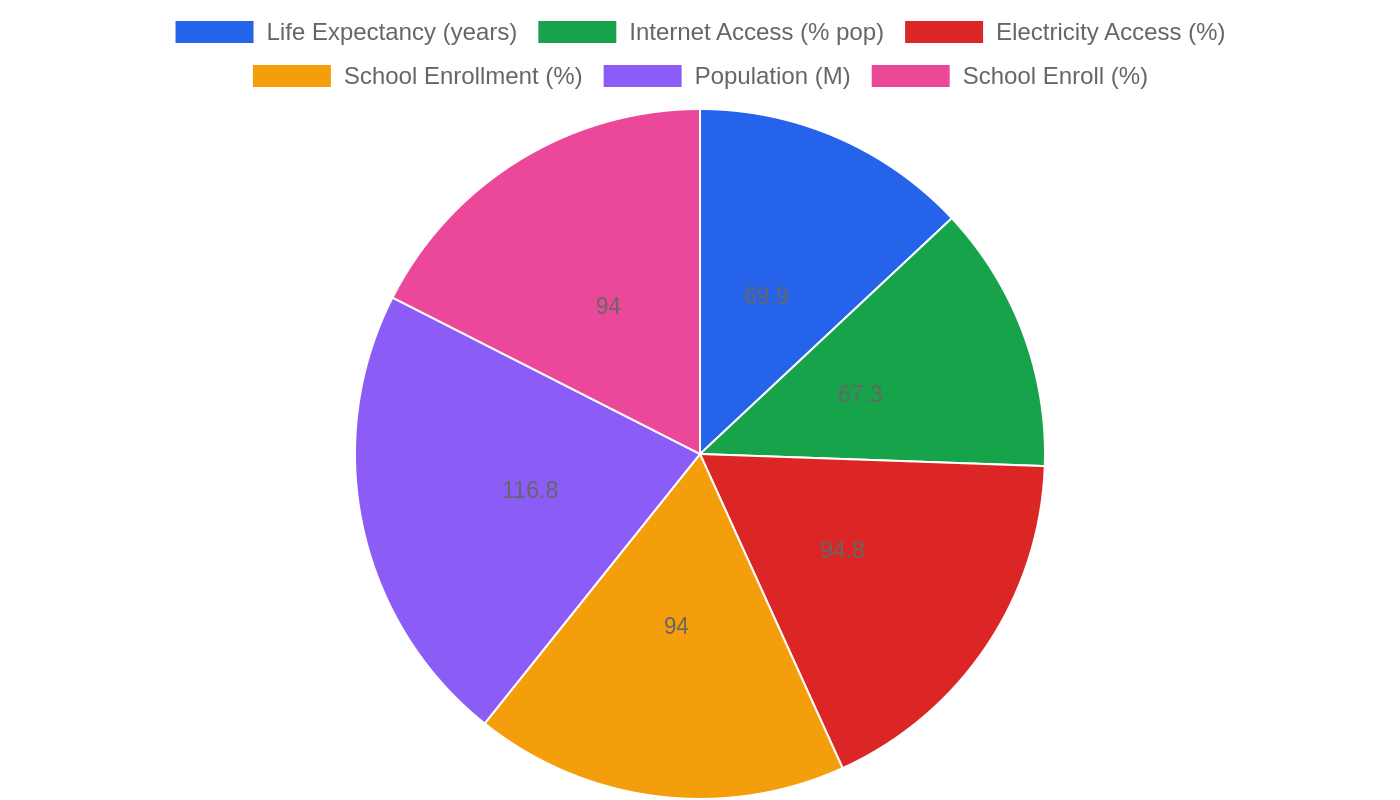
The Philippine economy is currently expanding at a rate of 4.40240158710621% as projected for 2025, a figure that underscores the country’s resilience in a volatile global environment. This growth is supported by a massive population base of 116,786,962 people, which provides a substantial domestic consumption engine.
However, the distribution of this wealth reveals a nuanced picture; while the Gross National Income (GNI) per capita sits at $4,850, the GDP per capita based on Purchasing Power Parity (PPP) reaches $12,576.9867435109. This disparity suggests that the cost of living adjustments make the local economy more robust for residents than raw USD conversions might imply. Furthermore, the inflation rate has settled at a tranquil 1.6587364525509%, a level that preserves real wages and encourages savings.
Such low inflation typically allows central banks to maintain supportive monetary policies, further aiding business expansion. The combination of steady growth and price stability creates a favorable backdrop for long-term economic planning, even if absolute GDP figures in USD remain unreported in current datasets.
Cost of Living and Housing Dynamics
For residents and expatriates alike, the current economic climate offers significant relief regarding daily expenses. With inflation hovering near 1.66%, the rapid erosion of purchasing power seen in previous years has largely subsided. This stabilization likely impacts housing markets, where rent increases may be moderating compared to high-inflation periods. While specific rental indices are not provided, the low CPI suggests that essential goods and services remain affordable relative to income levels.
The PPP-adjusted GDP per capita of roughly $12,577 indicates that within the local context, households can afford a standard of living that appears higher when adjusted for local price structures. Consequently, budgeting for basic necessities such as food, utilities, and transportation is less stressful for the average Filipino family. This affordability factor is crucial for retaining talent and supporting domestic tourism, which remains a vital component of the broader service sector.
Investment & Business Climate
Investors looking at the Philippines must navigate a landscape defined by demographic strength rather than just industrial output. The low unemployment rate of 2.235% signals a tight labor market, which could lead to wage pressures in competitive sectors but also reflects high consumer confidence and demand. For businesses, this means access to a vast pool of workers, though retention strategies will be key.
The political framework, described as a democratic constitutional republic with a presidential system, provides a clear chain of command, with the president serving as both head of state and government. However, the separate election of the vice president introduces a layer of political complexity, as the two top officials may come from different parties, potentially requiring negotiation for policy implementation.
Major industries are not explicitly detailed in the current data, but the economic structure relies heavily on leveraging this large population. Companies operating in the region should focus on sectors that benefit from domestic consumption, given the strong internal market dynamics driven by over 116 million consumers.
Safety, Politics & Quality of Life
The social fabric of the Philippines is anchored by its democratic institutions, yet safety metrics present a gap in the current data narrative. Crime and Safety Indices are listed as N/A, meaning precise statistical comparisons cannot be made without additional sources. Politically, the nation operates under a six-year term for the president, elected directly by citizens, which ensures a direct mandate from the populace.
This system contrasts with parliamentary models, providing stability through fixed terms but also concentrating executive power. The separation of the presidency and vice presidency means that governance often requires cross-party collaboration, adding a dynamic element to legislative processes. Despite the lack of specific crime data, the economic stability suggested by low inflation and high employment generally correlates with improved social cohesion.
Residents benefit from a political environment that prioritizes direct representation, although the effectiveness of governance depends on the alignment between the executive branches.
What’s Happening Now / Current Affairs
In the immediate term, the Philippine economy is benefiting from a period of calm regarding price volatility. The CPI reading of 1.6587364525509% is a standout metric in 2025, suggesting that supply chain disruptions and global energy shocks have been effectively managed domestically. This price stability is likely driving consumer spending, as households feel more confident about their financial futures.
Meanwhile, the labor market remains exceptionally tight, with unemployment at 2.235%, prompting businesses to compete aggressively for skilled workers. This trend may accelerate automation or upskilling initiatives across various industries to maintain productivity. On the political front, the ongoing dynamics between the separately elected president and vice president continue to shape policy directions, particularly in economic reforms.
Stakeholders are watching closely to see how these political relationships influence fiscal policy and foreign investment incentives. The absence of reported GDP in USD does not detract from the visible health of the domestic economy, which is growing steadily at 4.4%.
The Bottom Line
The Philippines in 2025-2026 represents a case study in controlled economic stability. Investors and observers should watch this country primarily for its demographic dividend and the surprising resilience of its consumer sector amid low inflation. The tight labor market and political structure offer both opportunities for growth and challenges for policy consistency. Ultimately, it is a market where domestic consumption power, adjusted for local costs, provides a solid foundation for long-term engagement.
Sources & Methodology
This article is authored by Economic Pulse Net for informational and research purposes. Economic Pulse Net sources its data from multilateral institutions, national statistics bureaus, and proprietary databases. All data is believed to be current as of the date of publication.
Published: October 18, 2026 | Category: Research — Philippines
Use these signals in your own platform
Economic Pulse publishes its live signal feed through a documented, read-only API. Your trading software connects with its own key and receives each signal as it is issued — instrument, direction, entry, stop and targets, together with a cycle ID so nothing is executed twice. The feed is independent of this website and cannot change it.
Signals are informational only and are not financial advice.