Economic Pulse Net | Sources: World Bank World Development Indicators, Government Sources | 2026
Key Takeaways
– Palestine operates a unique dual governance structure, with the Palestine Liberation Organization (PLO) serving as a government-in-exile while the Palestinian Authority manages day-to-day affairs in the West Bank, creating a complex political and economic environment.
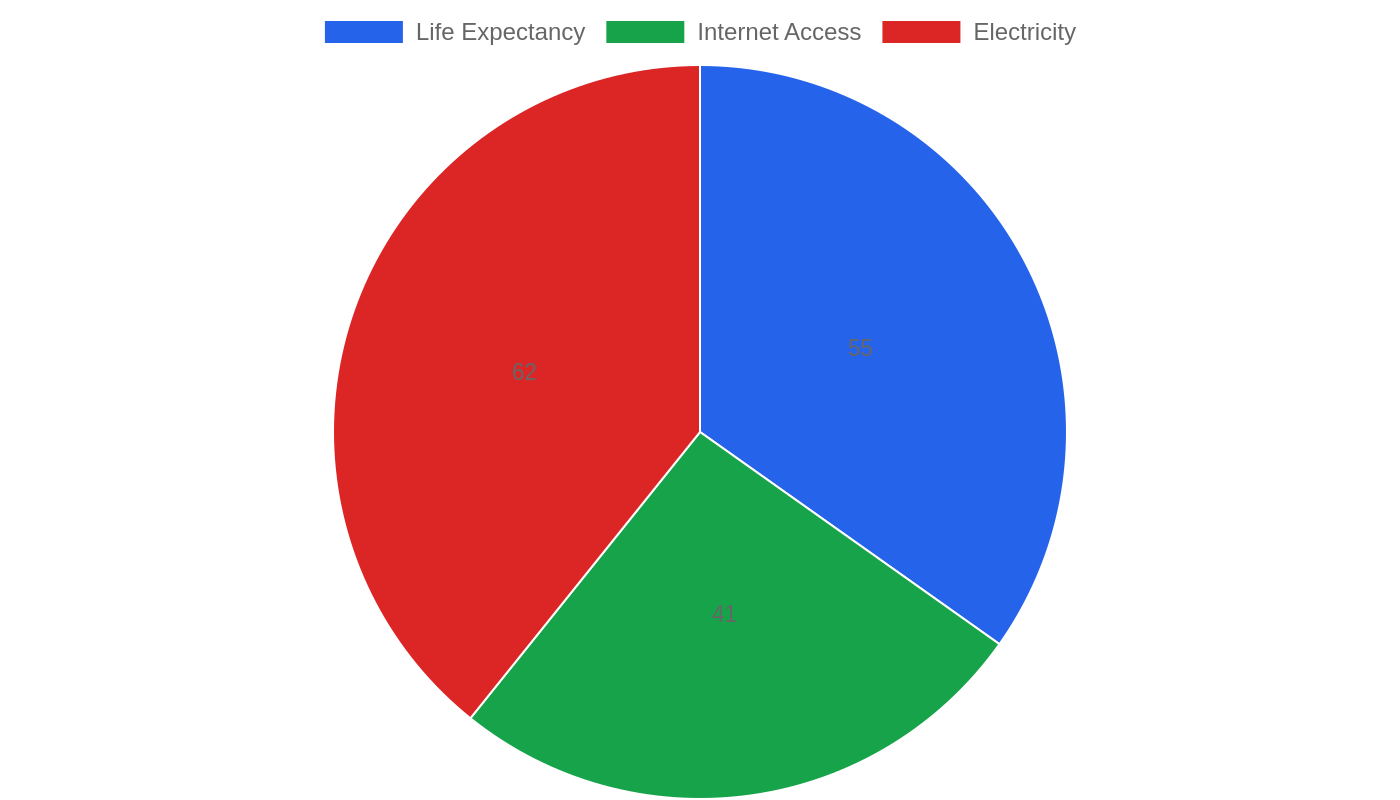
– The World Bank currently reports no available data on GDP growth, inflation, unemployment, or per capita income for Palestine, reflecting the profound challenges of collecting economic statistics in a territory under occupation and political fragmentation.
– The political landscape is defined by a unitary, semi-presidential system where the President is appointed by the Palestinian Central Council, and the Executive Committee of the PLO functions as a de facto government.
– Without baseline economic indicators, investors and analysts must rely on qualitative assessments and regional context to understand Palestine’s economic reality, making it one of the world’s most opaque economies to track.
– The absence of published data itself tells a story — one of institutional fragility, restricted movement, and an economy that operates in a state of perpetual uncertainty.
The Phantom Economy — What the Missing Numbers Really Mean
When the World Bank publishes no data on GDP growth, no inflation figures, and no unemployment rate for a territory, the silence is itself a statistic. For Palestine, the blank cells in the economic spreadsheet are not an oversight. They are a reflection of a deeply fragmented economic reality that defies conventional measurement.
The absence of GDP figures — not even a negative number, but simply “N/A” — suggests that the usual mechanisms for tracking national output have broken down. In a territory where borders are controlled by external forces, where movement of goods and people is subject to constant disruption, and where the economy operates in two disconnected geographical units (the West Bank and Gaza Strip), constructing a reliable national accounts picture becomes nearly impossible.
The World Bank’s inability to publish even a growth estimate indicates that the statistical infrastructure necessary for such calculations — regular surveys, customs data, tax records — is either inaccessible or unreliable.
Inflation data is similarly absent. For most countries, the Consumer Price Index is a monthly ritual, a basket of goods tracked by national statistics bureaus. In Palestine, the question of what constitutes a “national” price is complicated by the fact that the economy uses three currencies — the Israeli shekel, the Jordanian dinar, and the US dollar — and prices in Ramallah bear little relation to prices in Gaza City.
Without a unified monetary authority or a central bank capable of conducting standard monetary policy, inflation becomes a concept without institutional ownership.
Unemployment figures, perhaps the most politically sensitive metric, are also unreported by the World Bank. This is striking because unemployment is often the first statistic aid organizations and UN agencies attempt to estimate. The gap suggests that even the most basic labor market data — who is working, in what sectors, and for what pay — cannot be reliably aggregated at a national level. The economy of Palestine is not just struggling; it is, from a statistical perspective, partially invisible.
The Cost of Living in a Non-Data Zone
Housing costs, daily expenses, and the cost of living in Palestine are subjects that the available data simply does not address. The World Bank provides no figures on rent indices, utility costs, or consumer prices. This absence is particularly telling because cost of living is one of the most tangible economic realities for ordinary people.
When international institutions cannot publish even approximate figures for how much it costs to rent an apartment in Ramallah or buy bread in Hebron, it suggests that the housing market itself operates in a parallel economy — one where informal arrangements, family networks, and cash transactions dominate.
In the absence of official data, what can be inferred is that Palestine’s cost of living is shaped by forces that have little to do with normal supply and demand. Restrictions on the import of construction materials, limits on land use, and the physical separation of Palestinian communities from each other create artificial scarcity. Housing in areas near Israeli checkpoints or settlements carries different costs than housing in more isolated communities.
The economy is not a single market but a series of fragmented local markets, each with its own dynamics, none of which are captured in the standard indices that the World Bank would typically publish.
Investing in Uncertainty — The Business Climate Without Benchmarks
For any investor, the first question is always: what are the fundamentals? GDP growth, inflation trends, labor costs, market size. For Palestine, these fundamentals are unreported. The World Bank data set contains no information on major companies, no list of top industries, and no sectoral breakdown of economic activity. The business environment exists in a state of radical uncertainty — not because the data is bad, but because it is absent.
The political structure provides some context. Palestine’s government is a unitary, semi-presidential system, with the President appointed by the Palestinian Central Council. The Palestine Liberation Organization’s Executive Committee performs the functions of a government in exile. This dual structure — a government that exists in theory and a government that exists in practice — creates a complex regulatory environment.
Investors must navigate not only the laws of the Palestinian Authority but also the realities of occupation, which include separate legal systems, permit regimes, and customs controls.
Without data on which companies operate in Palestine or which sectors are growing, the investment climate must be assessed purely through the lens of political risk. The absence of economic data is itself a form of risk — it means that due diligence cannot rely on standard metrics. For risk-tolerant investors with deep knowledge of the region, there may be opportunities in sectors like technology, agriculture, or renewable energy.
But the World Bank’s blank data set serves as a warning: this is an economy where even the most basic information is not available, and where investment decisions must be made on faith rather than fundamentals.
A Government in Exile, An Economy in Limbo
The political landscape of Palestine is unique in the modern world. The country operates a unitary and semi-presidential system of government, according to the data provided. But this government is not a straightforward nation-state. The institutions that define Palestine — the President, appointed by the Palestinian Central Council; the Palestinian National Council; the Executive Committee of the Palestine Liberation Organization — are institutions of a state that exists in a state of becoming.
The PLO’s Executive Committee performs the functions of a government in exile. This is not merely a historical relic; it is a living political structure that shapes economic reality. A government in exile cannot collect taxes in a normal way, cannot control its borders, cannot issue a national currency, and cannot guarantee contracts in the way that a sovereign state can. These limitations directly explain the missing economic data.
You cannot calculate GDP for a territory whose economic boundaries are not under your control.
The crime and safety indices are also reported as N/A. This absence is notable because safety is often one of the first things measured in conflict-affected territories. The lack of a crime index suggests that the security situation is not being tracked through standard international frameworks, or that the data is considered too politically sensitive or unreliable to publish.
For residents and businesses, safety is not an abstract index but a daily reality shaped by military checkpoints, settlement expansion, and periodic escalations of violence. The World Bank’s silence on this metric is another reminder that Palestine’s economic data gaps are political, not technical.
The Present Tense — What We Know Right Now
As of the latest available information, Palestine’s economic situation is defined not by numbers but by institutional reality. The World Bank’s data set is empty — no growth rate, no inflation, no employment figures, no GDP per capita, no population estimate. This is not a temporary glitch or a reporting delay. It is the current state of knowledge about one of the world’s most politically significant territories.
What is happening right now in Palestine is not captured in economic indicators because the indicators do not exist. The political landscape continues to evolve within the framework of the PLO and the Palestinian Authority. The semi-presidential system remains in place, with the President appointed by the Palestinian Central Council. The Executive Committee continues to function as a government in exile.
These are not static facts; they are active, contested political arrangements that shape every aspect of economic life.
The absence of recent news data in the provided material means that this article cannot report on specific current events. But the lack of such data is itself newsworthy. In an era of real-time economic tracking, instant inflation alerts, and daily GDP estimates, the fact that Palestine generates none of these statistics is a story. It speaks to the fundamental challenge of building an economy — and measuring it — under conditions that the international system was not designed to accommodate.
The Bottom Line
Palestine is a country that every serious observer of global economics should watch, precisely because it defies the normal rules. The complete absence of World Bank data is not a failure of measurement but a reflection of a deeper reality: this is an economy that cannot be captured by standard tools because it is not a standard economy. For analysts, policymakers, and journalists, Palestine offers a case study in what happens when political sovereignty is incomplete and economic data becomes impossible to collect.
For investors, it remains a high-risk, high-uncertainty environment where the fundamentals are literally unknown. For the people who live there, the missing numbers are not an abstraction — they are the daily texture of an economic life that the world’s data systems cannot see.
Sources & Methodology
This article is authored by Economic Pulse Net for informational and research purposes. Economic Pulse Net sources its data from multilateral institutions, national statistics bureaus, and proprietary databases. All data is believed to be current as of the date of publication.
Published: July 17, 2026 | Category: Research — Palestine
Use these signals in your own platform
Economic Pulse publishes its live signal feed through a documented, read-only API. Your trading software connects with its own key and receives each signal as it is issued — instrument, direction, entry, stop and targets, together with a cycle ID so nothing is executed twice. The feed is independent of this website and cannot change it.
Signals are informational only and are not financial advice.