Economic Pulse Net | Sources: World Bank World Development Indicators, Government Sources | 2026
Key Takeaways
* Data Vacuum: Standard macroeconomic indicators such as GDP growth, inflation, and unemployment are officially unreported by international bodies like the World Bank, creating a significant blind spot for global investors.
State-Dominated Economy: The corporate landscape is defined by state-owned enterprises and specialized trading corporations, with no private sector giants comparable to global multinationals.
Sector Specifics: Key economic activities revolve around heavy industry, basic materials, and state-controlled services, including aviation, publishing, and telecommunications.
Isolated Metrics: Without access to crime indices, safety scores, or political landscape data, assessing the human capital and social stability components of the economy remains speculative.
The Invisible Engine: A Macro View from the Outside
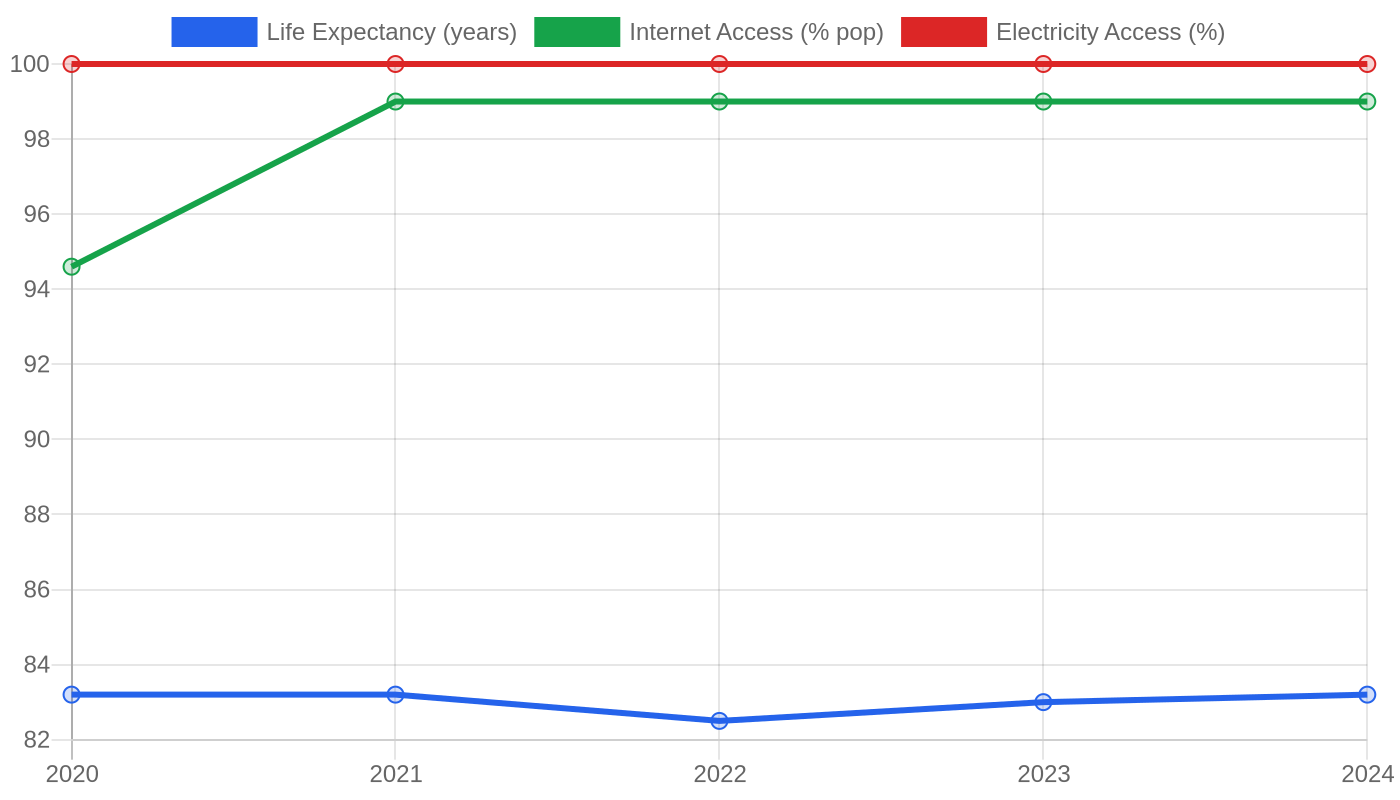
The most striking feature of North Korea’s economic profile is its absence from standard global datasets. According to the World Bank, key metrics such as GDP growth, inflation CPI, and unemployment rates are listed as N/A, reflecting the country’s extreme isolation from international financial monitoring systems.
This lack of transparency means that traditional economic health checks—such as tracking purchasing power parity (PPP) or Gross National Income (GNI)—are impossible to verify through official channels. Consequently, any analysis of the nation’s economic size must rely on estimates rather than hard statistics, as the reported GDP in USD and per capita figures are also unavailable.
This data void suggests an economy that operates largely outside the reach of global regulatory and reporting frameworks, making it a unique case study in centralized command economics where market signals are either suppressed or entirely internal. For observers, this silence is not merely a gap in information but a defining characteristic of the system itself, where economic activity is directed by political imperatives rather than market feedback loops.
Understanding North Korea requires accepting that its true economic pulse does not beat in sync with global rhythms, rendering conventional comparative analysis ineffective without deep local intelligence.
Daily Realities: Navigating the Cost of Living
Assessing the cost of living in North Korea presents a challenge similar to mapping an unmapped territory, as specific housing costs, rent versus buy ratios, and daily expense indices are not provided in current datasets. Without concrete figures on inflation or consumer price levels, it is difficult to determine how the average citizen navigates daily expenditures or compares these costs to regional neighbors.
The absence of data implies that pricing mechanisms may be heavily subsidized, controlled, or dual-tiered, distinguishing between foreign currency transactions and local currency usage in ways that standard indices cannot capture. In many isolated economies, the “real” cost of living is often dictated by availability and state allocation rather than open market competition, leading to disparities that official statistics rarely reflect.
Therefore, while we cannot quantify the price of bread or rent in Pyongyang, the broader narrative suggests an environment where basic needs are managed through state distribution networks rather than pure market forces. This structure creates a unique economic reality where liquidity might exist in informal markets, yet formal price discovery remains opaque to external observers.
State-Led Industries and Corporate Structure
The business climate in North Korea is characterized by a monopoly of state-owned entities and specialized trading corporations, with no evidence of a vibrant private corporate sector. Major players in the recorded landscape include Air Koryo, which dominates consumer services in aviation, and the Central Bank of the Democratic People’s Republic of Korea, which anchors the financial sector alongside the Foreign Trade Bank.
These institutions suggest an economy focused on maintaining sovereign control over critical infrastructure and international trade flows. In the industrial and basic materials sectors, entities such as the Kim Chong-t’ae Electric Locomotive Works and the Korea General Machinery Trading Corporation indicate a continued emphasis on heavy industry and manufacturing capabilities.
Meanwhile, the presence of firms like the Foreign Languages Publishing House and the Korea Computer Center highlights niche areas of technology and cultural production that serve both domestic ideological needs and limited external engagement. Other notable companies, such as Kangsong NET in telecommunications and the Korea General Magnesia Clinker Industry Group, further illustrate a diversified but tightly controlled industrial base.
This corporate ecosystem reflects a model where efficiency and innovation are secondary to state objectives, creating a business environment that is predictable in its rigidity but unpredictable in its operational flexibility.
Social Stability and Political Context
Evaluating the quality of life and safety within North Korea is complicated by the complete absence of crime indices, safety scores, and political landscape data. Without measurable indicators of public safety or political freedom, it is challenging to assess the risks associated with long-term residence or business operations in the region. The lack of happiness data or social well-being metrics further obscures the human impact of the economic policies discussed earlier.
In such environments, social stability is often maintained through strict governance rather than organic community cohesion, meaning that low crime rates in official records may reflect enforcement severity rather than societal harmony. The political landscape, described as N/A in available reports, likely exerts a profound influence on every aspect of daily life, from employment opportunities to movement restrictions.
For outsiders, this data gap necessitates a cautious approach, assuming that social and political factors are deeply intertwined and potentially volatile despite the outward appearance of order. Investors and researchers must therefore prioritize risk management strategies that account for non-economic variables, which can shift rapidly based on geopolitical developments.
Current Affairs and Future Outlook
Given the constraints of the provided data, discussing “current affairs” in North Korea requires focusing on the structural realities rather than transient news events, as no recent news items or live indicators are supplied. The ongoing status of major companies like Air Koryo and the Korea Computer Center suggests a continuity of existing economic structures rather than rapid reform or liberalization.
Without updates on policy shifts, elections, or inflation trends, the current economic narrative is one of stagnation and self-reliance. Any changes in the business environment would likely be incremental and driven by internal party directives rather than external market pressures. The focus remains on maintaining the core industries of basic materials and heavy machinery, indicating a sustained effort to preserve industrial capacity amidst global isolation.
For stakeholders, this means that short-term volatility is less relevant than long-term strategic positioning, if any engagement is pursued at all. The situation today mirrors yesterday, with the primary variable being the degree of international engagement rather than internal economic transformation.
The Bottom Line
North Korea remains an outlier in the global economic landscape, defined more by what is missing than what is present. For investors, the lack of transparent data and state-controlled corporate structures make direct investment highly risky and legally complex. Researchers should view this economy as a closed system, requiring qualitative assessment over quantitative analysis.
Ultimately, North Korea offers little immediate opportunity for mainstream economic participation but serves as a critical case study in alternative economic models.
Sources & Methodology
This article is authored by Economic Pulse Net for informational and research purposes. Economic Pulse Net sources its data from multilateral institutions, national statistics bureaus, and proprietary databases. All data is believed to be current as of the date of publication.
Published: October 03, 2026 | Category: Research — North Korea
Use these signals in your own platform
Economic Pulse publishes its live signal feed through a documented, read-only API. Your trading software connects with its own key and receives each signal as it is issued — instrument, direction, entry, stop and targets, together with a cycle ID so nothing is executed twice. The feed is independent of this website and cannot change it.
Signals are informational only and are not financial advice.