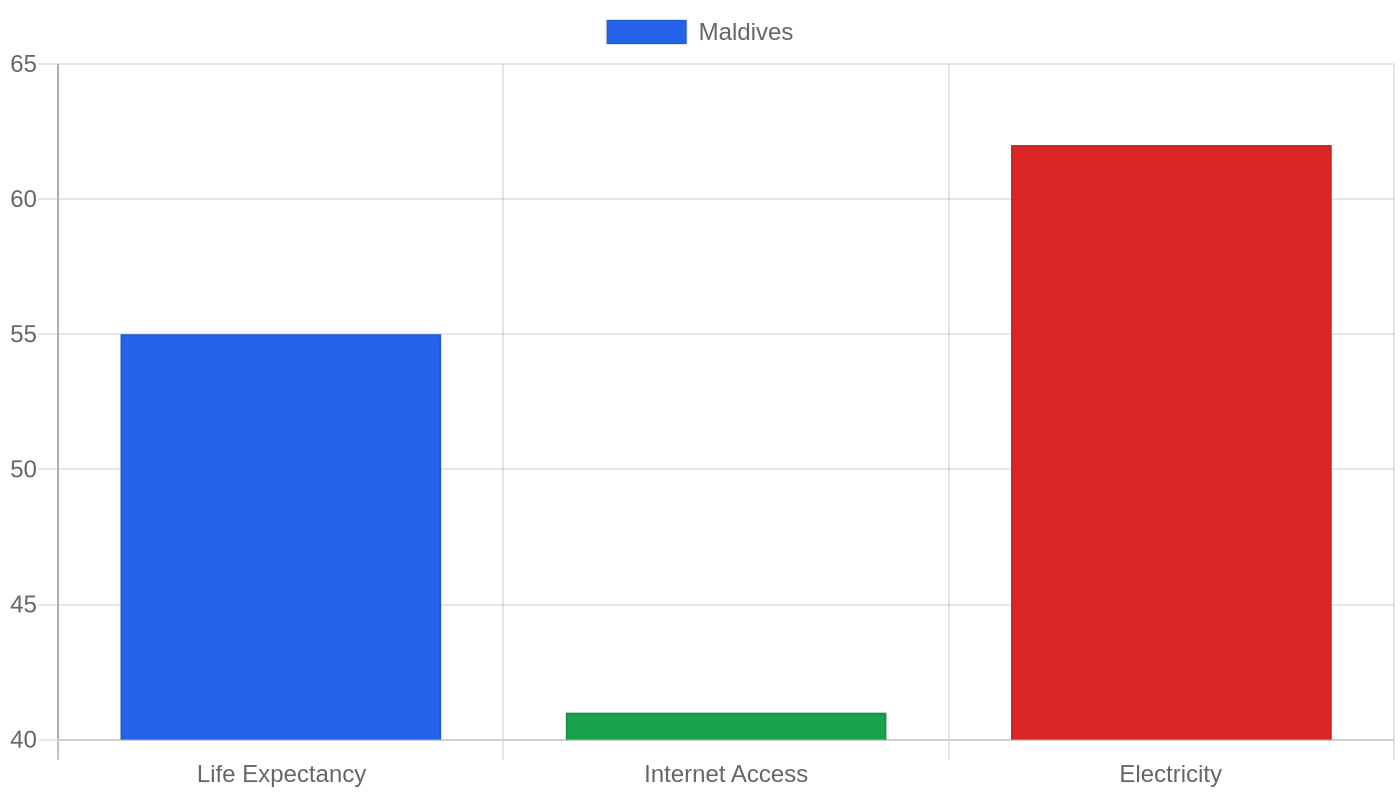
Economic Pulse Net | Sources: World Bank World Development Indicators, Government Sources | 2026
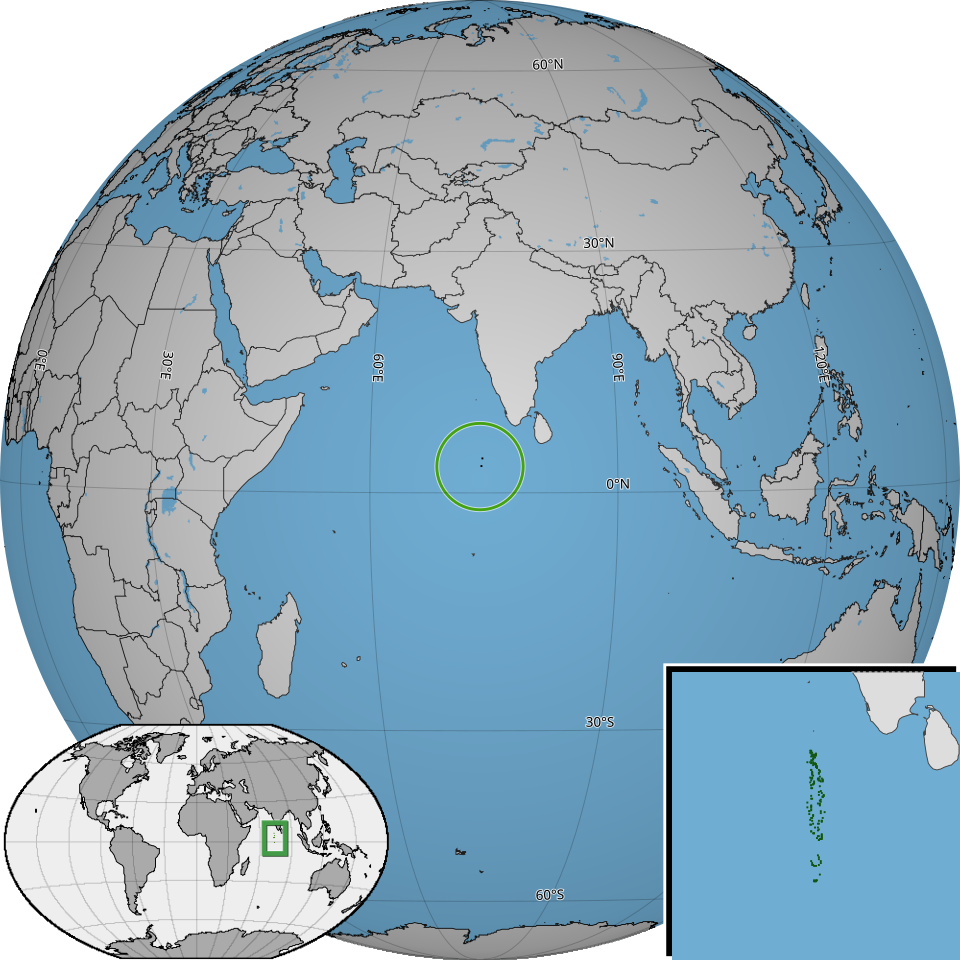
The Maldives has long been synonymous with overwater villas, turquoise lagoons, and honeymoon perfection. But beneath the postcard surface, this Indian Ocean nation of roughly 1,200 islands is navigating a delicate balancing act — one defined by political transition, economic vulnerability, and the relentless pressure of climate change.
With a new president in office since November 2023, the country is at a crossroads, attempting to reconcile its luxury-tourism-driven growth model with the urgent need for diversification, fiscal discipline, and long-term resilience. This is the story of a nation that knows exactly what it has — and is still figuring out what comes next.
Key Takeaways
– Political shift: Mohamed Muizzu has served as president since 17 November 2023, marking a new chapter in the Maldives’ presidential republic framework.
– Tourism dependency: The economy remains heavily reliant on tourism, though specific GDP figures are not currently available from the World Bank.
– Structural concentration: Power is concentrated in the presidency, with the head of state also serving as head of government, commander of the armed forces, and chief executive.
– Governance framework: The president appoints a cabinet subject to approval by the People’s Majlis, the country’s unicameral parliament.
– Data transparency gap: Key economic indicators including GDP growth, inflation, unemployment, and GNI per capita have not been published in the available World Bank dataset, making independent assessment challenging.
The Economic Canvas — A Portrait Painted in Broad Strokes
The World Bank’s latest dataset for the Maldives presents a curious paradox: a country of immense economic significance in its region, yet one for which the most recent macroeconomic indicators remain unpublished. GDP growth figures are listed as not available, as are inflation rates, unemployment levels, and GDP per capita on a purchasing power parity basis. This absence of hard numbers does not mean the economy is static — far from it.
It does, however, complicate any rigorous analysis of where the nation stands in real time.
What can be said with confidence is that the Maldives operates a highly concentrated economic model. The nation’s main industries — while not enumerated in the available data — are widely understood to center on tourism, fishing, and related services. The country’s geography, scattered across 26 atolls, has historically limited the development of large-scale manufacturing or agriculture.
This structural reality makes the Maldives acutely sensitive to global tourism flows, international travel sentiment, and external economic shocks.
The lack of published data on employment and inflation is itself a story worth telling. For a nation so dependent on discretionary travel spending, the absence of reliable real-time indicators creates uncertainty for investors, policymakers, and international financial institutions alike. The World Bank’s silence on these metrics may reflect data collection challenges inherent to a small island state spread across vast ocean distances.
Whatever the cause, the information vacuum makes it difficult to assess the effectiveness of the new administration’s economic policies or to benchmark the Maldives against its regional peers.
The Price of Paradise — Living Costs in an Island Economy
Housing and daily expenses in the Maldives present a unique set of challenges that set the country apart from nearly every other economy. The nation’s geography — a chain of small islands with limited land area — creates inherent supply constraints that drive up the cost of living, particularly in the capital region of Malé.
With a population density that ranks among the highest in the world for a capital city, Malé has witnessed significant pressure on housing availability, pushing prices upward as demand consistently outstrips supply.
The cost of living in the Maldives is shaped by the country’s import dependency. As an island nation with limited agricultural capacity, the vast majority of consumer goods — from food staples to construction materials — must be shipped in from abroad. This logistical reality inevitably translates into higher prices for everyday items compared to mainland regional economies.
The tourism industry, which commands premium prices for its luxury resorts, also influences the broader price environment, creating a dual economy where international visitors and affluent residents coexist alongside a population that faces significant cost pressures.
The rent-versus-buy calculation in the Maldives is heavily skewed by the same land constraints that affect all aspects of the housing market. With limited land available for development and strict regulations governing land ownership — particularly for non-citizens — the property market remains tightly controlled.
For most Maldivians, the practical reality involves navigating a rental market that offers little relief, with wages that may not keep pace with the cost of living in the absence of transparent inflation data.
Business and Investment — Opening the Door to Opportunity
The Maldivian business environment is defined by its dual character: a world-class tourism sector that attracts premium foreign investment, alongside a domestic economy that remains relatively small and concentrated. The country’s top companies, while not enumerated in the available data, are predominantly active in hospitality, aviation, and related service industries.
These sectors benefit from the Maldives’ global brand recognition and its reputation as one of the world’s premier luxury travel destinations.
For investors, the Maldives offers a compelling proposition tempered by structural challenges. The tourism sector has demonstrated remarkable resilience over the decades, with the country successfully positioning itself as a high-end destination that commands premium pricing. However, the same geographic constraints that limit housing supply also limit the scalability of business operations.
Infrastructure development across dispersed atolls requires significant capital investment, and the country’s small domestic market offers limited opportunities for businesses reliant on local demand.
The political transition to President Mohamed Muizzu’s administration has introduced a degree of policy uncertainty that investors are watching closely. Under the Maldives’ presidential system, the head of state wields extensive influence over economic policy, with the power to appoint cabinet members and shape the regulatory environment. The new administration’s approach to foreign investment, particularly in infrastructure and tourism development, will be a key signal for international capital.
The president’s authority over the armed forces and his role as head of government mean that political stability and economic direction are closely intertwined.
Security, Governance, and the Quality of Life
The Maldives’ political landscape is defined by its presidential constitutional republic structure, which concentrates significant power in the hands of a single executive. The president serves as both head of state and head of government, commands the armed forces, and appoints a cabinet that requires parliamentary approval. This concentration of authority creates a governance model that can move quickly but also raises questions about institutional checks and balances.
Crime and safety indices for the Maldives are not available in the current dataset, making it difficult to provide a data-driven assessment of public security. However, the country’s status as a high-end tourism destination implies a degree of safety and stability that has allowed the industry to flourish. The Maldives has generally been perceived as a low-crime society, though the pressures of economic inequality and urbanization in Malé present ongoing challenges.
The quality of life in the Maldives is a study in contrasts. The natural beauty of the islands is unparalleled, offering residents and visitors alike access to some of the world’s most stunning marine environments. Yet the same geographic isolation that provides this beauty also creates limitations — in healthcare access, educational opportunities, and economic mobility.
The country’s small population, spread across hundreds of inhabited islands, faces significant challenges in delivering public services efficiently. The new administration’s ability to address these structural issues while maintaining political stability will be critical to the nation’s long-term trajectory.
The Muizzu Era — A Nation in Transition
President Mohamed Muizzu has been in office since 17 November 2023, and his administration is already making its mark on the country’s direction. The new president inherited an economy facing significant headwinds, including the ongoing need to service substantial debt obligations and the imperative to diversify beyond tourism. His approach to these challenges will define the Maldives’ economic trajectory for years to come.
The political dynamics of the Muizzu administration are shaped by the structure of the presidential system itself. With the authority to appoint the cabinet and command the armed forces, the president holds considerable sway over the country’s direction. The People’s Majlis, the unicameral parliament, serves as a check on executive power, with members serving five-year terms alongside the president.
The interplay between the executive and legislative branches will determine the pace and nature of economic reforms.
For the international community, the Maldives remains a country of strategic interest. Its location in the Indian Ocean places it at the crossroads of major shipping lanes, and its political alignment carries regional significance. The new administration’s foreign policy orientation, combined with its domestic economic agenda, will be closely watched by neighboring powers and international financial institutions.
The next several years will reveal whether the Maldives can chart a course toward greater economic resilience while preserving the natural environment that underpins its tourism industry.
The Bottom Line
The Maldives stands at a pivotal moment in its modern history. With a new president at the helm and significant economic questions unanswered, the nation faces a choice between continuing its reliance on tourism or pursuing a more diversified economic model. Investors and policymakers should watch this country closely for signals about the new administration’s priorities — particularly regarding fiscal policy, infrastructure investment, and climate adaptation.
The Maldives’ ability to navigate these challenges will determine whether this island paradise can build a sustainable economic future for its citizens. For those with a stake in Indian Ocean geopolitics, tourism investment, or climate resilience, the Maldives is a nation worth watching with care.
Sources & Methodology
This article is authored by Economic Pulse Net for informational and research purposes. Economic Pulse Net sources its data from multilateral institutions, national statistics bureaus, and proprietary databases. All data is believed to be current as of the date of publication.
Published: August 27, 2026 | Category: Research — Maldives
Use these signals in your own platform
Economic Pulse publishes its live signal feed through a documented, read-only API. Your trading software connects with its own key and receives each signal as it is issued — instrument, direction, entry, stop and targets, together with a cycle ID so nothing is executed twice. The feed is independent of this website and cannot change it.
Signals are informational only and are not financial advice.