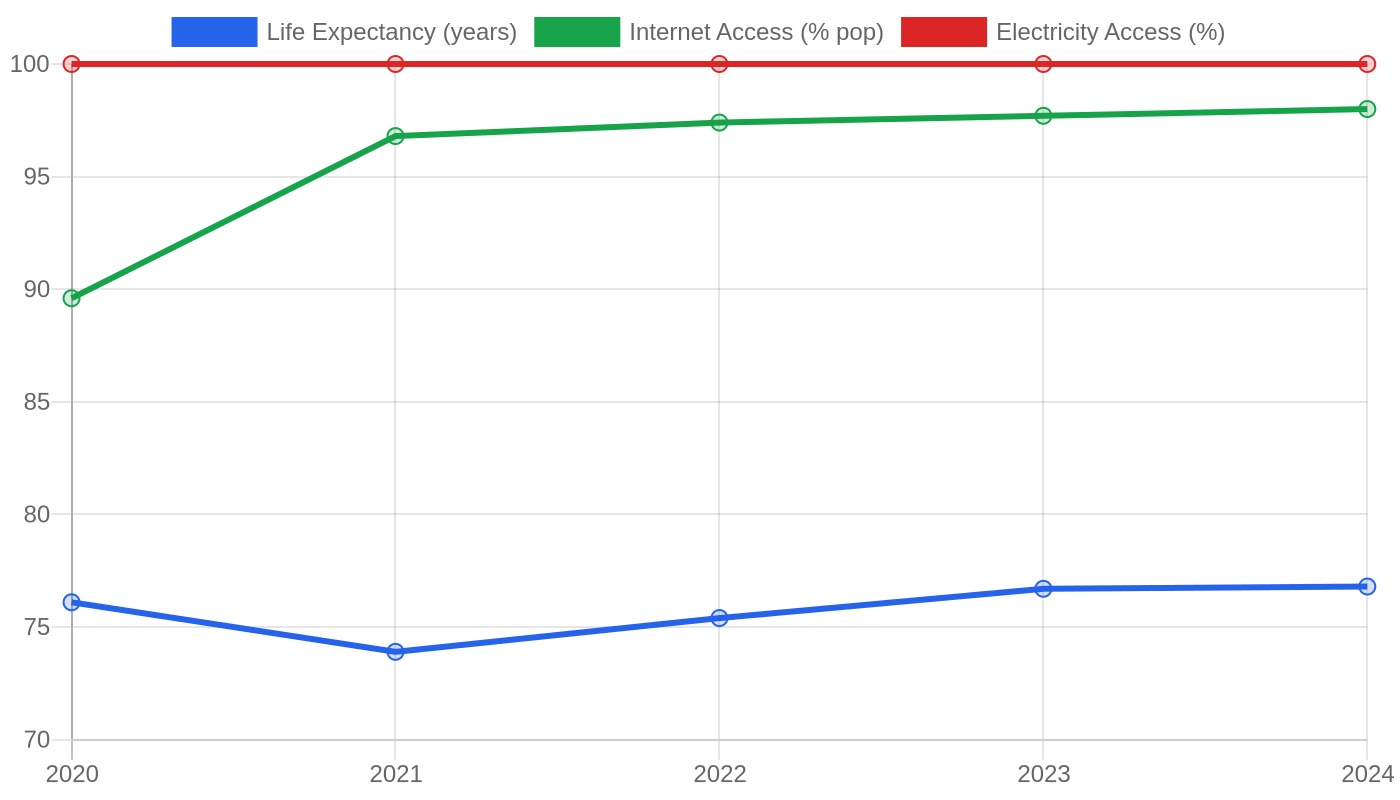
Economic Pulse Net | Sources: World Bank World Development Indicators, Government Sources | 2026
In a region defined by volatility, Malaysia is carving out a reputation as an anchor of stability. With gross domestic product expanding by a robust 5.17 percent in 2025 according to the World Bank, Southeast Asia’s third-largest economy is demonstrating a resilience that is turning heads among investors and policymakers alike.
But beneath the headline growth figures lies a more complex narrative—one of structural transformation, a tight labour market, and a political system that is as unique as it is functional. This is a nation navigating the delicate balance between its traditional strengths and its ambitious future.
Key Takeaways
– Solid Growth Trajectory: Malaysia’s economy grew by 5.17 percent in 2025, a figure that outpaces many regional peers and signals strong domestic demand and export resilience.
– Remarkably Low Unemployment: At just 3.76 percent, the jobless rate reflects a labour market operating at near-full capacity, though this raises questions about wage pressure and productivity.
– A $472 Billion Economy: With a GDP of approximately $472 billion, Malaysia remains a mid-tier powerhouse with significant room for upward mobility.
– Unique Political Structure: As the only federal constitutional elective monarchy in Southeast Asia, Malaysia’s governance model is a fascinating blend of tradition and Westminster-style democracy.
– Consumer and Services-Led Growth: The country’s top companies span healthcare, aviation, banking, and telecommunications, painting a picture of a diversified, services-oriented economy.
The Engine Room: Growth, Jobs, and the Shape of the Economy
The World Bank’s latest data paints a picture of an economy firing on most cylinders. The 5.17 percent GDP growth recorded in 2025 is not merely a statistical artefact—it represents genuine momentum across multiple sectors. For context, this level of expansion suggests that Malaysia has successfully navigated the post-pandemic turbulence and the subsequent global slowdown better than most.
The growth is particularly notable given the challenging external environment, with global trade tensions and supply chain realignments forcing many regional economies to reassess their strategies.
Unemployment at 3.76 percent is arguably the most telling indicator of economic health. This figure, reported by the World Bank, indicates that the vast majority of Malaysians who want to work are finding employment. In practical terms, this means household incomes are relatively secure, consumer confidence remains buoyant, and the government’s fiscal position is supported by steady tax revenues. However, such a tight labour market also presents challenges.
Employers across the services and manufacturing sectors are increasingly reporting difficulties in finding skilled workers, which could eventually translate into wage inflation and pressure on the country’s competitiveness.
The composition of the economy, as reflected in the nation’s top companies, reveals a sophisticated services sector. AirAsia’s prominence in consumer services, Axiata’s dominance in telecommunications, and AmBank’s role in financials collectively illustrate an economy that has moved well beyond its historical reliance on commodities and raw materials.
The presence of Adventa in healthcare further underscores the growing importance of the medical and wellness sector—a trend that aligns with Malaysia’s ambitions to become a regional healthcare hub. This diversification is crucial; it provides a buffer against commodity price shocks and positions the country to capture value from the digital and knowledge economies.
The Cost of Living Puzzle: Affluence and Affordability
With a GNI per capita of $12,380 according to World Bank figures, Malaysia occupies an interesting middle ground in the global income distribution. This places the country firmly in the upper-middle-income bracket, a status that brings with it certain expectations regarding living standards and public services. Yet, as any Malaysian will tell you, the cost of living in the major urban centres—particularly Kuala Lumpur, Penang, and Johor Bahru—has been rising steadily.
While the national statistics do not currently provide a comprehensive inflation figure, anecdotal evidence and regional comparisons suggest that housing costs in the capital have been climbing faster than average incomes.
The rent-versus-buy decision in Malaysia is a nuanced one. Property ownership has long been a cultural aspiration, and government policies have historically encouraged home ownership through various incentive schemes. However, the affordability gap between household incomes and property prices in prime locations has widened considerably. This has led to a growing rental market, particularly among younger professionals who prioritise flexibility and location over the long-term commitment of a mortgage.
Compared to neighbours like Singapore, where property prices are notoriously prohibitive, Malaysia still offers relative value. However, the gap between the haves and have-nots in terms of housing quality and location is becoming more pronounced, creating a subtle but persistent social pressure point.
Daily expenses for the average Malaysian remain manageable by regional standards. Food, in particular, is both a cultural passion and an economic bargain, with hawker centres and street food offering high quality at low prices. This vibrant informal food economy acts as a social safety net of sorts, allowing households to maintain a decent quality of life even when other costs rise.
The challenge for policymakers is to ensure that the formal economy—salaries, benefits, and social protections—keeps pace with the cost of modern urban living.
Business and Investment: A Landscape of Opportunity
For investors, Malaysia presents a compelling proposition. The corporate landscape is dominated by household names that have deep roots in the regional economy. AirAsia has revolutionised low-cost travel across Asia, while Axiata has built a telecommunications empire that spans multiple countries. These are not merely domestic champions; they are regional players with significant international footprints.
The presence of diversified conglomerates like Boustead Holdings and Berjaya Group adds a layer of resilience, as these entities can shift capital across sectors to manage risk.
The business environment is generally favourable, characterised by a well-developed physical infrastructure, a solid legal framework, and a multilingual workforce that is highly attractive to multinational corporations. The government has made digital transformation a key priority, and there is a palpable push to attract investment in technology, renewable energy, and advanced manufacturing.
For foreign investors, the combination of political stability and economic dynamism makes Malaysia a logical entry point into the broader ASEAN market of over 650 million people. The challenge remains bureaucratic efficiency; while the system works, it can sometimes be slower and more complex than investors would like.
Sectors to watch closely include healthcare, where Adventa’s success highlights growing domestic capabilities, and telecommunications, where the ongoing rollout of 5G infrastructure is expected to unlock new productivity gains. The financial services sector, anchored by AmBank, is also undergoing significant modernisation, with digital banking and fintech innovation reshaping how Malaysians manage their money.
Governance, Safety, and the Malaysian Way of Life
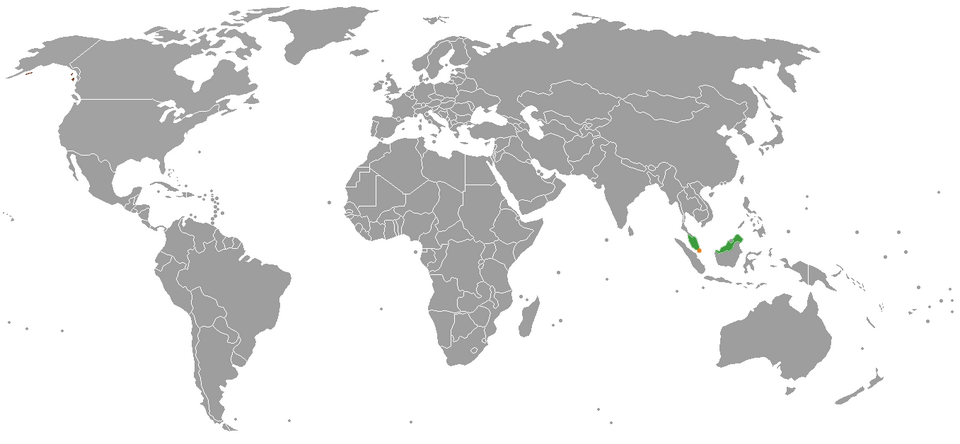
Malaysia’s political system is genuinely unique. As a federal constitutional elective monarchy, it is the only country in Southeast Asia with this governance model. The Yang di-Pertuan Agong, the King, is elected to a five-year term from among the nine hereditary rulers of the Malay states. This system, closely modelled on the Westminster parliamentary tradition as a legacy of British rule, creates a fascinating interplay between traditional authority and modern democratic governance.
The other four states, which have titular governors, do not participate in the selection of the King, a nuance that underscores the delicate balance of power within the federation.
This political structure has proven remarkably durable, providing a sense of continuity and cultural identity even as governments change. The check-and-balance role of the monarchy, while largely ceremonial, carries significant moral authority. In times of political uncertainty, the King has often acted as a stabilising force, mediating between factions and ensuring that the democratic process remains on track.
For citizens, this system fosters a sense of national identity that transcends the frequent changes in political leadership.
Quality of life in Malaysia is generally high, particularly for those in the middle and upper income brackets. The country offers a rich cultural tapestry, world-class cuisine, and natural beauty ranging from tropical islands to highland retreats. The healthcare system, while not without its challenges, provides a mix of public and private options that deliver good outcomes at a fraction of the cost found in Western countries.
The safety index data is not currently available, but the general perception is that Malaysia is a relatively safe country, particularly outside of the major urban crime hotspots that plague most large cities globally.
What’s Happening Now: The 2025-2026 Agenda
As Malaysia moves through 2025 and into 2026, the economic agenda is focused on sustaining the growth momentum while addressing structural vulnerabilities. The World Bank’s growth figure of 5.17 percent provides the government with a strong platform to pursue longer-term reforms. Discussions around subsidy rationalisation, particularly for fuel and essential goods, are ongoing.
These are politically sensitive issues, but the government appears committed to gradually reducing the fiscal burden while implementing targeted assistance for lower-income households.
The labour market remains a key focus. With unemployment at just 3.76 percent, the priority is shifting from job creation to job quality. There is a growing emphasis on upskilling and reskilling the workforce to meet the demands of a digital economy. The government is also keenly aware of the need to attract higher-value foreign direct investment, particularly in areas like semiconductor manufacturing, which aligns with global supply chain diversification trends.
The corporate sector is responding to these signals. AirAsia’s continued expansion, Axiata’s investments in next-generation connectivity, and the broader push towards environmental, social, and governance (ESG) standards are all indicative of a business community that is looking beyond short-term gains.
The coming months will be crucial in determining whether Malaysia can translate its current economic strength into lasting structural progress, or whether the familiar challenges of bureaucracy and political friction will temper its ambitions.
The Bottom Line
Malaysia in 2025-2026 is a country that has found its footing. The World Bank data confirms an economy that is growing strongly, employing its people, and building on a diversified corporate base. For investors, it offers a balanced entry point into Southeast Asia—less volatile than some neighbours, more dynamic than others, and underpinned by a unique political system that provides stability. For policymakers in the region, Malaysia serves as a case study in pragmatic governance.
The challenges ahead—ensuring affordable housing, upgrading skills, and managing the transition to a higher-value economy—are significant, but the foundation is solid. This is a country to watch, not with breathless excitement, but with steady, confident attention.
Sources & Methodology
This article is authored by Economic Pulse Net for informational and research purposes. Economic Pulse Net sources its data from multilateral institutions, national statistics bureaus, and proprietary databases. All data is believed to be current as of the date of publication.
Published: August 01, 2026 | Category: Research — Malaysia
Use these signals in your own platform
Economic Pulse publishes its live signal feed through a documented, read-only API. Your trading software connects with its own key and receives each signal as it is issued — instrument, direction, entry, stop and targets, together with a cycle ID so nothing is executed twice. The feed is independent of this website and cannot change it.
Signals are informational only and are not financial advice.