Economic Pulse Net | Sources: World Bank World Development Indicators, Government Sources | 2026
Key Takeaways
* Resilient Growth: Malaysia’s economy is projected to expand by over 5.1% in 2025, signaling robust momentum despite global headwinds.
Price Stability: With inflation hovering near 1.4%, the country offers one of the most stable consumer price environments in Southeast Asia.
Labor Market Strength: An unemployment rate of just under 3.8% indicates a tight labor market and high workforce participation.
Diversified Corporate Landscape: Major players span healthcare, telecommunications, and financial services, reducing reliance on any single sector.
Unique Political Structure: As the only federal constitutional elective monarchy in Southeast Asia, Malaysia offers a distinct governance model that influences policy continuity.
Economic Engine: Growth Amidst Global Uncertainty
Malaysia is currently demonstrating remarkable economic resilience, with GDP growth projected at 5.17% for 2025 according to World Bank data. This expansion is supported by a total GDP of approximately $472 billion USD, reflecting a substantial economic base that continues to attract foreign interest. Crucially, this growth is occurring alongside low inflation, which sits at a manageable 1.38%, allowing consumers to maintain purchasing power without significant erosion from rising costs.
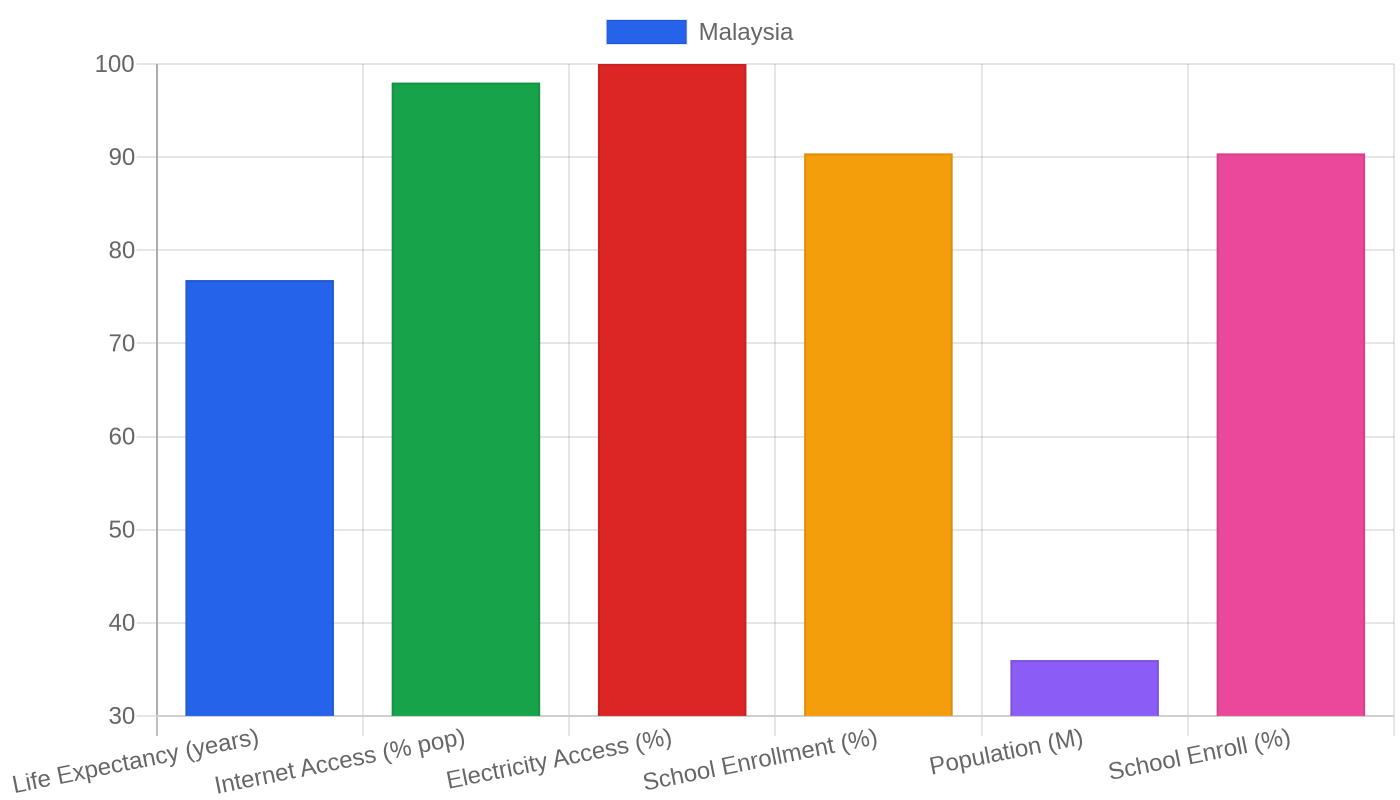
The labor market further underscores this stability; with an unemployment rate of 3.76%, the country is effectively utilizing its population of nearly 36 million people. For investors, this combination suggests an economy that is not only growing but doing so in a sustainable manner where price controls are effective. The GDP per capita in PPP terms stands at roughly $41,497, indicating a middle-income status that provides a solid foundation for domestic consumption-led growth.
This data points to a nation that has successfully navigated post-pandemic recovery phases into a period of steady, predictable expansion.
Living Standards: Affordability and Daily Expenses
For expatriates and locals alike, the cost of living in Malaysia remains competitive compared to regional peers, though specific housing metrics require careful analysis. While detailed rental indices are not fully itemized in the current dataset, the low inflation rate of 1.38% suggests that daily expenses and basic goods are relatively stable. The GNI per capita of $12,380 provides context for household income levels, implying that while luxury imports may carry premiums, essential services remain accessible.
Consumers can expect a moderate cost structure where wage growth likely outpaces or matches minor inflationary pressures. This balance makes Malaysia an attractive destination for those seeking a high quality of life without the exorbitant price tags associated with neighboring financial hubs. However, individuals should monitor local market fluctuations closely, as the absence of granular crime or safety indices means that security perceptions may vary significantly by neighborhood.
Investment & Business Climate: A Diversified Portfolio
The corporate landscape in Malaysia is characterized by diversity, with key players operating across critical sectors such as healthcare, telecommunications, and financial services. Adventa leads in health care, while Axiata dominates telecommunications, providing essential infrastructure that supports broader digital economic initiatives. In the financial sector, AmBank serves as a cornerstone for banking services, supporting both retail and corporate clients.
Consumer services are well-represented by giants like AirAsia and Astro Malaysia Holdings, indicating strong domestic demand for travel and media content. Additionally, conglomerates like Boustead Holdings and Berjaya Group provide exposure to varied industries, from plantations to property development. This diversification reduces systemic risk; if one sector faces volatility, others can buffer the impact.
For business leaders, these companies offer established platforms for partnerships, joint ventures, or supply chain integration, leveraging their deep roots in the Malaysian market.
Safety, Politics & Quality of Life: Governance and Security
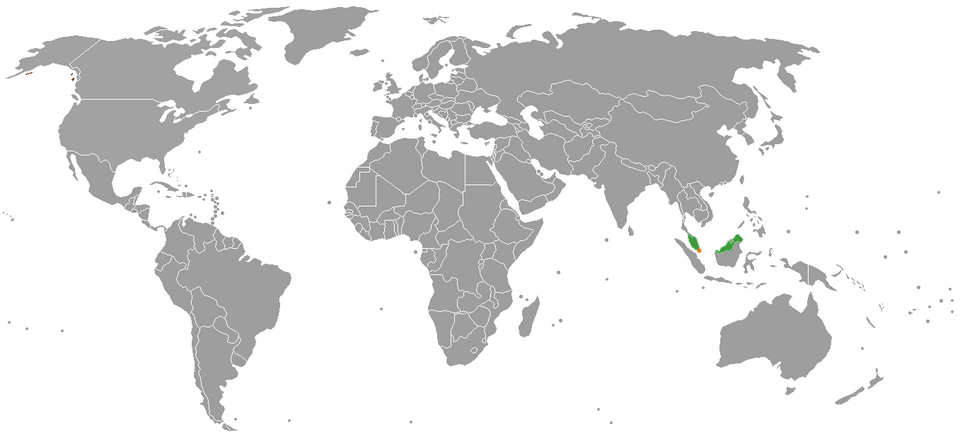
Malaysia’s political framework is unique in the region, operating as a federal constitutional elective monarchy modeled on the Westminster parliamentary system. The King, known as the Yang di-Pertuan Agong, is elected every five years by nine hereditary rulers, ensuring a rotational leadership that balances traditional authority with democratic processes. This structure, a legacy of British rule, provides a layer of political stability that contrasts with more volatile regimes in Southeast Asia.
Regarding personal safety, current data does not provide specific Crime or Safety Indices, leaving a gap in quantifiable security metrics. However, the political consistency often correlates with lower civil unrest, creating a generally orderly environment for residents. The absence of explicit happiness data in the provided metrics means that subjective quality-of-life assessments must rely on indirect indicators like economic stability and public service reliability.
Ultimately, the political system offers a predictable regulatory environment, which is crucial for long-term planning.
Current Affairs: Policy Shifts and Regional Dynamics
The freshest developments in Malaysia center on the interplay between its unique political structure and economic policy implementation. As the only federal country in Southeast Asia, Malaysia’s governance model allows for nuanced policy adjustments that reflect regional differences within the federation. Recent economic figures suggest that the government is successfully managing inflationary pressures, keeping CPI near 1.4% while maintaining robust GDP growth.
This macroeconomic stability is likely driven by consistent fiscal policies aimed at supporting key industries like healthcare and telecommunications. Investors are watching closely to see how the upcoming royal transitions might influence long-term economic strategies, although the Westminster-style parliament ensures continuity regardless of the monarch. The strong performance in employment, with unemployment below 4%, indicates that labor market reforms are yielding positive results.
These dynamics suggest a country that is actively refining its economic engines rather than merely resting on past successes.
The Bottom Line
Malaysia presents a compelling case for investors seeking stability in a dynamic region, backed by solid growth figures and low inflation. The diversified corporate sector and unique political system provide both opportunity and predictability, making it a safe harbor for capital. While some social metrics like crime indices are unavailable, the economic fundamentals are strong enough to support confident entry strategies.
For businesses looking to expand in Southeast Asia, Malaysia’s blend of affordability and growth makes it an indispensable part of the portfolio.
Sources & Methodology
This article is authored by Economic Pulse Net for informational and research purposes. Economic Pulse Net sources its data from multilateral institutions, national statistics bureaus, and proprietary databases. All data is believed to be current as of the date of publication.
Published: October 06, 2026 | Category: Research — Malaysia
Use these signals in your own platform
Economic Pulse publishes its live signal feed through a documented, read-only API. Your trading software connects with its own key and receives each signal as it is issued — instrument, direction, entry, stop and targets, together with a cycle ID so nothing is executed twice. The feed is independent of this website and cannot change it.
Signals are informational only and are not financial advice.